María Cecilia Lozada - Böcker
Visar alla böcker från författaren María Cecilia Lozada. Handla med fri frakt och snabb leverans.
6 produkter
6 produkter
1 178 kr
Skickas inom 10-15 vardagar
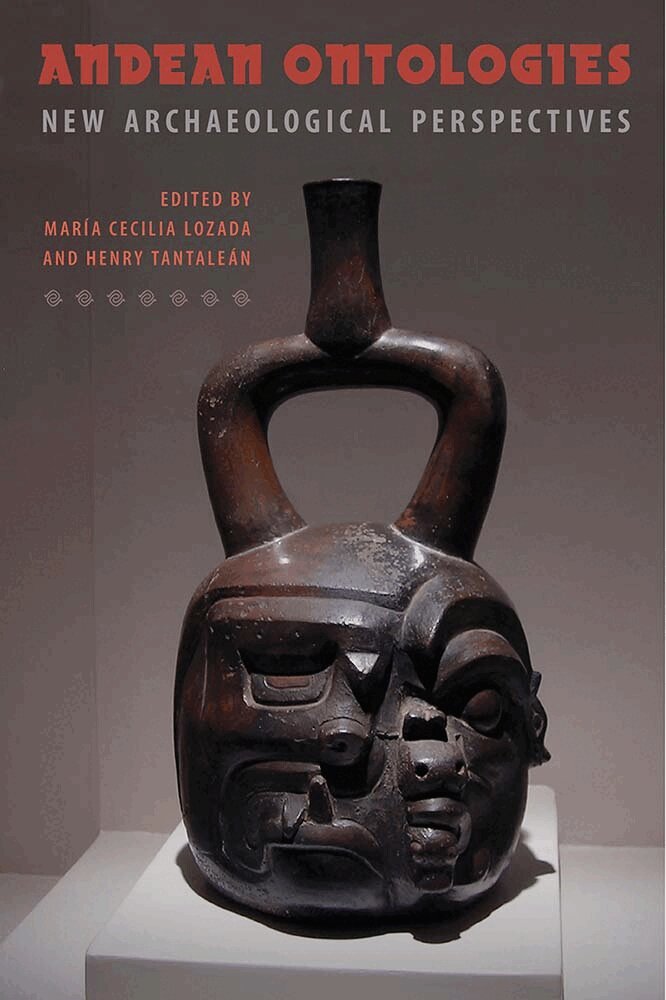
Andean Ontologies is a fascinating interdisciplinary investigation of how ancient Andean people understood their world and the nature of being. Exploring pre-Hispanic ideas of time, space, and the human body, these essays highlight a range of beliefs across the region’s different cultures, emphasizing the relational aspects of identity in Andean worldviews.This volume breaks new ground by bringing together an array of renowned specialists including anthropologists, bioarchaeologists, historians, linguists, ethnohistorians, and art historians to evaluate ancient Amerindian ideologies through different interpretive lenses. Many are local researchers from South American countries such as Ecuador, Peru, Bolivia, Chile, and Argentina, and this volume makes their work available to North American readers for the first time. Their essays are highly contextualized according to the territories and time periods studied. Instead of taking an external, outside-in approach, they prioritize internal and localized views that incorporate insights from today’s indigenous societies. This cutting-edge collection demonstrates the value of a multifaceted, holistic, inside-out approach to the pre-Columbian world.
Exploring Ontologies of the Precontact Americas
From Individual Bodies to Bodies of Social Theory
Inbunden, Engelska, 2024
1 049 kr
Skickas inom 10-15 vardagar
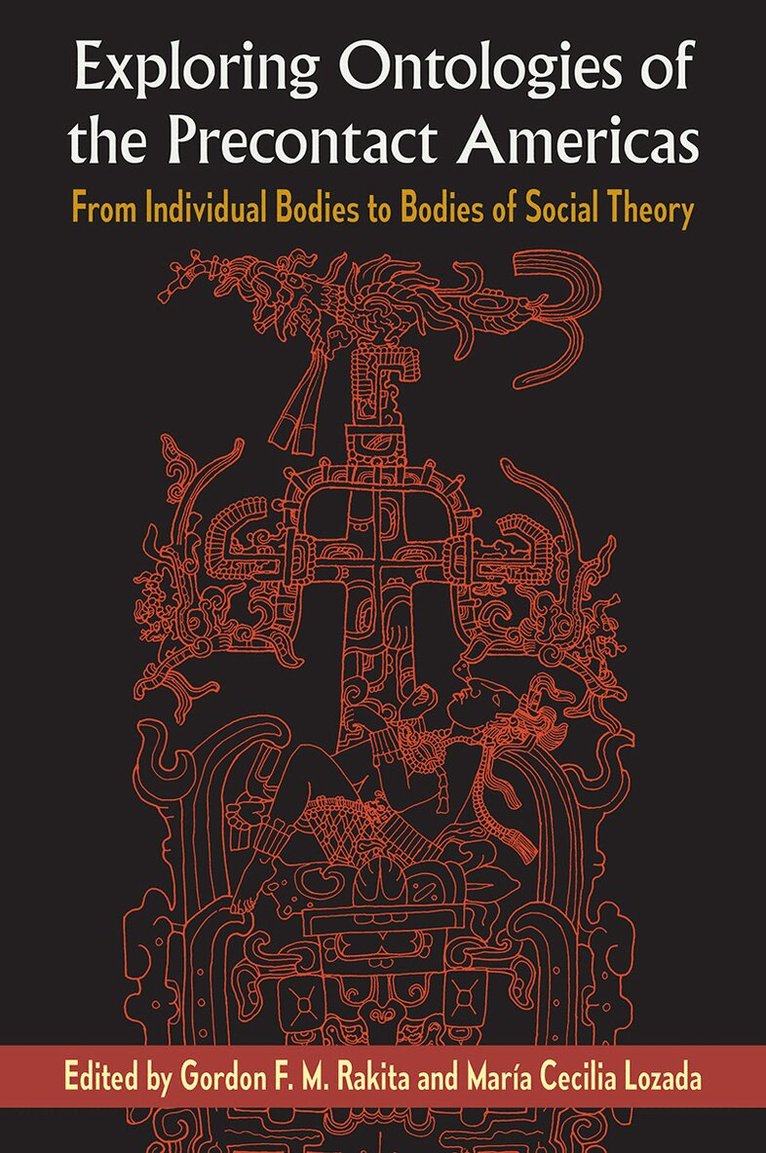
Applying social theory and incorporating non-Western perspectives in the interpretation of bioarchaeological research This volume demonstrates how researchers in bioarchaeology and mortuary archaeology can work to better understand concepts of life and death in past societies of the Indigenous Americas. Through case studies that apply the “ontological turn” to human funerary and skeletal remains, contributors set aside Western views of reality, nature, and personhood to explore how people of various cultures understood existence and the human body.Contributors examine mortuary records from Inuit groups in Labrador and Greenland, Hopewell culture in the lower Illinois River valley, and Weeden Island and Puebloan traditions in the United States Southeast and Southwest. They look at the Paquimé community in Mexico, iconography of the Maya civilization, the demographics of Inka populations, and an ancient village on the Amazon River in Brazil. With attention to the viewpoints of these cultures, these essays deconstruct the boundaries between human remains and other interred artifacts, the living and the dead, and other binaries rooted deeply in Western science.Exploring Ontologies of the Precontact Americas reminds readers that their own ontological perspectives affect how they interpret the past. By considering diverse, non-Western worldviews and engaging with novel social theories of the body, this volume inspires new understandings of precontact societies.
1 302 kr
Skickas inom 5-8 vardagar
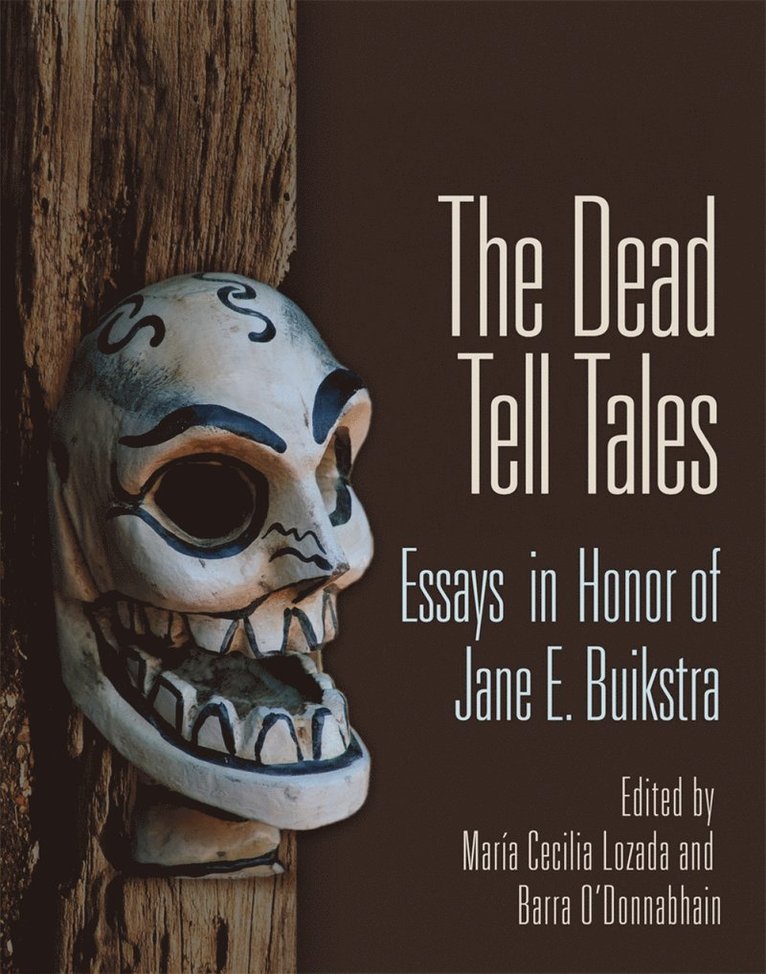
Honoring Jane Buikstra's pioneering work in the development of bioarchaeological research, the essays in this volume stem from a symposium held at the annual meeting of the Society for American Archaeology. Multiple generations of Buikstra's former doctoral students and other colleagues gathered to discuss the impact of her mentorship. The essays are remarkable for their breadth, in terms of both the topics discussed and the geographical range they cover. The contributions highlight the dynamism of bioarchaeology, which owes so much to the strong foundations laid down over the last few decades. The volume documents the degree to which bioarchaeological approaches have become normalized and integrated into anthropological research: bioarchaeology has moved out of the appendix and into the interpretation of archaeological data. New perspectives have emerged, partly in response to theoretical changes within anthropology, but also as a result of the engagement of the broader discipline with bioarchaeology.
Archaeological Human Remains
Legacies of Imperialism, Communism and Colonialism
Häftad, Engelska, 2018
1 096 kr
Skickas inom 10-15 vardagar
This book expands on Archaeological Human Remains: Global Perspectives that was published in the Springer Briefs series in 2014 and which had a strong focus on post-colonial countries.
552 kr
Skickas inom 10-15 vardagar
This volume addresses the directions that studies of archaeological human remains have taken in a number of different countries, where attitudes range from widespread support to prohibition. Overlooked in many previous publications, this diversity in attitudes is examined through a variety of lenses, including academic origins, national identities, supporting institutions, archaeological context and globalization. The volume situates this diversity of attitudes by examining past and current tendencies in studies of archaeologically-retrieved human remains across a range of geopolitical settings. In a context where methodological approaches have been increasingly standardized in recent decades, the volume poses the question if this standardization has led to a convergence in approaches to archaeological human remains or if significant differences remain between practitioners in different countries. The volume also explores the future trajectories of the study of skeletal remains in the different jurisdictions under scrutiny.
Archaeological Human Remains
Legacies of Imperialism, Communism and Colonialism
Inbunden, Engelska, 2018
1 096 kr
Skickas inom 10-15 vardagar
This book expands on Archaeological Human Remains: Global Perspectives that was published in the Springer Briefs series in 2014 and which had a strong focus on post-colonial countries. In the current volume, the editors include papers that deal with non-Anglophone European traditions such as Portugal, Germany and France. In addition, authors continue the exploration of osteological trajectories that are not well-documented in the West, such as Senegal, China and Russia. The lasting legacies of imperialism, communism and colonialism are apparent as the authors of the individual country profiles examine the historical roots of the study of archaeological human remains and the challenges encountered while also considering the likely future directions likely of this multi-faceted discipline in different world areas.