Maria Mili - Böcker
Visar alla böcker från författaren Maria Mili. Handla med fri frakt och snabb leverans.
2 produkter
2 produkter
1 667 kr
Skickas inom 7-10 vardagar
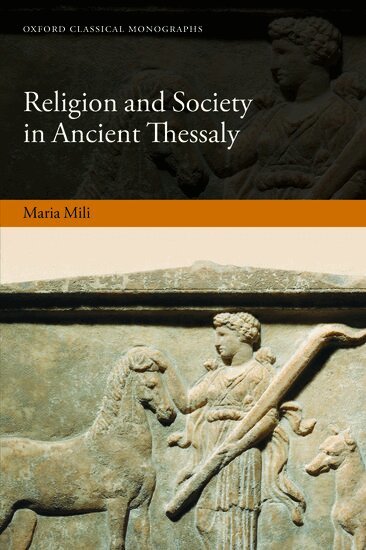
The fertile plains of the ancient Greek region of Thessaly stretch south from the shadow of Mount Olympus. Thessaly's numerous small cities were home to some of the richest men in Greece, their fabulous wealth counted in innumerable flocks and slaves. It had a strict oligarchic government and a reputation for indulgence and witchcraft, but also a dominant position between Olympus and Delphi, and a claim to some of the greatest Greek heroes, such as Achilles himself. It can be viewed as both the cradle of many aspects of Greek civilization and as a challenge to the dominant image of ancient Greece as moderate, rational, and democratic.Religion and Society in Ancient Thessaly explores the issues of regionalism in ancient Greek religion and the relationship between religion and society, as well as the problem of thinking about these matters through particular bodies of evidence. It discusses in depth the importance of citizenship and of other group-identities in Thessaly, and the relationship between cult activity and political and social organization. The volume investigates the Thessalian particularities of the evidence and the role of religion in giving the inhabitants of this land a sense of their identity and place in the wider Greek world, as well as the role of Thessaly in the ancients' and moderns' understanding of Greekness.
752 kr
Skickas inom 5-8 vardagar
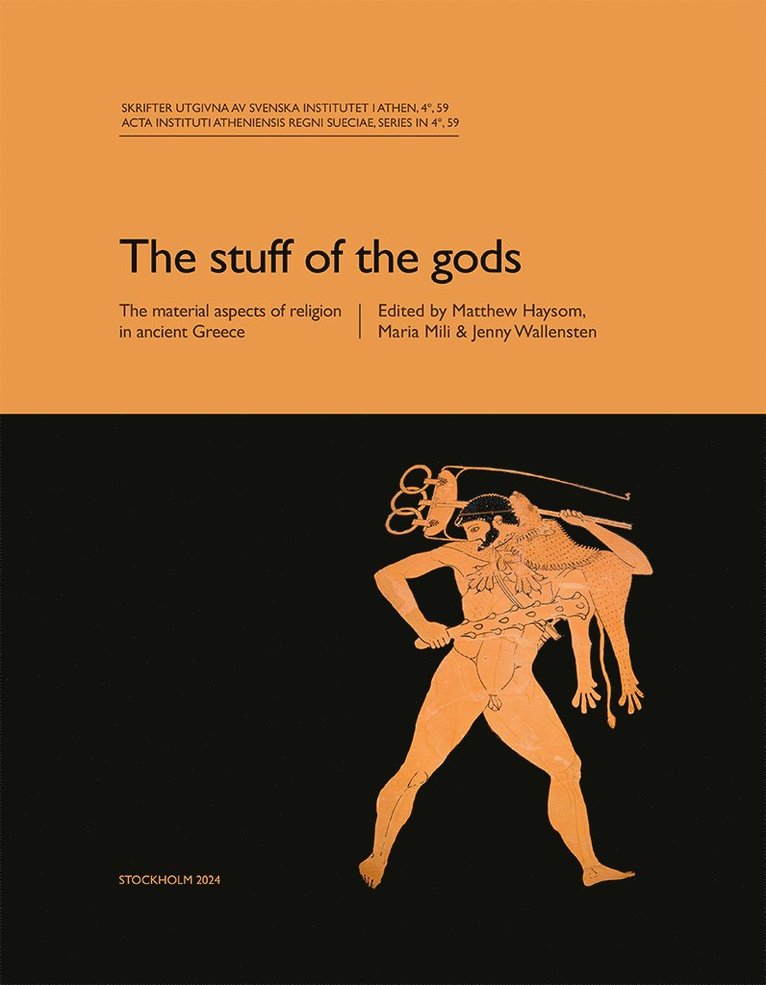
The “material turn” in the humanities and social sciences has brought about an expanded understanding of the material dimension of all cultural and social phenomena. In the Classics it has resulted in the breaking down of boundaries within the discipline and a growing interest in materiality within literature. In the study of religion cross-culturally new perspectives are emphasising religion as a material phenomenon and belief as a practice founded in the material world. This volume brings together experts in all aspects of Greek religion to consider its material dimensions. Chapters cover both themes traditionally approached by archaeologists, such as dedications and sacred space, and themes traditionally approached by philologists, such as the role of objects in divine power. They include a wide variety of themes ranging from the imminent material experience of religion for ancient Greek worshippers to the role of material culture in change and continuity over the long term. Contents Matthew Haysom, Maria Mili & Jenny Wallensten, ‘Introduction’, 7–14 Robin Osborne, ‘Stuff and godsense’, 15–24 Maria Mili, ‘Why did the Greek gods need objects?’, 25–34 Cécile Durvye, ‘Of things and men in the sanctuary of Aphrodite (Delos). Does the content of a sanctuary define the personality of the god?’, 35–45 Hedvig von Ehrenheim, ‘Incubation rituals. Creating a locality for the divine?’, 47–55 Petra Pakkanen, ‘Movable sacrality. Considerations on oscillating sacredness of material objects relating Greek sanctuaries’, 57–68 Gunnel Ekroth, ‘A room of one’s own? Exploring the temenos concept as divine property’, 69–82 Tyler Jo Smith, ‘Resistant, willing, and controlled. Sacrificial animals as “things” on Greek vases’, 83–95 Jenny Wallensten, ‘Decisive dedications. Dedications outside of sanctuary contexts’, 97–109 Caitlín E. Barrett, ‘The affordances of terracotta figurines in domestic contexts. Reconsidering the gap between material and ritual’, 111–132 Matthew Haysom, ‘Investigating the instability of religious material culture in Greek prehistory. The case of “bench shrines”’, 133–148 Catherine Morgan, ‘Adding buildings to Early Iron Age sanctuaries. The materiality of built space’, 149–166 Charlotte R. Potts, ‘An external view. Architecture and ritual in central Italy’, 167–180 Gina Salapata, ‘Ambiguity versus specificity in modest votive offerings’, 181–191 James Whitley, ‘Writing to the gods? Archaic votives, inscribed and uninscribed’, 193–213 Nassos Papalexandrou, ‘The asethetics of rare experiences in early Greek sanctuaries’, 215–223 Troels Myrup Kristensen, ‘Dephi and the omphalos. Materiality, replication and the mythistory of the Sanctuary of Apollo’, 225–234 Caroline Vout, ‘The stuff of crowded sanctuaries’, 235–246 ‘Index’, 247–248