Mariam Thalos - Böcker
Visar alla böcker från författaren Mariam Thalos. Handla med fri frakt och snabb leverans.
5 produkter
5 produkter
1 200 kr
Skickas inom 5-8 vardagar
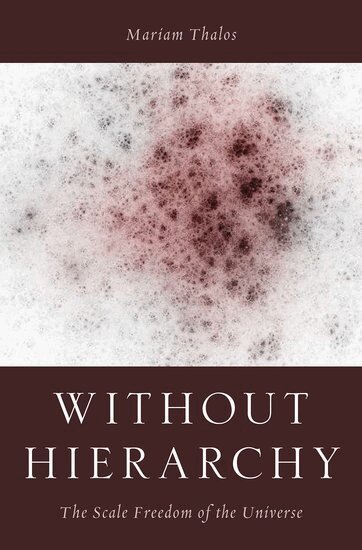
A venerable tradition in the metaphysics of science commends ontological reduction: the practice of analysis of theoretical entities into further and further proper parts, with the understanding that the original entity is nothing but the sum of these. This tradition implicitly subscribes to the principle that all the real action of the universe (also referred to as its "causation") happens at the smallest scales-at the scale of microphysics. A vast majority of metaphysicians and philosophers of science, covering a wide swath of the spectrum from reductionists to emergentists, defend this principle. It provides one pillar of the most prominent theory of science, to the effect that the sciences are organized in a hierarchy, according to the scales of measurement occupied by the phenomena they study. On this view, the fundamentality of a science is reckoned inversely to its position on that scale. This venerable tradition has been justly and vigorously countered-in physics, most notably: it is countered in quantum theory, in theories of radiation and superconduction, and most spectacularly in renormalization theories of the structure of matter. But these counters-and the profound revisions they prompt-lie just below the philosophical radar. This book illuminates these counters to the tradition principle, in order to assemble them in support of a vaster (and at its core Aristotelian) philosophical vision of sciences that are not organized within a hierarchy. In so doing, the book articulates the principle that the universe is active at absolutely all scales of measurement. This vision, as the book shows, is warranted by philosophical treatment of cardinal issues in the philosophy of science: fundamentality, causation, scientific innovation, dependence and independence, and the proprieties of explanation.
654 kr
Skickas inom 10-15 vardagar
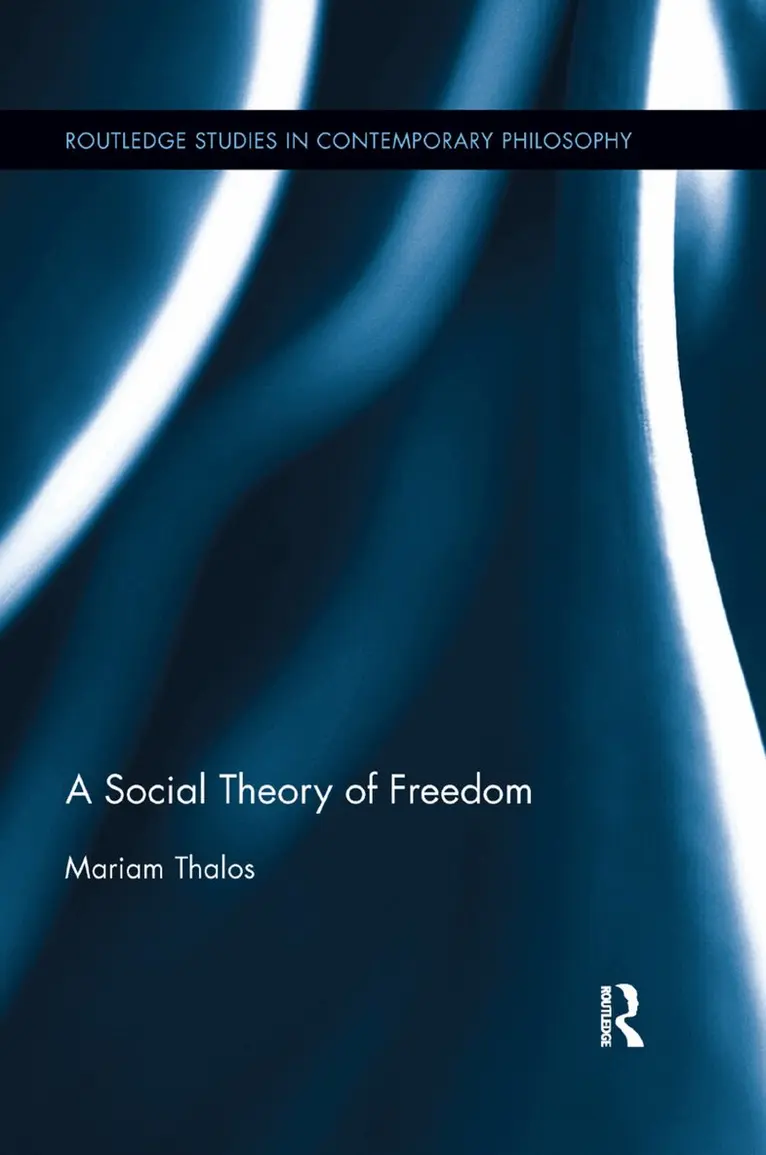
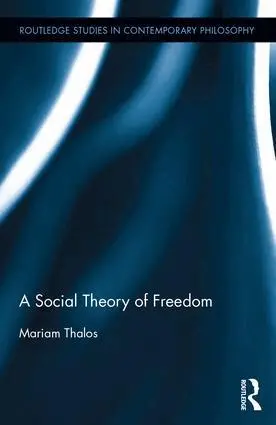
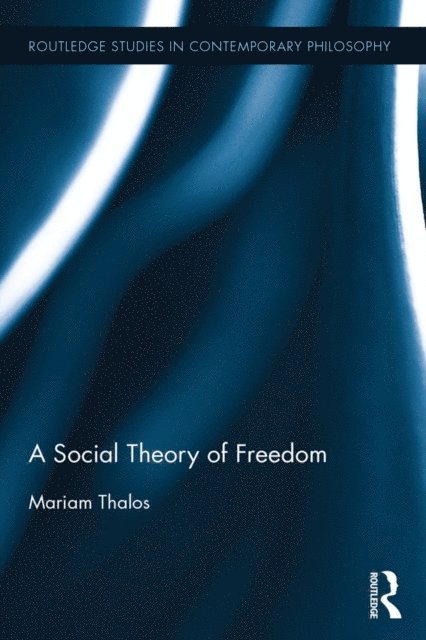
In A Social Theory of Freedom, Mariam Thalos argues that the theory of human freedom should be a broadly social and political theory, rather than a theory that places itself in opposition to the issue of determinism. Thalos rejects the premise that a theory of freedom is fundamentally a theory of the metaphysics of constraint and, instead, lays out a political conception of freedom that is closely aligned with questions of social identity, self-development in contexts of intimate relationships, and social solidarity. Thalos argues that whether a person is free (in any context) depends upon a certain relationship of fit between that agent’s conception of themselves (both present and future), on the one hand, and the facts of their circumstances, on the other. Since relationships of fit are broadly logical, freedom is a logic—it is the logic of fit between one’s aspirations and one’s circumstances, what Thalos calls the logic of agency. The logic of agency, once fleshed out, becomes a broadly social and political theory that encompasses one’s self-conceptions as well as how these self-conceptions are generated, together with how they fit with the circumstances of one’s life. The theory of freedom proposed in this volume is fundamentally a political one.
302 kr
Tillfälligt slut
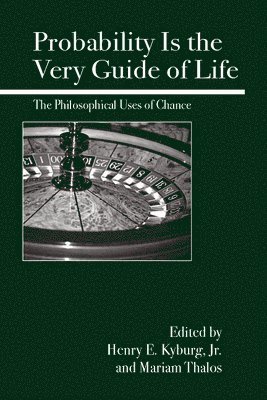
The theory of probability grew up in gaming rooms, and then in insurance companies, but was eventually applied by philosophers to all kinds of ordinary choices. That application, however, bristles with knotty problems and disagreements among the experts. This collection of philosophical essays by leading specialists in the subject looks at various technical problems in the use of probability theory for guidance in practical decisions. For those who already have a basic grounding in philosophy, logic, and probability theory, this book provides an informative sampling of the best recent work on developing an adequate conception of the use of probability theory in practical decision-making. The three standard views of probability are those of Richard von Mises, which identifies probability with limiting frequency; Carnap and his followers, which sees probability as a kind of partial entailment according to "state descriptions"; and Ramsey and Finetti (the Bayesian or subjective interpretation), which sees probabilities as tied to choices.As guides to life, each of these approaches has its shortcomings: the frequency interpretation allows many values of probability, the Carnapian or logical view fails to provide any specific values, and the subjective view can accommodate any value. Attempts to combine these approaches have also been disappointing. The contributors to this book represent a cross-section of contemporary views. They include attempts to tackle general issues, such as McGrew's discussion of Hume's assault on induction and Henderson's examination of recent attempts to reconcile Bayesian and Frequentist approaches, and the application of probability theory to specific kinds of decision, like Malinas's treatment of Simpson's Paradox or the article by Colyvan, Regan, and Ferson, which looks at the pitfalls of depending on statistical evidence to establish criminal guilt.
2 096 kr
Skickas inom 10-15 vardagar
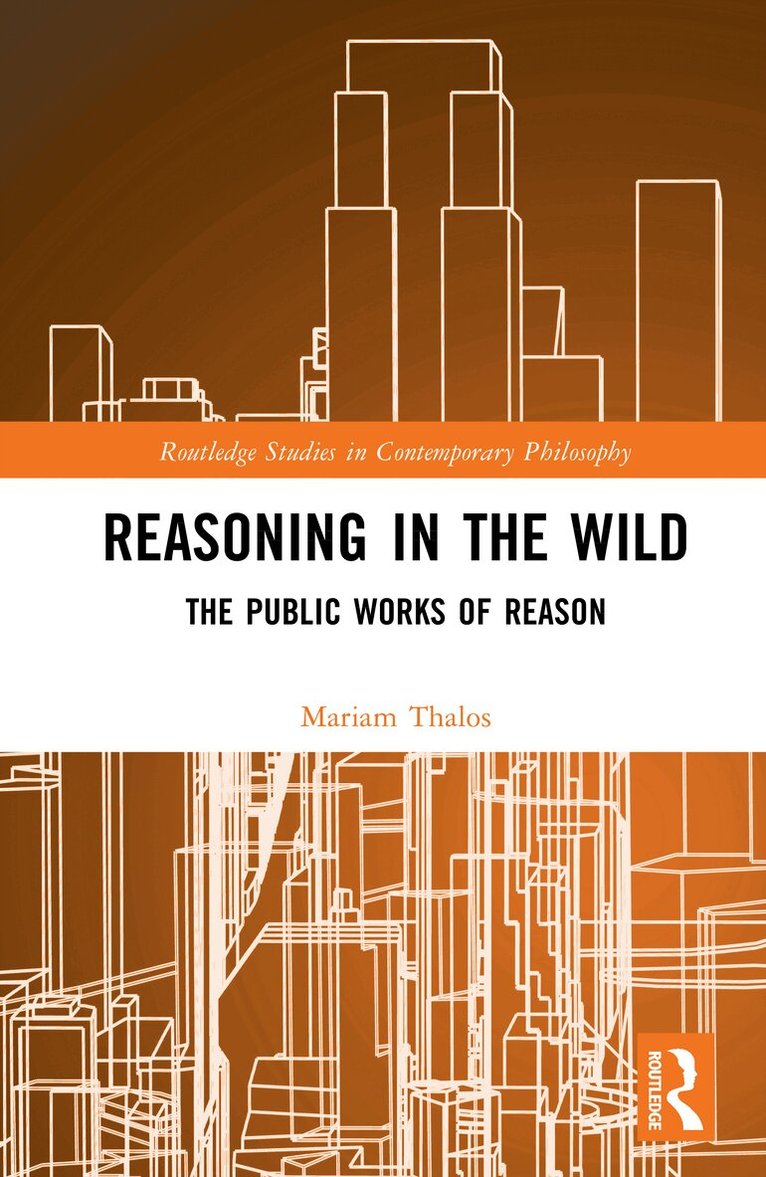
Philosophy has long wrongfully imprisoned reasoning within the isolated chambers of the individual mind. This book shatters this confinement, laying foundations of a groundbreaking framework that conceptualizes reasoning as protocol-articulated action governed by socially shared norms and unfolding across diverse sites of processing.While logicians portray reasoning as inhabiting an abstract system of rules applied to propositions, this book argues that this portrayal distorts the truth of the matter. Reasoning in the Wild is founded on the principle that the relation of logical consequence is best understood as a relation between concrete acts, not between abstract propositions inhabiting inference systems. This is the zeroeth principle of logic. Consonant with this principle, the book proceeds to illuminate: the vital concept of the common mind—the shared understandings and ways of thinking that exist within a community; how reasoning is inherently social, a public work that unfolds across various sites of processing, operating on principles of trust; that communication shapes action within the context of the common mind, but subject to manipulation that can contribute to polarization; that public sentiment is a powerful, macrosocial force shaped by interlocking processes of shared understanding and strategic communication; and finally, how a disjointed common mind can result from persistent false narratives. The book provocatively considers the role of generative AI in either exacerbating or ameliorating this condition.Reasoning in the Wild is a keen philosophical intervention on a broad range of interconnected topics around the public works of reasoning, for scholars and graduate students in philosophy and the social sciences, particularly the sciences of mind, logic, the social world and communication. It promises to reshape fundamentally our understanding of how we reason, not in terms of isolated mental activity but within the rich tapestry of human connection and public life.The Open Access version of this book, available at http://www.taylorfrancis.com, has been made available under a Creative Commons Attribution-Non Commercial-No Derivatives (CC BY-NC-ND) 4.0 license.
2 298 kr
Skickas inom 10-15 vardagar
In A Social Theory of Freedom, Mariam Thalos argues that the theory of human freedom should be a broadly social and political theory, rather than a theory that places itself in opposition to the issue of determinism. Thalos rejects the premise that a theory of freedom is fundamentally a theory of the metaphysics of constraint and, instead, lays out a political conception of freedom that is closely aligned with questions of social identity, self-development in contexts of intimate relationships, and social solidarity. Thalos argues that whether a person is free (in any context) depends upon a certain relationship of fit between that agent’s conception of themselves (both present and future), on the one hand, and the facts of their circumstances, on the other. Since relationships of fit are broadly logical, freedom is a logic—it is the logic of fit between one’s aspirations and one’s circumstances, what Thalos calls the logic of agency. The logic of agency, once fleshed out, becomes a broadly social and political theory that encompasses one’s self-conceptions as well as how these self-conceptions are generated, together with how they fit with the circumstances of one’s life. The theory of freedom proposed in this volume is fundamentally a political one.