Marianna Shreve Simpson - Böcker
Visar alla böcker från författaren Marianna Shreve Simpson. Handla med fri frakt och snabb leverans.
5 produkter
5 produkter
457 kr
Tillfälligt slut
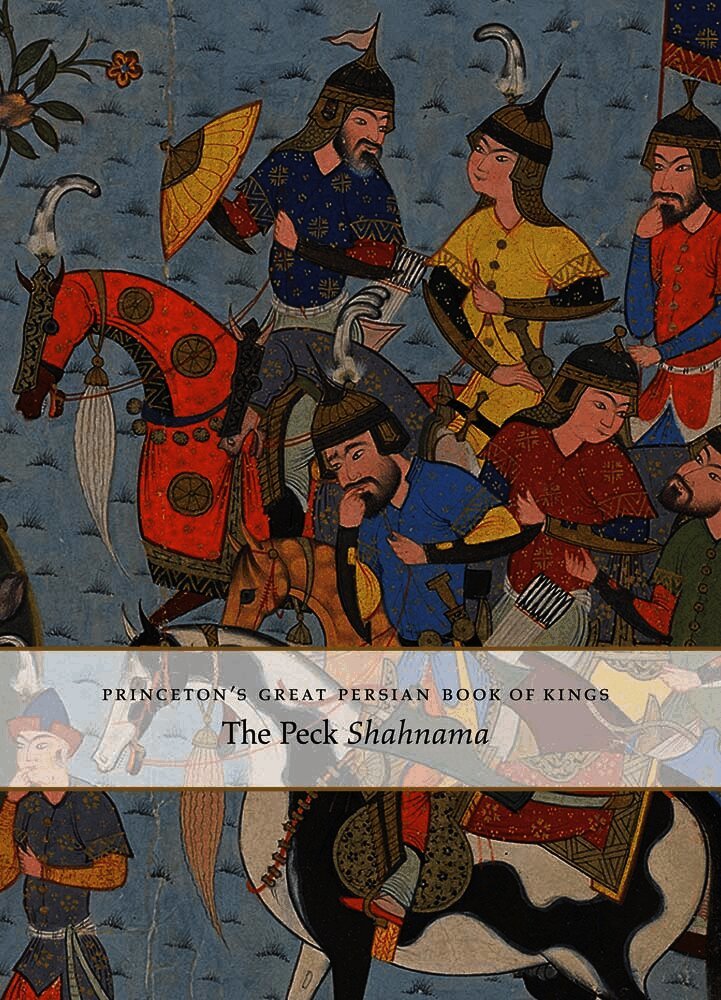
Princeton’s Great Persian Book of Kings presents the first comprehensive examination of a beautifully decorated yet relatively unknown manuscript of the Shahnama (Book of Kings), created in 1589–90 in the flourishing cultural center of Shiraz. Held by Princeton University and called the Peck Shahnama after its donor, the work ranks among the finest intact 16th-century Persian manuscripts in the United States. Composed more than one thousand years ago, the epic poem Shahnama narrates the story of Iran from the dawn of time to the 7th century A.D. Its 50,000 verses and countless tales of Iran’s ancient kings and heroes have been a vital source of artistic inspiration in Persian culture for centuries. Author Marianna Shreve Simpson offers a detailed discussion of the Peck Shahnama, including its origins, history, and artistic characteristics. All of the manuscript’s intricately illuminated and illustrated folios are reproduced with stunning new photography, and each is accompanied by commentary on its narrative themes and artistic presentation. An essay by Louise Marlow explores the manuscript’s extensive marginal glosses, an unusual feature of the Peck Shahnama.Distributed for the Princeton University Art MuseumExhibition Schedule:Princeton University Art Museum(10/03/15–01/24/16)
170 kr
Skickas inom 7-10 vardagar
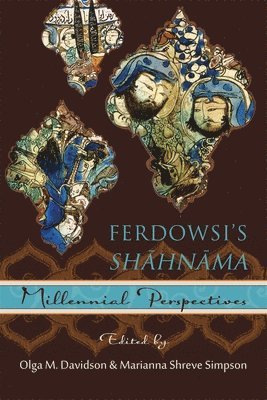
Ferdowsi's Shahnama: Millennial Perspectives celebrates the ongoing reception, over the last thousand years, of a masterpiece of classical Persian poetry. The epic of the Shahnama or Book of Kings glorifies the spectacular achievements of Iranian civilization from its mythologized beginnings all the way to the historical time of the Arab Conquest, when the notionally unbroken sequence of Iranian shahs came to an end. The poet Hakim Abu'l-Qasim, who composed this epic, was renamed Ferdowsi or "the man of Paradise" in recognition of his immortalizing artistic accomplishment. Even now, over a thousand years after his death in 1010 CE, the impact of Ferdowsi's epic poetry reverberates in the intellectual and artistic life of Persianate cultures all over the world. Ferdowsi's Shahnama: Millennial Perspectives undertakes a new look at the reception of Ferdowsi's poetry, especially in the twelfth, thirteenth, fourteenth, and fifteenth centuries CE. Such a reception, the contributors to this book argue, actively engages the visual as well as the verbal arts of Iranian civilization. The paintings and other art objects illustrating the Shahnama over the ages are as vitally relevant as the words of Ferdowsi's poetry.
209 kr
Skickas inom 7-10 vardagar
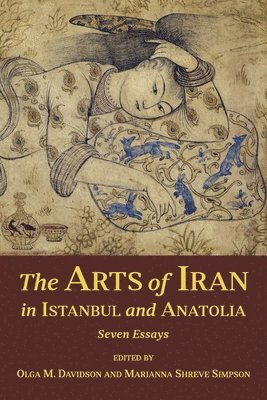
Many spectacular examples of Persianate art survive to the present day, safeguarded in Istanbul and beyond—celebrating the glory of the Persian Empire (and, later, the Ottoman Empire). These include illustrated books, featuring exquisitely painted miniatures artfully embedded in the texts of literary masterpieces, as well as tile decorations in medieval Anatolian architecture.Because of their beauty, many Persianate books were deliberately disassembled, their illustrations re-used in newer books or possessed as isolated art objects. As fragments found their way to collections around the world, the essential integration of text and image in the original books was lost. Six art historians and a literary historian—instrumental in reconstruction efforts—trace the long journey from the destructive dispersal of fragments to the joys of restoration.
2 101 kr
Kommande
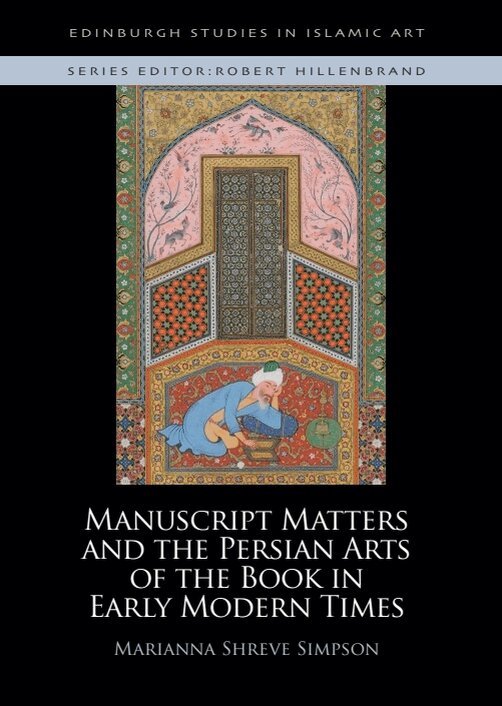
Based on the 2025 Yarshater Lectures in Persian Art, this book presents distinctive aspects – some familiar and others overlooked – of Persianate manuscripts and manuscript making during the early modern period. Its four parts focus on paintings that often come at the beginning and end of manuscripts (frontispieces and finispieces); on the presence and use of page markers on manuscript folios; on the graphic and pictorial style of ‘Abdullah al-Shirazi, a prolific sixteenth-century painter-decorator; and on the image of the book in illustrated manuscripts from Iran and India. Marianna Shreve Simpson explores particular material and artistic features, forms and functions that shaped the making of deluxe Persianate manuscripts over the fourteenth to seventeenth centuries, and that contribute to the continuing appeal of this celebrated tradition today.
349 kr
Skickas inom 7-10 vardagar
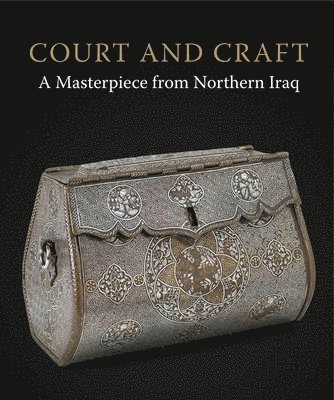
Accompanying a major scholarly exhibition at The Courtauld Gallery, this book explores one of the most beautiful and enigmatic objects in The Courtauld's collection: the so-called 'Courtauld wallet', a brass container richly inlaid with gold and silver, imitating a lady's textile or leather bag, and probably made in Mosul in northern Iraq around 1300. No other object of this kind is known. Decorated all round with courtly figures and on the top with an elaborate banqueting scene featuring an enthroned couple, it has long been recognized as a masterpiece of Arab metalwork. Yet, despite the superb quality of its design and craftsmanship and its status as a unique object, this exceptional metalwork bag has never been properly published. Thus it remains little known outside a small circle of specialists, and little understood even within that circle. Encompassing a variety of multidisciplinary essays by distinguished historians and art historians - on subjects ranging from music at the Mongol court, Mosul under Mongol governorship and Mongol marriage customers to the role of women under the Ilkhanids - this publication aims to explore the origins, function and iconography of this splendid luxury object as well as the cultural context in which it was made and used. It will bring together other images of enthroned Mongols with female consorts, as well as scenes of hunters, revelers an musicians in a variety of media, including illustrated manuscripts, ceramics, textile, and metalwork. By presenting the bag alongside carefully selected contemporary material, it will provide an insight into courtly life under the Mongols in the newly conquered areas of their empire, and will also provide an unrivaled opportunity to investigate the inlaid brass tradition in Mosul after the Mongol Conquest. Objects made before and after this seismic event will be reproduced side by side to demonstrate how the Mosul metalworkers adapted their work for their new patrons.