Marianne Sághy - Böcker
Visar alla böcker från författaren Marianne Sághy. Handla med fri frakt och snabb leverans.
2 produkter
2 produkter
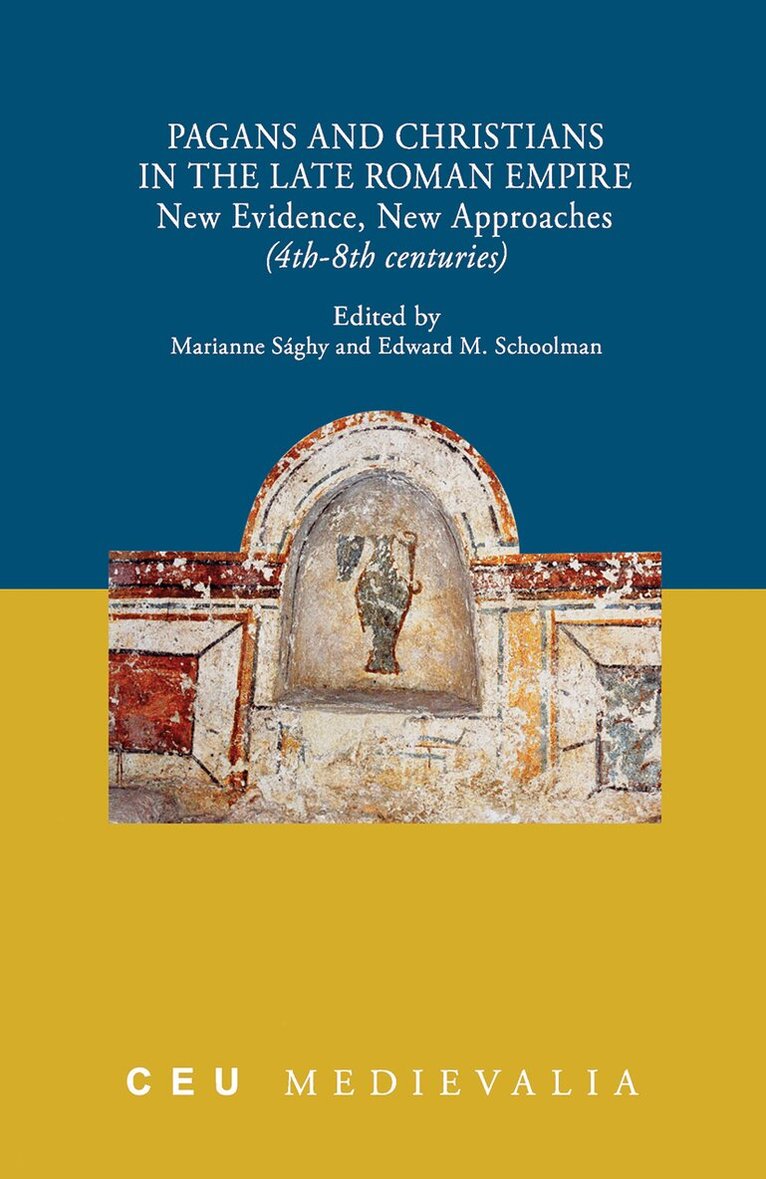
Pagans and Christians in the Late Roman Empire
New Evidence, New Approaches (4th-8th centuries)
Häftad, Engelska, 2017
914 kr
Skickas inom 10-15 vardagar
Do the terms 'pagan' and 'Christian,' 'transition from paganism to Christianity' still hold as explanatory devices to apply to the political, religious and cultural transformation experienced Empire-wise? Revisiting 'pagans' and 'Christians' in Late Antiquity has been a fertile site of scholarship in recent years: the paradigm shift in the interpretation of the relations between 'pagans' and 'Christians' replaced the old 'conflict model' with a subtler, complex approach and triggered the upsurge of new explanatory models such as multiculturalism, cohabitation, cooperation, identity, or group cohesion. This collection of essays, inscribes itself into the revisionist discussion of pagan-Christian relations over a broad territory and time-span, the Roman Empire from the fourth to the eighth century. A set of papers argues that if 'paganism' had never been fully extirpated or denied by the multiethnic educated elite that managed the Roman Empire, 'Christianity' came to be presented by the same elite as providing a way for a wider group of people to combine true philosophy and right religion. The speed with which this happened is just as remarkable as the long persistence of paganism after the sea-change of the fourth century that made Christianity the official religion of the State. For a long time afterwards, 'pagans' and 'Christians' lived 'in between' polytheistic and monotheist traditions and disputed Classical and non-Classical legacies.
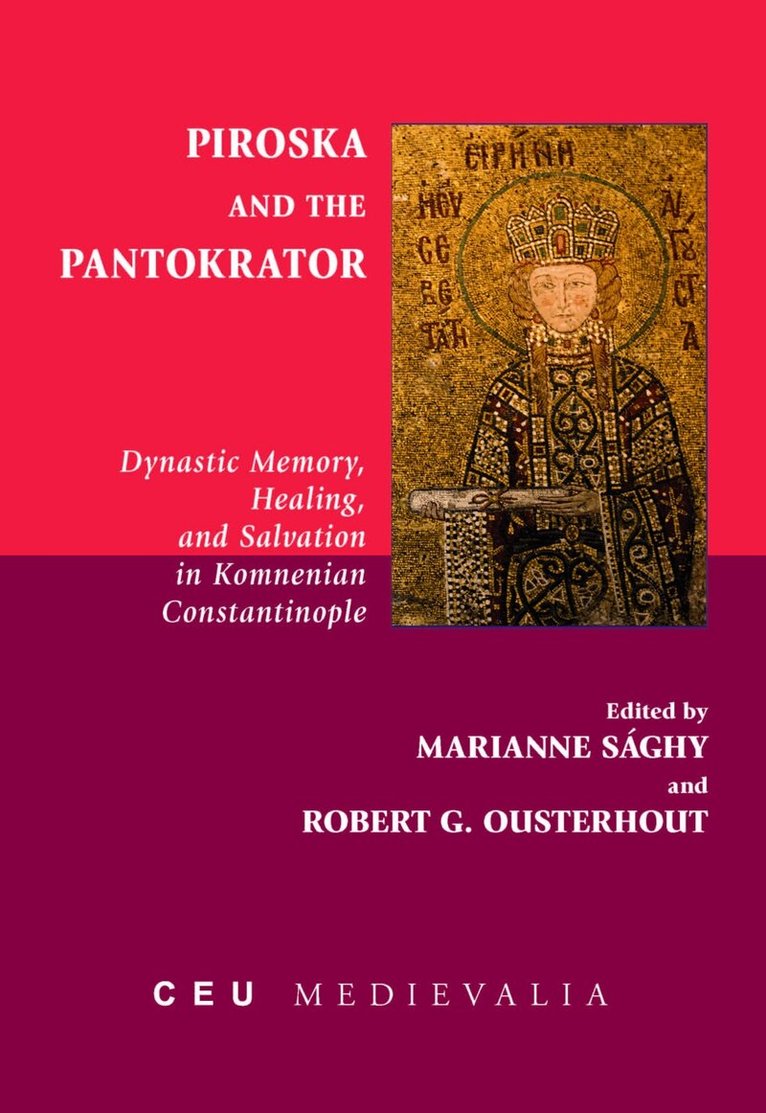
Piroska and the Pantokrator
Dynastic Memory, Healing and Salvation in Komnenian Constantinople
Häftad, Engelska, 2019
887 kr
Skickas inom 10-15 vardagar
This book is about the Christ Pantokrator, an imposing monumental complex serving monastic, dynastic, medical and social purposes in Constantinople, founded by Emperor John II Komnenos and Empress Piroska-Eirene in 1118. Now called the Zeyrek Mosque, the second largest Byzantine religious edifice after Hagia Sophia still standing in Istanbul represents the most remarkable architectural and the most ambitious social project of the Komnenian dynasty.This volume approaches the Pantokrator from a special perspective, focusing on its co-founder, Empress Piroska-Eirene, the daughter of the Hungarian king Ladislaus I. This particular vantage point enables its authors to explore not only the architecture, the monastic and medical functions of the complex, but also Hungarian-Byzantine relations, the cultural and religious history of early medieval Hungary, imperial representation, personal faith and dynastic holiness. Piroska's wedding with John Komnenos came to be perceived as a union of East and West. The life of the Empress, a "sainted ruler," and her memory in early Árpádian Hungary and Komnenian Byzantium are discussed in the context of women and power, monastic foundations, architectural innovations, and spiritual models.