Marine Ganofsky - Böcker
Visar alla böcker från författaren Marine Ganofsky. Handla med fri frakt och snabb leverans.
3 produkter
3 produkter
1 771 kr
Skickas inom 7-10 vardagar
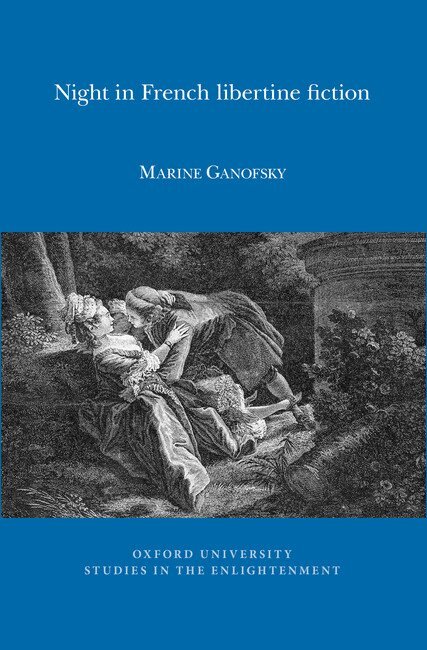
In the age of Enlightenment the concept of night evolved from being a time of dread to a time for pleasure. Between the start of the Régence (1715-1723) and the French Revolution the nocturnal and the erotic became intrinsically connected: shadows and darkness were reconfigured as the object of the philosophes’ fascination, while night was increasingly experienced as the realm of the self. Nowhere is this paradigmatic shift better recorded than in French libertine literature of the long eighteenth century.Marine Ganofsky delves into the night scenes of libertine fiction to analyse how the idea of night was reimagined and represented by writers ranging from Crébillon to Sade. Her original analysis of erotic encounters in pornographic novels, gallant stories and sensual fairy tales reveals how they capture the period’s emancipation from superstitions and traditions. The nocturnal settings of these libertine narratives were the primary means of staging men and women’s hitherto hidden sexual encounters and innermost fantasies, and ultimately illustrate the conquest of night-time terrors in favour of social encounters and amorous intimacy.Libertine nocturnal scenes reflect above all the Enlightenment’s re-invention of shadows less as an obstacle than an incentive to discover the mysteries they harbour. Through her innovative research Marine Ganofsky presents the erotic nights of libertine fiction as a sign that the siècle des Lumières, free to enjoy the charms to be found in, or under, the cover of darkness, was also the siècle de la nuit.
1 771 kr
Skickas inom 7-10 vardagar
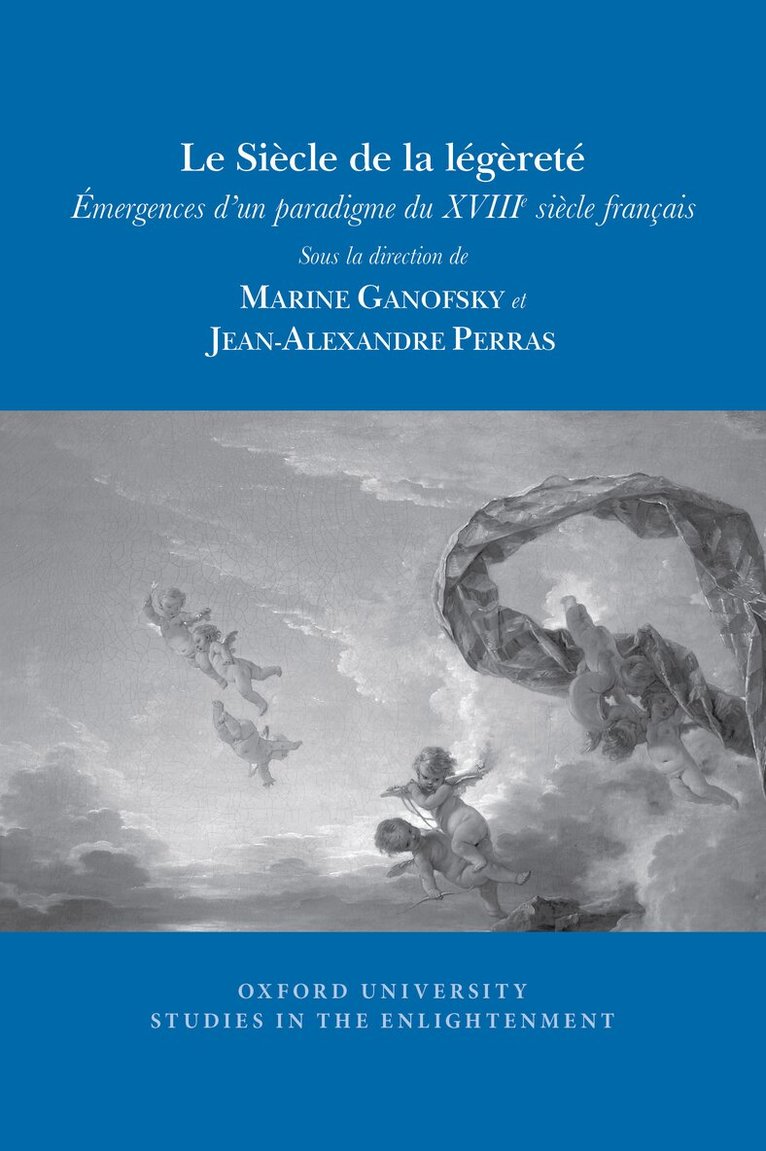
La France est une nation légère – ce lieu commun antique est abondamment repris tout au long du XVIIIe siècle, témoignant de profonds bouleversements axiologiques, scientifiques et éthiques, dont ce volume collectif cherche à mesurer l’importance et les enjeux, en racontant l’histoire d’un autre siècle des Lumières : celle d’un siècle de la Légèreté.Propre aux représentations que le XVIIIe siècle français construit de lui-même, tant par rapport aux siècles qui l’ont précédé que dans une logique de parallèle entre les nations européennes, la légèreté du XVIIIe siècle est un important paradigme de l’historiographie qui s’est constituée sitôt après la Révolution. Les héritiers du XVIIIe siècle ne reconnaissent pas seulement en lui l’âge de la raison et du progrès, des Lumières et des droits du citoyen, mais éprouvent aussi tantôt du mépris, tantôt de la nostalgie pour la prétendue légèreté de ses mœurs, la futilité de ses goûts ou la frivolité de ses enfantillages. Entre la bourgeoisie industrieuse du XIXe siècle tirant profit des représentations voluptueuses des fêtes galantes et l’intérêt de notre époque célébrant l’aimable frivolité du siècle de Marie-Antoinette, le XVIIIe siècle en sa légèreté n’a jamais cessé de séduire certes, mais aussi de questionner le récit progressiste de la raison et de l’utilité dans la définition des valeurs qui fondent notre communauté.Aussi importe-t-il d’interroger les conceptions et les valeurs qui sont associées à la notion de légèreté au XVIIIe siècle, de manière à mieux comprendre dans quelle mesure elle a pu être associée à la fois au caractère de la nation française en général et au XVIIIe siècle en particulier. ---The age-old cliché that France is a light-hearted nation is echoed repeatedly throughout the eighteenth century and bears witness to the deep axiological, scientific and ethical upheavals which this volume explores. By analysing the importance of, and issues at stake in, these transformations, the articles gathered here tell the story of another age of Enlightenment: the story of an age of lightness.Lightness is at the crux of how the French eighteenth century represents itself both in contrast with previous centuries and through parallels between European nations. The concept of lightness therefore constitutes an essential paradigm of the historiography that developed immediately after the French Revolution. The intellectual heirs of the eighteenth century do not only find in this period an age of reason, progress, Enlightenment and citizens’ rights; they also feel, at times, contempt, at other times, nostalgia for the alleged lightness of its mores, the futility of its taste or the frivolity of its childish ways. Between the industrious bourgeoisie of the 19th century exploiting the voluptuous representations of fêtes galantes and the fascination of our own 21st century for the delightful frivolity of Marie-Antoinette’s era, the 18th century in its lightness has never lost its charm. Yet, crucially, it also challenges the progressive narrative of the history of reason and usefulness in the definition of the very values on which our community is built.It is therefore essential to analyse the concepts and values associated to the notion of lightness in the 18th century. Such an approach yields breakthroughs in understanding why, and to what extent, this idea of lightness has been related to the French national character in general as well as, more particularly, to its 18th century.
1 771 kr
Skickas inom 7-10 vardagar
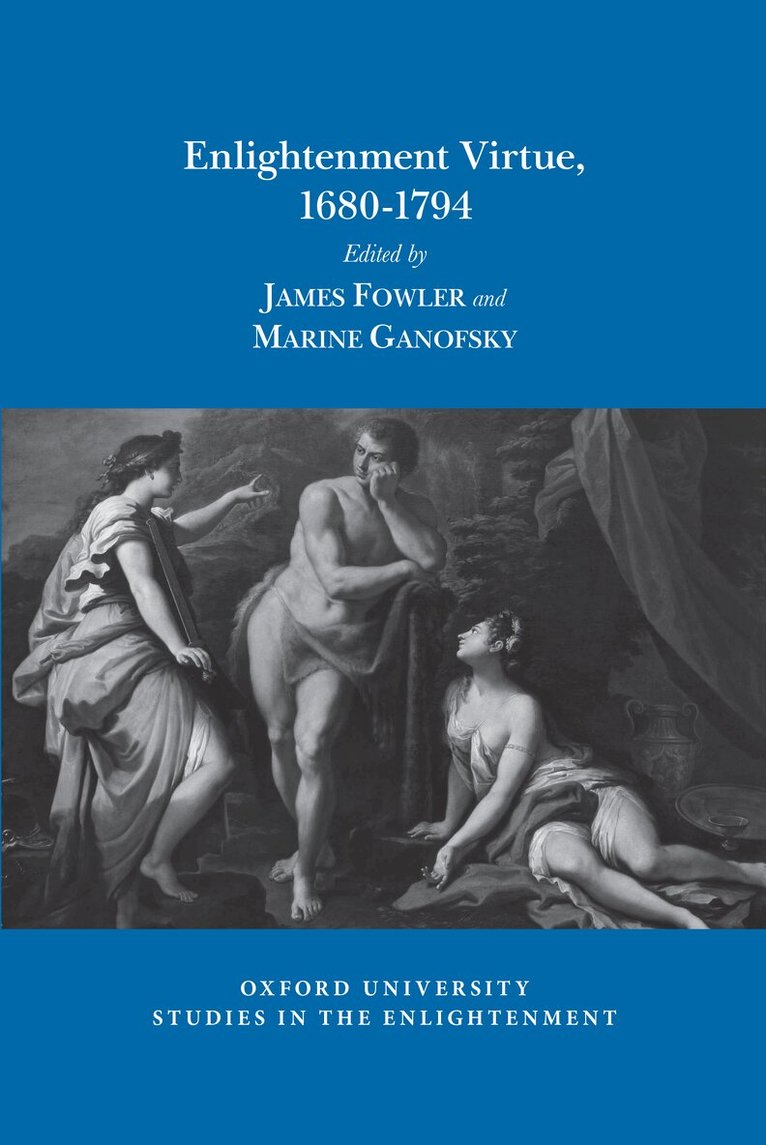
In a speech delivered in 1794, roughly one year after the execution of Louis XVI, Robespierre boldly declared Terror to be an ‘emanation of virtue’. In adapting the concept of virtue to Republican ends, Robespierre was drawing on traditions associated with ancient Greece and Rome. But Republican tradition formed only one of many strands in debates concerning virtue in France and elsewhere in Europe, from 1680 to the Revolution. This collection focuses on moral-philosophical and classical-republican uses of ‘virtue’ in this period – one that is often associated with a ‘crisis of the European mind’. It also considers in what ways debates concerning virtue involved gendered perspectives. The texts discussed are drawn from a range of genres, from plays and novels to treatises, memoirs, and libertine literature. They include texts by authors such as Diderot, Laclos, and Madame de Staël, plus other, lesser-known texts that broaden the volume’s perspective. Collectively, the contributors to the volume highlight the central importance of virtue for an understanding of an era in which, as Daniel Brewer argues in the closing chapter, ‘the political could not be thought outside its moral dimension, and morality could not be separated from inevitable political consequences’.