Jean-Alexandre Perras - Böcker
Visar alla böcker från författaren Jean-Alexandre Perras. Handla med fri frakt och snabb leverans.
3 produkter
3 produkter
355 kr
Skickas inom 5-8 vardagar
1 771 kr
Skickas inom 7-10 vardagar
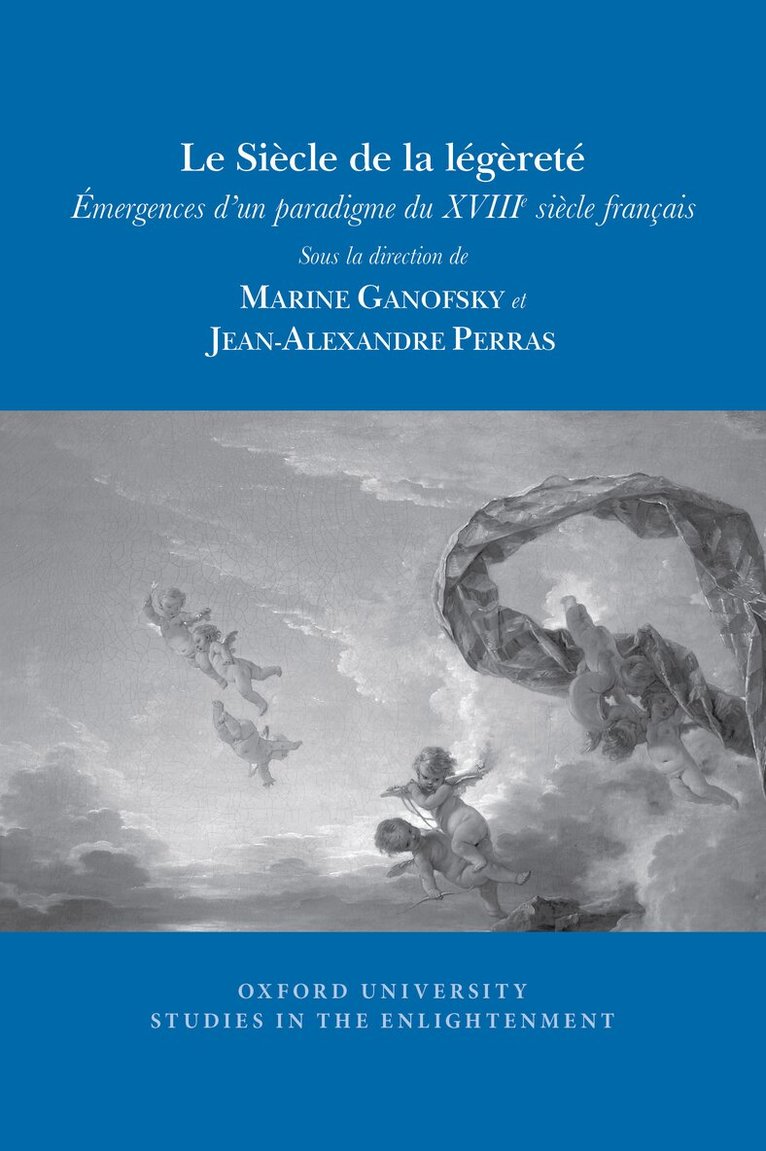
La France est une nation légère – ce lieu commun antique est abondamment repris tout au long du XVIIIe siècle, témoignant de profonds bouleversements axiologiques, scientifiques et éthiques, dont ce volume collectif cherche à mesurer l’importance et les enjeux, en racontant l’histoire d’un autre siècle des Lumières : celle d’un siècle de la Légèreté.Propre aux représentations que le XVIIIe siècle français construit de lui-même, tant par rapport aux siècles qui l’ont précédé que dans une logique de parallèle entre les nations européennes, la légèreté du XVIIIe siècle est un important paradigme de l’historiographie qui s’est constituée sitôt après la Révolution. Les héritiers du XVIIIe siècle ne reconnaissent pas seulement en lui l’âge de la raison et du progrès, des Lumières et des droits du citoyen, mais éprouvent aussi tantôt du mépris, tantôt de la nostalgie pour la prétendue légèreté de ses mœurs, la futilité de ses goûts ou la frivolité de ses enfantillages. Entre la bourgeoisie industrieuse du XIXe siècle tirant profit des représentations voluptueuses des fêtes galantes et l’intérêt de notre époque célébrant l’aimable frivolité du siècle de Marie-Antoinette, le XVIIIe siècle en sa légèreté n’a jamais cessé de séduire certes, mais aussi de questionner le récit progressiste de la raison et de l’utilité dans la définition des valeurs qui fondent notre communauté.Aussi importe-t-il d’interroger les conceptions et les valeurs qui sont associées à la notion de légèreté au XVIIIe siècle, de manière à mieux comprendre dans quelle mesure elle a pu être associée à la fois au caractère de la nation française en général et au XVIIIe siècle en particulier. ---The age-old cliché that France is a light-hearted nation is echoed repeatedly throughout the eighteenth century and bears witness to the deep axiological, scientific and ethical upheavals which this volume explores. By analysing the importance of, and issues at stake in, these transformations, the articles gathered here tell the story of another age of Enlightenment: the story of an age of lightness.Lightness is at the crux of how the French eighteenth century represents itself both in contrast with previous centuries and through parallels between European nations. The concept of lightness therefore constitutes an essential paradigm of the historiography that developed immediately after the French Revolution. The intellectual heirs of the eighteenth century do not only find in this period an age of reason, progress, Enlightenment and citizens’ rights; they also feel, at times, contempt, at other times, nostalgia for the alleged lightness of its mores, the futility of its taste or the frivolity of its childish ways. Between the industrious bourgeoisie of the 19th century exploiting the voluptuous representations of fêtes galantes and the fascination of our own 21st century for the delightful frivolity of Marie-Antoinette’s era, the 18th century in its lightness has never lost its charm. Yet, crucially, it also challenges the progressive narrative of the history of reason and usefulness in the definition of the very values on which our community is built.It is therefore essential to analyse the concepts and values associated to the notion of lightness in the 18th century. Such an approach yields breakthroughs in understanding why, and to what extent, this idea of lightness has been related to the French national character in general as well as, more particularly, to its 18th century.
Del 47 - Cultural Interactions: Studies in the Relationship between the Arts
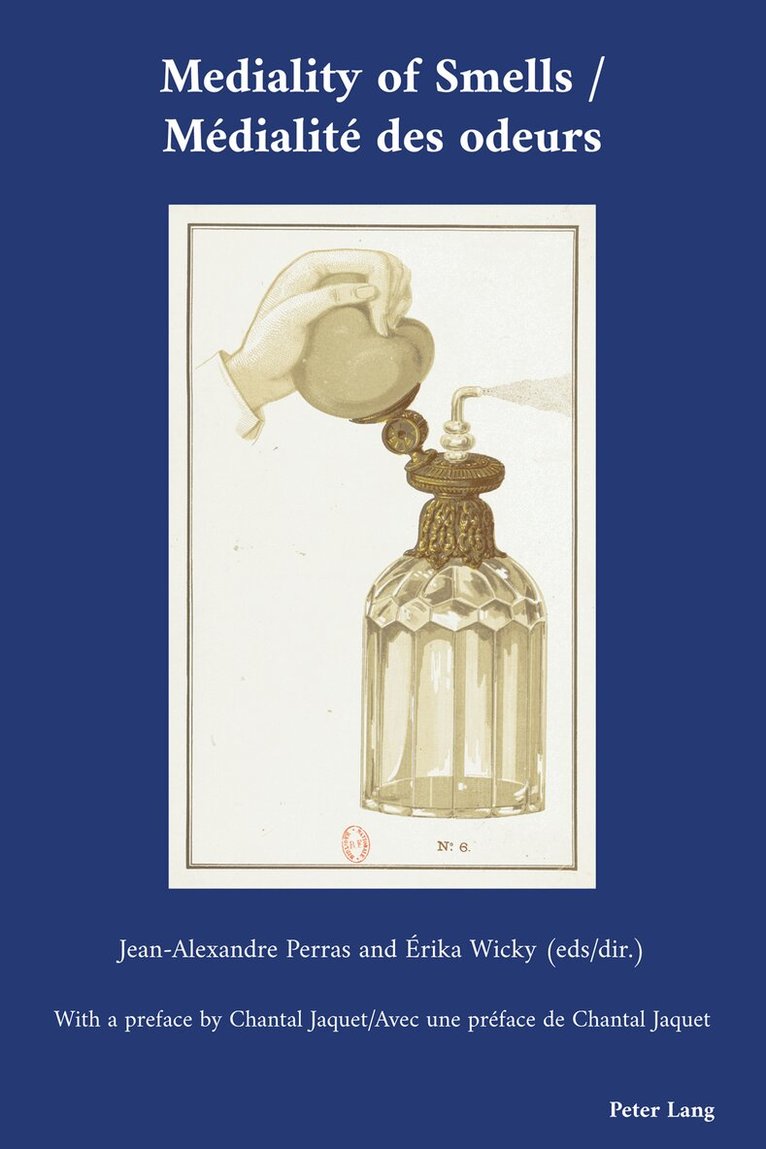
Mediality of Smells / Médialité des odeurs
Häftad, Engelska, 2021
797 kr
Skickas inom 5-8 vardagar
The study of scents and all things olfactory is thriving, a sign of the great interest that our information-based society feels for a sense that seems to offer a direct and immediate experience of reality. But smells resist description and representation, especially given that they are closely linked to individual personal experience, and their perception has changed through time and space in a myriad of ways. This volume aims to contribute to the flourishing multidisciplinary exchanges around smells by examining the question of their mediality, focusing on the mechanisms by which the olfactory experience, as well as the scents themselves, circulate and are diffused, but also by exploring the modes of smell as a medium in itself. Drawing on a wide variety of approaches, cultural zones, and historical periods, this volume gathers the contributions of twenty-one researchers who specialize in this field in order to explore the multiple aspects of olfactory culture, which characterizes and shapes our relations to smells.La richesse de l’actualité en matière d’odeurs et d’odorat témoigne du vif intérêt de nos sociétés de l’information pour un sens qui semble offrir une saisie directe et immédiate du réel. Circulant de manière très variable à travers le temps et l’espace, les odeurs font l’objet d’une perception qui résiste d’autant plus à la description et à la représentation qu’elle reste individuelle et liée à l’histoire personnelle. Ce volume vise à contribuer aux échanges interdisciplinaires sur l’olfaction à travers la question de la médialité, en s’interrogeant sur les mécanismes par lesquels l’expérience olfactive et les odeurs sont transmises et diffusées, mais aussi en explorant les modalités de l’odeur comme médium. Proposant une diversité d’approches, d’aires culturelles et de périodes, ce volume rassemble les contributions de vingt-et-un spécialistes qui étudient comment la culture olfactive caractérise et construit nos rapports aux odeurs.