Marinus G. Bos - Böcker
Visar alla böcker från författaren Marinus G. Bos. Handla med fri frakt och snabb leverans.
3 produkter
3 produkter
1 577 kr
Skickas inom 10-15 vardagar
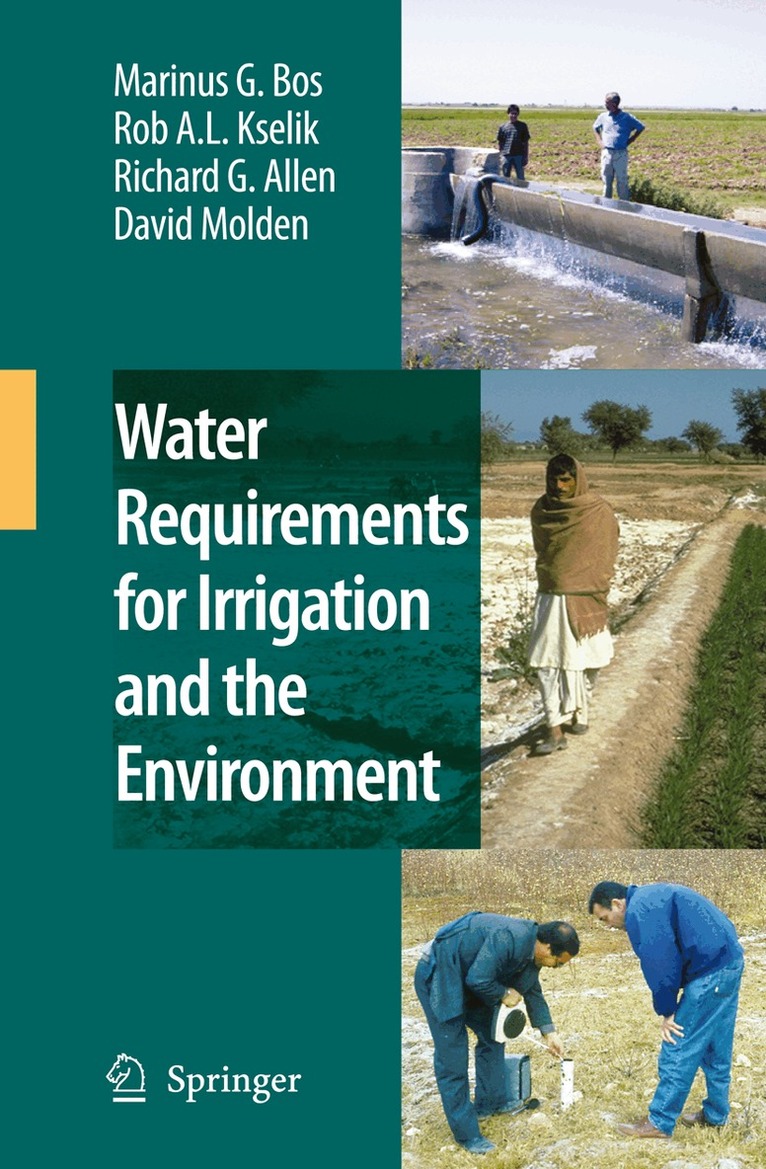
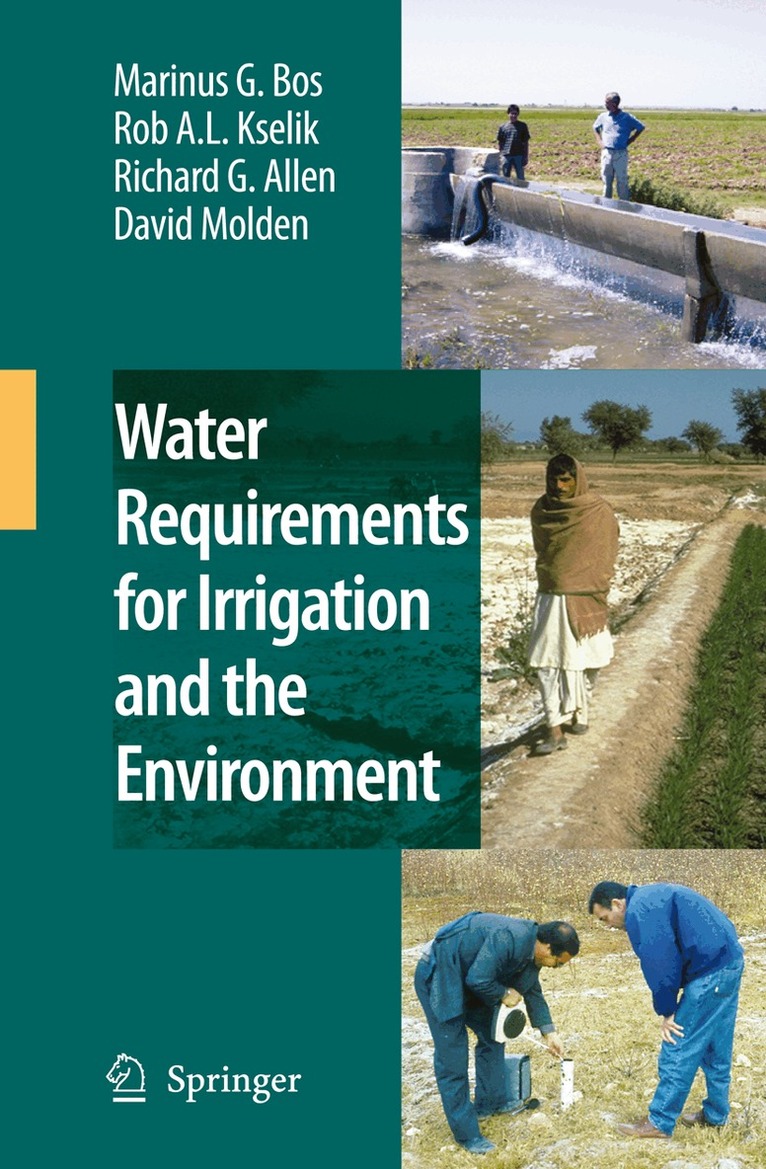
Irrigated agriculture produces about 40% of all food and fibre on about 16% of all cropped land. As such, irrigated agriculture is a productive user of resources; both in terms of yield per cropped area and in yield per volume of water consumed. Many irrigation projects, however, use (divert or withdraw) much more water than consumed by the crop. The non-consumed fraction of the water may cause a variety of undesirable effects ranging from water-logging and salinity within the irrigated area to downstram water pollution.This book discusses all components of the water balance of an irrigated area; evapotranspiration (Ch.2), effective precipitation (Ch.3) and capillary rise from the groundwater table (Ch.4). Chapter 5 then combines all components into a water management strategy that balances actual evapotranspiration (and thus crop yield) with the groundwater balance of the irrigated area (for a substainable environment). Chapter 6 presents CRIWAR 3.0, a simulation program that combines all water balance components into a single simulation procedure. The chapter describes the use of the CRIWAR software for developing water requirement tables and other useful information based on the selected water management strategy. This version greatly expands upon the capabilities of previously published programs.
1 590 kr
Skickas inom 10-15 vardagar
Irrigated agriculture produces about 40% of all food and fibre on about 16% of all cropped land. As such, irrigated agriculture is a productive user of resources; both in terms of yield per cropped area and in yield per volume of water consumed. Many irrigation projects, however, use (divert or withdraw) much more water than consumed by the crop. The non-consumed fraction of the water may cause a variety of undesirable effects ranging from water-logging and salinity within the irrigated area to downstram water pollution.This book discusses all components of the water balance of an irrigated area; evapotranspiration (Ch.2), effective precipitation (Ch.3) and capillary rise from the groundwater table (Ch.4). Chapter 5 then combines all components into a water management strategy that balances actual evapotranspiration (and thus crop yield) with the groundwater balance of the irrigated area (for a substainable environment). Chapter 6 presents CRIWAR 3.0, a simulation program that combines all water balance components into a single simulation procedure. The chapter describes the use of the CRIWAR software for developing water requirement tables and other useful information based on the selected water management strategy. This version greatly expands upon the capabilities of previously published programs.
Inter-Relationship Between Irrigation, Drainage and the Environment in the Aral Sea Basin
Häftad, Engelska, 2011
1 590 kr
Skickas inom 10-15 vardagar
The irrigated area in the Aral Sea basin totals about 7. 5 million hectare. Part of the water supplied to this area is consumed by the irrigated crop; the remainder of the supplied water drains to the groundwater basin, to downstream depressions, or back to the rivers. During its use, however, this drained part of the water accumulates salts and chemicals. The disposal of this polluted water causes a variety of (environmental) problems. If the percentage consumed water of the total water supply to an irrigated area (the so-called overall consumed ratio) can be increased, less water needs to be drained. This alleviates part of the related (environmental) problems. Further, if the overall consumed ratio for the above 7. 5 million hectare is improved, less water needs to be diverted from the rivers. Hence, more water can flow towards the Aral Sea. As mentioned above, part of the non-consumed irrigation water drains to the groundwater basin. Commonly, the natural discharge capacity of this basin is insufficient to handle this imported water. As a result, the groundwater table rises towards the land surface causing waterlogging. In (semi-)arid zones this waterlogging triggers a soil salinity problem resulting to a significant reduction in crop yields. The artificial increase of the discharge capacity, and lowering of the groundwater table, solves the soil salinity problem.