Inbunden, Engelska, 2009
390 kr
Skickas inom 10-15 vardagar
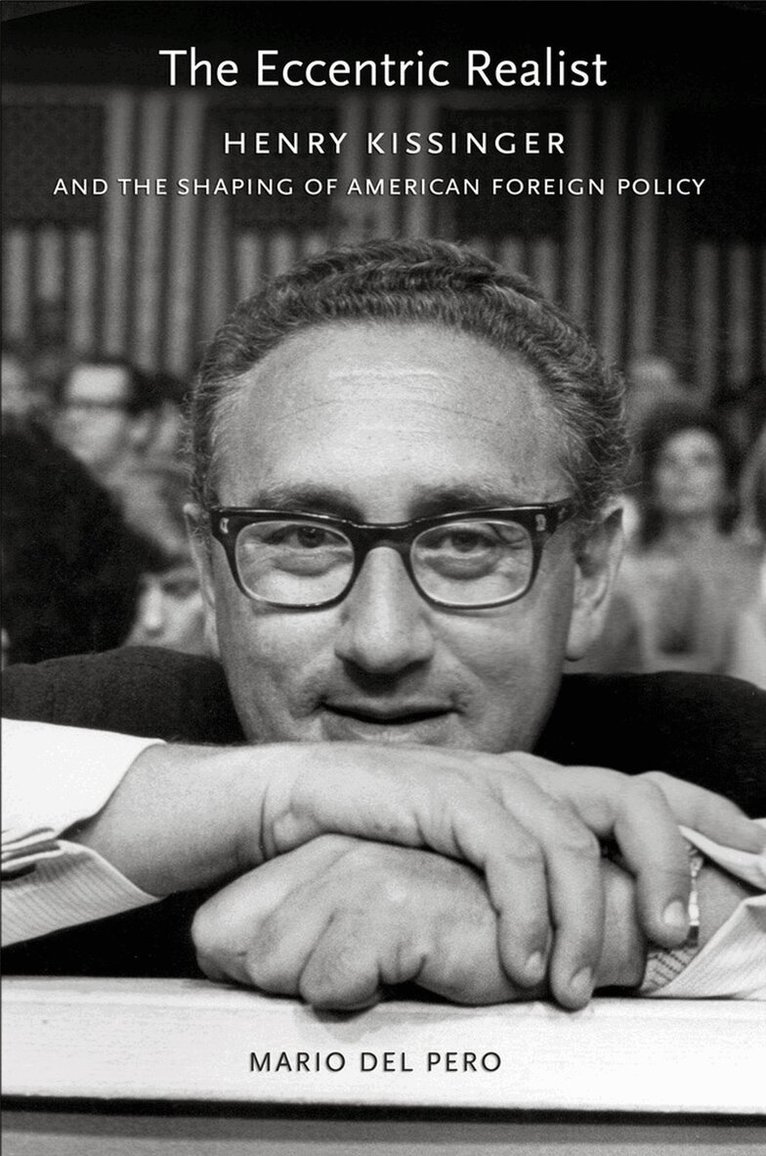
During the 2008 election season, the Democratic and Republican presidential candidates both aspired to be understood as foreign policy "realists" in the mold of Henry Kissinger. Kissinger, who is distrusted on the neoconservative right for his skepticism about American exceptionalism and on the liberal left for his amoral, realpolitik approach, once again stood as the sage of foreign relations and the wise man who rises above partisan politics. In The Eccentric Realist, Mario Del Pero questions this depiction of Kissinger. Lauded as the foreign policy realist par excellence, Kissinger, as Del Pero shows, has been far more ideological and inconsistent in his policy formulations than is commonly realized.Del Pero considers the rise and fall of Kissinger's foreign policy doctrine over the course of the 1970s—beginning with his role as National Security Advisor to Nixon and ending with the collapse of détente with the Soviet Union after Kissinger left the scene as Ford's outgoing Secretary of State. Del Pero shows that realism then (not unlike realism now) was as much a response to domestic politics as it was a cold, hard assessment of the facts of international relations. In the early 1970s, Americans were weary of ideological forays abroad; Kissinger provided them with a doctrine that translated that political weariness into foreign policy. Del Pero argues that Kissinger was keenly aware that realism could win elections and generate consensus. Moreover, over the course of the 1970s it became clear that realism, as practiced by Kissinger, was as rigid as the neoconservativism that came to replace it.In the end, the failure of the détente forged by the realists was not the defeat of cool reason at the hands of ideologically motivated and politically savvy neoconservatives. Rather, the force of American exceptionalism, the touchstone of the neocons, overcame Kissinger's political skills and ideological commitments. The fate of realism in the 1970s raises interesting questions regarding its prospects in the early years of the twenty-first century.