Mario Valdes – författare
Visar alla böcker från författaren Mario Valdes. Handla med fri frakt och snabb leverans.
19 produkter
Identity of the Literary Text
Häftad, 1985
505 kr
Lägg i varukorg
Literary criticism today is dominated by the debate about whether texts have a fixed identity with established meaning or a variable identity with changing meaning. The very nature of what the critic does and what he can provide for his readers is being questioned; the challenge to the traditional …
World-Making
The Literary Truth-Claim and the Interpretation of Texts
Av Mario Valdes
Häftad, 1991
313 kr
Lägg i varukorg
In literary texts writers express their views on a great variety of issues, some of which they take seriously, others of which they treat with levity. Even in those statements to which cultural circumstances assign a transcendent meaning there is a wide range of commitment from marginal to central …
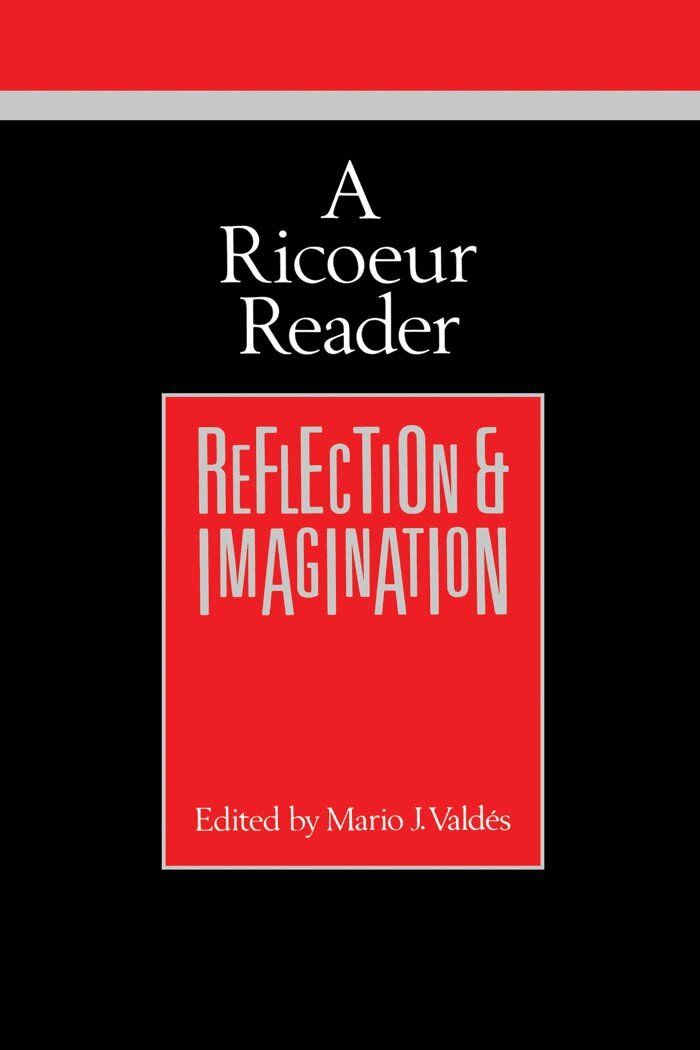
Ricoeur Reader
Reflection and Imagination
Häftad, 1991
623 kr
Lägg i varukorg
Paul Ricoeur is one of the most important modern literary theorists and a philosopher of world renown. This collection brings together his published articles, papers, reviews, and interviews that focus on literary theory and criticism.The first of four sections includes early pieces that explore …
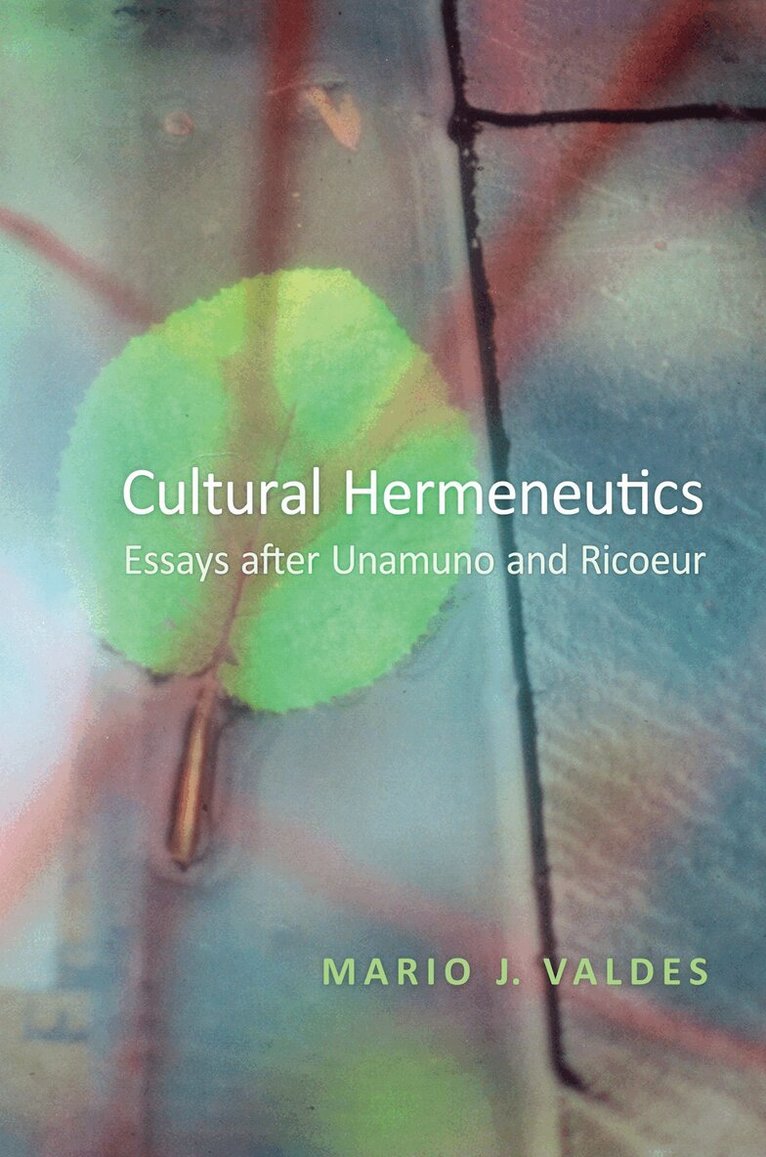
Cultural Hermeneutics
Essays After Unamuno and Ricoeur
Av Mario Valdes
E-bok, 2016
766 kr
Lägg i varukorg
In Cultural Hermeneutics, Mario J. ValdÉs offers a synthesis of the hermeneutic philosophies of Miguel de Unamuno and Paul Ricoeur, a dialectical method that has formed the basis for many of ValdÉs’ own studies in comparative literature. As ValdÉs explains in these insightful essays, what Unamuno …
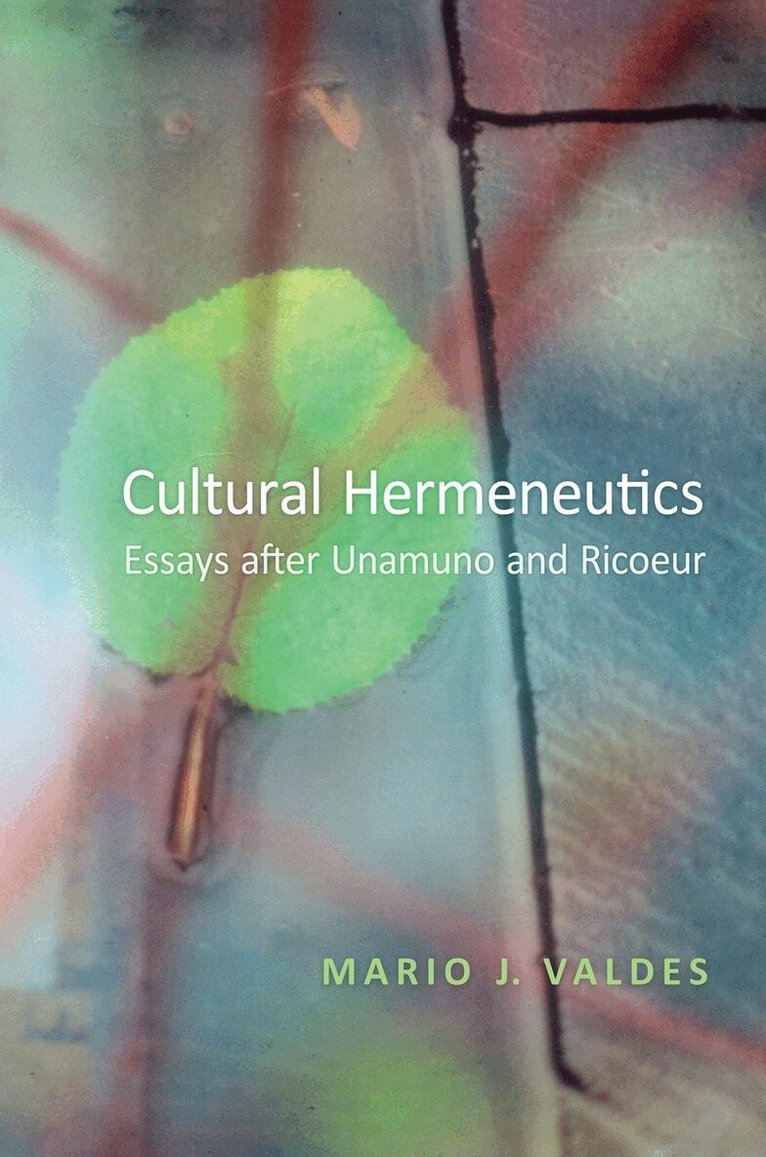
Cultural Hermeneutics
Essays After Unamuno and Ricoeur
Av Mario Valdes
E-bok, 2016
766 kr
Lägg i varukorg
In Cultural Hermeneutics, Mario J. ValdÉs offers a synthesis of the hermeneutic philosophies of Miguel de Unamuno and Paul Ricoeur, a dialectical method that has formed the basis for many of ValdÉs’ own studies in comparative literature. As ValdÉs explains in these insightful essays, what Unamuno …
Cultural Hermeneutics
Essays After Unamuno and Ricoeur
Av Mario Valdes
Inbunden, 2016
579 kr
Lägg i varukorg
In Cultural Hermeneutics, Mario J. ValdÉs offers a synthesis of the hermeneutic philosophies of Miguel de Unamuno and Paul Ricoeur, a dialectical method that has formed the basis for many of ValdÉs’ own studies in comparative literature. As ValdÉs explains in these insightful essays, what Unamuno …
Ricoeur Reader
Reflection and Imagination
E-bok, 1991
1331 kr
Lägg i varukorg
Paul Ricoeur is one of the most important modern literary theorists and a philosopher of world renown. This collection brings together his published articles, papers, reviews, and interviews that focus on literary theory and criticism.The first of four sections includes early pieces that explore …
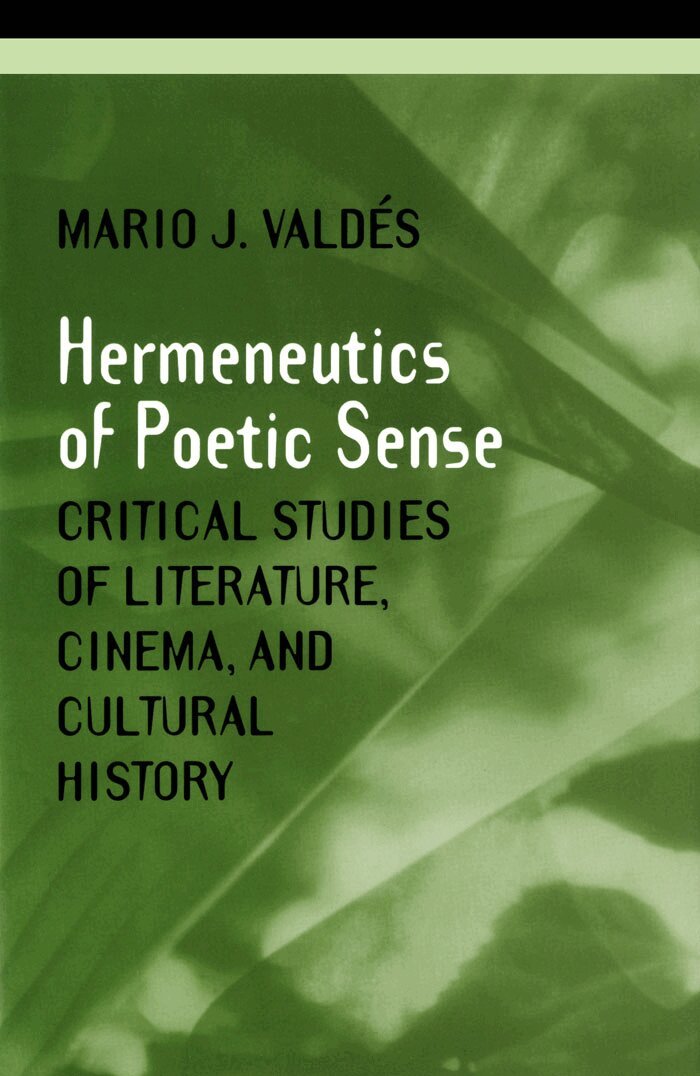
Hermeneutics of Poetic Sense
Av Mario Valdes
E-bok, 1998
1050 kr
Lägg i varukorg
In his earlier books, Shadows in the Cave (1982) and Phenomenological Hermeneutics and the Study of Literature (1987), Mario Valdés laid the foundation for his phenomenological-hermeneutic approach to literary criticism. With this book he continues the development of his ideas, using his views of …
World-Making
The Literary Truth-Claim and the Interpretation of Texts
Av Mario Valdes
E-bok, 1992
404 kr
Lägg i varukorg
In literary texts writers express their views on a great variety of issues, some of which they take seriously, others of which they treat with levity. Even in those statements to which cultural circumstances assign a transcendent meaning there is a wide range of commitment from marginal to central …
Identity of the Literary Text
E-bok, 1985
642 kr
Lägg i varukorg
Literary criticism today is dominated by the debate about whether texts have a fixed identity with established meaning or a variable identity with changing meaning. The very nature of what the critic does and what he can provide for his readers is being questioned; the challenge to the traditional …
Shadows in the Cave
A Phenomenological Approach to Literary Criticism Based on Hispanic Texts
Av Mario Valdes
E-bok, 1982
459 kr
Lägg i varukorg
Professor Valdes presents a theory of literary criticism based on phenomenological philosophy – primarily the work of Husserl, Ingarden, Merleau-Ponty, and Ricoeur. His basic argument is that literary texts are inexhaustible sources of imaginative creativity for their readers, and, further, that …
Interpretation of Narrative
E-bok, 1978
469 kr
Lägg i varukorg
This volume contains an edited selection of the papers read at the International Colloquium on Interpretation of Narrative held at the University of Toronto, 24 to 27 March 1976 by the Graduate Programme in Comparative Literature. The papers in the first part all deal with the methodology of …
Unamuno Source Book
A Catalogue of Readings and Acquisitions with an Introductary Essay on Unamuno's Dialectical Enquiry
Av Mario Valdes, Maria Elena de Valdes
E-bok, 1973
642 kr
Lägg i varukorg
Miguel de Unamuno (d. 1936), one of the most influential of modern Spanish writers and thinkers, has been described as Spain’s richest mind of the twentieth century. This book provides a bibliography of the approximately 5,700 books in his private library in Salamanca and includes most of his …
Phenomenological Hermeneutics and the Study of Literature
Av Mario Valdes
E-bok, 1987
413 kr
Lägg i varukorg
In the intensity of current theoretical debates, critics and students of literature are sometimes in danger of losing sight of the most basic principles and presuppositions of their discipline, of the underlying connections between attitudes to truth and the study of literature. Aware of this …
Phenomenological Hermeneutics and the Study of Literature
Av Mario Valdes
Häftad, 1987
313 kr
Lägg i varukorg
In the intensity of current theoretical debates, critics and students of literature are sometimes in danger of losing sight of the most basic principles and presuppositions of their discipline, of the underlying connections between attitudes to truth and the study of literature. Aware of this …
Interpretation of Narrative
Häftad, 1978
361 kr
Lägg i varukorg
This volume contains an edited selection of the papers read at the International Colloquium on Interpretation of Narrative held at the University of Toronto, 24 to 27 March 1976 by the Graduate Programme in Comparative Literature. The papers in the first part all deal with the methodology of …
Unamuno Source Book
A Catalogue of Readings and Acquisitions with an Introductary Essay on Unamuno's Dialectical Enquiry
Av Mario Valdes, Maria Elena de Valdes
Häftad, 1973
505 kr
Lägg i varukorg
Miguel de Unamuno (d. 1936), one of the most influential of modern Spanish writers and thinkers, has been described as Spain’s richest mind of the twentieth century. This book provides a bibliography of the approximately 5,700 books in his private library in Salamanca and includes most of his …
Shadows in the Cave
A Phenomenological Approach to Literary Criticism Based on Hispanic Texts
Av Mario Valdes
Häftad, 1982
361 kr
Lägg i varukorg
Professor Valdes presents a theory of literary criticism based on phenomenological philosophy – primarily the work of Husserl, Ingarden, Merleau-Ponty, and Ricoeur. His basic argument is that literary texts are inexhaustible sources of imaginative creativity for their readers, and, further, that …
Hermeneutics of Poetic Sense
Av Mario Valdes
Inbunden, 1998
778 kr
Tillfälligt slut
In his earlier books, Shadows in the Cave (1982) and Phenomenological Hermeneutics and the Study of Literature (1987), Mario Valdés laid the foundation for his phenomenological-hermeneutic approach to literary criticism. With this book he continues the development of his ideas, using his views of …