Mark Bertness - Böcker
Visar alla böcker från författaren Mark Bertness. Handla med fri frakt och snabb leverans.
2 produkter
2 produkter
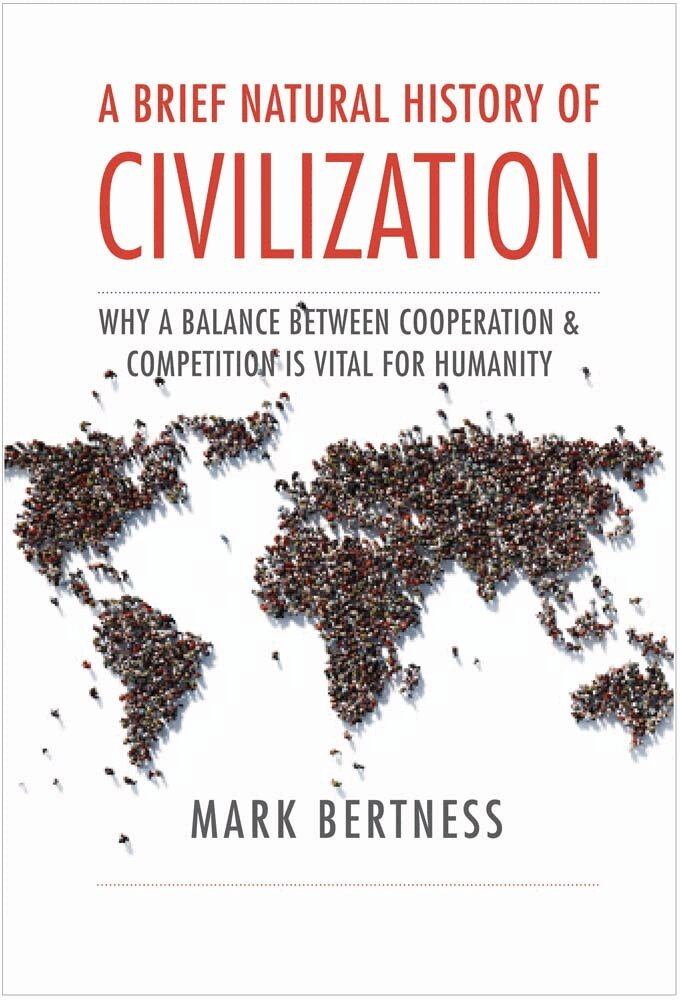
Brief Natural History of Civilization
Why a Balance Between Cooperation & Competition Is Vital to Humanity
Inbunden, Engelska, 2020
264 kr
Skickas inom 7-10 vardagar
A compelling evolutionary narrative that reveals how human civilization follows the same ecological rules that shape all life on Earth Offering a bold new understanding of who we are, where we came from, and where we are going, noted ecologist Mark Bertness argues that human beings and their civilization are the products of the same self‑organization, evolutionary adaptation, and natural selection processes that have created all other life on Earth. Bertness follows the evolutionary process from the primordial soup of two billion years ago through today, exploring the ways opposing forces of competition and cooperation have led to current assemblages of people, animals, and plants. Bertness’s thoughtful examination of human history from the perspective of natural history provides new insights about why and how civilization developed as it has and explores how humans, as a species, might have to consciously overrule our evolutionary drivers to survive future challenges.
2 778 kr
Skickas inom 5-8 vardagar
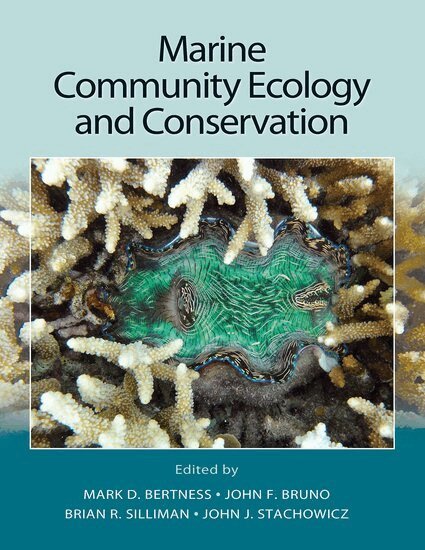
Published by Sinauer Associates, an imprint of Oxford University Press. Marine Community Ecology and Conservation was written to give advanced undergraduate and graduate students a current overview of what is known about the structure, organization, and conservation of organism assemblages that live on the sea floor. It largely focuses on advancements over the past decade since the publication of Marine Community Ecology (2001). Each chapter is written by leading researchers to give students an up-to-date look at these communities, and what remains to be learned about them.The book is organized into three parts. The first part explores general processes that generate pattern in benthic communities. These introductory chapters examine how physical and biological forces interacting with historical and genetic constraints operate to structure marine communities. The second part examines the ecology of specific marine benthic community types, ranging from rocky shores and soft substrate habitats to kelp forests to coral reefs. These chapters are intended to be the most current summaries available of our understanding of these communities. The final part examines conservation and management issues of marine communities. The closing chapters emphasize how pervasively and profoundly marine communities are impacted by humans and outlines how we can use our understanding of these systems to manage and preserve the valuable services and resources they provide.Marine Community Ecology and Conservation is extensively referenced and includes a bibliography of over 5,000 citations. It is suitable as a text for advanced marine ecology courses and seminars, as well as a general reference for students and researchers.