• Fri frakt över 249 kr
  • •
  • Snabba leveranser
  • •
  • Billiga böcker
Kundservice

Du är på sajten för privatpersoner.

Företag, bibliotek eller offentlig verksamhet?

Du handlar på classic.bokus.com, där alla dina funktioner finns intakta.
Till classic.bokus.com
Bokus logotyp. Gå till startsidan.
  • Erbjudanden
  • Nyheter
  • Student
  • Topplistor
  • Barn & ungdom
  • Bokus Play
  • E-böcker
  • Pocketböcker
  • Spel & pussel

10% rabatt på allt med kod: NYSTART10 →

Sidfot

Mina sidor

    Hjälp

    • Kundservice
    • Vanliga frågor och svar
    • Frakt och leverans
    • Retur vid ångerrätt
    • Reklamera vara
    • Betalning
    • Köpvillkor
    • Allmänna villkor
    • Information om webbplatsens tillgänglighet

    Om Bokus

    • Om oss
    • Pressrum
    • För studenter
    • För företag
    • För bibliotek och offentlig verksamhet
    • För leverantörer
    • Hållbarhet

    Populärt

    • Aktuella erbjudanden
    • Presentkort
    • Studentlitteratur
    • Nya böcker
    • Topplistor
    • Signerade böcker
    • Engelska böcker

    Inspiration

    • Boktips
    • BookTok
    • Populära bokserier
    • Barnbokskaraktärer
    • Populära författare
    Logotyp för Bokus
    Följ oss på Facebook (extern länk)Följ oss på Instagram (extern länk)Följ oss på YouTube (extern länk)Följ oss på TikTok (extern länk)
    bokus @ CookiesAnpassa cookiesIntegritetspolicyKöpvillkor
    Till Citymail hemsida (extern länk)Till Budbee hemsida (extern länk)Till Postnord hemsida (extern länk)Till Schenker hemsida (extern länk)Till Early Bird hemsida (extern länk)Till Walleys hemsida (extern länk)
    1. Naturvetenskap och teknik
    2. Matematik och naturvetenskap
    3. Biologi
    4. Biovetenskap

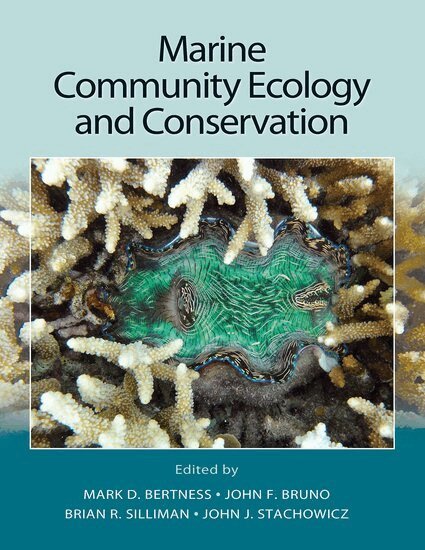
    Marine Community Ecology and Conservation

    AvMark Bertness,John Bruno

    Inbunden, Engelska, 2013

    2 976 kr

    Beställningsvara. Skickas inom 5-8 vardagar. Fri frakt över 249 kr.

    Beskrivning

    Published by Sinauer Associates, an imprint of Oxford University Press. Marine Community Ecology and Conservation was written to give advanced undergraduate and graduate students a current overview of what is known about the structure, organization, and conservation of organism assemblages that live on the sea floor. It largely focuses on advancements over the past decade since the publication of Marine Community Ecology (2001). Each chapter is written by leading researchers to give students an up-to-date look at these communities, and what remains to be learned about them.The book is organized into three parts. The first part explores general processes that generate pattern in benthic communities. These introductory chapters examine how physical and biological forces interacting with historical and genetic constraints operate to structure marine communities. The second part examines the ecology of specific marine benthic community types, ranging from rocky shores and soft substrate habitats to kelp forests to coral reefs. These chapters are intended to be the most current summaries available of our understanding of these communities. The final part examines conservation and management issues of marine communities. The closing chapters emphasize how pervasively and profoundly marine communities are impacted by humans and outlines how we can use our understanding of these systems to manage and preserve the valuable services and resources they provide.Marine Community Ecology and Conservation is extensively referenced and includes a bibliography of over 5,000 citations. It is suitable as a text for advanced marine ecology courses and seminars, as well as a general reference for students and researchers.

    Produktinformation

    • Utgivningsdatum:2013-10-31
    • Mått:221 x 284 x 27 mm
    • Vikt:1 678 g
    • Format:Inbunden
    • Språk:Engelska
    • Antal sidor:560
    • Förlag:OUP USA
    • ISBN:9781605352282

    Utforska kategorier

    • Biovetenskap inom Naturvetenskap och teknik
    • Marinbiologi inom Naturvetenskap och teknik

    Mer om författaren

    Mark Bertness is Robert Brown Professor of Biology at Brown University. He was born in Tacoma, Washington and grew up exploring the shores of Puget Sound. He received his undergraduate degree from the University of Puget Sound in 1971. He has been at Brown University since 1980. Dr. Bertness is the author of Atlantic Shoreline Ecology: A Natural History, published by Princeton University Press in 2006. His research focuses on the structure, dynamics and conservation of shoreline communities--particularly salt marsh plant communities--and the sessile invertebrate and seaweed communities of rocky shores.John Bruno is a marine ecologist and Professor at The University of North Carolina at Chapel Hill. His research is focused on marine biodiversity, coral reef ecology and conservation, and the impacts of climate change on marine ecosystems. He earned his Ph.D. from Brown University in Ecology and Evolutionary Biology, and was a postdoctoral fellow at Cornell University in disease ecology. Dr. Bruno is currently working primarily in Belize, the Bahamas, Cuba, and the Galapagos Islands. He is an avid blogger and co-developer of the oceans website SeaMonster.Brian Silliman is the Rachel Carson Associate Professor of Marine Conservation Biology in the Nicholas School of the Environment at Duke University. He holds both B.A. and M.S. degrees from the University of Virginia, and completed his Ph.D. in Ecology and Evolutionary Biology at Brown University. Dr. Silliman was named a David H. Smith Conservation Fellow with The Nature Conservancy in 2004 and a Visiting Professor with the Royal Netherlands Society of Arts and Sciences in 2011. He has also received several awards, including the Young Investigator Award from the American Society of Naturalists (2006), a Young Investigator Grant Award from the Andrew Mellon Foundation (2007), and a NSF Career Grant Award (2011). Dr. Silliman has published thirteen book chapters and over ninety peer reviewed journal articles, and co-edited the book Human Impacts on Salt Marshes: A Global Perspective (with T. Grosholtz and M. D. Bertness, 2009).Jay Stachowicz is Professor of Ecology and Evolution at The University of California Davis. He was born in Springfield, Massachusetts and grew up exploring the shores of Cape Cod Bay. He received his undergraduate degree from Dartmouth College in 1993, and did his doctoral work with Mark Hay at the University of North Carolina Chapel Hill, studying the ecology and evolution of mutualistic interactions between crabs and their coral or seaweed host-plants. He has been at UC Davis since 2000. Dr. Stachowicz co-edited the book Species Invasions: Insights into Ecology, Evolution, and Biogeography, published by Sinauer Associates in 2005. He was awarded the George Mercer Prize from the Ecological Society of America in 2004 and the UC Davis Academic Senate Teaching Award in 2012. He is also an Aldo Leopold Leadership Fellow.

    Recensioner i media

    In the second edition of Marine Community Ecology and Conservation, Bertness and co-editors provide an update of the dominant elements of marine community ecology as well as the now maturing science of our generation: conservation. The editors state that the book is intended to fill intellectual gaps and update readers on new developments in applied ecology in the oceans. The book targets upper-level undergraduate to graduate level users. We feel that the book achieves this goal and is a very useful resource for graduate-level readers.

    Innehållsförteckning

    • Forward by JBC Jackson and Robert Treat Paine.- 1. A Historical Perspective of Marine Community Ecology; John F. Bruno, Brian R. Silliman, John J. Stachowicz and Mark D. Bertness.- PART 1: PROCESSES THAT GENERATE PATTERN IN MARINE COMMUNITIES.- 2. The Physical Context of Marine Communities; Marc Weissburg, Brian Helmuth and Jon Witman.- 3. Foundation Species in Marine Ecosystems; Andrew H. Altieri and Johan van de Koppel.- 4. Marine Dispersal, Ecology, and Conservation; Stephen R. Palumbi and Malin L. Pinsky.- 5. The Role of Infectious Disease in Marine Communities; Kevin D. Lafferty and C. Drew Harvell.- 6. Biodiversity and Ecosystem Function: Does Pattern Influence Process?; Mary I. O'Connor and Jarrett E. Byrnes.- 7. The Biogeography of Marine Communities; Eric Sanford.- 8. Historical Ecology: Informing the Future by Learning from the Past; Heike K. Lotze and Loren McClenachan.- PART 2: COMMUNITY TYPES.- 9. Intertidal Rocky Shores; Lisandro Benedetti-Cecchi and Geoffrey C. Trussell.- 10. Soft Sediment Communities; James E. Byers and John H. Grabowski.- 11. Salt Marshes; Mark D. Bertness and Brian R. Silliman.- 12. Ecology of Seagrass Communities; Emmett Duffy, Randall Hughes and Per Moksnes.- 13. Coral Reef Ecosystems: A Decade of Discoveries; Isabelle M. Côté and Nancy Knowlton.- 14. Kelp Beds; Robert Steneck and Craig Johnson.- 15. Pelagic Communities; Jon Fisher and Ken Frank.- 16. Phytoplankton Communities; Kyle F. Edwards and Elena Litchman.- 17. Deep Sea Hydrothermal Vent Communities; Lauren S. Mullineaux.- PART 3: CONSERVATION.- 18. Services of Marine Ecosystems: A Quantitative Perspective; Edward B. Barbier, Heather M. Leslie and Fiorenza Micheli.- 19. Threats to Marine Ecosystems: Climate Change and Bottom-up Forcing; John Bruno and C. Harley.- 20. Threats to Marine Ecosystems: Overfishing and Habitat Degradation; Boris Worm and Hunter S. Lenihan.- 21. Ecosystem Based Approaches to Marine Conservation and Management; Benjamin S. Halpern and Tundi Agardy.- 22. Marine Restoration Ecology; Sean P. Powers and Katharyn E. Boyer.- 23. The Future of Marine Conservation and Management; Mary Ruckelshaus, Peter Kareiva and Larry Crowder.