Mark C. Elliott - Böcker
Visar alla böcker från författaren Mark C. Elliott. Handla med fri frakt och snabb leverans.
4 produkter
4 produkter
450 kr
Skickas inom 5-8 vardagar
'How to succeed in organic chemistry' gives the reader a solid understanding of the principles of organic reaction mechanisms, such that they can draw structures, stereoisomers and reaction mechanisms with confidence. Throughout, the author speaks the language of students to build their confidence and interest.At heart, the book promotes active learning to ensure the necessary skills become so ingrained that they become something students simply cannot forget, and do not need to revise. As such, the book structures learning so that the reader encounters the right things at the right time, helping to 'internalise' key concepts.Concepts, explanations and examples are presented in short, easy-to-read chapters, each of which explores one of a number of themes, including 'Basics', 'Habits', 'Common error', 'Reaction detail', and 'Practice'.Digital formats and resourcesHow to Succeed in Organic Chemistry is supported by online resources and is available for students and institutions to purchase in a variety of formats.- The e-book includes more than 60 author videos which are embedded in the text, and these discuss and offer solutions to problems posed in the text, providing a fully immersive experience and extra learning support. www.oxfordtextbooks.co.uk/ebooks- These videos are also available as a stand-alone online resource for use alongside the print book, where lecturers can also access the figures from the book for use in their teaching.
2 289 kr
Skickas inom 10-15 vardagar
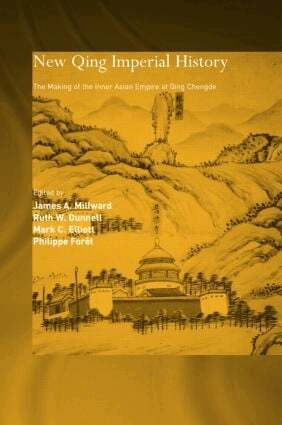
New Qing Imperial History uses the Manchu summer capital of Chengde and associated architecture, art and ritual activity as the focus for an exploration of the importance of Inner Asia and Tibet to the Qing Empire (1636-1911). Well-known contributors argue that the Qing was not simply another Chinese dynasty, but was deeply engaged in Inner Asia not only militarily, but culturally, politically and ideologically. Emphasizing the diverse range of peoples in the Qing empire, this book analyzes the importance to Chinese history of Manchu relations with Tibetan prelates, Mongolian chieftains, and the Turkic elites of Xinjiang. In offering a new appreciation of a culturally and politically complex period, the authors discuss the nature and representation of emperorship, especially under Qianlong (r. 1736-1795), and examine the role of ritual in relations with Inner Asia, including the vaunted (but overrated) tribute system. By using a specific artifact or text as a starting point for analysis in each chapter, the contributors not only include material previously unavailable in English but allow the reader an intimate knowledge of life at Chengde and its significance to the Qing period as a whole.
795 kr
Skickas inom 10-15 vardagar
New Qing Imperial History uses the Manchu summer capital of Chengde and associated architecture, art and ritual activity as the focus for an exploration of the importance of Inner Asia and Tibet to the Qing Empire (1636-1911). Well-known contributors argue that the Qing was not simply another Chinese dynasty, but was deeply engaged in Inner Asia not only militarily, but culturally, politically and ideologically. Emphasizing the diverse range of peoples in the Qing empire, this book analyzes the importance to Chinese history of Manchu relations with Tibetan prelates, Mongolian chieftains, and the Turkic elites of Xinjiang. In offering a new appreciation of a culturally and politically complex period, the authors discuss the nature and representation of emperorship, especially under Qianlong (r. 1736-1795), and examine the role of ritual in relations with Inner Asia, including the vaunted (but overrated) tribute system. By using a specific artifact or text as a starting point for analysis in each chapter, the contributors not only include material previously unavailable in English but allow the reader an intimate knowledge of life at Chengde and its significance to the Qing period as a whole.
406 kr
Skickas inom 10-15 vardagar
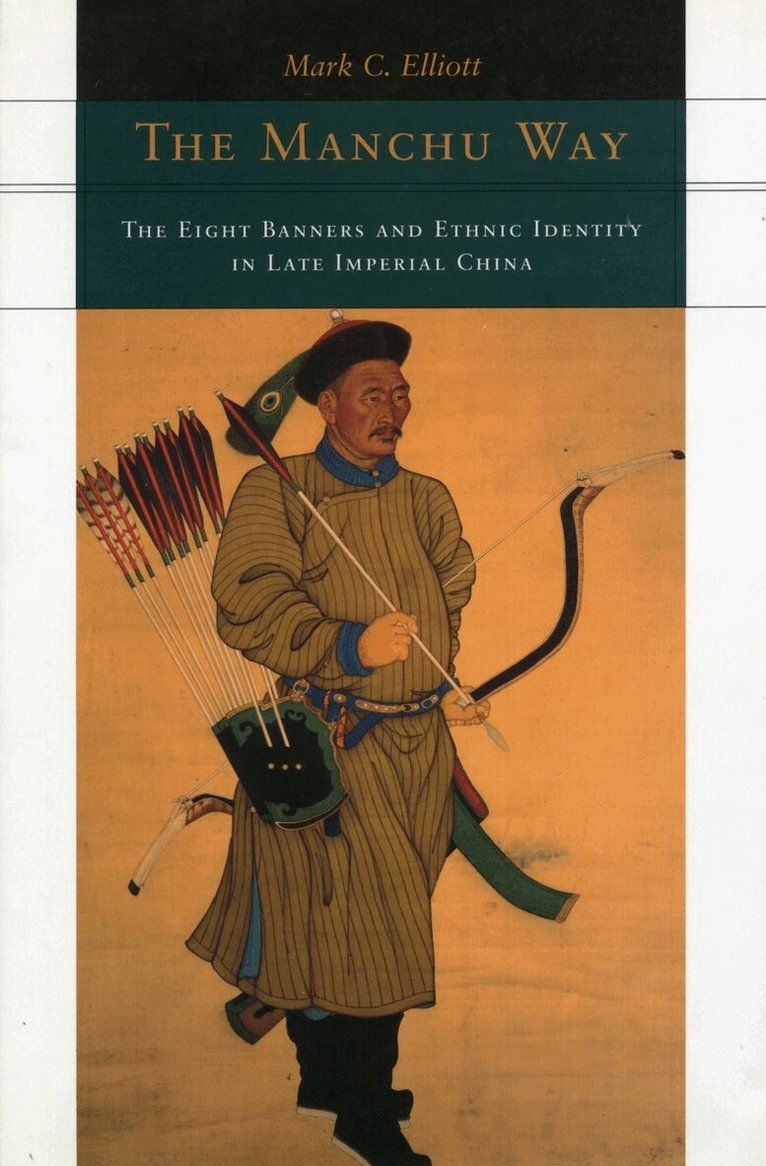
In 1644, the Manchus, a relatively unknown people inhabiting China's rude northeastern frontier, overthrew the Ming, Asia's mightiest rulers, and established the Qing dynasty, which endured to 1912. From this event arises one of Chinese history's great conundrums: How did a barely literate alien people manage to remain in power for nearly 300 years over a highly cultured population that was vastly superior in number? This problem has fascinated scholars for almost a century, but until now no one has approached the question from the Manchu point of view.This book, the first in any language to be based mainly on Manchu documents, supplies a radically new perspective on the formative period of the modern Chinese nation. Drawing on recent critical notions of ethnicity, the author explores the evolution of the "Eight Banners," a unique Manchu system of social and military organization that was instrumental in the conquest of the Ming.The author argues that as rulers of China the Manchu conquerors had to behave like Confucian monarchs, but that as a non-Han minority they faced other, more complex considerations as well. Their power derived not only from the acceptance of orthodox Chinese notions of legitimacy, but also, the author suggests, from Manchu "ethnic sovereignty," which depended on the sustained coherence of the conquerors.When, in the early 1700s, this coherence was threatened by rapid acculturation and the prospective loss of Manchu distinctiveness, the Qing court, always insecure, desperately urged its minions to uphold the traditions of an idealized "Manchu Way." However, the author shows that it was not this appeal but rather the articulation of a broader identity grounded in the realities of Eight Banner life that succeeded in preserving Manchu ethnicity, and the Qing dynasty along with it, into the twentieth century.