• Fri frakt över 249 kr
  • •
  • Snabba leveranser
  • •
  • Billiga böcker
Kundservice

Du är på sajten för privatpersoner.

Företag, bibliotek eller offentlig verksamhet?

Du handlar på classic.bokus.com, där alla dina funktioner finns intakta.
Till classic.bokus.com
Bokus logotyp. Gå till startsidan.
  • Erbjudanden
  • Nyheter
  • Student
  • Topplistor
  • Barn & ungdom
  • Bokus Play
  • E-böcker
  • Pocketböcker
  • Spel & pussel

10% rabatt på allt med kod: NYSTART10 →

Sidfot

Mina sidor

    Hjälp

    • Kundservice
    • Vanliga frågor och svar
    • Frakt och leverans
    • Retur vid ångerrätt
    • Reklamera vara
    • Betalning
    • Köpvillkor
    • Allmänna villkor
    • Information om webbplatsens tillgänglighet

    Om Bokus

    • Om oss
    • Pressrum
    • För studenter
    • För företag
    • För bibliotek och offentlig verksamhet
    • För leverantörer
    • Hållbarhet

    Populärt

    • Aktuella erbjudanden
    • Presentkort
    • Studentlitteratur
    • Nya böcker
    • Topplistor
    • Signerade böcker
    • Engelska böcker

    Inspiration

    • Boktips
    • BookTok
    • Populära bokserier
    • Barnbokskaraktärer
    • Populära författare
    Logotyp för Bokus
    Följ oss på Facebook (extern länk)Följ oss på Instagram (extern länk)Följ oss på YouTube (extern länk)Följ oss på TikTok (extern länk)
    bokus @ CookiesAnpassa cookiesIntegritetspolicyKöpvillkor
    Till Citymail hemsida (extern länk)Till Budbee hemsida (extern länk)Till Postnord hemsida (extern länk)Till Schenker hemsida (extern länk)Till Early Bird hemsida (extern länk)Till Walleys hemsida (extern länk)
    1. Naturvetenskap och teknik
    2. Matematik och naturvetenskap
    3. Kemi

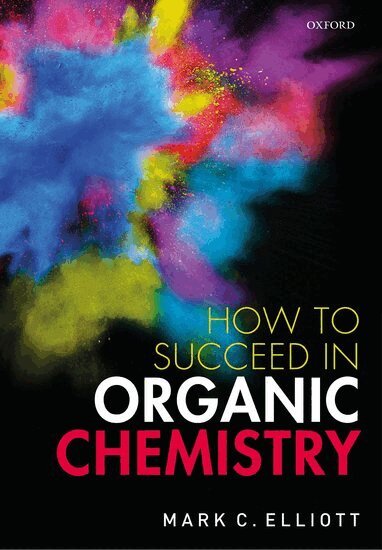
    How to Succeed in Organic Chemistry

    AvMark C. Elliott

    Häftad, Engelska, 2020

    513 kr

    Beställningsvara. Skickas inom 5-8 vardagar. Fri frakt över 249 kr.

    Beskrivning

    'How to succeed in organic chemistry' gives the reader a solid understanding of the principles of organic reaction mechanisms, such that they can draw structures, stereoisomers and reaction mechanisms with confidence. Throughout, the author speaks the language of students to build their confidence and interest.At heart, the book promotes active learning to ensure the necessary skills become so ingrained that they become something students simply cannot forget, and do not need to revise. As such, the book structures learning so that the reader encounters the right things at the right time, helping to 'internalise' key concepts.Concepts, explanations and examples are presented in short, easy-to-read chapters, each of which explores one of a number of themes, including 'Basics', 'Habits', 'Common error', 'Reaction detail', and 'Practice'.Digital formats and resourcesHow to Succeed in Organic Chemistry is supported by online resources and is available for students and institutions to purchase in a variety of formats.- The e-book includes more than 60 author videos which are embedded in the text, and these discuss and offer solutions to problems posed in the text, providing a fully immersive experience and extra learning support. www.oxfordtextbooks.co.uk/ebooks- These videos are also available as a stand-alone online resource for use alongside the print book, where lecturers can also access the figures from the book for use in their teaching.

    Produktinformation

    • Utgivningsdatum:2020-03-03
    • Mått:172 x 243 x 21 mm
    • Vikt:900 g
    • Format:Häftad
    • Språk:Engelska
    • Antal sidor:520
    • Förlag:OUP OXFORD
    • ISBN:9780198851295

    Utforska kategorier

    • Kemi inom Naturvetenskap och teknik

    Mer om författaren

    Dr Mark Elliott is Senior Lecturer in Organic Chemistry and Deputy Director of Learning and Teaching in the Department of Chemistry at Cardiff University. His research interests lie in the development of new synthetic methodology, and its application to target synthesis. He teaches organic chemistry at all levels of the undergraduate curriculum.

    Recensioner i media

    I liked the slightly informal tone of writing, almost as if I was being taught one-to-one by the author. It felt personal and honest, as if the author wrote the book to help me personally.

    Innehållsförteckning

    • Section 1: Laying the Foundations Basics 1: Structures of Organic Compounds Habit 1: Always Draw Structures with Realistic Geometry Basics 2: Functional Groups and "R" Groups Basics 3: Naming Organic Compounds Practice 1: Drawing Structures from Chemical Names Basics 4: Isomerism in Organic Chemistry - Constitutional Isomers Practice 2: Constitutional Isomers and Chemical Names Habit 2: Identifying When a Formula is Possible Practice 3: Double Bond Equivalents Common Error 1: Formulae, Functional Groups and Double Bond Equivalents Habit 3: Ignore What Doesn't Change Basics 5: Electronegativity, Bond Polarisation and Inductive Effects Practice 4: Bond Polarisation and Electronegativity Basics 6: Bonding in Organic Compounds Practice 5: Hybridisation Basics 7: Bonding and Antibonding Orbitals Basics 8: Introduction to Curly Arrows Fundamental Reaction Type 1: Nucleophilic Substitution at Saturated Carbon Practice 6: Electronegativity in Context Fundamental Reaction Type 2: Elimination Reactions Section 2: Building on the Foundations Basics 9: Breaking Bonds DS Linking Curly Arrows and Molecular Orbitals Common Error 2: Curly Arrows Basics 10: Conjugation and Resonance Basics 11: Thermodynamic Definitions Basics 12: Bond Dissociation Energy Basics 13: Calculating Enthalpy of Reaction from Bond Dissociation Energies Perspective 1: A Closer Look at Bond Dissociation Energies Practice 7: Calculating Enthalpy of Reaction from Bond Dissociation Energy Basics 14: Energetics and Reaction Profiles Basics 15: How Fast Are Reactions? Basics 16: Introduction to Carbocations, Carbanions and Free-Radicals Basics 17: Carbocations 2 - More Factors Affecting Stability Basics 18: Carbanions 2 - Stability and pKa Perspective 2: A Scale for Carbocation Stability Common Error 3: Methyl Groups are Electron-Releasing Practice 8: Drawing Resonance Forms for Carbocations and Carbanions Common Error 4: Resonance Basics 19: The Hammond Postulate Basics 20: Conjugation and Stability - The Evidence Common Error 5: Carbocations and Carbanions Basics 21: Reactivity of Conjugated Systems Basics 22: Acid Catalysis in Organic Reactions Part 1 Reaction Detail 1: Nucleophilic Substitution at Saturated Carbon Basics 23: What Defines a Transition State? Perspective 3: Bonding Beyond Hybridisation Fundamental Knowledge Recap 1: Bond Lengths and Strengths Fundamental Knowledge Recap 2: pKa Section 3: A Focus on Shape Habit 4: Representing Stereochemistry - Flying Wedge and Newman Projections Basics 23: Isomerism in Organic Chemistry - Configurational Isomers Habit 5: Getting Used to Drawing Stereoisomers Practice 9: Getting Used to Stereoisomers Habit 6: Assignment of Stereochemistry - The Cahn-Ingold-Prelog Rules Practice 10: Assigning Stereochemistry Habit 7: Stereoisomers with Symmetry Basics 25: Properties of Stereoisomers Reaction Detail 2: Stereochemical Aspects of Substitution Reactions Common Error 6: Substitution Reactions Reaction Detail 3: Substitution with Retention of Configuration Common Error 7: Stereochemical Errors Section 4: Types of Selectivity Basics 26: Selectivity in Organic Chemistry - Chemoselectivity Basics 27: Selectivity in Organic Chemistry - Regioselectivity Basics 28: Selectivity in Organic Chemistry - Stereoselectivity Basics 29: Stereochemical Definitions Relating to Reactions Section 5: Bonds Can Rotate Basics 30: Isomerism in Organic Chemistry - Conformational Isomers Practice 11: Conformational Analysis Applications 1: Conformational Isomers 2 Applications 2: SN2 Substitution Reactions Forming Three-Membered Rings Basics 31: Introduction to Cyclohexanes Practice 12: Drawing Cyclohexanes Applications 3: Substitution Reactions of Cyclohexanes Basics 32: Quantifying Conformers of Cyclohexanes Basics 33: More Conformers of Cyclohexanes and Related Compounds Practice 13: Drawing More Complex Cyclohexanes Common Error 8: Cyclohexanes Section 6: Eliminating the Learning Reaction Detail 4: Elimination Reactions Perspective 4: A Continuum of Mechanisms Basics 34: More Substituted Alkenes Are More Stable Basics 35: Enthalpy Changes for Reactions Involving Anionic Species Applications 4: Stereochemistry of Elimination Reactions Basics 36: Stereospecificity Applications 5: Elimination Reactions of Cyclohexanes Common Error 9: Elimination Reaction Reaction Detail 5: Allylic Substitution Section 7: Building Skills Worked Problem 1: Curly Arrows and Reaction Profiles Worked Problem 2: Competing SN1 Substitution and E1 Elimination Worked Problem 3: Competing SN2 Substitution and E2 Elimination Worked Problem 4: Acid Catalysis in Organic Reactions Part 2 Worked Problem 5: Epoxide Opening Reactions Worked Problem 6: Is cis-Cyclohexane-1,2-diol Really Achiral? Worked Problem 7: The Furst-Plattner Rule Worked Problem 8: SN2' Stereochemistry and Conformations Worked Problem 9: Complex Substitution Stereochemistry Worked Problem 10: Cyclisation Reactions Solution to Problem 1: Curly Arrows and Reaction Profiles Solution to Problem 2: Competing SN1 Substitution and E1 Elimination Solution to Problem 3: Competing SN2 Substitution and E2 Elimination Solution to Problem 4: Acid Catalysis in Organic Reactions Part 2 Solution to Problem 5: Epoxide Opening Reactions Solution to Problem 6: Is cis-Cyclohexane-1,2-diol Really Achiral? Solution to Problem 7: The Furst-Plattner Rule Solution to Problem 8: SN2' Stereochemistry and Conformations Solution to Problem 9: Complex Substitution Stereochemistry Solution to Problem 10: Cyclisation Reactions