Mark C. Murphy - Böcker
Visar alla böcker från författaren Mark C. Murphy. Handla med fri frakt och snabb leverans.
14 produkter
14 produkter
747 kr
Skickas inom 5-8 vardagar
"What is Justice?" was one of Socrates' most provocative and to this day unresolved questions. What is Justice? is an attempt to bring together many of the most prominent and influential writings on the topic of justice, both before and after Socrates, with particular emphasis on questions of justice in the modern world, especially in (more or less) egalitarian, democratic societies. The book places special emphasis on "social contract" theories of justice, both ancient and modern, culminating in the monumental work of John Rawls and various responses to his work. This book also puts special emphasis on questions of retributive justice and punishment that are typically excluded from volumes concerned with civil and "distributive" justice. In this new edition the editors expand and bring up-to-date both the readins on justice and punishment and more recent responses to Rawls' work, including Rawls' own most recent work. This book is designed to be flexible for use in very different courses and contexts and comprehensible to a wide variety of students and readers. It presupposes no philosophical or specialized background. The book is divided into five parts, together with a general introduction to the subject and an updated bibliography. Part One includes classical sources from Homer, Plato, Aristotle, the Bible, the Koran, Aquinas, and Mencius. Part Two includes readings on the state of nature and the social contract from Hobbes and Locke to Rawls, Nozick, Gauthier, and Baier. Part Three includes the Declaration of Independence and Amendments to the US Constitution and discussions of property and social justice from Locke, Hume, and Adam Smith to Engels, Marx, Mill, von Hayek, and some contemporary authors. Part Four includes a wide variety of readings on punishment, several with specific concerns about the death penalty. Part Five begins with selections from Rawls' work and includes responses from Dworkin, Nagel, Nozick, MacIntyre, Sandel, Walzer, Okin and Rawls himself. Every selection is preceded by a brief introduction, providing some biography, history, and context for the reading, and each of the five parts begins with an introduction to the topics to be discussed. Every selection, however, is self-contained, so that the readings can be selected in virtually any order to suit the needs of the instructor or reader.
502 kr
Skickas inom 7-10 vardagar
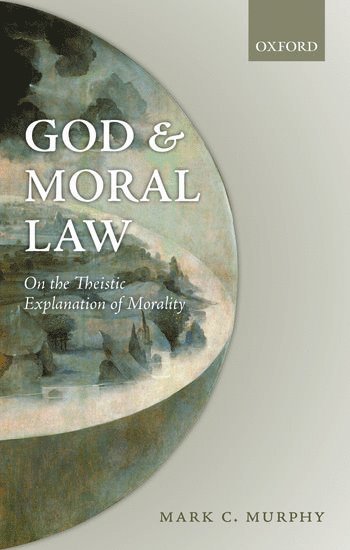
Does God's existence make a difference to how we explain morality? Mark C. Murphy critiques the two dominant theistic accounts of morality--natural law theory and divine command theory--and presents a novel third view. He argues that we can value natural facts about humans and their good, while keeping God at the centre of our moral explanations. The characteristic methodology of theistic ethics is to proceed by asking whether there are features of moral norms that can be adequately explained only if we hold that such norms have some sort of theistic foundation. But this methodology, fruitful as it has been, is one-sided. God and Moral Law proceeds not from the side of the moral norms, so to speak, but from the God side of things: what sort of explanatory relationship should we expect between God and moral norms given the existence of the God of orthodox theism? Mark C. Murphy asks whether the conception of God in orthodox theism as an absolutely perfect being militates in favor of a particular view of the explanation of morality by appeal to theistic facts. He puts this methodology to work and shows that, surprisingly, natural law theory and divine command theory fail to offer the sort of explanation of morality that we would expect given the existence of the God of orthodox theism. Drawing on the discussion of a structurally similar problem--that of the relationship between God and the laws of nature--Murphy articulates his new account of the relationship between God and morality, one in which facts about God and facts about nature cooperate in the explanation of moral law.
973 kr
Skickas inom 5-8 vardagar
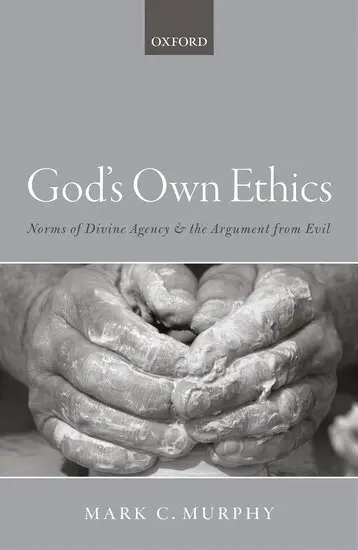
Every version of the argument from evil requires a premise concerning God's motivation - about the actions that God is motivated to perform or the states of affairs that God is motivated to bring about. The typical source of this premise is a conviction that God is, obviously, morally perfect, where God's moral perfection consists in God's being motivated to act in accordance with the norms of morality by which both we and God are governed. The aim of God's Own Ethics is to challenge this understanding by giving arguments against this view of God as morally perfect and by offering an alternative account of what God's own ethics is like. According to this alternative account, God is in no way required to promote the well-being of sentient creatures, though God may rationally do so. Any norms of conduct that favor the promotion of creaturely well-being that govern God's conduct are norms that are contingently self-imposed by God. This revised understanding of divine ethics should lead us to revise sharply downward our assessment of the force of the argument from evil while leaving intact our conception of God as an absolutely perfect being, supremely worthy of worship.
1 461 kr
Skickas inom 5-8 vardagar
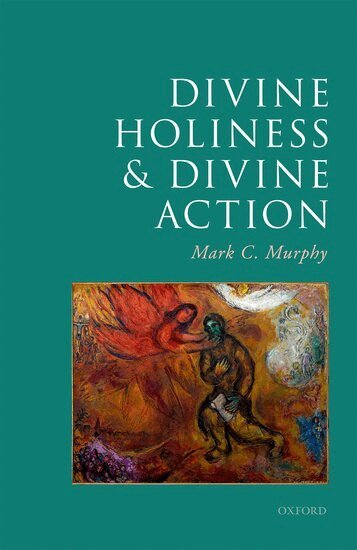
Holiness is the attribute most emphatically ascribed to God in Scripture, but there has been little attention devoted to characterizing and considering the entailments of divine holiness. In Divine Holiness and Divine Action, Mark C. Murphy defends an account of holiness indebted to Rudolf Otto's description of the experience of the holy as that of a mysterium tremendum et fascinans. God's being holy consists in God's being someone with whom intimate union is both extremely desirable for us and yet something for which we--and indeed any limited beings--are unfit. This notion of divine holiness is useful for addressing disputed theological questions regarding divine action. In contrast to standard accounts of divine action that begin with assumptions regarding God's moral perfection or God's maximal love, the appeal to divine holiness supports a rival framework for explaining and predicting divine action--the holiness framework--according to which God is motivated to act in ways that are a response to God's own value by keeping distance from that which is deficient, defective, or in any way limited in goodness. This study exhibits the fruitfulness of a reorientation from the morality and love frameworks to the holiness framework by showing how such a reorientation suggests distinct approaches to perennial problems of divine action regarding creation, incarnation, atonement, and salvation. From the treatment of these perennial problems, a general theme regarding divine action emerges: that God's interaction with the world exhibits a radical sort of humility.
851 kr
Skickas inom 5-8 vardagar
Does God's existence make a difference to how we explain morality? Mark C. Murphy critiques the two dominant theistic accounts of morality--natural law theory and divine command theory--and presents a novel third view. He argues that we can value natural facts about humans and their good, while keeping God at the centre of our moral explanations. The characteristic methodology of theistic ethics is to proceed by asking whether there are features of moral norms that can be adequately explained only if we hold that such norms have some sort of theistic foundation. But this methodology, fruitful as it has been, is one-sided. God and Moral Law proceeds not from the side of the moral norms, so to speak, but from the God side of things: what sort of explanatory relationship should we expect between God and moral norms given the existence of the God of orthodox theism? Mark C. Murphy asks whether the conception of God in orthodox theism as an absolutely perfect being militates in favour of a particular view of the explanation of morality by appeal to theistic facts. He puts this methodology to work and shows that, surprisingly, natural law theory and divine command theory fail to offer the sort of explanation of morality that we would expect given the existence of the God of orthodox theism. Drawing on the discussion of a structurally similar problem--that of the relationship between God and the laws of nature--Murphy articulates his new account of the relationship between God and morality, one in which facts about God and facts about nature cooperate in the explanation of moral law.
705 kr
Skickas inom 7-10 vardagar
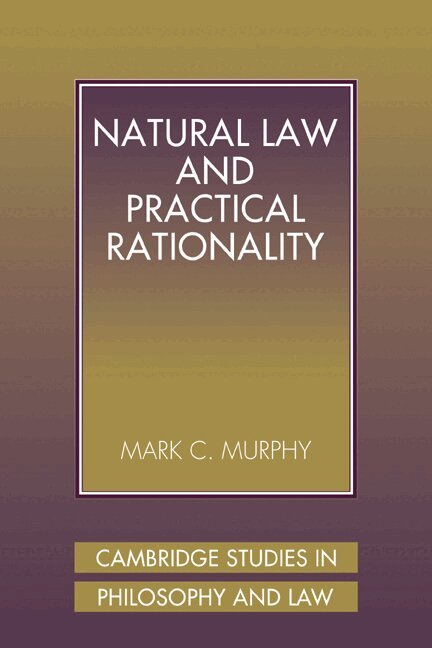
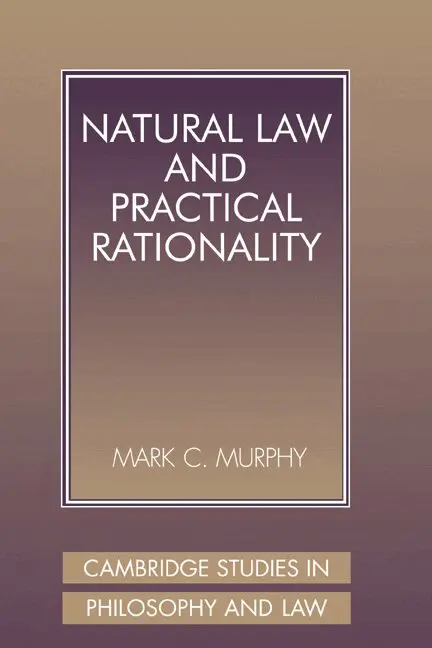
Natural law theory has been undergoing a revival, especially in political philosophy and jurisprudence. Yet, most fundamentally, natural law theory is not a political theory, but a moral theory, or more accurately a theory of practical rationality. According to the natural law account of practical rationality, the basic reasons for actions are basic goods that are grounded in the nature of human beings. Practical rationality aims to identify and characterize reasons for action and to explain how choice between actions worth performing can be appropriately governed by rational standards. These standards are justified by reference to features of the human goods that are the fundamental reasons for action. This book is a defence of a contemporary natural law theory of practical rationality, demonstrating its inherent plausibility and engaging systematically with rival egoist, consequentialist, Kantian and virtue accounts.
334 kr
Skickas inom 7-10 vardagar
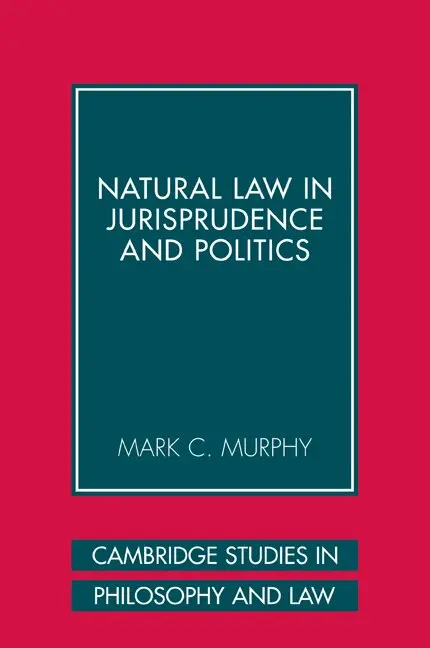
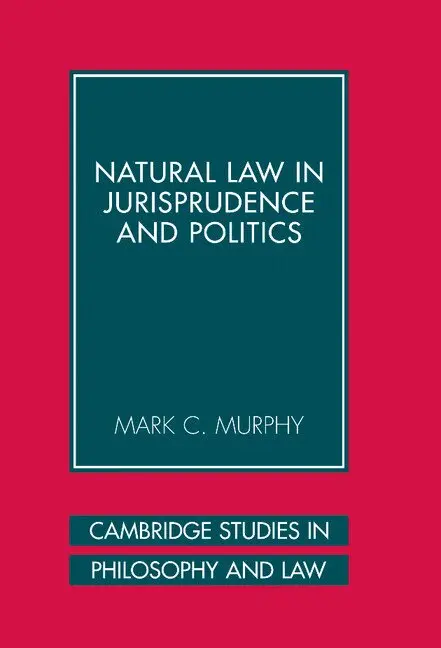
Natural law is a perennial though poorly represented and understood issue in political philosophy and the philosophy of law. In this 2006 book, Mark C. Murphy argues that the central thesis of natural law jurisprudence - that law is backed by decisive reasons for compliance - sets the agenda for natural law political philosophy, demonstrating how law gains its binding force by way of the common good of the political community. Murphy's work ranges over the central questions of natural law jurisprudence and political philosophy, including the formulation and defense of the natural law jurisprudential thesis, the nature of the common good, the connection between the promotion of the common good and requirement of obedience to law, and the justification of punishment.
902 kr
Skickas inom 7-10 vardagar
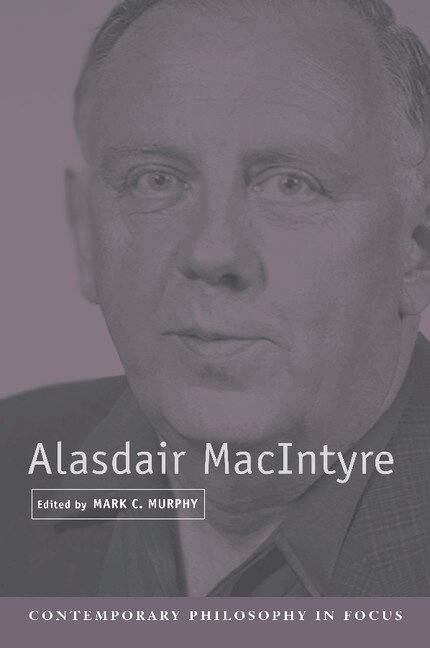
The contribution to contemporary philosophy of Alasdair MacIntyre is enormous. His writings on ethics, political philosophy, philosophy of religion, philosophy of the social sciences and the history of philosophy have established him as one of the philosophical giants of the last fifty years. His best-known book, After Virtue (1981), spurred the profound revival of virtue ethics. Moreover, MacIntyre, unlike so many of his contemporaries, has exerted a deep influence beyond the bourns of academic philosophy. This volume focuses on the major themes of MacIntyre's work with critical expositions of MacIntyre's views on the history of philosophy, the role of tradition in philosophical inquiry, the philosophy of the social sciences, moral philosophy, political theory, and his critique of the assumptions and institutions of modernity. Written by a distinguished team of philosophers, this volume will have a wide appeal outside philosophy to students in the social sciences, law, theology, and political theory.
360 kr
Skickas inom 7-10 vardagar
The contribution to contemporary philosophy of Alasdair MacIntyre is enormous. His writings on ethics, political philosophy, philosophy of religion, philosophy of the social sciences and the history of philosophy have established him as one of the philosophical giants of the last fifty years. His best-known book, After Virtue (1981), spurred the profound revival of virtue ethics. Moreover, MacIntyre, unlike so many of his contemporaries, has exerted a deep influence beyond the bourns of academic philosophy. This volume focuses on the major themes of MacIntyre's work with critical expositions of MacIntyre's views on the history of philosophy, the role of tradition in philosophical inquiry, the philosophy of the social sciences, moral philosophy, political theory, and his critique of the assumptions and institutions of modernity. Written by a distinguished team of philosophers, this volume will have a wide appeal outside philosophy to students in the social sciences, law, theology, and political theory.
1 245 kr
Skickas inom 7-10 vardagar
Natural law theory has been undergoing a revival, especially in political philosophy and jurisprudence. Yet, most fundamentally, natural law theory is not a political theory, but a moral theory, or more accurately a theory of practical rationality. According to the natural law account of practical rationality, the basic reasons for actions are basic goods that are grounded in the nature of human beings. Practical rationality aims to identify and characterize reasons for action and to explain how choice between actions worth performing can be appropriately governed by rational standards. These standards are justified by reference to features of the human goods that are the fundamental reasons for action. This book is a defence of a contemporary natural law theory of practical rationality, demonstrating its inherent plausibility and engaging systematically with rival egoist, consequentialist, Kantian and virtue accounts.
1 145 kr
Skickas inom 7-10 vardagar
Natural law is a perennial though poorly represented and understood issue in political philosophy and the philosophy of law. In this 2006 book, Mark C. Murphy argues that the central thesis of natural law jurisprudence - that law is backed by decisive reasons for compliance - sets the agenda for natural law political philosophy, demonstrating how law gains its binding force by way of the common good of the political community. Murphy's work ranges over the central questions of natural law jurisprudence and political philosophy, including the formulation and defense of the natural law jurisprudential thesis, the nature of the common good, the connection between the promotion of the common good and requirement of obedience to law, and the justification of punishment.
894 kr
Skickas inom 10-15 vardagar
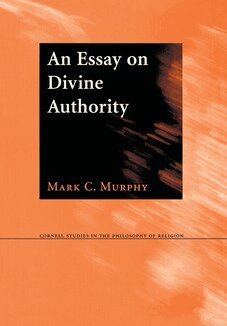
In the first book wholly concerned with divine authority, Mark C. Murphy explores the extent of God's rule over created rational beings. The author challenges the view—widely supported by theists and nontheists alike—that if God exists, then humans must be bound by an obligation of obedience to this being. He demonstrates that this view, the "authority thesis," cannot be sustained by any of the arguments routinely advanced on its behalf, including those drawn from perfect being theology, metaethical theory, normative principles, and even Scripture and tradition. After exposing the inadequacies of the various arguments for the authority thesis, he develops his own solution to the problem of whether, and to what extent, God is authoritative.For Murphy, divine authority is a contingent matter: while created rational beings have decisive reason to subject themselves to the divine rule, they are under divine authority only insofar as they have chosen to allow God's decisions to take the place of their own in their practical reasoning. The author formulates and defends his arguments for this view, and notes its implications for understanding the distinctiveness of Christian ethics.
1 127 kr
Skickas inom 7-10 vardagar
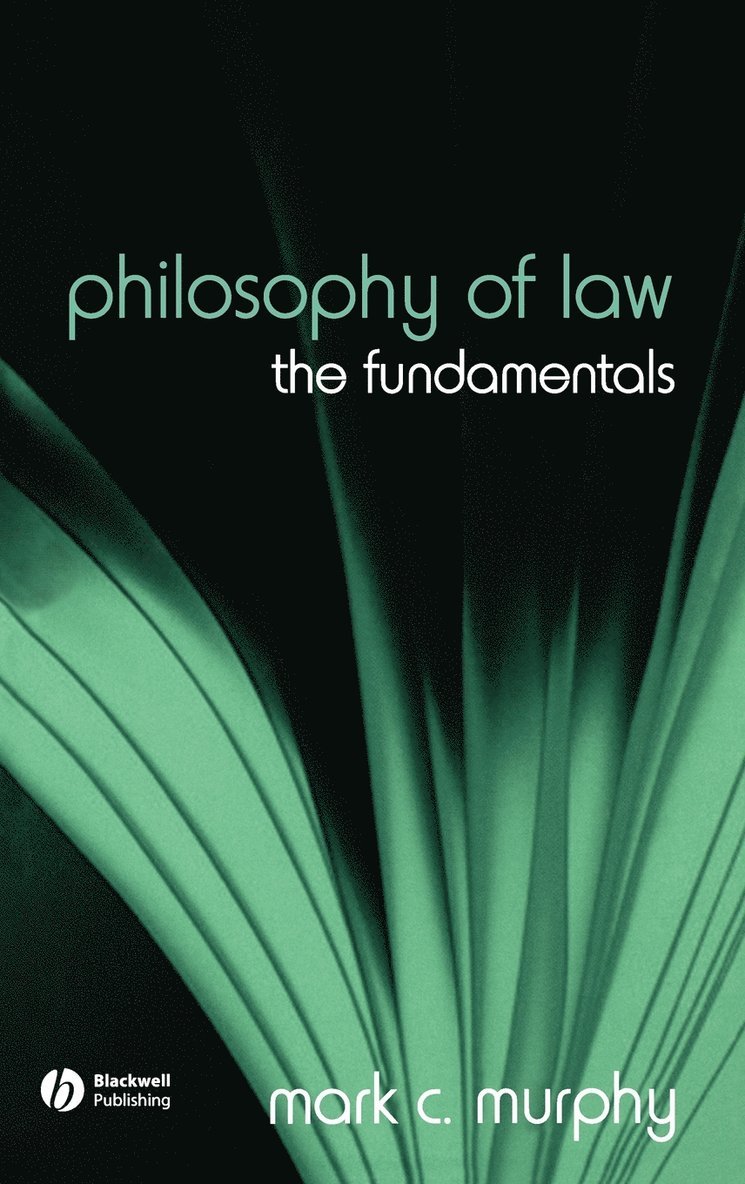
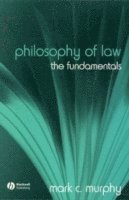
The Philosophy of Law is a broad-reaching text that guides readers through the basic analytical and normative issues in the field, highlighting key historical and contemporary thinkers and offering a unified treatment of the various issues in the philosophy of law. Enlivened with numerous, everyday examples to illustrate various concepts of law. Employs the idea of three central commonplaces about law - that law is a social matter, that law is authoritative, and that law is for the common good - to organize seemingly disparate topics and to bring rival views into contention with each other. The first volume in the Fundamentals of Philosophy series, in which leading philosophers explore the fundamental issues and core problems in the major sub-disciplines of philosophy.
446 kr
Skickas inom 7-10 vardagar
The Philosophy of Law is a broad-reaching text that guides readers through the basic analytical and normative issues in the field, highlighting key historical and contemporary thinkers and offering a unified treatment of the various issues in the philosophy of law. Enlivened with numerous, everyday examples to illustrate various concepts of law. Employs the idea of three central commonplaces about law - that law is a social matter, that law is authoritative, and that law is for the common good - to organize seemingly disparate topics and to bring rival views into contention with each other. The first volume in the Fundamentals of Philosophy series, in which leading philosophers explore the fundamental issues and core problems in the major sub-disciplines of philosophy.