Mark G. McGowan – författare
Visar alla böcker från författaren Mark G. McGowan. Handla med fri frakt och snabb leverans.
4 produkter
4 produkter
1 202 kr
Skickas inom 7-10 vardagar
Ireland's Great Famine produced Europe's worst refugee crisis of the nineteenth century. More than 1.5 million people left Ireland, many ending up in Canada. Among the most vulnerable were nearly 1,700 orphaned children who now found themselves destitute in an unfamiliar place. The story Canada likes to tell is that these orphans were adopted by benevolent families and that they readily adapted to their new lives, but this happy ending is mostly a myth.In Finding Molly Johnson Mark McGowan traces what happened to these children. In the absence of state support, the Catholic and Protestant churches worked together to become the orphans' principal caregivers. The children were gathered, fed, schooled, and placed in family homes in Saint John, Quebec, Montreal, Bytown, Kingston, and Toronto. Yet most were not considered members of their placement families, but rather sources of cheap labour. Many fled their placements, joining thousands of other Irish refugees on the Canadian frontier searching for work, extended family, and the opportunity to begin a new life.Finding Molly Johnson revisits an important chapter of the Irish emigrant experience, revealing that the story of Canada's acceptance of the famine orphans is a product of national myth-making that obscures both the hardship the children endured and the agency they ultimately expressed.
428 kr
Skickas inom 7-10 vardagar
Ireland's Great Famine produced Europe's worst refugee crisis of the nineteenth century. More than 1.5 million people left Ireland, many ending up in Canada. Among the most vulnerable were nearly 1,700 orphaned children who now found themselves destitute in an unfamiliar place. The story Canada likes to tell is that these orphans were adopted by benevolent families and that they readily adapted to their new lives, but this happy ending is mostly a myth.In Finding Molly Johnson Mark McGowan traces what happened to these children. In the absence of state support, the Catholic and Protestant churches worked together to become the orphans' principal caregivers. The children were gathered, fed, schooled, and placed in family homes in Saint John, Quebec, Montreal, Bytown, Kingston, and Toronto. Yet most were not considered members of their placement families, but rather sources of cheap labour. Many fled their placements, joining thousands of other Irish refugees on the Canadian frontier searching for work, extended family, and the opportunity to begin a new life.Finding Molly Johnson revisits an important chapter of the Irish emigrant experience, revealing that the story of Canada's acceptance of the famine orphans is a product of national myth-making that obscures both the hardship the children endured and the agency they ultimately expressed.
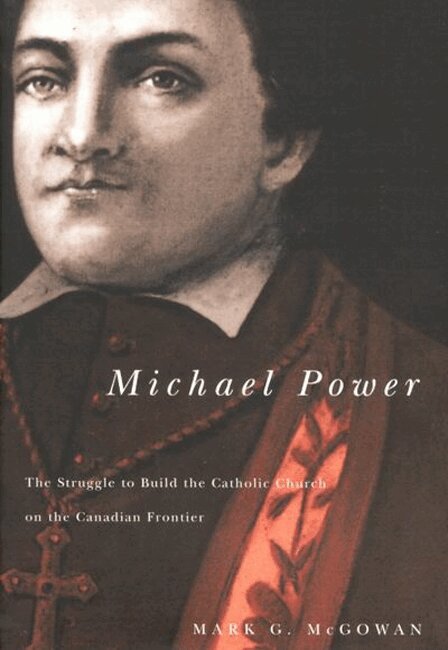
Michael Power
The Struggle to Build the Catholic Church on the Canadian Frontier
Häftad, Engelska, 2007
468 kr
Skickas inom 7-10 vardagar
This biography of Toronto's first Roman Catholic bishop also serves as a compelling history of Canadian Catholicism.Winner of the 2006 Heritage Toronto Book Award for excellence.
315 kr
Skickas inom 7-10 vardagar
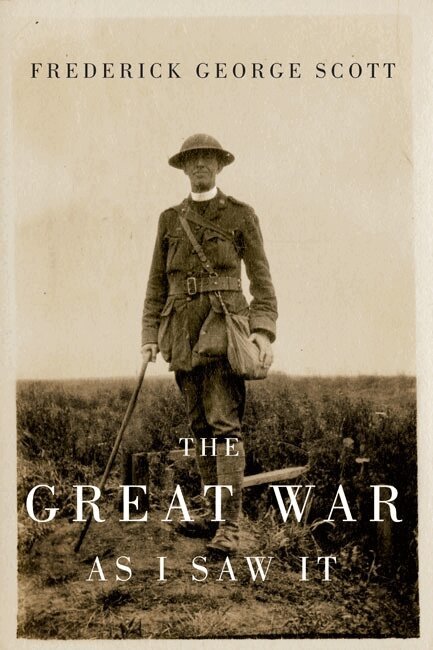
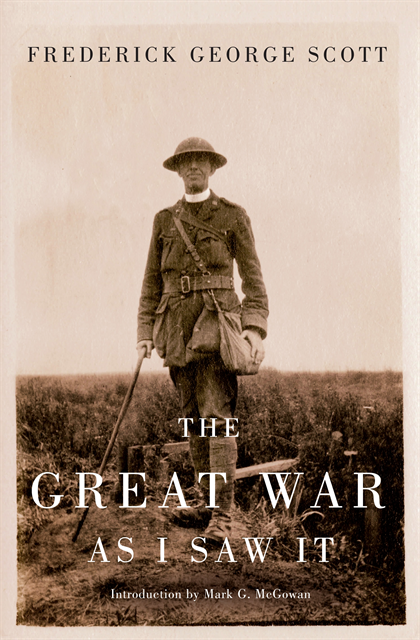
A fifty-three-year-old Anglican priest and poet when the First World War broke out, Frederick George Scott was an improbable volunteer, but also an invaluable war memoirist about life at the front. Enlisting at the very beginning of the conflict and serving on the Western Front until the Armistice, Scott became the most decorated Canadian chaplain. A High Anglican and staunch British imperialist described by one of his fellow officers as "an old snob of the old school," Scott also defied stereotypes, often rejecting the privileges he was entitled to as an officer and insisting on being at the frontlines with the rank-and-file soldiers, with whom he felt genuine kinship. As a result, he was seriously wounded in the autumn of 1918, near the end of the war. The Great War as I Saw It is an idiosyncratic portrait by a man of strong religious convictions witnessing the horror of modern warfare. In evocative prose shaped by his background as a poet, Scott moves between lighthearted moments and dark tragedy, including his wrenching account of searching for his own son's body in a ruined battlefield. Rich in detail, it is one of the most diverse and complete first-hand accounts of the war ever published.