Mark J. Eitelberg - Böcker
Visar alla böcker från författaren Mark J. Eitelberg. Handla med fri frakt och snabb leverans.
2 produkter
2 produkter
1 009 kr
Skickas inom 10-15 vardagar
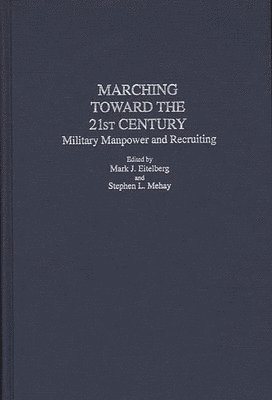
This book will appeal to persons interested in national security issues and, more specifically, to those who may want to know more about the manpower and recruiting problems facing the military of the future. The authors come from a wide variety of backgrounds and academic disciplines--including economics, political science, psychology, sociology, operations research, education, and public administration. This book will also appeal to persons interested in human resource issues beyond the military, as well as those interested in tracking trends in the labor force, public opinion, education, youth attitudes, or society in general.
234 kr
Skickas inom 10-15 vardagar
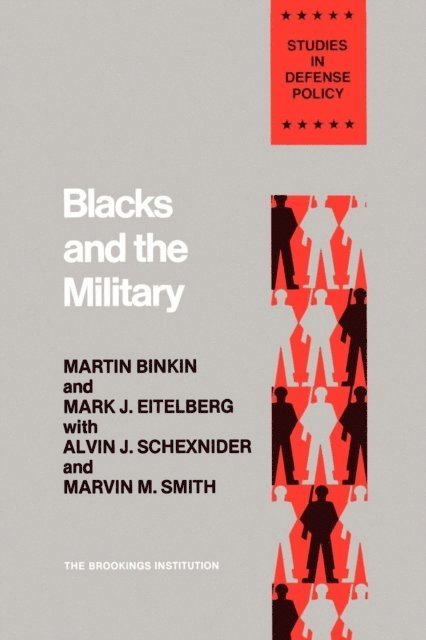
For much of the nation's history, the participation of blacks in the armed forces was approximately in line with their proportion in the total population. This changed during the 1970s: by 1980 one of every three Army Gls and one of every five marines were black. The reaction has been mixed.Many Americans look with approval on the growth of black participation in military service, since it often affords young blacks educational, social, and financial opportunities that constitute a bridge to a better life not otherwise available to them. But for other Americans, the opportunities are outweighed by the disproportionate imposition of the burden of defense on a segment of the population that has not enjoyed a fair share of the benefits that society confers. From this perspective, the likelihood that blacks would suffer at least a third-and perhaps a half-of the combat fatalities in the initial stages of conflict is considered immoral, unethical, or otherwise contrary to the precepts of democratic institutions.Some also worry that military forces with such a high fraction of blacks entail risks to U.S. national security. A socially unrepresentative force, it is argued, may lack the cohesion considered vital to combat effectiveness. Others fear that such a force would be unreliable if it were deployed in situations that would test the allegiance of its minority members. And some have even expressed concern that a large proportion of blacks may raise questions about the status of U.S fighting forces, as judged by the American public, the nation's allies, and its adversaries.The authors of this book examine evidence on both sides of the issue in an effort to bring objective scrutiny to bear on questions that for many years have been loaded with emotion and subjective reaction. They also discuss the implications for the military's racial composition of demographic, economic, and technological trends and the possible effects of returning to some form of conscription.