Mark L. Taper – författare
Visar alla böcker från författaren Mark L. Taper. Handla med fri frakt och snabb leverans.
4 produkter
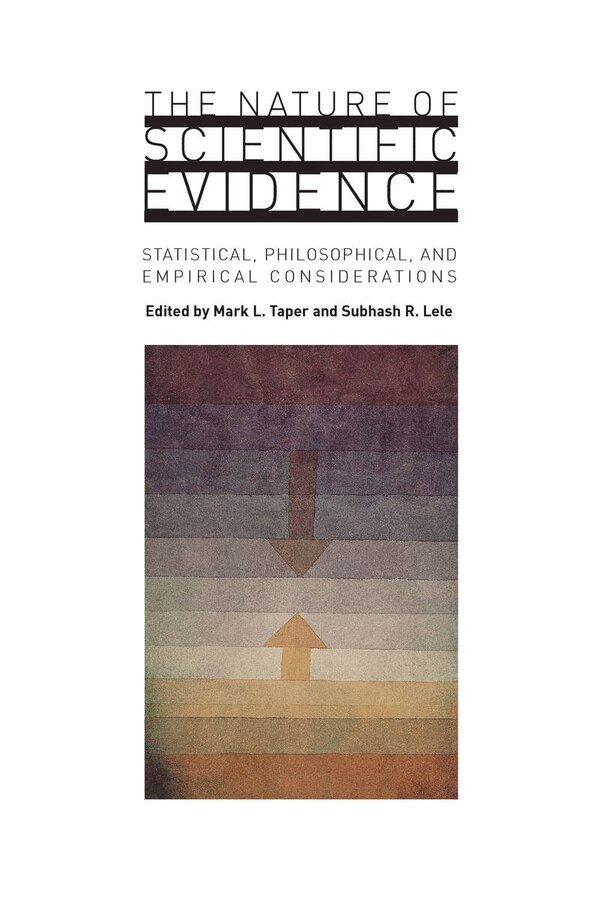
Nature of Scientific Evidence
Statistical, Philosophical, and Empirical Considerations
Av Mark L. Taper, Subhash R. Lele
Häftad, 2004
428 kr
Lägg i varukorg
An exploration of the statistical foundations of scientific inference, The Nature of Scientific Evidence asks what constitutes scientific evidence and whether scientific evidence can be quantified statistically. Mark Taper, Subhash Lele, and an esteemed group of contributors explore the …
Nature of Scientific Evidence
Statistical, Philosophical, and Empirical Considerations
Av Subhash R. Lele, Mark L. Taper
E-bok, 2010
928 kr
Lägg i varukorg
An exploration of the statistical foundations of scientific inference, The Nature of Scientific Evidence asks what constitutes scientific evidence and whether scientific evidence can be quantified statistically. Mark Taper, Subhash Lele, and an esteemed group of contributors explore the …
Belief, Evidence, and Uncertainty
Problems of Epistemic Inference
Av Prasanta S. Bandyopadhyay, Gordon Brittan Jr. m. fl.
Häftad, 2016
468 kr
Lägg i varukorg
This work breaks new ground by carefully distinguishing the concepts of belief, confirmation, and evidence and then integrating them into a better understanding of personal and scientific epistemologies. It outlines a probabilistic framework in which subjective features of personal knowledge and …
Belief, Evidence, and Uncertainty
Problems of Epistemic Inference
Av Mark L. Taper, Gordon Brittan Jr. m. fl.
E-bok, 2016
897 kr
Lägg i varukorg
This work breaks new ground by carefully distinguishing the concepts of belief, confirmation, and evidence and then integrating them into a better understanding of personal and scientific epistemologies. It outlines a probabilistic framework in which subjective features of personal knowledge and …