Mark Santiago – författare
Visar alla böcker från författaren Mark Santiago. Handla med fri frakt och snabb leverans.
7 produkter
7 produkter
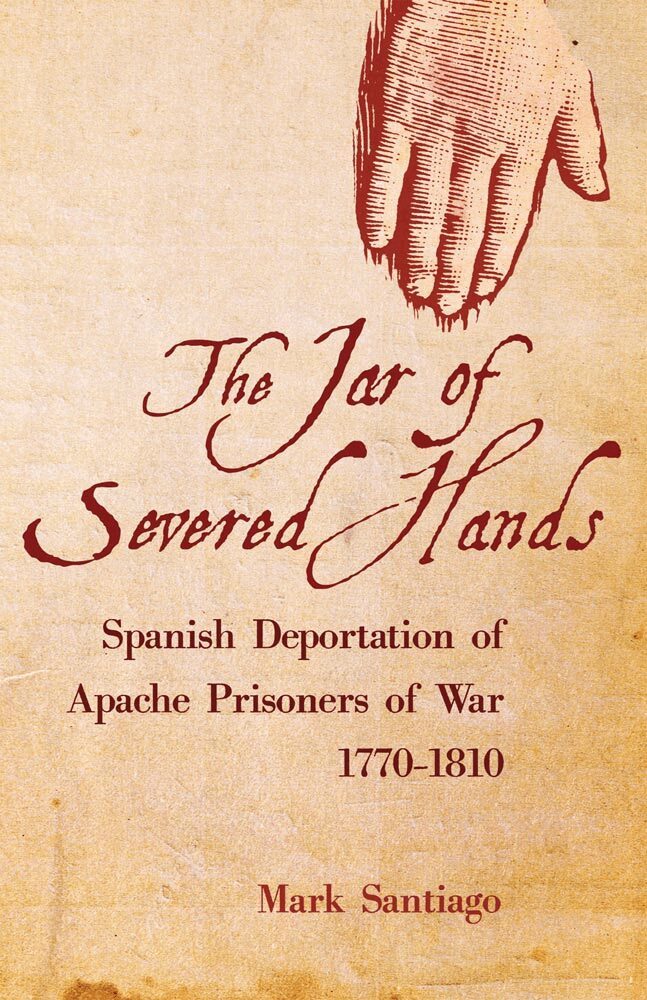
Jar of Severed Hands
Spanish Deportation of Apache Prisoners of War, 1770–1810
Inbunden, Engelska, 2011
336 kr
Skickas inom 5-8 vardagar
More than two centuries after the Coronado Expedition first set foot in the region, the northern frontier of New Spain in the late 1770s was still under attack by Apache raiders. Mark Santiago's gripping account of Spanish efforts to subdue the Apaches illuminates larger cultural and political issues in the colonial period of the Southwest and northern Mexico. To persuade the Apaches to abandon their homelands and accept Christian ""civilization,"" Spanish officials employed both the mailed fist of continuous war and the velvet glove of the reservation system. ""Hostiles"" captured by the Spanish would be deported, while Apaches who agreed to live in peace near the Spanish presidios would receive support. Santiago's history of the deportation policy includes vivid descriptions of colleras, the chain gangs of Apache prisoners of war bound together for the two-month journey by mule and on foot from the northern frontier to Mexico City. The book's arresting title, The Jar of Severed Hands, comes from a 1792 report documenting a desperate break for freedom made by a group of Apache prisoners. After subduing the prisoners and killing twelve Apache men, the Spanish soldiers verified the attempted breakout by amputating the left hands of the dead and preserving them in a jar for display to their superiors.Santiago's nuanced analysis of deportation policy credits both the Apaches' ability to exploit the Spanish government's dual approach and the growing awareness on the Spaniards' part that the peoples they referred to as Apaches were a disparate and complex assortment of tribes that could not easily be subjugated. The Jar of Severed Hands deepens our understanding of the dynamics of the relationship between Indian tribes and colonial powers in the Southwest borderlands.
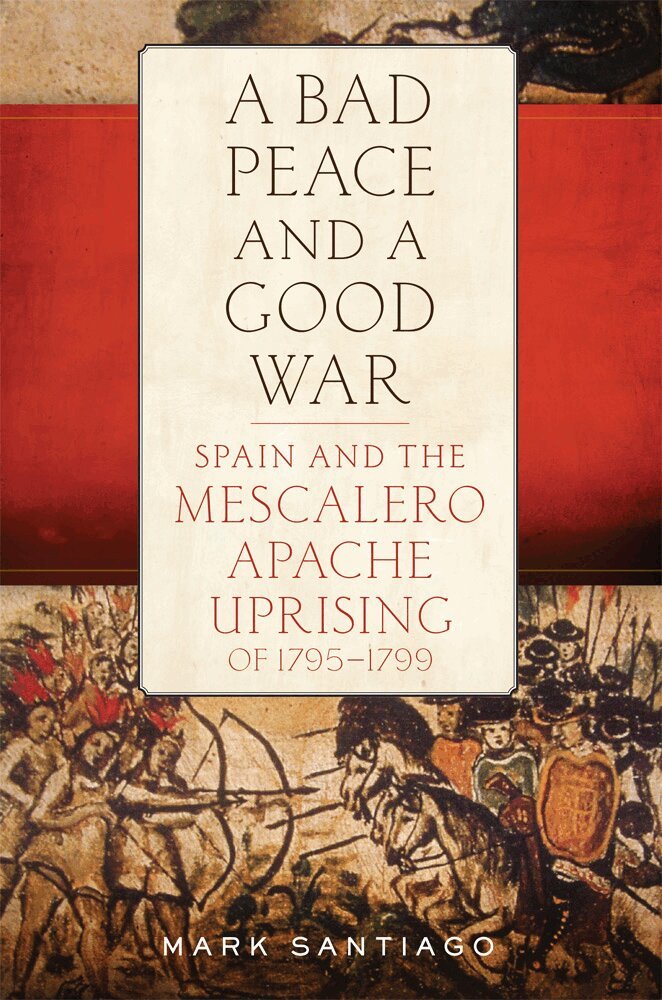
Bad Peace and a Good War
Spain and the Mescalero Apache Uprising of 1795-1799
Inbunden, Engelska, 2018
365 kr
Skickas inom 10-15 vardagar
This book challenges long-accepted historical orthodoxy about relations between the Spanish and the Indians in the borderlands separating what are now Mexico and the United States. While most scholars describe the decades after 1790 as a period of relative peace between the occupying Spaniards and the Apaches, Mark Santiago sees in the Mescalero Apache attacks on the Spanish beginning in 1795 a sustained, widespread, and bloody conflict. He argues that Commandant General Pedro de Nava's coordinated campaigns against the Mescaleros were the culmination of the Spanish military's efforts to contain Apache aggression, constituting one of its largest and most sustained operations in northern New Spain. A Bad Peace and a Good War examines the antecedents, tactics, and consequences of the fighting.This conflict occurred immediately after the Spanish military had succeeded in making an uneasy peace with portions of all Apache groups. The Mescaleros were the first to break the peace, annihilating two Spanish patrols in August 1795. Galvanized by the loss, Commandant General Nava struggled to determine the extent to which Mescaleros residing in ""peace establishments"" outside Spanish settlements near El Paso, San Elizario, and Presidio del Norte were involved. Santiago looks at the impact of conflicting Spanish military strategies and increasing demands for fiscal efficiency as a result of Spain's imperial entanglements. He examines Nava's yearly invasions of Mescalero territory, his divide-and-rule policy using other Apaches to attack the Mescaleros, and his deportation of prisoners from the frontier, preventing the Mescaleros from redeeming their kin.Santiago concludes that the consequences of this war were overwhelmingly negative for Mescaleros and ambiguous for Spaniards. The war's legacy of bitterness lasted far beyond the end of Spanish rule, and the continued independence of so many Mescaleros and other Apaches in their homeland proved the limits of Spanish military authority. In the words of Viceroy Bernardo de Gálvez, the Spaniards had technically won a ""good war"" against the Mescaleros and went on to manage a ""bad peace.
224 kr
Skickas inom 5-8 vardagar
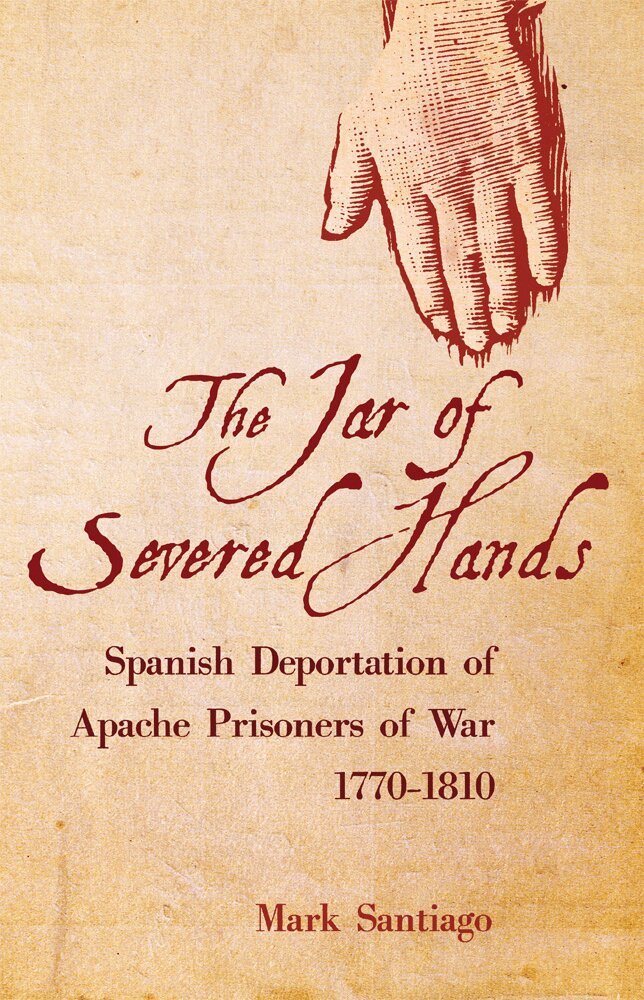
More than two centuries after the Coronado Expedition first set foot in the region, the northern frontier of New Spain in the late 1770s was still under attack by Apache raiders. Mark Santiago's gripping account of Spanish efforts to subdue the Apaches illuminates larger cultural and political issues in the colonial period of the Southwest and northern Mexico. To persuade the Apaches to abandon their homelands and accept Christian ""civilization,"" Spanish officials employed both the mailed fist of continuous war and the velvet glove of the reservation system. ""Hostiles"" captured by the Spanish would be deported, while Apaches who agreed to live in peace near the Spanish presidios would receive support. Santiago's history of the deportation policy includes vivid descriptions of colleras, the chain gangs of Apache prisoners of war bound together for the two-month journey by mule and on foot from the northern frontier to Mexico City. The book's arresting title, The Jar of Severed Hands, comes from a 1792 report documenting a desperate break for freedom made by a group of Apache prisoners. After subduing the prisoners and killing twelve Apache men, the Spanish soldiers verified the attempted breakout by amputating the left hands of the dead and preserving them in a jar for display to their superiors.Santiago's nuanced analysis of deportation policy credits both the Apaches' ability to exploit the Spanish government's dual approach and the growing awareness on the Spaniards' part that the peoples they referred to as Apaches were a disparate and complex assortment of tribes that could not easily be subjugated. The Jar of Severed Hands deepens our understanding of the dynamics of the relationship between Indian tribes and colonial powers in the Southwest borderlands.
241 kr
Skickas inom 10-15 vardagar
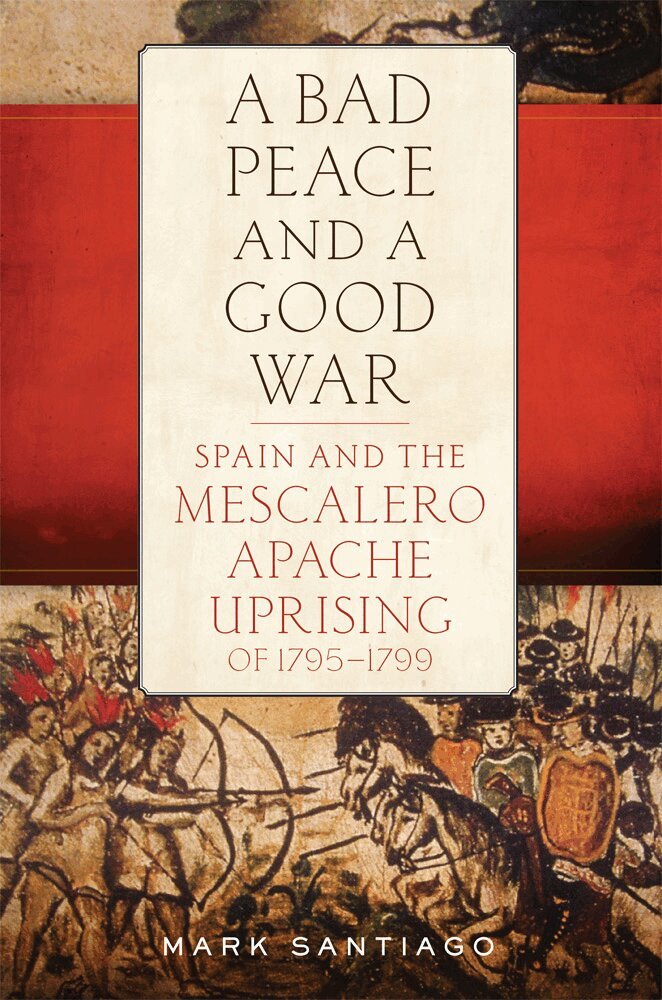
This book challenges long-accepted historical orthodoxy about relations between the Spanish and the Indians in the borderlands separating what are now Mexico and the United States. While most scholars describe the decades after 1790 as a period of relative peace between the occupying Spaniards and the Apaches, Mark Santiago sees in the Mescalero Apache attacks on the Spanish beginning in 1795 a sustained, widespread, and bloody conflict. He argues that Commandant General Pedro de Nava's coordinated campaigns against the Mescaleros were the culmination of the Spanish military's efforts to contain Apache aggression, constituting one of its largest and most sustained operations in northern New Spain. A Bad Peace and a Good War examines the antecedents, tactics, and consequences of the fighting.This conflict occurred immediately after the Spanish military had succeeded in making an uneasy peace with portions of all Apache groups. The Mescaleros were the first to break the peace, annihilating two Spanish patrols in August 1795. Galvanized by the loss, Commandant General Nava struggled to determine the extent to which Mescaleros residing in 'peace establishments' outside Spanish settlements near El Paso, San Elizario, and Presidio del Norte were involved. Santiago looks at the impact of conflicting Spanish military strategies and increasing demands for fiscal efficiency as a result of Spain's imperial entanglements. He examines Nava's yearly invasions of Mescalero territory, his divide-and-rule policy using other Apaches to attack the Mescaleros, and his deportation of prisoners from the frontier, preventing the Mescaleros from redeeming their kin.Santiago concludes that the consequences of this war were overwhelmingly negative for Mescaleros and ambiguous for Spaniards. The war's legacy of bitterness lasted far beyond the end of Spanish rule, and the continued independence of so many Mescaleros and other Apaches in their homeland proved the limits of Spanish military authority. In the words of Viceroy Bernardo de GÁlvez, the Spaniards had technically won a 'good war' against the Mescaleros and went on to manage a 'bad peace.'
279 kr
Skickas inom 7-10 vardagar
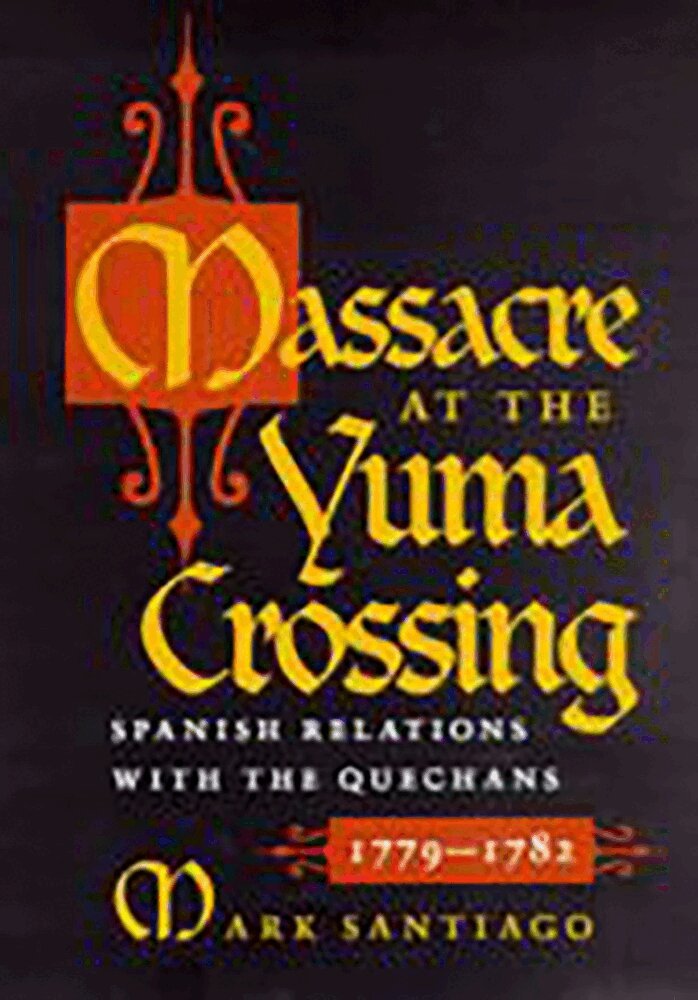
The quiet of the dawn was rent by the screams of war. Scores, perhaps hundreds, of Quechan and Mohave warriors leaped from concealment, rushing the plaza from all sides. Painted for battle and brandishing lances, bows, and war clubs, the Indians killed every Spaniard they could catch. The route from the Spanish presidial settlements in upper Sonora to the Colorado River was called the Camino del Diablo, the ""Road of the Devil."" Running through the harshest of deserts, this route was the only way for the Spanish to transport goods overland to their settlements in California. At the end of the route lay the only passable part of the lower Colorado, and the people who lived around the river, the Yumas or Quechans, initially joined into a peaceful union with the Spanish. When the relationship soured and the Yumas revolted in 1781, it essentially ended Spanish settlement in the area, dashed the dreams of the mission builders, and limited Spanish expansion into California and beyond. In ‘Massacre at the Yuma Crossing’, Mark Santiago introduces us to the important and colourful actors involved in the dramatic revolt of 1781: Padre Francisco Garcés, who discovered a path from Sonora to California, made contact with the Yumas and eventually became their priest; Salvador Palma, the informal leader of the Yuman people, whose decision to negotiate with the Spanish earned him a reputation as a peacebuilder in the region, which eventually caused his downfall; and Teodoro de Croix, the Spanish commandant-general, who, breaking with traditional settlement practice, established two pueblos among the Quechans without an adequate garrison or mission, thereby leaving the settlers without any sort of defence when the revolt finally took place. ‘Massacre at the Yuma Crossing’ not only tells the story of the Yuma Massacre with new details but also gives the reader an understanding of the pressing questions debated in the Spanish Empire at the time: What was the efficacy of the presidios? How extensive should the power of the Catholic mission priests be? And what would be the future of Spain in North America?
490 kr
Skickas inom 3-6 vardagar
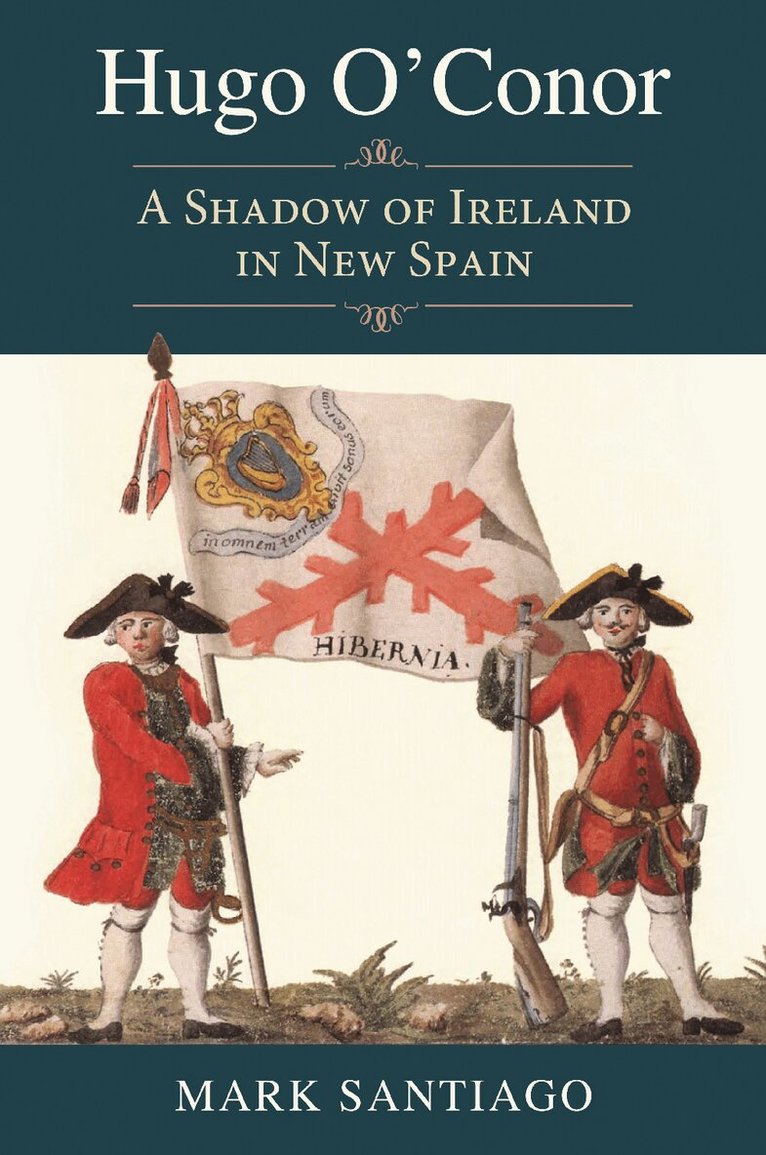
Hugo O'Conor: A Shadow of Ireland in New Spain presents a comprehensive biography of Hugo O'Conor (1734–1779), the first Commandant Inspector of the Interior Provinces of New Spain. Demonstrating the remarkable breadth of O'Conor's life experiences, the narrative moves from his early life in Ireland to a successful career in the Spanish military spanning both sides of the Atlantic.O'Conor's story reads like an action-packed nail-biter. He grew up on "the Isle of Slaves," as Ireland has been characterized, but had to flee due to the imposition of the anti-Catholic Penal Laws of the eighteenth century. He entered the Hibernia Regiment of the Spanish army and subsequently found himself immured in a rigid military caste system at the age of fifteen. O'Conor went on a wide array of adventures: fighting a brutal—but largely forgotten—war in Portugal; serving as a drill master in Cuba; becoming a spy and then governor in Texas; and implementing the crown's plans of military reform in northern New Spain, becoming feared by Apaches across the Southwest Borderlands. Finally settled after his travels, he became an effective governor of Yucatán during the same period as the American Revolution.Author Mark Santiago's Hugo O'Conor makes its principal contribution to borderlands history by showing how O'Conor played a crucial part in the development of Spanish military power in what is now the American Southwest. Perhaps even more importantly, this work captures the humanity of O'Conor and his times. Hugo O'Conor is an enticing blend of artistic storytelling and academic rigor that advances our understanding of the military and political landscape of the Spanish Colonial period, especially in the Texas–Mexico borderlands.
2 279 kr
Skickas inom 5-8 vardagar
Profit. What a simple term. To determine it, all one needs to do is take revenue and subtract costs and there you go: profit. From there it’s easy to determine a percentage and margin. So what’s so hard about law firm profitability? Profitability in Law Firms: Insight and Analysis provides practical and proven strategies for law firm leaders and managers who want to take their firms to the next level of performance and profitability.How can they increase their profitability and efficiency without compromising their quality and reputation? How can they leverage the power of technology, data, and innovation to create value for their clients and themselves? Law firms are facing unprecedented challenges in the current financial climate and therefore need profitability strategies to survive and thrive in a competitive and changing market.