Martha A. Ackelsberg – författare
Visar alla böcker från författaren Martha A. Ackelsberg. Handla med fri frakt och snabb leverans.
3 produkter
3 produkter
622 kr
Skickas inom 10-15 vardagar
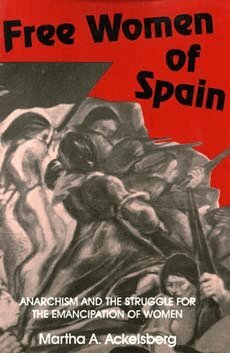
"When historians take women's movements and gender differences in organizations . . . seriously, this book will become part of the canon. . . . a forthright effort to view women's participation in politics in exciting new ways." —American Historical Review"The work not only fills a gap in knowledge of women's radical politics, but also addresses current concerns of feminist scholars." —Choice"The book brings us something of the excitement of the revolutionary possibility lived by these women—and the frustration of their encounter with male resistance to including women's emancipation in the revolutionary program." —Signs"Theirs is a story of commitment and creativity, of steadfastness and practicality, of communal endeavour and the bleak individual fate of defeat, hardship, and exile." —Gender and History"Ackelsberg, in the roles of both historian and activist, has crafted a volume that speaks to a wide variety of interests. . . . Her story is rich with the memories and voices of women . . . " —The Women's Review of Books"The author examines the autonomous women's liberation organization in late-1930s Spain, which represented an alternative to the individualistic perspectives characterizing mainstream feminist movements of the time." —Smith Alumnae Quarterly" . . . particularly strong on the ideology and organization of this radical women's group of the late 1930s." —Society for Spanish and Portuguese Historical Studies Bulletin"Ackelsberg gives the reader a fine explanation of the Spanish events, the general perspective of anarchism and the inspiring goals and struggles of Mujeres Libres." —Fifth EstateAckelsberg explores the development of Mujeres Libres, founded in 1936 during the Civil War in Spain as an organization dedicated to the liberation of women from their triple enslavement—to ignorance, as women, and as producers.
2 576 kr
Skickas inom 7-10 vardagar
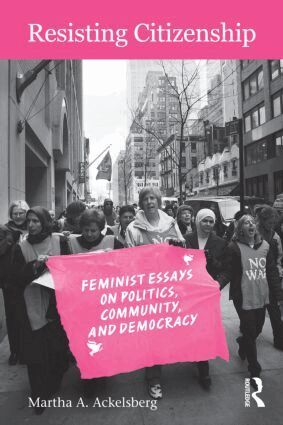
Political participation in America—supposedly the world’s strongest democracy—is startlingly low, and many of the civil rights and economic equity initiatives that were instituted in the 1960s and '70s have been abandoned, as significant proportions of the populace seem to believe that the civil rights battle has been won. However, rates of collective engagement, like community activism, are surprisingly high. In Resisting Citizenship, renowned feminist political scientist Martha Ackelsberg argues that community activism may hold important clues to reviving democracy in this time of growing bureaucratization and inequality.This book brings together many of Ackelsberg’s writings over the past 25 years, combining her own field work and interviews with cutting edge research and theory on democracy and activism. She explores these efforts in order to draw lessons—and attempt to incorporate knowledge—about current notions of democracy from those who engage in "non-traditional" participation, those who have, in many respects, been relegated to the margins of political life in the United States.
809 kr
Skickas inom 10-15 vardagar
Political participation in America—supposedly the world’s strongest democracy—is startlingly low, and many of the civil rights and economic equity initiatives that were instituted in the 1960s and '70s have been abandoned, as significant proportions of the populace seem to believe that the civil rights battle has been won. However, rates of collective engagement, like community activism, are surprisingly high. In Resisting Citizenship, renowned feminist political scientist Martha Ackelsberg argues that community activism may hold important clues to reviving democracy in this time of growing bureaucratization and inequality.This book brings together many of Ackelsberg’s writings over the past 25 years, combining her own field work and interviews with cutting edge research and theory on democracy and activism. She explores these efforts in order to draw lessons—and attempt to incorporate knowledge—about current notions of democracy from those who engage in "non-traditional" participation, those who have, in many respects, been relegated to the margins of political life in the United States.