Martha J. Macri - Böcker
Visar alla böcker från författaren Martha J. Macri. Handla med fri frakt och snabb leverans.
5 produkter
5 produkter
721 kr
Skickas inom 10-15 vardagar
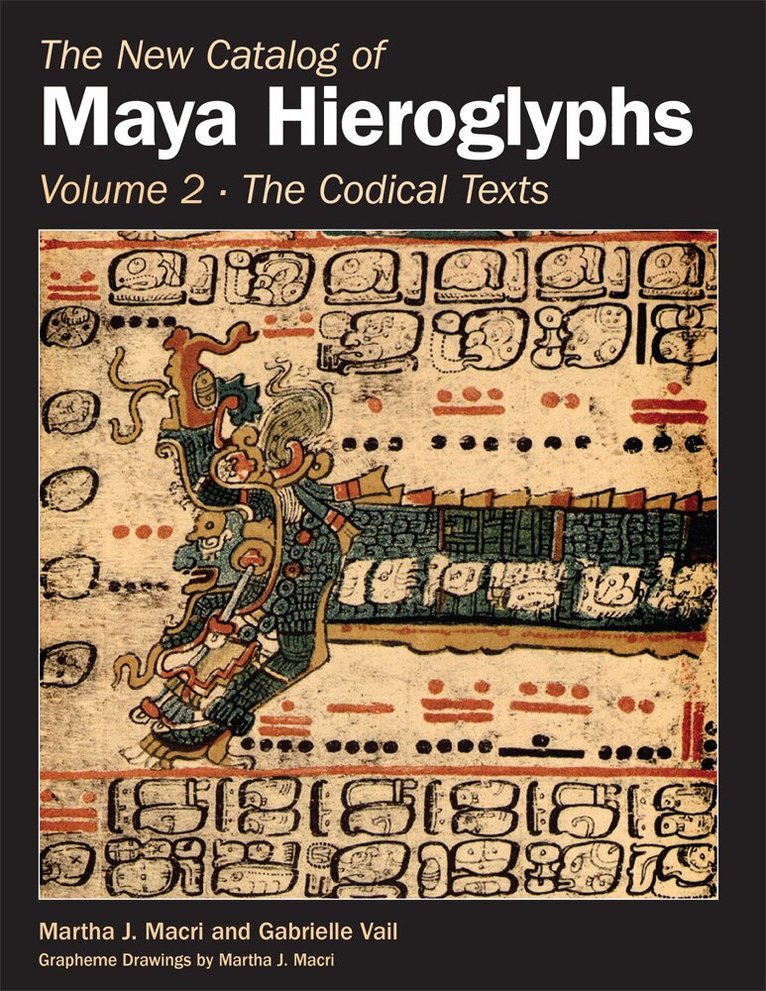
This long-awaited resource complements its companion volume on Classic Period monumental inscriptions. Authors Martha J. Macri and Gabrielle Vail provide a comprehensive listing of graphemes found in the Dresden, Madrid, and Paris codices, 40 percent of which are unique to these painted manuscripts, and discuss current and past interpretations of these graphemes.The New Catalog uses an original coding system developed for the Maya Hieroglyphic Database Project. The new three-digit codes group the graphemes according to their visual, rather than functional, characteristics to allow readers to see distinctions between similar signs. Each entry contains the grapheme's New Catalog code, an image, the corresponding Thompson number, proposed syllabic and logographic values, calendrical significance, and bibliographical citations. Appendices and an index of signs from both volumes contain images of all graphemes and variants ordered by code, allowing readers to search for graphemes by visual form or by their proposed logographic and phonetic values.Together the two volumes of the New Catalog represent the most significant updating of the sign lists for the Maya script proposed in half a century. They provide a cutting-edge reference tool critical to the research of Mesoamericanists in the fields of archaeology, art history, ethnohistory, and linguistics, and a valuable resource to scholars specializing in comparative studies of writing systems and related disciplines.
378 kr
Skickas inom 10-15 vardagar
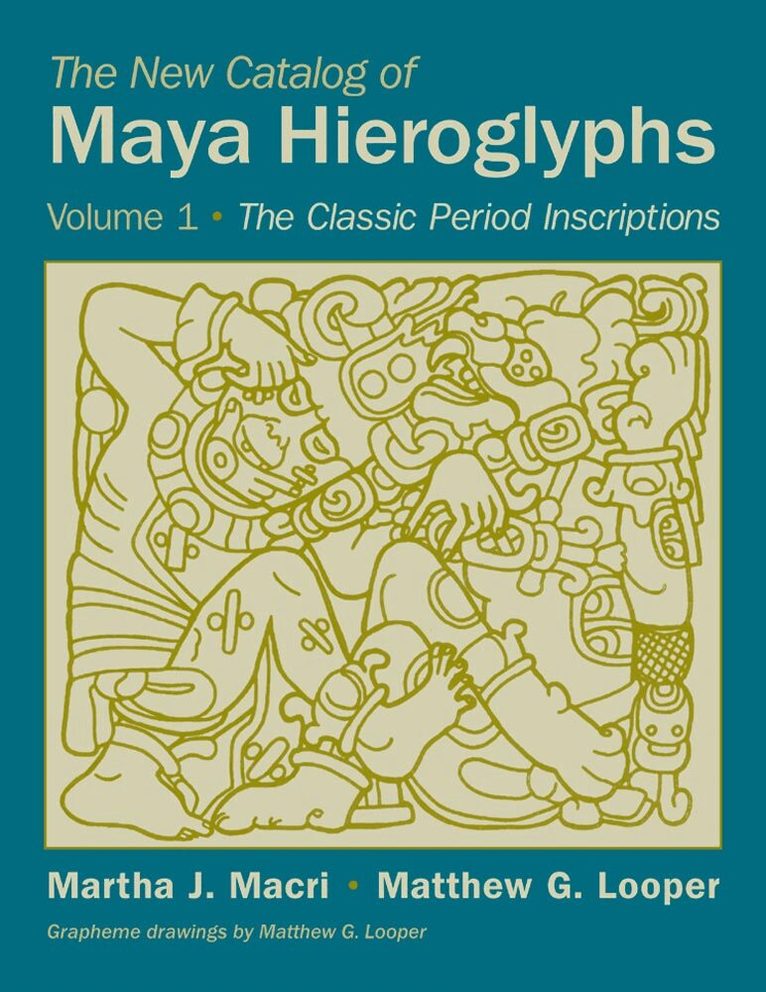
For hundreds of years, Maya artists and scholars used hieroglyphs to record their history and culture. In the nineteenth and twentieth centuries, archaeologists, photographers, and artists recorded the Maya carvings that remained, often by transporting box cameras and plaster casts through the jungle on muleback. The New Catalog of Maya Hieroglyphs, Volume I: The Classic Period Inscriptions is a guide to all the known hieroglyphic symbols of the Classic Maya script. In the New Catalog Martha J. Macri and Matthew G. Looper have produced a valuable research tool based on the latest Mesoamerican scholarship.An essential resource for all students of Maya texts, the New Catalog is also accessible to nonspecialists with an interest in Mesoamerican cultures. Macri and Looper present the combined knowledge of the most reliable scholars in Maya epigraphy. They provide currently accepted syllabic and logographic values, a history of references to published discussions of each sign, and related lexical entries from dictionaries of Maya languages, all of which were compiled through the Maya Hieroglyphic Database Project.This first volume of the New Catalog focuses on texts from the Classic Period (approximately 150-900 C.E.), which have been found on carved stone monuments, stucco wall panels, wooden lintels, carved and painted pottery, murals, and small objects of jadeite, shell, bone, and wood. The forthcoming second volume will describe the hieroglyphs of the three surviving Maya codices that date from later periods.
378 kr
Skickas inom 10-15 vardagar
This long-awaited resource complements its companion volume on Classic Period monumental inscriptions. Authors Martha J. Macri and Gabrielle Vail provide a comprehensive listing of graphemes found in the Dresden, Madrid, and Paris codices, 40 percent of which are unique to these painted manuscripts, and discuss current and past interpretations of these graphemes.The New Catalog uses an original coding system developed for the Maya Hieroglyphic Database Project. The new three-digit codes group the graphemes according to their visual, rather than functional, characteristics to allow readers to see distinctions between similar signs. Each entry contains the grapheme’s New Catalog code, an image, the corresponding Thompson number, proposed syllabic and logographic values, calendrical significance, and bibliographical citations. Appendices and an index of signs from both volumes contain images of all graphemes and variants ordered by code, allowing readers to search for graphemes by visual form or by their proposed logographic and phonetic values.Together the two volumes of the New Catalog represent the most significant updating of the sign lists for the Maya script proposed in half a century. They provide a cutting-edge reference tool critical to the research of Mesoamericanists in the fields of archaeology, art history, ethnohistory, and linguistics, and a valuable resource to scholars specializing in comparative studies of writing systems and related disciplines.
733 kr
Kommande
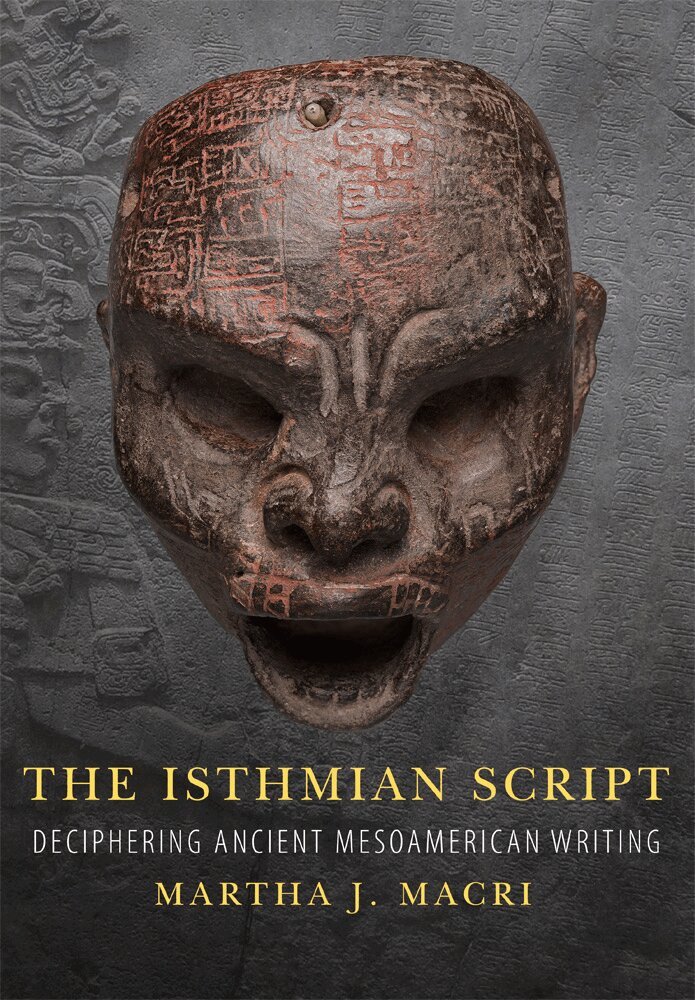
The Isthmian script, sometimes called Epi-Olmec, first came to the attention of scholars through inscribed texts on the Tuxtla Statuette and the La Mojarra Stela, both discovered in Veracruz, Mexico. In The Isthmian Script: Deciphering Ancient Mesoamerican Writing, linguist Martha J. Macri provides the most comprehensive account ever given of this ancient script and the tantalizing clues it holds for pre-Maya culture. While the Olmec culture of the Gulf of Mexico, among the oldest known in Mesoamerica, clearly inspired the artistic motifs and iconography of the region, Macri argues that on the basis of evidence from sculptural traditions farther to the south, the Isthmian script proper originated in Chiapas and Guatemala, not in the Olmec centers of San Lorenzo and La Venta. Challenging a previous claim of full decipherment announced in the journal Science in 1993, Macri uses structural analysis and comparative iconography to demonstrate that the Isthmian script, even without a word-for-word decipherment, affords a wealth of data about the origins of Mesoamerican scripts and about interactions between Mixe-Zoquean and Mayan speakers during the Middle to Late Preclassic period (900 BCE–100 CE). This richly documented study offers observations on specific signs as a starting point for further research, providing data in support of the author’s hypotheses and spelling out clearly what is still not known. With valuable new insights into the linguistic prehistory and the iconography on stone sculpture in Mexico and Guatemala, Macri’s work calls for a new generation of investigators into the Isthmian script and inspires a renewed interest in the process of script invention among early Mesoamerican peoples.
New Catalog of Maya Hieroglyphs, Volume 3 Volume 285
The Complete Illustrated Guide
Inbunden, Engelska, 2026
733 kr
Kommande
Among their celebrated achievements, the ancient Maya are renowned for developing a highly sophisticated writing system. Their unique hieroglyphic script adorns stone and wood monuments, as well as portable objects. Drawing on a wealth of research, this remarkable book—the third and final volume in The New Catalog of Maya Hieroglyphs series—offers a comprehensive and up-to-date visual reference of the Maya script.As the culmination of The New Catalog, the current volume both summarizes information from the previous volumes and expands on the discussions of decipherment and grapheme functions. Incorporating the most recent research on the script, it reclassifies several signs and adds many more, including those appearing in newly discovered inscriptions. Along with explanatory text, it presents in visual form each individual sign used in the Maya script along with its corresponding three- or four-digit code.Combining cutting-edge scholarship with accessible presentation, this volume serves as a concise reference tool critical for the ongoing research of scholars and students of Mesoamerican writing systems. For enhanced interactivity, readers can also use the guide in coordination with the online Maya Hieroglyphic Database.