Martin Bommas - Böcker
Visar alla böcker från författaren Martin Bommas. Handla med fri frakt och snabb leverans.
9 produkter
9 produkter
2 012 kr
Skickas inom 10-15 vardagar
Over a century after his discovery, this comprehensive biography of Tutankhamun explores a wealth of evidence, including archaeological and ancient textual sources, DNA analysis and CT scanning, bringing to life a pharaoh who has remained elusive apart from his grandiose tomb treasures.For the first time, this volume identifies the names of Tutankhamun’s biological parents, tracing the footsteps of his short life that was marked by genetic defects and physical deterioration. Between his early days and his untimely death, Tutankhamun (previously Tutankhaten) appears as a child of his time; he was torn between the cult of the Aten and the restoration of the cult of Amun, a campaign in which he personally played a leading role. Equipped with a thorough education, gifted with a brilliant mind and living mostly in solitude, readers will follow in detail how Tutankhamun secured the survival of the 18th Dynasty. This book traces Tutankhamun’s involvement in processes which can still be felt in Egypt today. His complex personality is reconstructed based on archaeological evidence—some of which has never been discussed previously—and conclusions drawn from both scientific research and a deep understanding of the context in which he lived. By also considering the lives of those who were close to the teenage king, this book delivers a comprehensive source-based biography of an ancient Egyptian pharaoh. Complete with intensive references to international scholarship, visual sources and maps, and excluding the tomb treasures created after his physical death, this book is a fresh and original approach to understanding the life—not afterlife—of the most popular pharaoh of modern times.Tutankhamun: A Biography is suitable for students, scholars and non-specialist readers interested in the life of Tutankhamun, as well as those working on ancient Egyptian history and religion more broadly, particularly that of New Kingdom Egypt.
552 kr
Skickas inom 10-15 vardagar
Over a century after his discovery, this comprehensive biography of Tutankhamun explores a wealth of evidence, including archaeological and ancient textual sources, DNA analysis and CT scanning, bringing to life a pharaoh who has remained elusive apart from his grandiose tomb treasures.For the first time, this volume identifies the names of Tutankhamun’s biological parents, tracing the footsteps of his short life that was marked by genetic defects and physical deterioration. Between his early days and his untimely death, Tutankhamun (previously Tutankhaten) appears as a child of his time; he was torn between the cult of the Aten and the restoration of the cult of Amun, a campaign in which he personally played a leading role. Equipped with a thorough education, gifted with a brilliant mind and living mostly in solitude, readers will follow in detail how Tutankhamun secured the survival of the 18th Dynasty. This book traces Tutankhamun’s involvement in processes which can still be felt in Egypt today. His complex personality is reconstructed based on archaeological evidence—some of which has never been discussed previously—and conclusions drawn from both scientific research and a deep understanding of the context in which he lived. By also considering the lives of those who were close to the teenage king, this book delivers a comprehensive source-based biography of an ancient Egyptian pharaoh. Complete with intensive references to international scholarship, visual sources and maps, and excluding the tomb treasures created after his physical death, this book is a fresh and original approach to understanding the life—not afterlife—of the most popular pharaoh of modern times.Tutankhamun: A Biography is suitable for students, scholars and non-specialist readers interested in the life of Tutankhamun, as well as those working on ancient Egyptian history and religion more broadly, particularly that of New Kingdom Egypt.
972 kr
Skickas inom 5-8 vardagar
1 964 kr
Skickas inom 10-15 vardagar
This title deals with the role of memory in shaping religion in the ancient cities of Mesopotamia, Egypt, Greece and Rome. This volume brings together scholars and researchers working on memory and religion in ancient urban environments. Chapters explore topics relating to religious traditions and memory, and the multifunctional roles of architectural and geographical sites, mythical figures and events, literary works and artefacts. Pagan religions were often less static and more open to new influences than previously understood. One of the factors that shape religion is how fundamental elements are remembered as valuable and therefore preservable for future generations. Memory, therefore, plays a pivotal role when - as seen in ancient Rome during late antiquity - a shift of religions takes place within communities. The significance of memory in ancient societies and how it was promoted, prompted, contested and even destroyed is discussed in detail.This volume, the first of its kind, will not only address the main cultures of the ancient world - Mesopotamia, Egypt, Greece and Rome - but also look at urban religious culture and funerary belief, and how concepts of ethnic religion were adapted in new religious environments.
2 022 kr
Skickas inom 10-15 vardagar
In recent years memory has become a central concept in historical studies, following the definition of the term 'Cultural Memory' by the Egyptologist Jan Assmann in 1994. Thinking about memory, as both an individual and a social phenomenon, has led to a new way of conceptualizing history and has drawn historians into debate with scholars in other disciplines such as literary studies, cultural theory and philosophy. The aim of this volume is to explore memory and identity in ancient societies. 'We are what we remember' is the striking thesis of the Nobel laureate Eric R Kandel, and this holds equally true for ancient societies as modern ones. How did the societies of Mesopotamia, Egypt, Greece and Rome remember and commemorate the past? How were relationships to the past, both individual and collective, articulated? Exploring the balance between memory as survival and memory as reconstruction, and between memory and historically recorded fact, this volume unearths the way ancient societies formed their cultural identity.
544 kr
Skickas inom 10-15 vardagar
In recent years memory has become a central concept in historical studies, following the definition of the term 'Cultural Memory' by the Egyptologist Jan Assmann in 1994. Thinking about memory, as both an individual and a social phenomenon, has led to a new way of conceptualizing history and has drawn historians into debate with scholars in other disciplines such as literary studies, cultural theory and philosophy. The aim of this volume is to explore memory and identity in ancient societies. ‘We are what we remember' is the striking thesis of the Nobel laureate Eric R Kandel, and this holds equally true for ancient societies as modern ones. How did the societies of Mesopotamia, Egypt, Greece and Rome remember and commemorate the past? How were relationships to the past, both individual and collective, articulated? Exploring the balance between memory as survival and memory as reconstruction, and between memory and historically recorded fact, this volume unearths the way ancient societies formed their cultural identity.
528 kr
Skickas inom 10-15 vardagar
Memory and Urban Religion in the Ancient World brings together scholars and researchers working on memory and religion in ancient urban environments. Chapters explore topics relating to religious traditions and memory, and the multifunctional roles of architectural and geographical sites, mythical figures and events, literary works and artefacts. Pagan religions were often less static and more open to new influences than previously understood. One of the factors that shape religion is how fundamental elements are remembered as valuable and therefore preservable for future generations. Memory, therefore, plays a pivotal role when - as seen in ancient Rome during late antiquity - a shift of religions takes place within communities. The significance of memory in ancient societies and how it was promoted, prompted, contested and even destroyed is discussed in detail. This volume, the first of its kind, not only addresses the main cultures of the ancient world - Mesopotamia, Egypt, Greece and Rome - but also looks at urban religious culture and funerary belief, and how concepts of ethnic religion were adapted in new religious environments.
366 kr
Skickas inom 7-10 vardagar
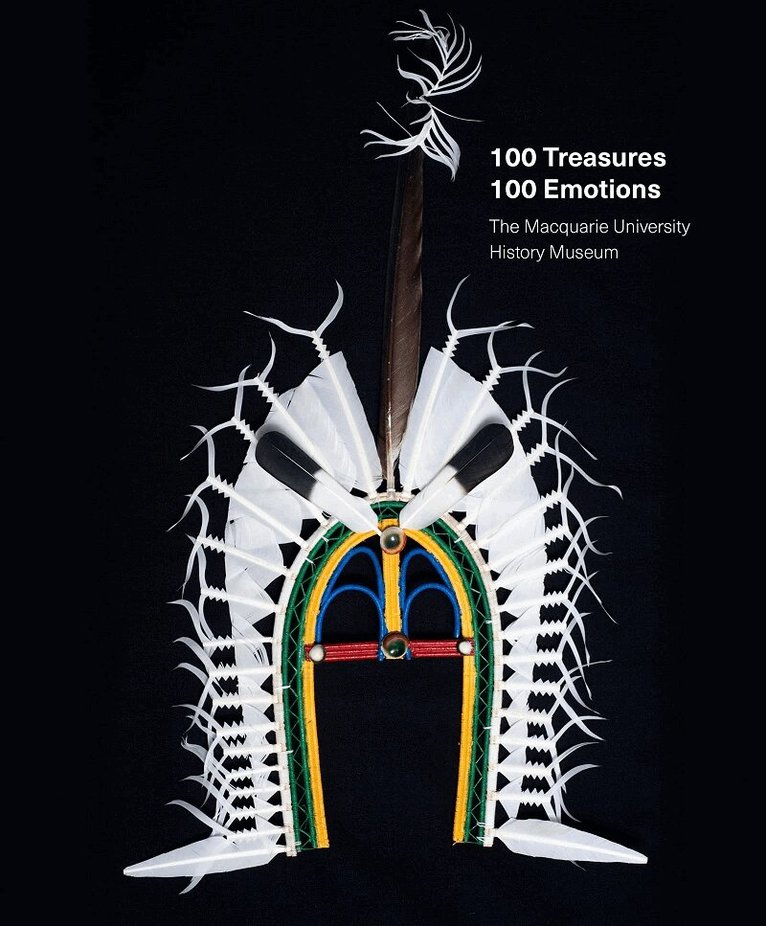
100 Treasures / 100 Emotions celebrates the inauguration of the Macquarie University History Museum Sydney, NSW, Australia. This entirely new volume focuses on 100 works from a vast collection of 15,000 objects, to highlight the new museum's focus on social history and the human condition beyond the borders of space and time. This story is told through a mixture of short essays and colour plates of 100 selected objects drawn from across five continents and over the course of 5,000 years. These objects - ranging from fragments of an ancient Egyptian Book of the Dead, to a WWI era Turkish Star medal - have been chosen by Museum staff and Macquarie scholars to achieve a representative and rigorously researched survey of human experience and creativity over five millennia. Professor Martin Bommas, edits short essays on each of the 100 selected objects by a broad range of academic authors, complemented by entirely new photography of the objects commissioned from award-winning photographer Effy Alexakis.
162 kr
Skickas inom 7-10 vardagar
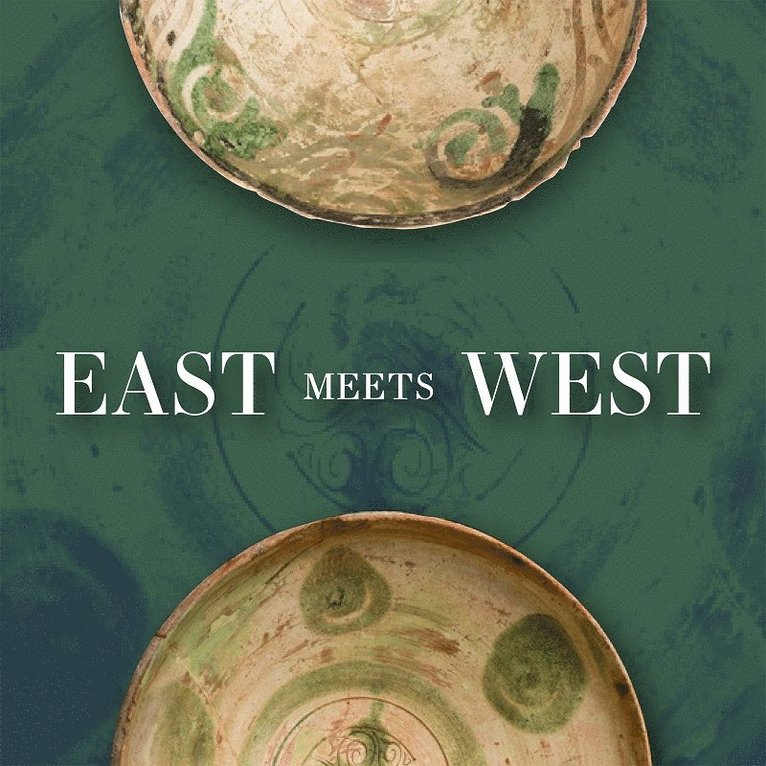
This entirely new volume illuminates the complex intersection of western and eastern culture and civilization in the Eastern Mediterranean during the period of the Crusades from the eleventh to late thirteenth century; in particular it presents and studies 20 Byzantine and Mamluk Egyptian artworks and illuminated manuscripts drawn both from the collections of the Museum and external loans. The diverse artworks-ceramic bowls, Sgraffito ware, gold coins, glass jewellery and leaves from the Qur'an, and other illuminated manuscripts-are presented in broad chronological and thematic sections, each with an introductory text by a Professor Martin Bommas of the Museum, and other guest authors. These sections look at these objects within the broad context of the Crusades and the history of the Byzantine Empire and Mamluk Egypt, as well as considering reception to, and presentation of, Mamluk heritage in modern-day Cairo, and the reception of object of non-European heritage in Australia. In addition to the main sections and presentation of the objects, many also illustrated using wonderful colour details for the section openers, the volume includes a timeline, selected bibliography and brief biographies of the contributing authors.