Martin Brückner - Böcker
Visar alla böcker från författaren Martin Brückner. Handla med fri frakt och snabb leverans.
9 produkter
9 produkter
1 133 kr
Skickas inom 3-6 vardagar
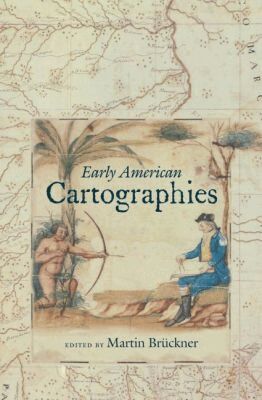
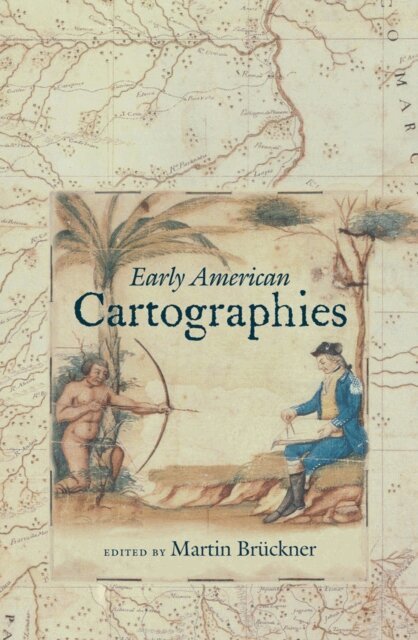
Maps were at the heart of cultural life in the Americas from before colonization to the formation of modern nation-states. The fourteen essays in Early American Cartographies examine indigenous and European peoples' creation and use of maps to better represent and understand the world they inhabited. Drawing from both current historical interpretations and new interdisciplinary perspectives, this collection provides diverse approaches to understanding the multilayered exchanges that went into creating cartographic knowledge in and about the Americas. In the introduction, editor Martin Bruckner provides a critical assessment of the concept of cartography and of the historiography of maps. The individual essays, then, range widely over space and place, from the imperial reach of Iberian and British cartography to indigenous conceptualizations, including ""dirty,"" ephemeral maps and star charts, to demonstrate that pre-nineteenth-century American cartography was at once a multiform and multicultural affair. This volume not only highlights the collaborative genesis of cartographic knowledge about the early Americas; the essays also bring to light original archives and innovative methodologies for investigating spatial relations among peoples in the western hemisphere. Taken together, the authors reveal the roles of early American cartographies in shaping popular notions of national space, informing visual perception, animating literary imagination, and structuring the political history of Anglo- and Ibero-America. The contributors are: Martin Bruckner, University of Delaware Michael J. Drexler, Bucknell University Matthew H. Edney, University of Southern Maine Jess Edwards, Manchester Metropolitan University Junia Ferreira Furtado, Universidade Federal de Minas Gerais, Brazil William Gustav Gartner, University of Wisconsin–Madison Gavin Hollis, Hunter College of the City University of New York Scott Lehman, independent scholar Ken MacMillan, University of Calgary Barbara E. Mundy, Fordham University Andrew Newman, Stony Brook University Ricardo Padron, University of Virginia Judith Ridner, Mississippi State University |Maps were at the heart of cultural life in the Americas from before colonization to the formation of modern nation-states. The fourteen essays in Early American Cartographies examine indigenous and European peoples' creation and use of maps to better represent and understand the world they inhabited.
433 kr
Skickas inom 10-15 vardagar
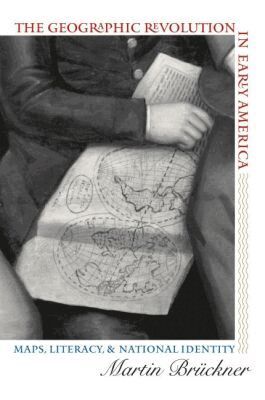
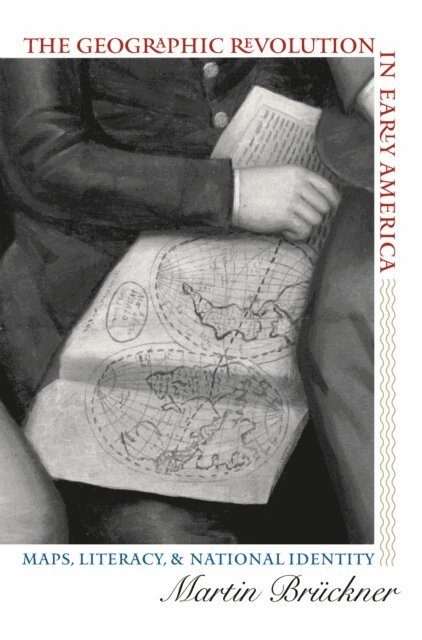
The rapid rise in popularity of maps and geography handbooks in the eighteenth century ushered in a new geographic literacy among non elite Americans. In a path breaking and richly illustrated examination of this transformation, Martin Bruckner argues that geographic literacy as it was played out in popular literary genres significantly influenced the formation of identity in America from the 1680s to the 1820s. Drawing on historical geography, cartography, literary history, and material culture, Bruckner recovers a vibrant culture of geography consisting of property plats and surveying manuals, decorative wall maps and school geographies, the nation's first atlases, and sentimental objects such as needlework samplers. By showing how this geographic revolution affected the production of literature, Bruckner demonstrates that the internalization of geography as a kind of language helped shape the literary construction of the modern American subject. Empirically rich and provocative in its readings, ""The Geographic Revolution in Early America"" proposes a new, geographical basis for Anglo-Americans' understanding of their character and its expression in pedagogical and literary terms.
622 kr
Skickas inom 11-20 vardagar
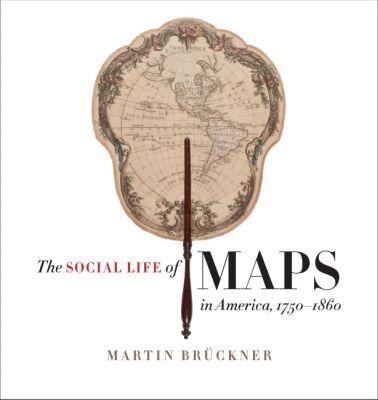
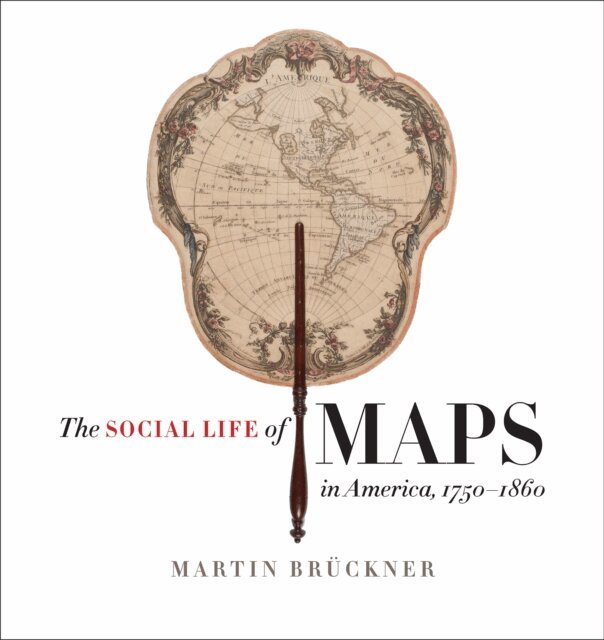
In the age of MapQuest and GPS, we take cartographic literacy for granted. We should not; the ability to find meaning in maps is the fruit of a long process of exposure and instruction. A ""carto-coded"" America - a nation in which maps are pervasive and meaningful - had to be created. The Social Life of Maps tracks American cartography's spectacular rise to its unprecedented cultural influence. Between 1750 and 1860, maps did more than communicate geographic information and political pretensions. They became affordable and intelligible to ordinary American men and women looking for their place in the world. School maps quickly entered classrooms, where they shaped reading and other cognitive exercises; giant maps drew attention in public spaces; miniature maps helped Americans chart personal experiences. In short, maps were uniquely social objects whose visual and material expressions affected commercial practices and graphic arts, theatrical performances and the communication of emotions. This lavishly illustrated study follows popular maps from their points of creation to shops and galleries, schoolrooms and coat pockets, parlors and bookbindings. Between the decades leading up to the Revolutionary War and the Civil War, early Americans bonded with maps; Martin Bruckner's comprehensive history of quotidian cartographic encounters is the first to show us how.
1 307 kr
Skickas inom 7-10 vardagar
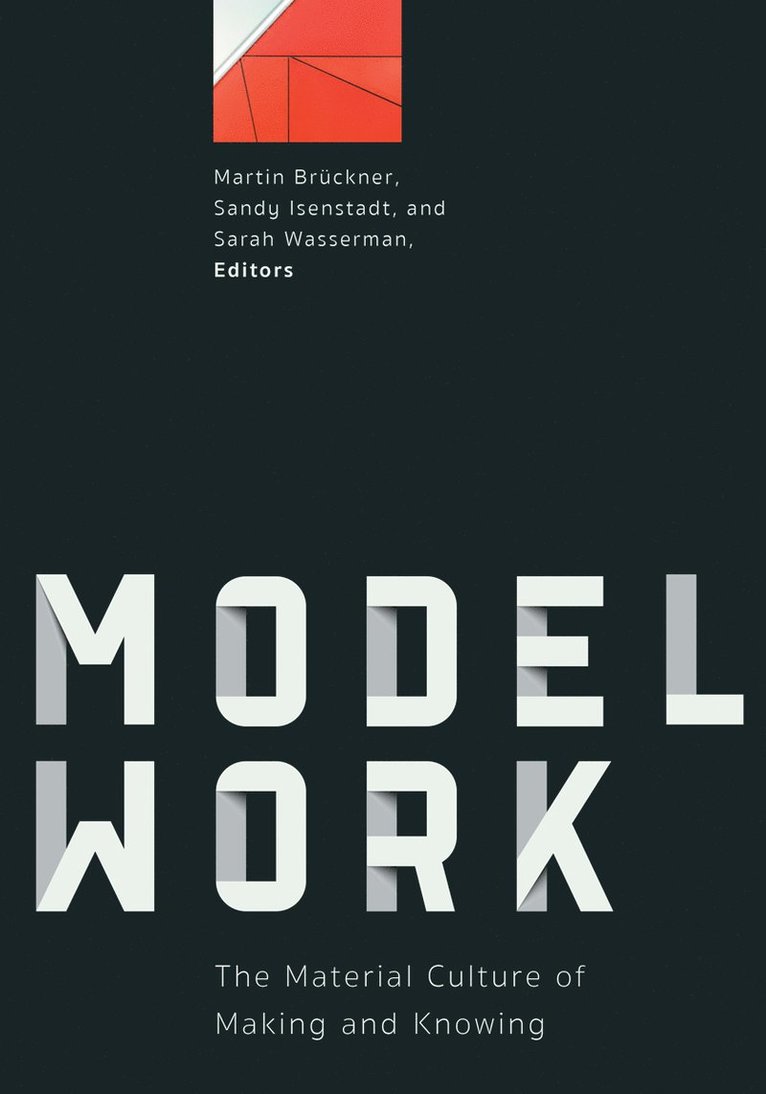
How making models allows us to recall what was and to discover what still might be Whether looking inward to the intricacies of human anatomy or outward to the furthest recesses of the universe, expanding the boundaries of human inquiry depends to a surprisingly large degree on the making of models. In this wide-ranging volume, scholars from diverse fields examine the interrelationships between a model’s material foundations and the otherwise invisible things it gestures toward, underscoring the pivotal role of models in understanding and shaping the world around us. Whether in the form of reproductions, interpretive processes, or constitutive tools, models may bridge the gap between the tangible and the abstract.By focusing on the material aspects of models, including the digital ones that would seem to displace their analogue forebears, these insightful essays ground modeling as a tactile and emphatically humanistic endeavor. With contributions from scholars in the history of science and technology, visual studies, musicology, literary studies, and material culture, this book demonstrates that models serve as invaluable tools across every field of cultural development, both historically and in the present day.Modelwork is unique in calling attention to modeling’s duality, a dynamic exchange between imagination and matter. This singular publication shows us how models shape our ability to ascertain the surrounding world and to find new ways to transform it. Contributors: Hilary Bryon, Virginia Tech; Johanna Drucker, UCLA; Seher Erdoğan Ford, Temple U; Peter Galison, Harvard U; Lisa Gitelman, New York U; Reed Gochberg, Harvard U; Catherine Newman Howe, Williams College; Christopher J. Lukasik, Purdue U; Martin Scherzinger, New York U; Juliet S. Sperling, U of Washington; Annabel Jane Wharton, Duke U.
319 kr
Skickas inom 7-10 vardagar
How making models allows us to recall what was and to discover what still might be Whether looking inward to the intricacies of human anatomy or outward to the furthest recesses of the universe, expanding the boundaries of human inquiry depends to a surprisingly large degree on the making of models. In this wide-ranging volume, scholars from diverse fields examine the interrelationships between a model’s material foundations and the otherwise invisible things it gestures toward, underscoring the pivotal role of models in understanding and shaping the world around us. Whether in the form of reproductions, interpretive processes, or constitutive tools, models may bridge the gap between the tangible and the abstract.By focusing on the material aspects of models, including the digital ones that would seem to displace their analogue forebears, these insightful essays ground modeling as a tactile and emphatically humanistic endeavor. With contributions from scholars in the history of science and technology, visual studies, musicology, literary studies, and material culture, this book demonstrates that models serve as invaluable tools across every field of cultural development, both historically and in the present day.Modelwork is unique in calling attention to modeling’s duality, a dynamic exchange between imagination and matter. This singular publication shows us how models shape our ability to ascertain the surrounding world and to find new ways to transform it. Contributors: Hilary Bryon, Virginia Tech; Johanna Drucker, UCLA; Seher Erdoğan Ford, Temple U; Peter Galison, Harvard U; Lisa Gitelman, New York U; Reed Gochberg, Harvard U; Catherine Newman Howe, Williams College; Christopher J. Lukasik, Purdue U; Martin Scherzinger, New York U; Juliet S. Sperling, U of Washington; Annabel Jane Wharton, Duke U.
1 118 kr
Skickas inom 7-10 vardagar
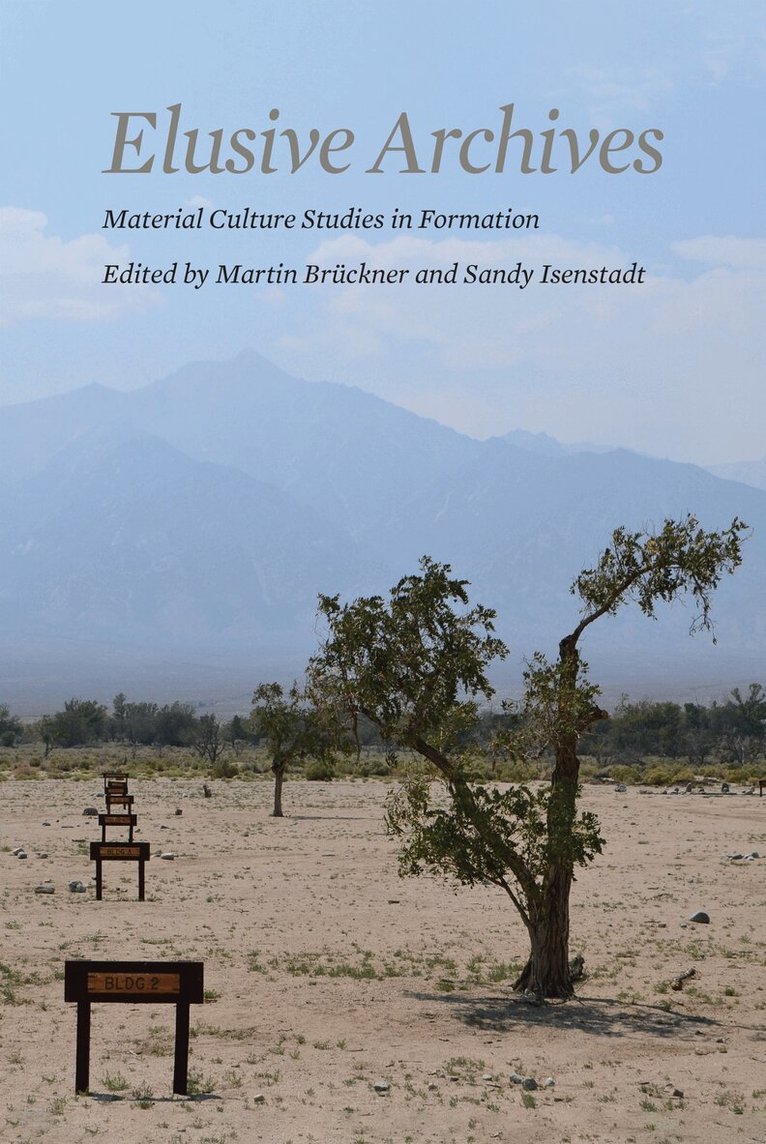
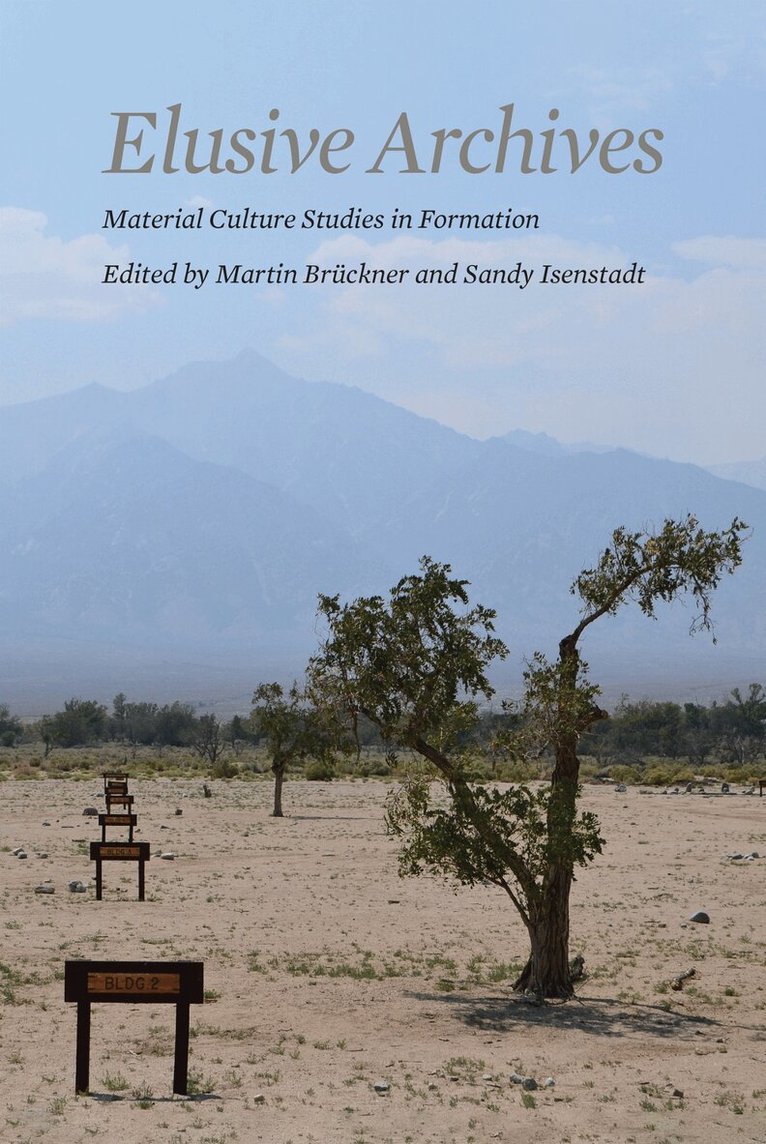
The essays that comprise Elusive Archives raise a common question: how do we study material culture when the objects of study are transient, evanescent, dispersed or subjective? Such things resist the taxonomic protocols that institutions, such as museums and archives, rely on to channel their acquisitions into meaningful collections. What holds these disparate things together here are the questions authors ask of them. Each essay creates by means of its method a provisional collection of things, an elusive archive. Scattered matter then becomes fixed within each author’s analytical framework rather than within the walls of an archive’s reading room or in cases along a museum corridor.This book follows the ways in which objects may be identified, gathered, arranged, conceptualized and even displayed rather than by “discovering” artifacts in an archive and then asking how they came to be there. The authors approach material culture outside the traditional bounds of learning about the past. Their essays are varied not only in subject matter but also in narrative format and conceptual reach, making the volume accessible and easy to navigate for a quick reference or, if read straight through, build toward a new way to think about material culture.
495 kr
Skickas inom 7-10 vardagar
The essays that comprise Elusive Archives raise a common question: how do we study material culture when the objects of study are transient, evanescent, dispersed or subjective? Such things resist the taxonomic protocols that institutions, such as museums and archives, rely on to channel their acquisitions into meaningful collections. What holds these disparate things together here are the questions authors ask of them. Each essay creates by means of its method a provisional collection of things, an elusive archive. Scattered matter then becomes fixed within each author’s analytical framework rather than within the walls of an archive’s reading room or in cases along a museum corridor.This book follows the ways in which objects may be identified, gathered, arranged, conceptualized and even displayed rather than by “discovering” artifacts in an archive and then asking how they came to be there. The authors approach material culture outside the traditional bounds of learning about the past. Their essays are varied not only in subject matter but also in narrative format and conceptual reach, making the volume accessible and easy to navigate for a quick reference or, if read straight through, build toward a new way to think about material culture.
145 kr
Skickas inom 3-6 vardagar
197 kr
Skickas inom 5-8 vardagar