• Fri frakt över 249 kr
  • •
  • Snabba leveranser
  • •
  • Billiga böcker
Kundservice

Du är på sajten för privatpersoner.

Företag, bibliotek eller offentlig verksamhet?

Du handlar på classic.bokus.com, där alla dina funktioner finns intakta.
Till classic.bokus.com
Bokus logotyp. Gå till startsidan.
  • Erbjudanden
  • Nyheter
  • Student
  • Topplistor
  • Barn & ungdom
  • Bokus Play
  • E-böcker
  • Pocketböcker
  • Spel & pussel

10% rabatt på allt med kod: NYSTART10 →

Sidfot

Mina sidor

    Hjälp

    • Kundservice
    • Vanliga frågor och svar
    • Frakt och leverans
    • Retur vid ångerrätt
    • Reklamera vara
    • Betalning
    • Köpvillkor
    • Allmänna villkor
    • Information om webbplatsens tillgänglighet

    Om Bokus

    • Om oss
    • Pressrum
    • För studenter
    • För företag
    • För bibliotek och offentlig verksamhet
    • För leverantörer
    • Hållbarhet

    Populärt

    • Aktuella erbjudanden
    • Presentkort
    • Studentlitteratur
    • Nya böcker
    • Topplistor
    • Signerade böcker
    • Engelska böcker

    Inspiration

    • Boktips
    • BookTok
    • Populära bokserier
    • Barnbokskaraktärer
    • Populära författare
    Logotyp för Bokus
    Följ oss på Facebook (extern länk)Följ oss på Instagram (extern länk)Följ oss på YouTube (extern länk)Följ oss på TikTok (extern länk)
    bokus @ CookiesAnpassa cookiesIntegritetspolicyKöpvillkor
    Till Citymail hemsida (extern länk)Till Budbee hemsida (extern länk)Till Postnord hemsida (extern länk)Till Schenker hemsida (extern länk)Till Early Bird hemsida (extern länk)Till Walleys hemsida (extern länk)
    1. Kultur
    2. Arkitektur

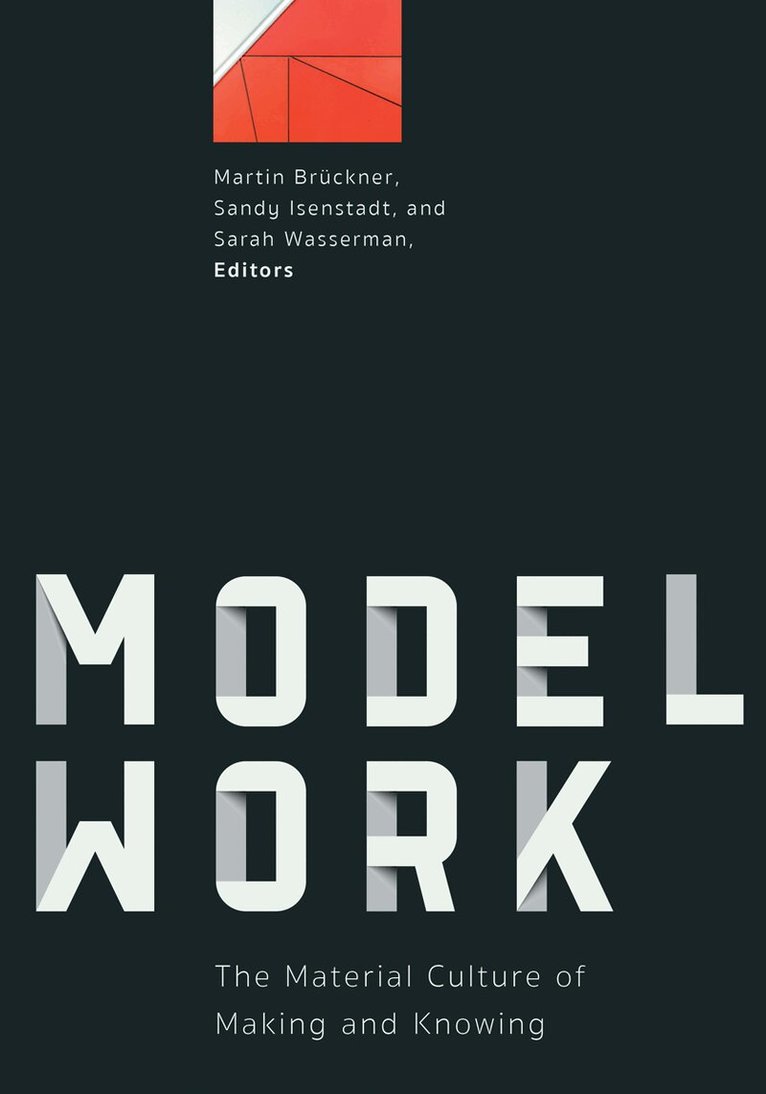
    Modelwork

    The Material Culture of Making and Knowing

    AvMartin Brückner,Sandy Isenstadt

    Inbunden, Engelska, 2021

    1 361 kr

    Beställningsvara. Skickas inom 5-8 vardagar. Fri frakt över 249 kr.

    Beskrivning

    How making models allows us to recall what was and to discover what still might be Whether looking inward to the intricacies of human anatomy or outward to the furthest recesses of the universe, expanding the boundaries of human inquiry depends to a surprisingly large degree on the making of models. In this wide-ranging volume, scholars from diverse fields examine the interrelationships between a model’s material foundations and the otherwise invisible things it gestures toward, underscoring the pivotal role of models in understanding and shaping the world around us. Whether in the form of reproductions, interpretive processes, or constitutive tools, models may bridge the gap between the tangible and the abstract.By focusing on the material aspects of models, including the digital ones that would seem to displace their analogue forebears, these insightful essays ground modeling as a tactile and emphatically humanistic endeavor. With contributions from scholars in the history of science and technology, visual studies, musicology, literary studies, and material culture, this book demonstrates that models serve as invaluable tools across every field of cultural development, both historically and in the present day.Modelwork is unique in calling attention to modeling’s duality, a dynamic exchange between imagination and matter. This singular publication shows us how models shape our ability to ascertain the surrounding world and to find new ways to transform it. Contributors: Hilary Bryon, Virginia Tech; Johanna Drucker, UCLA; Seher Erdoğan Ford, Temple U; Peter Galison, Harvard U; Lisa Gitelman, New York U; Reed Gochberg, Harvard U; Catherine Newman Howe, Williams College; Christopher J. Lukasik, Purdue U; Martin Scherzinger, New York U; Juliet S. Sperling, U of Washington; Annabel Jane Wharton, Duke U.

    Produktinformation

    • Utgivningsdatum:2021-10-12
    • Mått:178 x 254 x 38 mm
    • Vikt:784 g
    • Format:Inbunden
    • Språk:Engelska
    • Antal sidor:312
    • Förlag:University of Minnesota Press
    • ISBN:9781517910891

    Utforska kategorier

    • Arkitektur inom Kultur
    • Konsthistoria inom Kultur
    • Designböcker inom Kultur

    Mer om författaren

    Martin BrÜckner is professor of English and material culture studies at the University of Delaware. He is author or coeditor of several books, most recently The Social Life of Maps in America, 1750–1860.Sandy Isenstadt is professor and chair of art history at the University of Delaware and author or coeditor of several books, most recently Electric Light: An Architectural History. Sarah Wasserman is associate professor of English and material culture studies at the University of Delaware. She is author of The Death of Things: Ephemera and the American Novel (Minnesota, 2020).

    Recensioner i media

    "Essays by these art historians combine attention to the circulation and galvanizing force of images with a material culturalist sensibility that locates those images’ power in the manual practices, forms, and formats that support their transfer." -Winterthur Portfolio"Modelwork nicely shows that models are not only the critical instruments of modern science but have also become the essential tools with which we shape the world around us. " -Isis

    Innehållsförteckning

    • ContentsIntroduction: ModelworkMartin BrÜckner and Sandy IsenstadtPart I. Knowing1. Defining ModelsAnnabel Jane Wharton2. Material Models of Immaterial ThingsPeter GalisonPart II. Sensing3. William Farish’s Devices and Drawings: Models for Envisioning Immaterial and Material RealmsHilary Bryon4. “The Instructed Eye”: What Eighteenth- and Nineteenth-Century Drawing Books Tell Us about Vision and How We SeeChristopher J. Lukasik5. Algorithmic Audition: Modeling Musical PerceptionMartin ScherzingerPart III. Making6. The Useful Arts of Nineteenth-Century Patent ModelsReed Gochberg7. Bodies Made of Numbers, Numbers Made of BodiesCatherine Newman Howe8. Hypermodels: Architectural Production in Virtual SpacesSeher Erdoğan FordPart IV. Doing9. Modeling Maneuvers: Anatomical Illustration and the Practice of TouchJuliet S. Sperling10. Models and Manufactures: The Shoe as CommodityLisa Gitelman11. Modeling InterpretationJohanna DruckerAfterword: On the Humility of ModelsSarah WassermanAcknowledgmentsContributorsIndex