Martin D. Moore – författare
Visar alla böcker från författaren Martin D. Moore. Handla med fri frakt och snabb leverans.
4 produkter
4 produkter
241 kr
Kommande
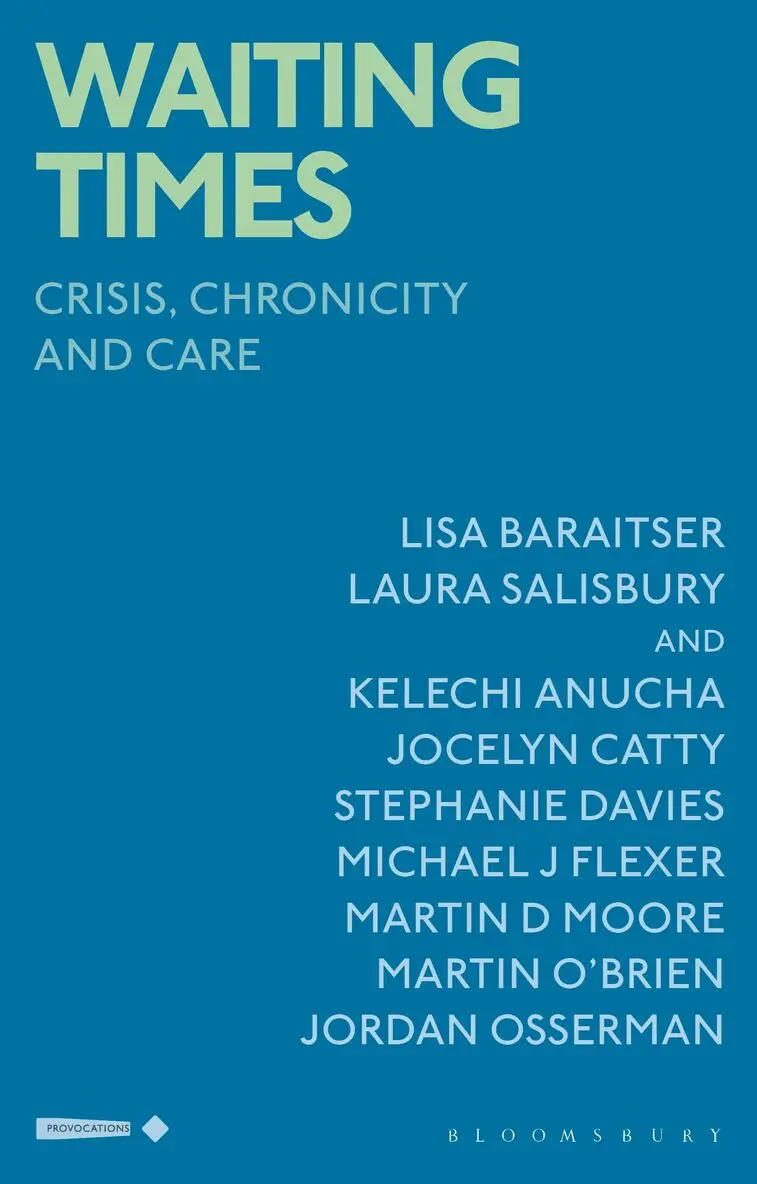
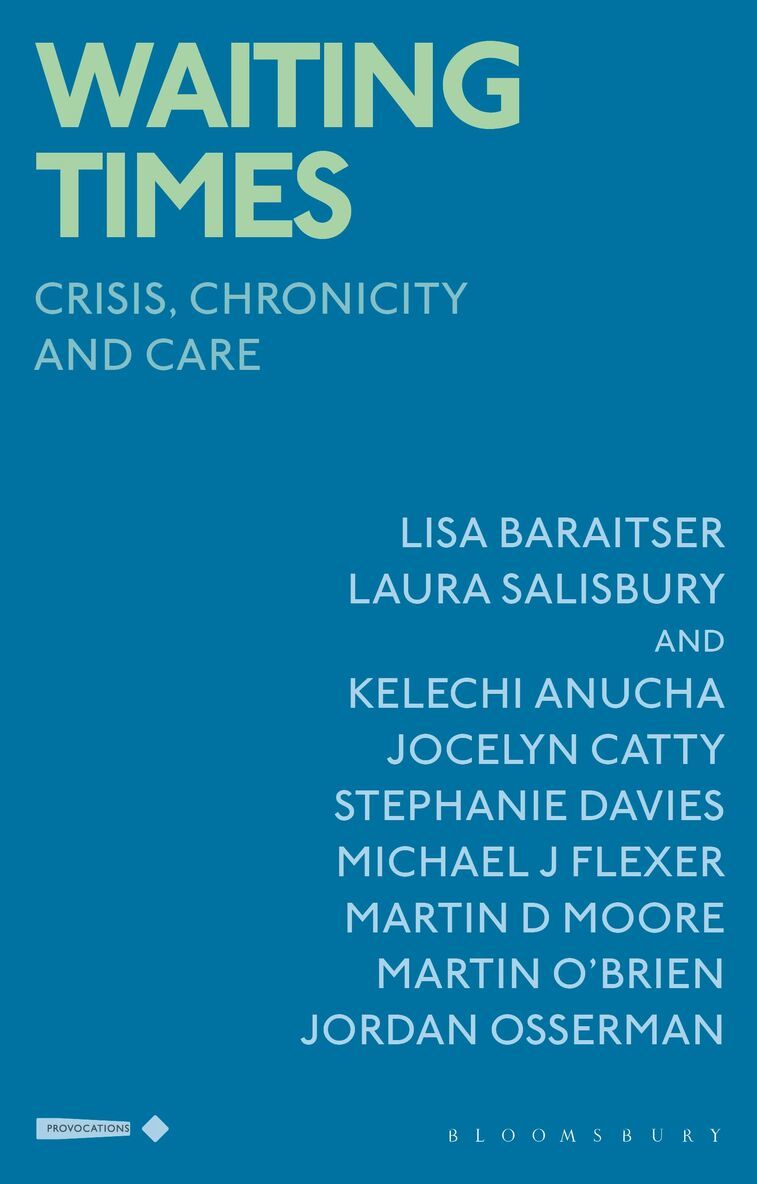
This open access book investigates waiting as one of healthcare’s core experiences. Waiting is there in the time it takes to access services; the uncertain temporalities of diagnosis and treatment; and in the elongated time-frames of recovery, relapse, remission, and dying. Yet it can be felt to be intolerable when we are in need of care and when we want to offer timely care. This book investigates both the difficulties and vital significance of waiting in and for practices of care.Waiting times in many health services across the Global North have been at historic levels since the Covid-19 pandemic. Although this crisis of waiting is culturally and historically specific, Covid-19 made visible broader questions about the relationship between waiting, time, and care, and the fate of welfare infrastructures. Who waits for (and on) whom? If all care entails forms of elongated time, what waiting do we want to eliminate, and what waiting needs to be noticed, supported, and preserved as an offer and practice of care? This book takes the UK National Health Service (NHS) as a particular site of collective waiting and caring. The authors argue that care is not straightforwardly aligned with the time of production, progress, or growth, but is bound instead to the chronicity of practices that sustain interdependence: pausing to assess what is needed, staying alongside suffering, and returning to sites of vulnerability. Cutting across the marketization, provision rationalization, ideas of crisis, and the linear models of time that can dominate health and welfare policies, this book reckons with care’s essential ‘untimeliness’. By moving away from the idea that waiting is merely a form of service failure or abandonment, the authors trace out a more complex understanding of how ‘timely’ care might be offered, made, and sustained. The ebook editions of this book are available open access under a CC BY-NC-ND 4.0 licence on bloomsburycollections.com. Open access was funded by The Wellcome Trust.
771 kr
Kommande
This open access book investigates waiting as one of healthcare’s core experiences. Waiting is there in the time it takes to access services; the uncertain temporalities of diagnosis and treatment; and in the elongated time-frames of recovery, relapse, remission, and dying. Yet it can be felt to be intolerable when we are in need of care and when we want to offer timely care. This book investigates both the difficulties and vital significance of waiting in and for practices of care.Waiting times in many health services across the Global North have been at historic levels since the Covid-19 pandemic. Although this crisis of waiting is culturally and historically specific, Covid-19 made visible broader questions about the relationship between waiting, time, and care, and the fate of welfare infrastructures. Who waits for (and on) whom? If all care entails forms of elongated time, what waiting do we want to eliminate, and what waiting needs to be noticed, supported, and preserved as an offer and practice of care? This book takes the UK National Health Service (NHS) as a particular site of collective waiting and caring. The authors argue that care is not straightforwardly aligned with the time of production, progress, or growth, but is bound instead to the chronicity of practices that sustain interdependence: pausing to assess what is needed, staying alongside suffering, and returning to sites of vulnerability. Cutting across the marketization, provision rationalization, ideas of crisis, and the linear models of time that can dominate health and welfare policies, this book reckons with care’s essential ‘untimeliness’. By moving away from the idea that waiting is merely a form of service failure or abandonment, the authors trace out a more complex understanding of how ‘timely’ care might be offered, made, and sustained. The ebook editions of this book are available open access under a CC BY-NC-ND 4.0 licence on bloomsburycollections.com. Open access was funded by The Wellcome Trust.
Del 15 - Social Histories of Medicine
Managing Diabetes, Managing Medicine
Chronic Disease and Clinical Bureaucracy in Post-War Britain
Inbunden, Engelska, 2019
428 kr
Skickas inom 5-8 vardagar
Through its study of diabetes care in twentieth-century Britain, Managing diabetes, managing medicine offers the first historical monograph to explore how the decision-making and labour of medical professionals became subject to bureaucratic regulation and managerial oversight. Where much existing literature has cast health care management as either a political imposition or an assertion of medical control, this work positions managerial medicine as a co-constructed venture. Although driven by different motives, doctors, nurses, professional bodies, government agencies and international organisations were all integral to the creation of managerial systems, working within a context of considerable professional, political, technological, economic and cultural change.An electronic edition of this book is freely available under a Creative Commons (CC BY-NC-ND) licence.
Del 18 - Social Histories of Medicine
Balancing the Self
Medicine, Politics and the Regulation of Health in the Twentieth Century
Inbunden, Engelska, 2020
432 kr
Skickas inom 5-8 vardagar
Many health, environmental, and social challenges across the globe – from diabetes to climate change – are regularly discussed in terms of imbalances in biological, ecological, and social systems. Yet, as contributions to this collection demonstrate, while the pressures of modernity have long been held to be pathogenic, strategies for addressing modern excesses and deficiencies of bodies and minds have frequently focused on the agency of the individual, self-knowledge, and individual choices. This volume explores how concepts of ‘balance’ have been central to modern politics, medicine, and society, analysing the diverse ways in which balanced and unbalanced selfhoods have been subject to construction, intervention, and challenge across the long twentieth century.Through original chapters on subjects as varied as obesity control, fatigue and the regulation of work, and the physiology of exploration in extreme conditions, Balancing the self explores how the mechanisms and meanings of balance have been framed historically. Together, contributions examine the positive narratives that have been attached to the ideals and practices of ‘self-help’, the diverse agencies historically involved in cultivating new ‘balanced’ selves, and the extent to which rhetorics of empowerment and responsibility have been used for a variety of purposes, from disciplining bodies to cutting social security. With contributions from leading and emerging scholars such as Dorothy Porter, Alex Mold, Vanessa Heggie, Chris Millard, and Natasha Feiner, Balancing the self generates new insights into emerging fields of health governance, subjectivity, and balance.An electronic edition of this book is freely available under a Creative Commons (CC BY-NC-ND) licence.