Martin Goldberg - Böcker
Visar alla böcker från författaren Martin Goldberg. Handla med fri frakt och snabb leverans.
8 produkter
8 produkter
1 031 kr
Kommande
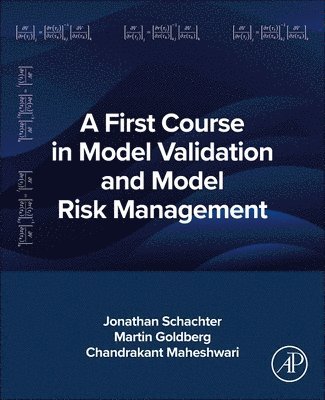
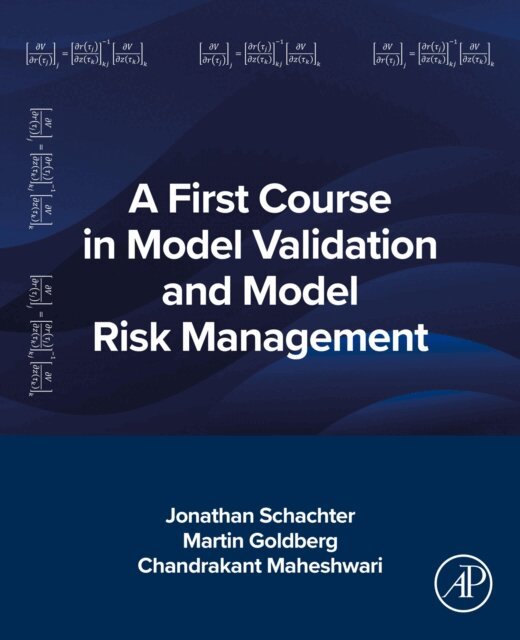
A First Course in Model Validation and Model Risk Management offers robust coverage for current and future financial engineers. Useful as part of a masters program, for self-study, or as a valuable reference, the textbook explains in step-by-step, practical terms how mathematical models owned by financial institutions are essential to their public activities, including sales, trading, risk management, and internal audits. Like a diverse fleet of cars maintained by a rental car location, a bank must make sure customers can "drive" any of its models for a specific financial product. The book covers both pricing and risk models. Chapters consider modeling basics, marked-to-market and marked-to-model asset classes, market risk, credit risk, portfolio risk, operational risk, capital model risk, and financial crime, along with machine learning/AI.To support course use and practical applications, the text provides examples in Python throughout, as well as an appendix containing homework problems for all chapters, further supported by an ftp site for data and sample code. Additional appendices cover global model risk management, and a refresher in statistics.Offers practical concepts for learning model validation and model risk managementExplains how to use Python-based models to assess and manage model riskCovers the US gold standard of model risk, "Federal Reserve Board SR 11-7", including testing inputs, testing outputs, benchmarking, outcomes analysis, third party models, and compensating controlsDiscusses model governance, including model inventory , risk ratings, and the three lines of defenseProvides Instructor Manuals for qualified instructors via https://www.educate.elsevier.com/book/details/9780443337468
208 kr
Skickas inom 5-8 vardagar
247 kr
Skickas
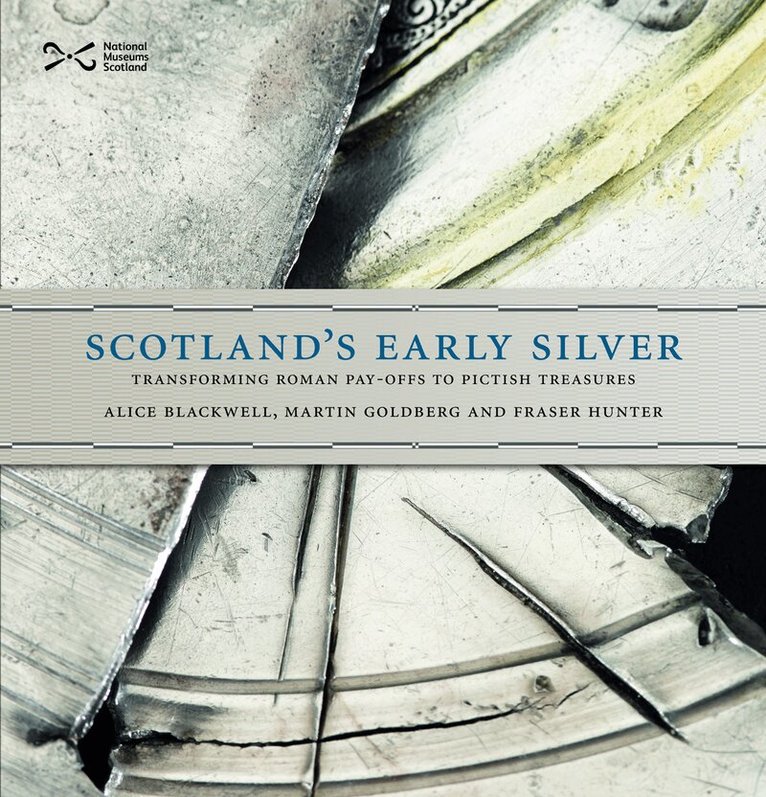
The breadth of National Museums Scotland's collections, together with the support of The Glenmorangie Company, puts National Museums in a unique position to reveal the role of silver in the development of the first kingdoms of Scotland. It was silver, not gold, which was the most important and powerful precious metal in Scotland for over six hundred years and, as well as showcasing beautiful objects, the book builds on the Glenmorangie Research Project to gives fresh insights into this formative period of Scottish history. Based on the exhibition Scotland's Early Silver which was at the National Museum of Scotland and is now on tour.
163 kr
Skickas
In 2017 an intense fundraising campaign ensured that what came to be known as 'the Galloway Hoard' was saved for the nation. Since then work has been ongoing to preserve and understand it. Over 5kg of silver bullion, many unique and enigmatic gold objects, the rare preservation of textiles and an unusual range of other materials, make the Hoard the richest collection of Viking-age objects every found in Britain and Ireland. Dr Martin Goldberg and Dr Mary Davis provide the first full description of the Hoard and place the find in a wider historical and geographical context.
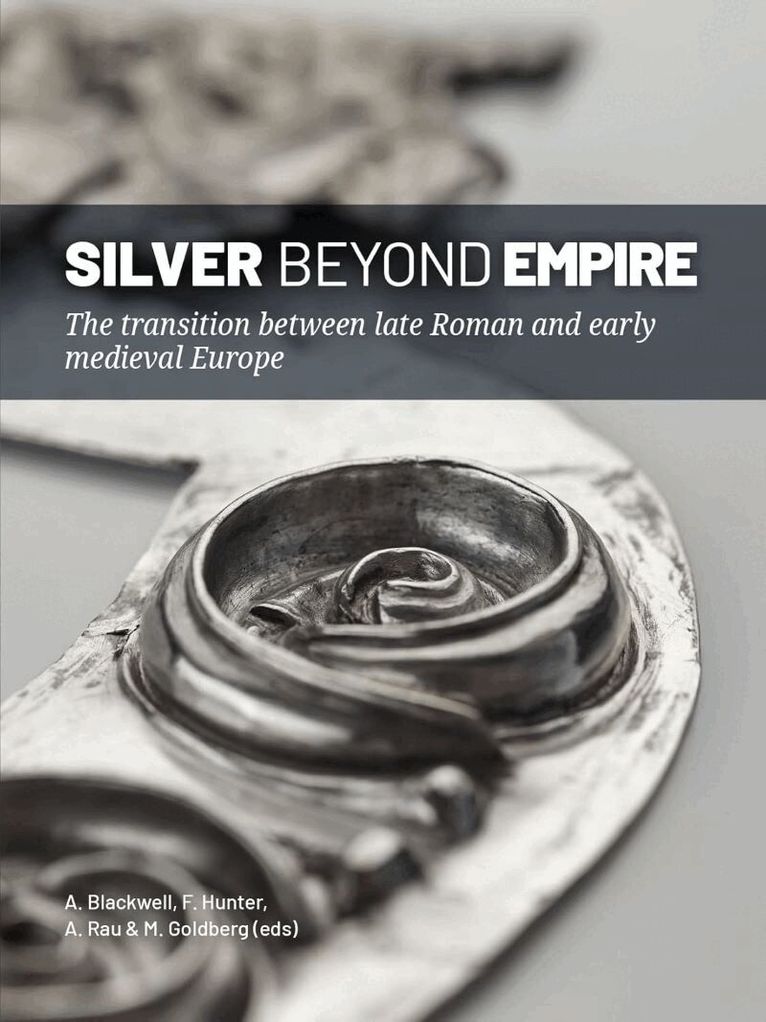
Silver Beyond Empire
The transition between late Roman and early medieval Europe
Häftad, Engelska, 2026
2 126 kr
Skickas inom 11-20 vardagar
Power and prestige in Europe during the first millennium AD were predominantly expressed in two portable materials: silver and gold. These precious metals underpinned the emergence of early Medieval kingdoms in Europe by providing the raw materials for objects that were used to create, contest and reflect status within and between societies. They also provide a key source of evidence for understanding reactions to the political vacuum caused by the disintegration of the Roman Empire and the emergence of the early Medieval kingdoms of Europe.While parts of temperate Europe favoured gold, silver was the most important precious metal in northern Britain for over 700 years (c.200–900). Silver was introduced to Scotland by Rome (via subsidies, military pay, diplomacy and loot), first as denarii and later as hacksilver, and rapidly became a vital means of expressing power and prestige in the lands beyond this frontier. Indeed, silver’s Imperial connotations may have been a key part of its attraction. The supply of silver declined with the diminishing influence of the western Roman Empire and this dwindling resource needed to be carefully managed and recycled by early Medieval societies.Together National Museums Scotland and Leibniz-Zentrum für Archäologie created an international research network of specialists working on silver from the 4th–6th centuries with a focus on the North Sea region. This volume of papers results from meetings of the network in Edinburgh and Schleswig that explored the role of silver in the crucial transition from the late Roman Empire, with barbaricum beyond its frontiers, to early Medieval Europe and the peoples and polities that many modern European nations trace their origins back to. It aims to provide the first comparative, international and cross-disciplinary study of this powerful and valuable material during a pivotal period in Europe’s history. It also provides the first full catalogues of a number of important but poorly understood hacksilver hoards from the UK: Norrie’s Law (Fife), Gaulcross (Aberdeenshire), Tummel Bridge (Perthshire) and Patching (Sussex).
Silver Beyond Empire
The transition between late Roman and early medieval Europe
Inbunden, Engelska, 2026
3 281 kr
Skickas inom 11-20 vardagar
Power and prestige in Europe during the first millennium AD were predominantly expressed in two portable materials: silver and gold. These precious metals underpinned the emergence of early Medieval kingdoms in Europe by providing the raw materials for objects that were used to create, contest and reflect status within and between societies. They also provide a key source of evidence for understanding reactions to the political vacuum caused by the disintegration of the Roman Empire and the emergence of the early Medieval kingdoms of Europe.While parts of temperate Europe favoured gold, silver was the most important precious metal in northern Britain for over 700 years (c.200–900). Silver was introduced to Scotland by Rome (via subsidies, military pay, diplomacy and loot), first as denarii and later as hacksilver, and rapidly became a vital means of expressing power and prestige in the lands beyond this frontier. Indeed, silver’s Imperial connotations may have been a key part of its attraction. The supply of silver declined with the diminishing influence of the western Roman Empire and this dwindling resource needed to be carefully managed and recycled by early Medieval societies.Together National Museums Scotland and Leibniz-Zentrum für Archäologie created an international research network of specialists working on silver from the 4th–6th centuries with a focus on the North Sea region. This volume of papers results from meetings of the network in Edinburgh and Schleswig that explored the role of silver in the crucial transition from the late Roman Empire, with barbaricum beyond its frontiers, to early Medieval Europe and the peoples and polities that many modern European nations trace their origins back to. It aims to provide the first comparative, international and cross-disciplinary study of this powerful and valuable material during a pivotal period in Europe’s history. It also provides the first full catalogues of a number of important but poorly understood hacksilver hoards from the UK: Norrie’s Law (Fife), Gaulcross (Aberdeenshire), Tummel Bridge (Perthshire) and Patching (Sussex).
Out of The Workplace Trap
A Theory and Therapy of Organizations Based on the Work of Wilhelm Reich
Inbunden, Engelska, 2023
367 kr
Skickas inom 3-6 vardagar
Out of The Workplace Trap
A Theory and Therapy of Organizations Based on the Work of Wilhelm Reich
Häftad, Engelska, 2023
345 kr
Skickas inom 5-8 vardagar