Martin Sullivan – författare
Visar alla böcker från författaren Martin Sullivan. Handla med fri frakt och snabb leverans.
5 produkter
5 produkter
2 246 kr
Skickas inom 10-15 vardagar
With birth rates falling at the same time that average age is rising in the developed world, the pensions time bomb is ticking louder than ever. Understanding how pensions work, their history, and their future is absolutely essential.This book thoroughly explains to readers the unique concepts and terminology which underpin pensions. Focusing firstly on the rationale for pensions and their evolution, before moving on to an explanation of the latest controversies regarding pensions. The glossary of pensions terminology in the final section of the book virtually ensures its place on many academic bookshelves. This timely volume is an extremely useful contribution to this important issue. Of use to policy-makers as much as to students and academics of finance and public policy, Understanding Pensions should prove to be a popular addition to the literature.
27 349 kr
Skickas inom 7-10 vardagar
For more than fifty years, pensions have been the subject of academic enquiry and controversy. Debates have raged over, amongst other things, the need for pensions, the means by which they might be delivered, their implications for the public finances, their impact on an individual’s employment motivations and their significance for national and global capital markets. These debates, and others, have spawned a vast and disparate literature.Currently, the issue that most often exercises the minds of academics and policy makers is that of pension reform. It is widely recognized that decades of social and economic change have rendered obsolete the pension arrangements in many developed and developing countries. The question of what now constitutes an appropriate set of pension arrangements is, however, far from settled. Opinions are divided over whether existing national pension systems can be modified to make them fit contemporary needs and circumstances, or whether they should be jettisoned in favour of something entirely different.Central to the analysis of many issues in pension provision is the universal phenomenon of population ageing. Around the world, falling birth rates and rising life expectancy are raising the ratio of elderly to working-age people. For several decades the literature on pensions and population ageing has been extremely negative. Recently, though, a series of books and papers have appeared which argue for a more benign, less pessimistic, interpretation of population ageing.The papers and articles included in each volume of this new Routledge Major Work have been selected so as to reflect the multi-dimensional nature of the subject and the interest it has aroused internationally. With a full index and an introduction newly written by the editor, this four-volume collection is a unique and valuable research resource for both student and scholar alike.
693 kr
Skickas inom 10-15 vardagar
With birth rates falling at the same time that average age is rising in the developed world, the pensions time bomb is ticking louder than ever. Understanding how pensions work, their history, and their future is absolutely essential.This book thoroughly explains to readers the unique concepts and terminology which underpin pensions. Focusing firstly on the rationale for pensions and their evolution, before moving on to an explanation of the latest controversies regarding pensions. The glossary of pensions terminology in the final section of the book virtually ensures its place on many academic bookshelves. This timely volume is an extremely useful contribution to this important issue. Of use to policy-makers as much as to students and academics of finance and public policy, Understanding Pensions should prove to be a popular addition to the literature.
266 kr
Skickas
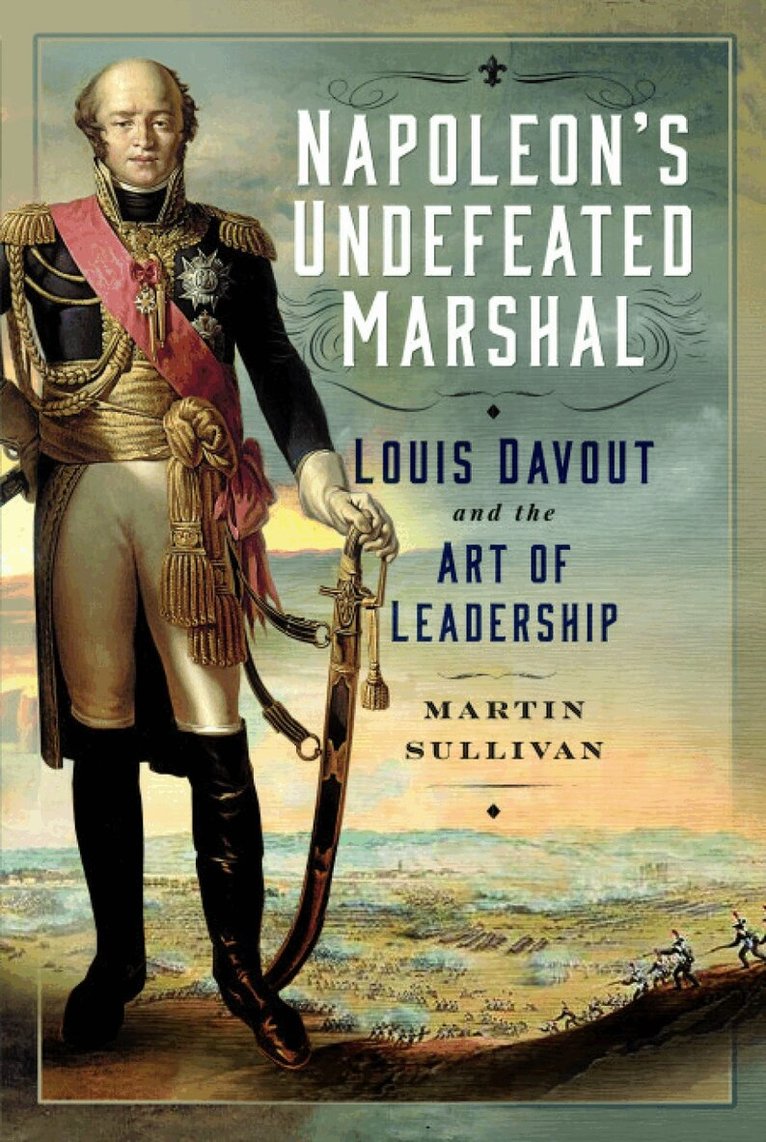
The war of 1809 between France and Habsburg Austria, culminating in the titanic battle of Wagram, has been described often as Napoleon’s last successful campaign. Napoleon said later that the manoeuvres and actions of the French army and their German allies in the opening two weeks of this conflict were among the most brilliant and skilful of his entire career. But matters might have gone very differently. A series of miscalculations, mistakes and poor communications, both prior to Austria’s declaration of war and in the early days of hostilities, might have resulted in a major setback, if not a disaster, for the French Emperor. That they did not is due in large part to the decisions and actions of Marshal Louis Davout, the so-called “Iron Marshall”This is the first English study of Marshal Davout's command and leadership in over fifty years. Little known outside of France, Louis Davout was one of the finest generals in Napoleon's army, as evidenced by his comprehensive defeat of the main Prussian force at Auerstadt in October 1806\. A hard, even harsh, disciplinarian, an utterly ruthless opponent on the field of battle, Davout was also a loving family man, meticulously concerned for the health and well-being of his troops, and able to command the loyalty of his divisional commanders for far longer than any of his contemporaries.In this new study, Martin Sullivan describes in detail the decision-making processes and actions of Marshal Davout, and from this analysis illustrates leadership concepts and theories which remain relevant to the world of today. Focusing upon the opening phase of the Wagram campaign, he examines in detail the decisions and actions of the participants, Davout, his opponent the Archduke Charles, and Napoleon himself. By this method the art of leadership may be seen exercised in the heat of an intense and deadly conflict.
183 kr
Kommande
The war of 1809 between France and Habsburg Austria, culminating in the titanic battle of Wagram, has been described often as Napoleon’s last successful campaign. Napoleon said later that the manoeuvres and actions of the French army and their German allies in the opening two weeks of this conflict were among the most brilliant and skilful of his entire career. But matters might have gone very differently. A series of miscalculations, mistakes and poor communications, both prior to Austria’s declaration of war and in the early days of hostilities, might have resulted in a major setback, if not a disaster, for the French Emperor. That they did not is due in large part to the decisions and actions of Marshal Louis Davout, the so-called “Iron Marshall”This is the first English study of Marshal Davout's command and leadership in over fifty years. Little known outside of France, Louis Davout was one of the finest generals in Napoleon's army, as evidenced by his comprehensive defeat of the main Prussian force at Auerstadt in October 1806. A hard, even harsh, disciplinarian, an utterly ruthless opponent on the field of battle, Davout was also a loving family man, meticulously concerned for the health and well-being of his troops, and able to command the loyalty of his divisional commanders for far longer than any of his contemporaries.In this new study, Martin Sullivan describes in detail the decision-making processes and actions of Marshal Davout, and from this analysis illustrates leadership concepts and theories which remain relevant to the world of today. Focusing upon the opening phase of the Wagram campaign, he examines in detail the decisions and actions of the participants, Davout, his opponent the Archduke Charles, and Napoleon himself. By this method the art of leadership may be seen exercised in the heat of an intense and deadly conflict.