Mary-Ann Winkelmes - Böcker
Visar alla böcker från författaren Mary-Ann Winkelmes. Handla med fri frakt och snabb leverans.
4 produkter
4 produkter
313 kr
Skickas inom 7-10 vardagar
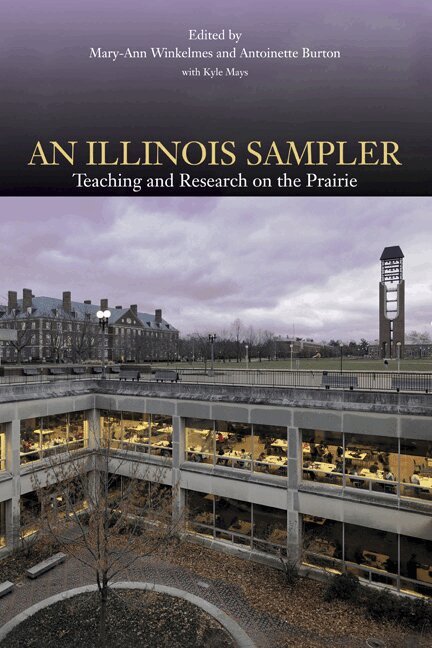
An Illinois Sampler presents personal accounts from faculty members at the University of Illinois at Urbana-Champaign and other contributors about their research and how it enriches and energizes their teaching. Contributors from the humanities, engineering, social and natural sciences, and other disciplines explore how ideas, methods, and materials merge to lead their students down life-changing paths to creativity, discovery, and solutions. Faculty introduce their classes to work conducted from the Illinois prairie to Caribbean coral reefs to African farms, and from densely populated cities to dense computer coding. In so doing they generate an atmosphere where research, teaching, and learning thrive inside a feedback loop of education across disciplines. Aimed at alumni and prospective students interested in the university's ongoing mission, as well as current faculty and students wishing to stay up to date on the work being done around them, An Illinois Sampler showcases the best, the most ambitious, and the most effective teaching practices developed and nurtured at one of the world's premier research universities. Contributors are Nancy Abelmann, Flavia C. D. Andrade, Jayadev Athreya, Betty Jo Barrett, Thomas J. Bassett, Hugh Bishop, Antoinette Burton, Lauren A. Denofrio-Corrales, Lizanne DeStefano, Karen Flynn, Bruce W. Fouke, Rebecca Ginsburg, Julie Jordan Gunn, Geoffrey Herman, Laurie Johnson, Kyle T. Mays, Rebecca Nettl-Fiol, Audrey Petty, Anke Pinkert, Raymond Price, Luisa-Maria Rosu, D. Fairchild Ruggles, Carol Spindel, Mark D. Steinberg, William Sullivan, Richard I. Tapping, Bradley Tober, Agniezska Tuszynska, Bryan Wilcox, Kate Williams, Mary-Ann Winkelmes, and Yi Lu.
147 kr
Skickas inom 7-10 vardagar
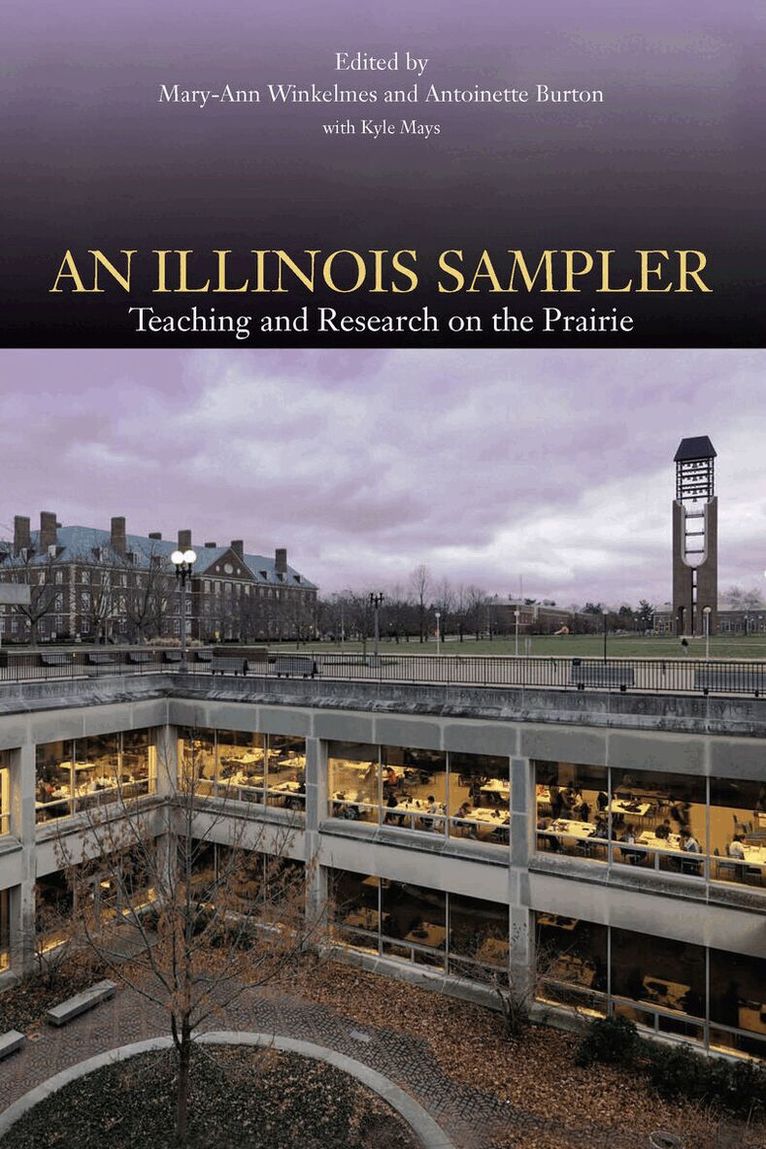
An Illinois Sampler presents personal accounts from faculty members at the University of Illinois at Urbana-Champaign and other contributors about their research and how it enriches and energizes their teaching. Contributors from the humanities, engineering, social and natural sciences, and other disciplines explore how ideas, methods, and materials merge to lead their students down life-changing paths to creativity, discovery, and solutions. Faculty introduce their classes to work conducted from the Illinois prairie to Caribbean coral reefs to African farms, and from densely populated cities to dense computer coding. In so doing they generate an atmosphere where research, teaching, and learning thrive inside a feedback loop of education across disciplines. Aimed at alumni and prospective students interested in the university's ongoing mission, as well as current faculty and students wishing to stay up to date on the work being done around them, An Illinois Sampler showcases the best, the most ambitious, and the most effective teaching practices developed and nurtured at one of the world's premier research universities. Contributors are Nancy Abelmann, Flavia C. D. Andrade, Jayadev Athreya, Betty Jo Barrett, Thomas J. Bassett, Hugh Bishop, Antoinette Burton, Lauren A. Denofrio-Corrales, Lizanne DeStefano, Karen Flynn, Bruce W. Fouke, Rebecca Ginsburg, Julie Jordan Gunn, Geoffrey Herman, Laurie Johnson, Kyle T. Mays, Rebecca Nettl-Fiol, Audrey Petty, Anke Pinkert, Raymond Price, Luisa-Maria Rosu, D. Fairchild Ruggles, Carol Spindel, Mark D. Steinberg, William Sullivan, Richard I. Tapping, Bradley Tober, Agniezska Tuszynska, Bryan Wilcox, Kate Williams, Mary-Ann Winkelmes, and Yi Lu.
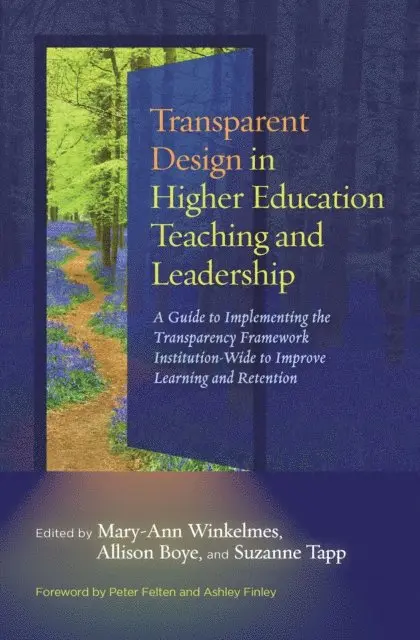
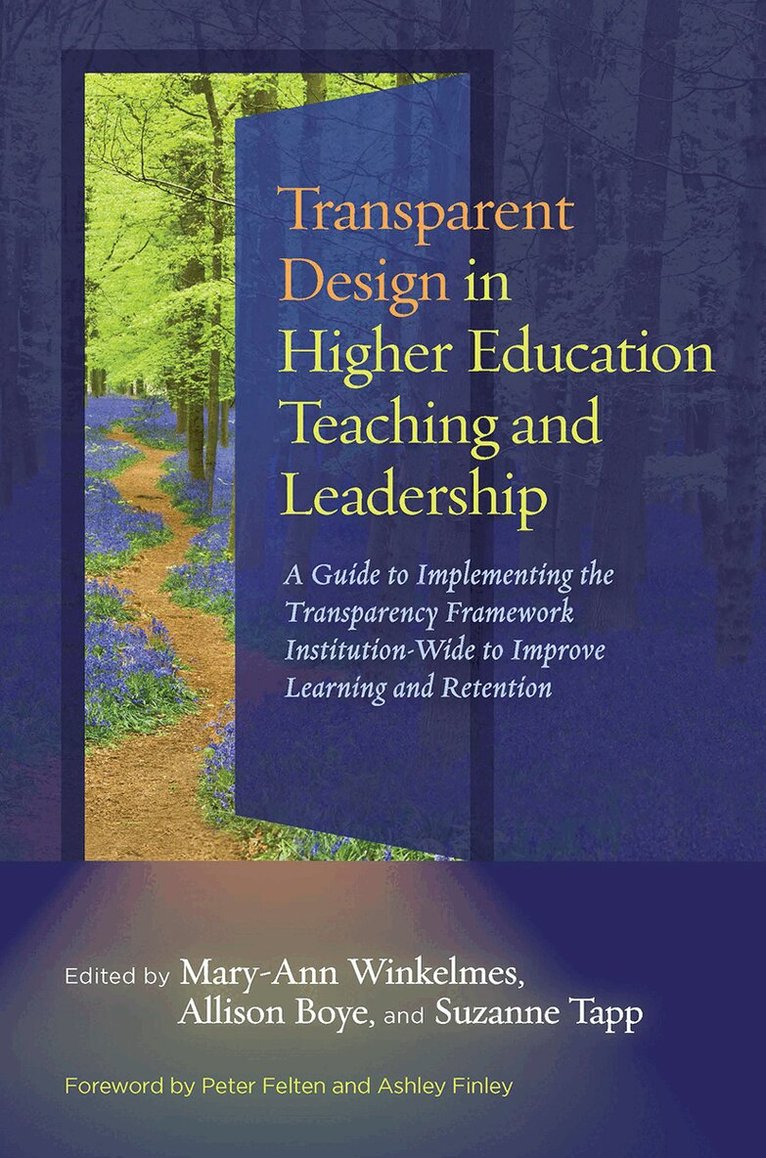
Transparent Design in Higher Education Teaching and Leadership
A Guide to Implementing the Transparency Framework Institution-Wide to Improve Learning and Retention
Inbunden, Engelska, 2019
2 029 kr
Skickas inom 10-15 vardagar
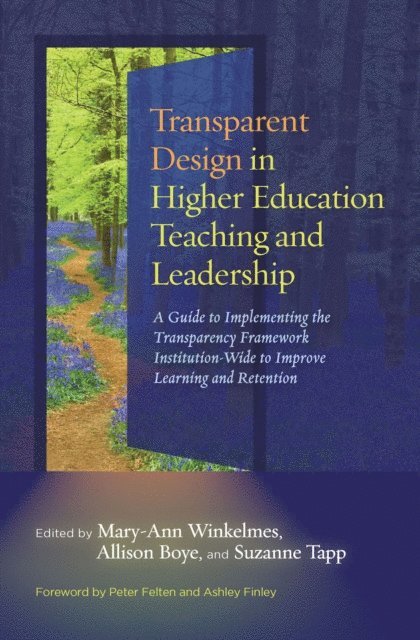
This book offers a comprehensive guide to the Transparency in Learning and Teaching (TILT) framework that has convincingly demonstrated that implementation increases retention and improved outcomes for all students. Its premise is simple: to make learning processes explicit and equitably accessible for all students. Transparent instruction involves faculty/student discussion about several important aspects of academic work before students undertake that work, making explicit the purpose of the work, the knowledge that will be gained and its utility in students’ lives beyond college; explaining the tasks involved, the expected criteria, and providing multiple examples of real-world work applications of the specific academic discipline. The simple change of making objective and methods explicit – that faculty recognize as consistent with their teaching goals – creates substantial benefits for students and demonstrably increases such predictors of college students’ success as academic confidence, sense of belonging in college, self-awareness of skill development, and persistence. This guide presents a brief history of TILT, summarizes both past and current research on its impact on learning, and describes the three-part Transparency Framework (of purposes, tasks and criteria). The three sections of the book in turn demonstrate why and how transparent instruction works suggesting strategies for instructors who wish to adopt it; describing how educational developers and teaching centers have adopted the Framework; and concluding with examples of how several institutions have used the Framework to connect the daily work of faculty with the learning goals that departments, programs and institutions aim to demonstrate.
Transparent Design in Higher Education Teaching and Leadership
A Guide to Implementing the Transparency Framework Institution-Wide to Improve Learning and Retention
Häftad, Engelska, 2019
468 kr
Skickas inom 10-15 vardagar
This book offers a comprehensive guide to the Transparency in Learning and Teaching (TILT) framework that has convincingly demonstrated that implementation increases retention and improved outcomes for all students. Its premise is simple: to make learning processes explicit and equitably accessible for all students. Transparent instruction involves faculty/student discussion about several important aspects of academic work before students undertake that work, making explicit the purpose of the work, the knowledge that will be gained and its utility in students’ lives beyond college; explaining the tasks involved, the expected criteria, and providing multiple examples of real-world work applications of the specific academic discipline. The simple change of making objective and methods explicit – that faculty recognize as consistent with their teaching goals – creates substantial benefits for students and demonstrably increases such predictors of college students’ success as academic confidence, sense of belonging in college, self-awareness of skill development, and persistence. This guide presents a brief history of TILT, summarizes both past and current research on its impact on learning, and describes the three-part Transparency Framework (of purposes, tasks and criteria). The three sections of the book in turn demonstrate why and how transparent instruction works suggesting strategies for instructors who wish to adopt it; describing how educational developers and teaching centers have adopted the Framework; and concluding with examples of how several institutions have used the Framework to connect the daily work of faculty with the learning goals that departments, programs and institutions aim to demonstrate.