Mary Anne Hunting - Böcker
Visar alla böcker från författaren Mary Anne Hunting. Handla med fri frakt och snabb leverans.
2 produkter
2 produkter
477 kr
Tillfälligt slut
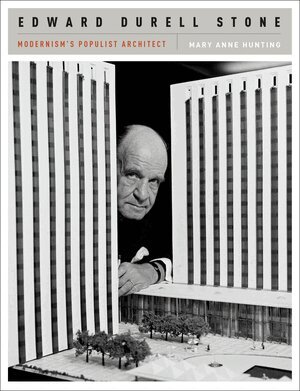
Framed between the Great Depression and the oil embargo of the early 1970s, the distinguished career of the native Arkansan is represented on four continents, in thirteen foreign countries, and in thirty-two states—his masterpiece the American Embassy chancery (1953–59) in New Delhi, India. Recognized in his prime as one of the nation’s most sought-after architects, Stone’s vast and prestigious workload brought prosperity on a scale rare in architecture in his time; after the death of Frank Lloyd Wright, some supporters thought Stone seemed destined to take the place of his personal hero and close friend as the great national architect.But Stone also drew divergent reactions. Such International Style buildings as his Museum of Modern Art (1935–39) in New York City, an austere, unornamented volume, won critical approval; in contrast, his monumental postwar architecture—the John F. Kennedy Center for the Performing Arts (1958–71) in Washington, DC, among the best known—exposed popular tastes by offering a broader definition of Modernism inclusive of decoration.Enhanced interest in Stone’s architecture has been spurred by the reconsideration of a number of his buildings. The former Gallery of Modern Art (1958–64) at 2 Columbus Circle in New York City, which was lost to a near complete makeover, stimulated vigorous and at times contentious discussion that made evident the need for an objective reassessment. His legacy—of giving form to the aspirations of the emerging consumer culture and of reconciling Modernism with the dynamism of the age—is established in Edward Durell Stone: Modernism’s Populist Architect.
533 kr
Skickas inom 7-10 vardagar
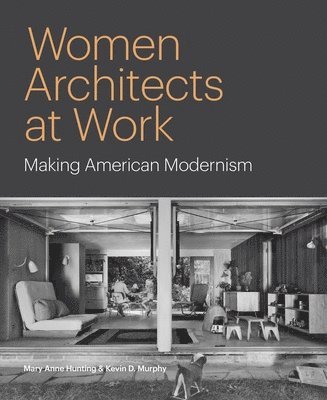
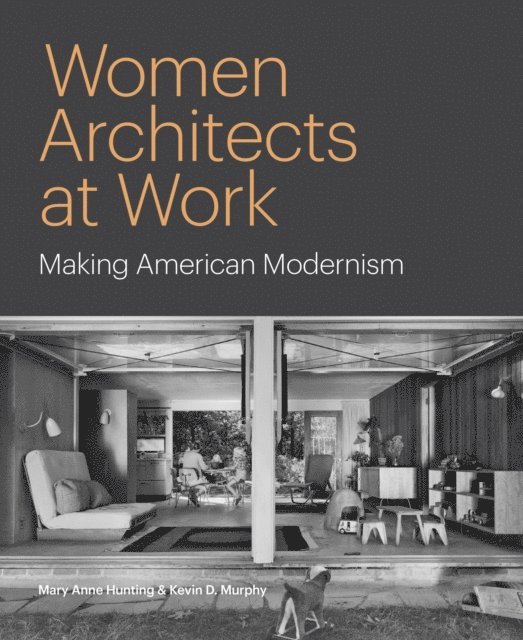
A comprehensive history of the women architects who left their enduring mark on American ModernismIn the decades preceding World War II, professional architecture schools enrolled increasing numbers of women, but career success did not come easily. Women Architects at Work tells the stories of the resilient and resourceful women who surmounted barriers of sexism, racism, and classism to take on crucial roles in the establishment and growth of Modernism across the United States.Mary Anne Hunting and Kevin D. Murphy describe how the Cambridge School of Architecture and Landscape Architecture in Massachusetts evolved for the professional education of women between 1916 and 1942. While alumnae such as Eleanor Agnes Raymond, Victorine du Pont Homsey, and Sarah Pillsbury Harkness achieved some notoriety, others like Elizabeth-Ann Campbell Knapp and Louisa Vaughan Conrad have been largely absent from histories of Modernism. Hunting and Murphy describe how these innovative practitioners capitalized on social, educational, and professional ties to achieve success and used architecture to address social concerns, including how modernist ideas could engage with community and the environment. Some joined women-led architectural firms while others partnered with men or contributed to Modernism as retailers of household furnishings, writers and educators, photographers and designers, or fine artists.With stunning illustrations, Women Architects at Work offers new histories of recognized figures while recovering the stories of previously unsung women, all of whom contributed to the modernization of American architecture and design.