Mary Hallward-Driemeier - Böcker
Visar alla böcker från författaren . Handla med fri frakt och snabb leverans.
4 produkter
4 produkter
328 kr
Skickas inom 10-15 vardagar
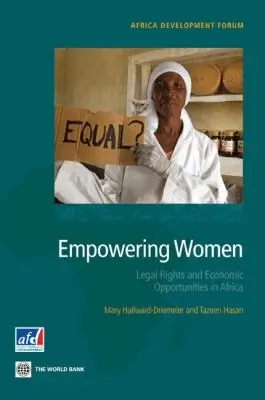
The importance of property rights in providing the incentive to invest, work hard, and innovate has been recognized for centuries. Yet, many women in Africa do not have the same property rights or formal legal capacity enjoyed by men. Empowering Women: Legal Rights and Economic Opportunities in Africa documents the extent to which the legal capacity and property rights vary for women and men, and analyzes the impact this has on women’s economic opportunities. The book introduces the “Women’s Legal Economic Empowerment Database – Africa (Women LEED Africa).” This database covers all 47 countries in Sub-Saharan Africa, providing indicators and links to constitutions, ratified international conventions, and domestic statutes where there are gender gaps in legal capacity and property rights. It shows how and where, despite universal constitutional recognition of non-discrimination, many countries have exceptions in areas of marriage, ownership, and control over property and inheritance. With less secure property rights, women in these countries do not have the same ability – or incentive – to accumulate and control assets and thus to access finance or to grow their businesses. After laying out the various gender gaps in legal capacity and property rights, the book addresses the additional challenges stemming from legal systems with a multiplicity of sources of law. Overlapping legal systems themselves add uncertainty to defining women’s economic rights. The authors use case law to trace out the implications for women’s rights and to provide examples of effective reforms. The book recognizes that beyond de jure differences, women may face greater practical constraints in having their rights protected. This book spells out specific steps that can be taken to address gender gaps both in formal property rights and in practical constraints in accessing justice.
328 kr
Skickas inom 10-15 vardagar
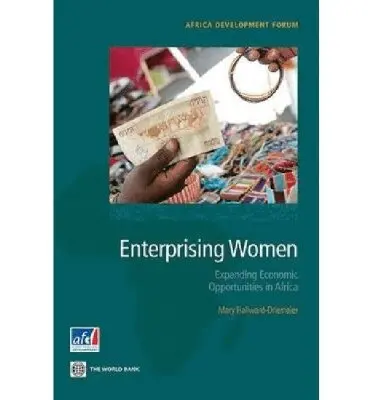
This book brings together new household and enterprise data from 42 countries in Sub-Saharan Africa to inform policy makers and practitioners on ways to expand women entrepreneurs' economic opportunities. Sub-Saharan Africa boasts the highest share of women entrepreneurs, but they are disproportionately concentrated among the self-employed rather than employers. Relative to men, women are pursuing lower opportunity activities, with their enterprises more likely to be smaller, informal, and in low value-added lines of business. The challenge in expanding opportunities is not helping more women become entrepreneurs but enabling them to shift to higher return activities. A central question addressed in the book is what explains the gender sorting in the types of enterprises that women and men run? The analysis shows that many Sub-Saharan countries present a challenging environment for women. Four key areas of the agenda for expanding women's economic opportunities in Africa are analysed: strengthening women's property rights and their ability to control assets; improving women's access to finance; building human capital in business skills and networks; and strengthening women's voices in business environment reform. These areas are important both because they have wide gender gaps and because they help explain gender differences in entrepreneurial activities. It is particularly striking that while gender gaps in education tend to close with higher incomes, gaps in women's property rights and in women's participation in reform processes do not. As simply raising a country's income is unlikely to be sufficient to give women equal ability to control assets or have greater voice, more proactive steps will be needed. Practical guidelines to move the agenda forward are discussed for each of these key areas.
338 kr
Skickas inom 10-15 vardagar
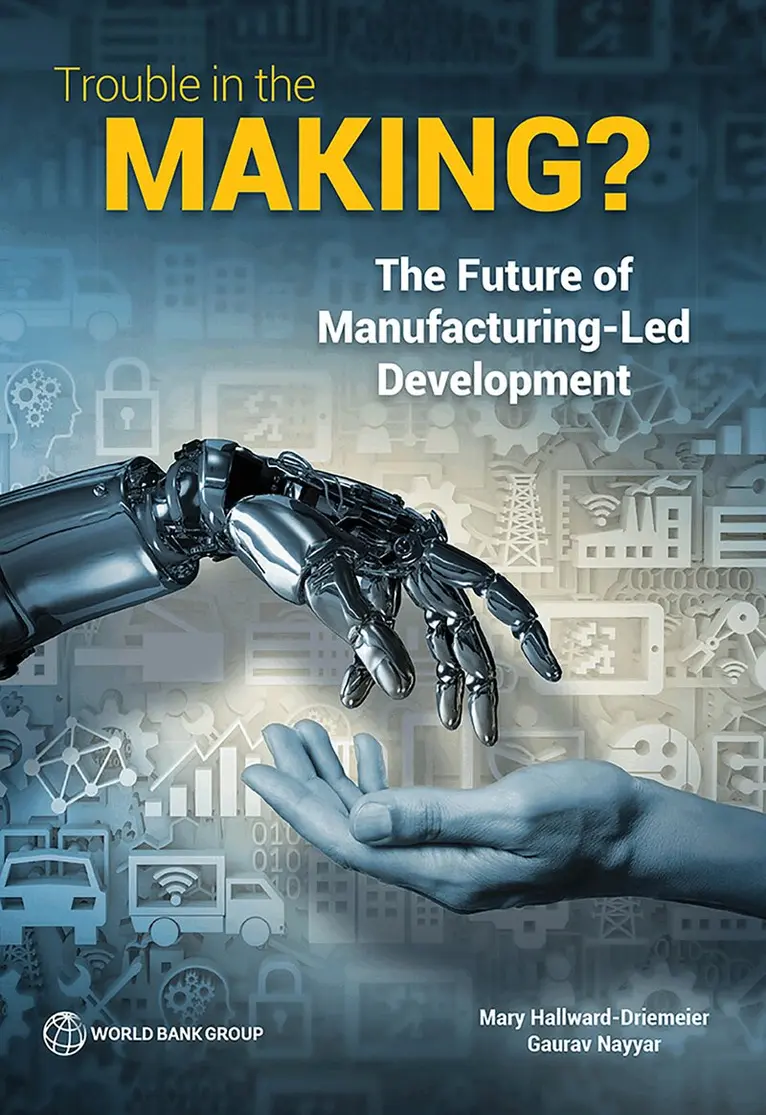
Globalization and new technologies are impacting the desirability and feasibility of what has historically been the most successful development strategy. Manufacturing has been seen as special, promising both productivity gains and job creation. But trade is slowing. Global value chains (GVC) are maturing. Robotics, artificial intelligence, 3D printing, and the Internet of things are shifting what makes locations attractive for production and threatening significant disruptions in employment. There is a risk of increased polarization, within countries and across countries. Shifting the attention from high-income countries, this report takes the perspective of developing countries to ask: -- If new technologies reduce the importance of low-wage labor, how can developing countries compete? -- Do countries need to industrialize to develop? -- How can countries at different levels of development take advantage of new opportunities? Development strategies need to broaden. Different manufacturing sub-sectors can still provide productivity growth or jobs; fewer can deliver both. Many of the pro-development characteristics traditionally associated with manufacturing--tradability, scale, innovation, learning-by-doing--are increasingly features of services. With faster diffusion of technology, it will be all the more important for countries to improve the enabling environment, remain open to trade, and support capabilities of firms and workers to ensure future prosperity is shared.
435 kr
Skickas inom 10-15 vardagar
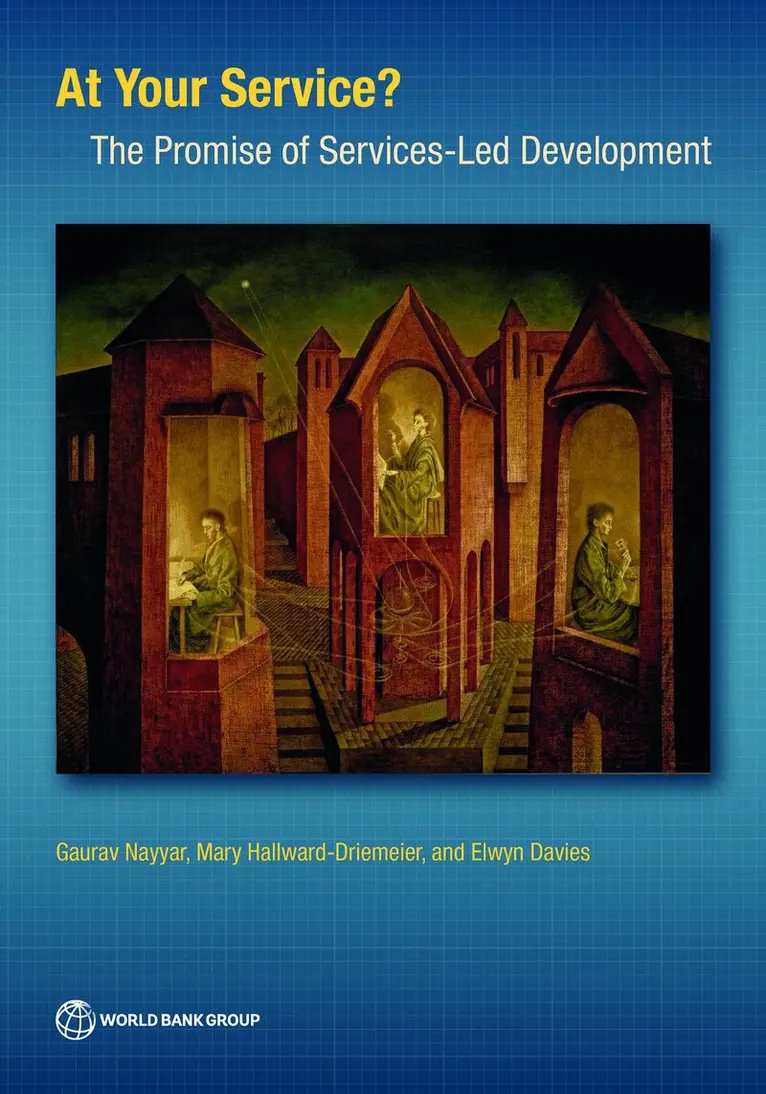
Considering technological change and linkages between sectors while differentiating across types of services, this book assesses the scope of a services-driven development model and policy directions that maximize its potential.