F. Scott Scribner - Böcker
Visar alla böcker från författaren F. Scott Scribner. Handla med fri frakt och snabb leverans.
2 produkter
2 produkter
484 kr
Skickas inom 5-8 vardagar
This book offers a radically new interpretation of the entire philosophy of J. G. Fichte by showing the impact of nineteenth-century psychological techniques and technologies on the formation of his theory of the imagination—the very centerpiece of his philosophical system. By situating Fichte’s philosophy within the context of nineteenth-century German science and culture, the book establishes a new genealogy, one that shows the extent to which German idealism’s transcendental account of the social remains dependent upon the scientific origins of psychoanalysis in the material techniques of Mesmerism. The book makes it clear that the rational, transcendental account of spirit, imagination, and the social has its source in the psychological phenomena of affective rapport. Specifically, the imagination undergoes a double displacement in which it is ultimately subject to external influence, the influence of a material technique, or, in short, a technology.
328 kr
Skickas inom 10-15 vardagar
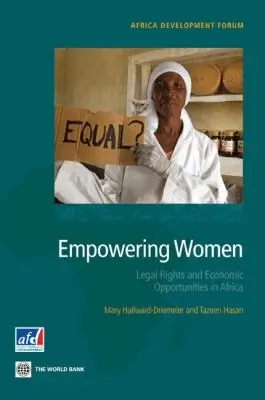
The importance of property rights in providing the incentive to invest, work hard, and innovate has been recognized for centuries. Yet, many women in Africa do not have the same property rights or formal legal capacity enjoyed by men. Empowering Women: Legal Rights and Economic Opportunities in Africa documents the extent to which the legal capacity and property rights vary for women and men, and analyzes the impact this has on women’s economic opportunities. The book introduces the “Women’s Legal Economic Empowerment Database – Africa (Women LEED Africa).” This database covers all 47 countries in Sub-Saharan Africa, providing indicators and links to constitutions, ratified international conventions, and domestic statutes where there are gender gaps in legal capacity and property rights. It shows how and where, despite universal constitutional recognition of non-discrimination, many countries have exceptions in areas of marriage, ownership, and control over property and inheritance. With less secure property rights, women in these countries do not have the same ability – or incentive – to accumulate and control assets and thus to access finance or to grow their businesses. After laying out the various gender gaps in legal capacity and property rights, the book addresses the additional challenges stemming from legal systems with a multiplicity of sources of law. Overlapping legal systems themselves add uncertainty to defining women’s economic rights. The authors use case law to trace out the implications for women’s rights and to provide examples of effective reforms. The book recognizes that beyond de jure differences, women may face greater practical constraints in having their rights protected. This book spells out specific steps that can be taken to address gender gaps both in formal property rights and in practical constraints in accessing justice.