Massimo Montanari - Böcker
Visar alla böcker från författaren Massimo Montanari. Handla med fri frakt och snabb leverans.
13 produkter
13 produkter
200 kr
Skickas
Vi pratar ofta om mat i termer av naturlighet, men det finns enligt Massimo Montanari ingenting naturligt med mat. Maten vi äter är i alla avseenden en kulturell produkt. Maten är kultur efetersom den har skapat och format vår värld. Den är kultur när den produceras, när den tillagas och när den konsumeras. Maten är en produkt av vår identitet och ett medel för att uttrycka och kommunicera den. Att baka bröd, att konservera frukt, att duka bordet ja, alla handlingar knutna till mat även den enklaste och vardagligaste bär med sig en historia som uttrycker en komplex kultur. Montanari späckar sina resonemang med anekdoter från den västerländska historien. Ett exempel: Pasta med tomatsås betraktas idag som en typisk italiens matträtt. Men om vi benar ut rättens historiska rötter framträder en bild av det lyckade mötet mellan en arabisk produktionsteknik som utarbetades i det medeltida Sicilien och en amerikansk råvara som importerades till Europa av de spanska conquistadorerna.
1 140 kr
Skickas inom 7-10 vardagar
When did we first serve meals at regular hours? Why did we begin using individual plates and utensils to eat? When did "cuisine" become a concept and how did we come to judge food by its method of preparation, manner of consumption, and gastronomic merit? Food: A Culinary History explores culinary evolution and eating habits from prehistoric times to the present, offering surprising insights into our social and agricultural practices, religious beliefs, and most unreflected habits. The volume dispels myths such as the tale that Marco Polo brought pasta to Europe from China, that the original recipe for chocolate contained chili instead of sugar, and more. As it builds its history, the text also reveals the dietary rules of the ancient Hebrews, the contributions of Arabic cookery to European cuisine, the table etiquette of the Middle Ages, and the evolution of beverage styles in early America. It concludes with a discussion on the McDonaldization of food and growing popularity of foreign foods today.
290 kr
When did we first serve meals at regular hours? Why did we begin using individual plates and utensils to eat? When did "cuisine" become a concept and how did we come to judge food by its method of preparation, manner of consumption, and gastronomic merit? Food: A Culinary History explores culinary evolution and eating habits from prehistoric times to the present, offering surprising insights into our social and agricultural practices, religious beliefs, and most unreflected habits. The volume dispels myths such as the tale that Marco Polo brought pasta to Europe from China, that the original recipe for chocolate contained chili instead of sugar, and more. As it builds its history, the text also reveals the dietary rules of the ancient Hebrews, the contributions of Arabic cookery to European cuisine, the table etiquette of the Middle Ages, and the evolution of beverage styles in early America. It concludes with a discussion on the McDonaldization of food and growing popularity of foreign foods today.
337 kr
Skickas inom 7-10 vardagar
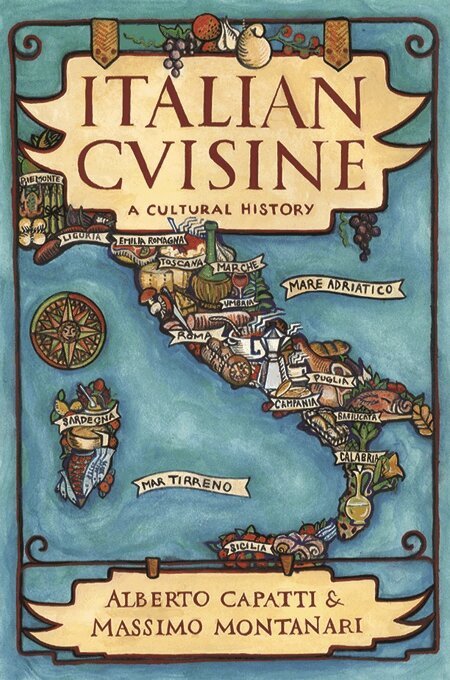
Italy, the country with a hundred cities and a thousand bell towers, is also the country with a hundred cuisines and a thousand recipes. Its great variety of culinary practices reflects a history long dominated by regionalism and political division, and has led to the common conception of Italian food as a mosaic of regional customs rather than a single tradition. Nonetheless, this magnificent new book demonstrates the development of a distinctive, unified culinary tradition throughout the Italian peninsula. Alberto Capatti and Massimo Montanari uncover a network of culinary customs, food lore, and cooking practices, dating back as far as the Middle Ages, that are identifiably Italian: o Italians used forks 300 years before other Europeans, possibly because they were needed to handle pasta, which is slippery and dangerously hot. o Italians invented the practice of chilling drinks and may have invented ice cream. o Italian culinary practice influenced the rest of Europe to place more emphasis on vegetables and less on meat. o Salad was a distinctive aspect of the Italian meal as early as the sixteenth century.The authors focus on culinary developments in the late medieval, Renaissance, and Baroque eras, aided by a wealth of cookbooks produced throughout the early modern period. They show how Italy's culinary identities emerged over the course of the centuries through an exchange of information and techniques among geographical regions and social classes. Though temporally, spatially, and socially diverse, these cuisines refer to a common experience that can be described as Italian. Thematically organized around key issues in culinary history and beautifully illustrated, Italian Cuisine is a rich history of the ingredients, dishes, techniques, and social customs behind the Italian food we know and love today.
1 363 kr
Skickas inom 3-6 vardagar
459 kr
Skickas inom 3-6 vardagar
816 kr
Skickas inom 7-10 vardagar
Known for his entertaining investigations into culinary practice, Massimo Montanari turns his hungry eye to the phenomenon of food culture, food lore, cooking methods, and eating habits throughout history. An irresistible buffet of one hundred concise and engaging essays, this collection provides stimulating food for thought for those curious about one of life's most fundamental pleasures. Focusing on the selection, preparation, and mythology of food, Montanari traverses such subjects as the status of the pantry over the centuries, the various strategies of cooking over time, the gastronomy of famine, the science of flavors, the changing characteristics of convivial rituals, the customs of the table, and the ever-evolving identity of food. He shows that cooking not only is a decisive part of our cultural heritage but also communicates essential information about our material and intellectual well-being. From the invention of basic bread making to chocolate's reputation for decadence, Montanari positions food culture as a lens through which we can plot changes in historical values and social and economic trends.Even the biblical tale of Jacob buying Esau's birthright for a bowl of lentils is a text full of essential meaning, representing civilization's important shift from a hunting to an agrarian society. Readers of all backgrounds will enjoy these delectable insights and their easy consumption in one companionable volume.
816 kr
Skickas inom 7-10 vardagar
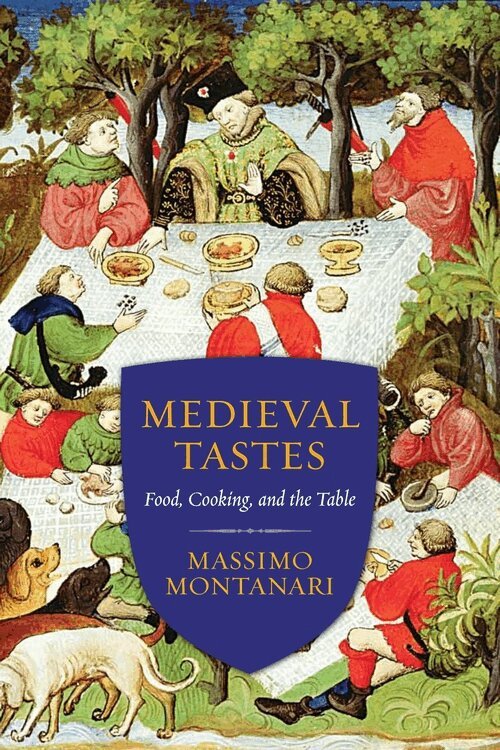
In his new history of food, acclaimed historian Massimo Montanari traces the development of medieval tastes-both culinary and cultural-from raw materials to market and captures their reflections in today's food trends. Tying the ingredients of our diet evolution to the growth of human civilization, he immerses readers in the passionate debates and bold inventions that transformed food from a simple staple to a potent factor in health and a symbol of social and ideological standing. Montanari returns to the prestigious Salerno school of medicine, the "mother of all medical schools," to plot the theory of food that took shape in the twelfth century. He reviews the influence of the Near Eastern spice routes, which introduced new flavors and cooking techniques to European kitchens, and reads Europe's earliest cookbooks, which took cues from old Roman practices that valued artifice and mixed flavors. Dishes were largely low-fat, and meats and fish were seasoned with vinegar, citrus juices, and wine.He highlights other dishes, habits, and battles that mirror contemporary culinary identity, including the refinement of pasta, polenta, bread, and other flour-based foods; the transition to more advanced cooking tools and formal dining implements; the controversy over cooking with oil, lard, or butter; dietary regimens; and the consumption and cultural meaning of water and wine. As people became more cognizant of their physicality, individuality, and place in the cosmos, Montanari shows, they adopted a new attitude toward food, investing as much in its pleasure and possibilities as in its acquisition.
234 kr
Skickas inom 7-10 vardagar
In his new history of food, acclaimed historian Massimo Montanari traces the development of medieval tastes-both culinary and cultural-from raw materials to market and captures their reflections in today's food trends. Tying the ingredients of our diet evolution to the growth of human civilization, he immerses readers in the passionate debates and bold inventions that transformed food from a simple staple to a potent factor in health and a symbol of social and ideological standing. Montanari returns to the prestigious Salerno school of medicine, the "mother of all medical schools," to plot the theory of food that took shape in the twelfth century. He reviews the influence of the Near Eastern spice routes, which introduced new flavors and cooking techniques to European kitchens, and reads Europe's earliest cookbooks, which took cues from old Roman practices that valued artifice and mixed flavors. Dishes were largely low-fat, and meats and fish were seasoned with vinegar, citrus juices, and wine.He highlights other dishes, habits, and battles that mirror contemporary culinary identity, including the refinement of pasta, polenta, bread, and other flour-based foods; the transition to more advanced cooking tools and formal dining implements; the controversy over cooking with oil, lard, or butter; dietary regimens; and the consumption and cultural meaning of water and wine. As people became more cognizant of their physicality, individuality, and place in the cosmos, Montanari shows, they adopted a new attitude toward food, investing as much in its pleasure and possibilities as in its acquisition.
518 kr
Skickas inom 7-10 vardagar
This book is about the history of food in Europe and the part it has played in the evolution of the European cultures over two millennia. It has been a driving force in national and imperial ambition, the manner of its production and consumption a means by which the identity and status of regions, classes and individuals have been and still are expressed. In this wide-ranging exploration of its history the author weaves deftly between the classes, regions and nations of Europe, between the habits of late antiquity and the problems of modernity. He examines the interlinked evolutions of consumption, production and taste, to show both what these reveal of the varied cultures and peoples of Europe in the past and what they suggest about the present.
1 520 kr
Skickas inom 10-15 vardagar
Europe was formed in the Middle Ages. The merging of the traditions of Roman-Mediterranean societies with the customs of Northern Europe created new political, economic, social and religious structures and practices. Between 500 and 1300 CE, food in all its manifestations, from agriculture to symbol, became ever more complex and integral to Europe’s culture and economy. The period saw the growth of culinary literature, the introduction of new spices and cuisines as a result of trade and war, the impact of the Black Death on food resources, the widening gap between what was eaten by the rich and what by the poor, as well as the influence of religion on food rituals.A Cultural History of Food in the Medieval Age presents an overview of the period with essays on food production, food systems, food security, safety and crises, food and politics, eating out, professional cooking, kitchens and service work, family and domesticity, body and soul, representations of food, and developments in food production and consumption globally.
447 kr
Skickas inom 10-15 vardagar
Europe was formed in the Middle Ages. The merging of the traditions of Roman-Mediterranean societies with the customs of Northern Europe created new political, economic, social and religious structures and practices. Between 500 and 1300 CE, food in all its manifestations, from agriculture to symbol, became ever more complex and integral to Europe’s culture and economy. The period saw the growth of culinary literature, the introduction of new spices and cuisines as a result of trade and war, the impact of the Black Death on food resources, the widening gap between what was eaten by the rich and what by the poor, as well as the influence of religion on food rituals.A Cultural History of Food in the Medieval Age presents an overview of the period with essays on food production, food systems, food security, safety and crises, food and politics, eating out, professional cooking, kitchens and service work, family and domesticity, body and soul, representations of food, and developments in food production and consumption globally.
117 kr
Skickas
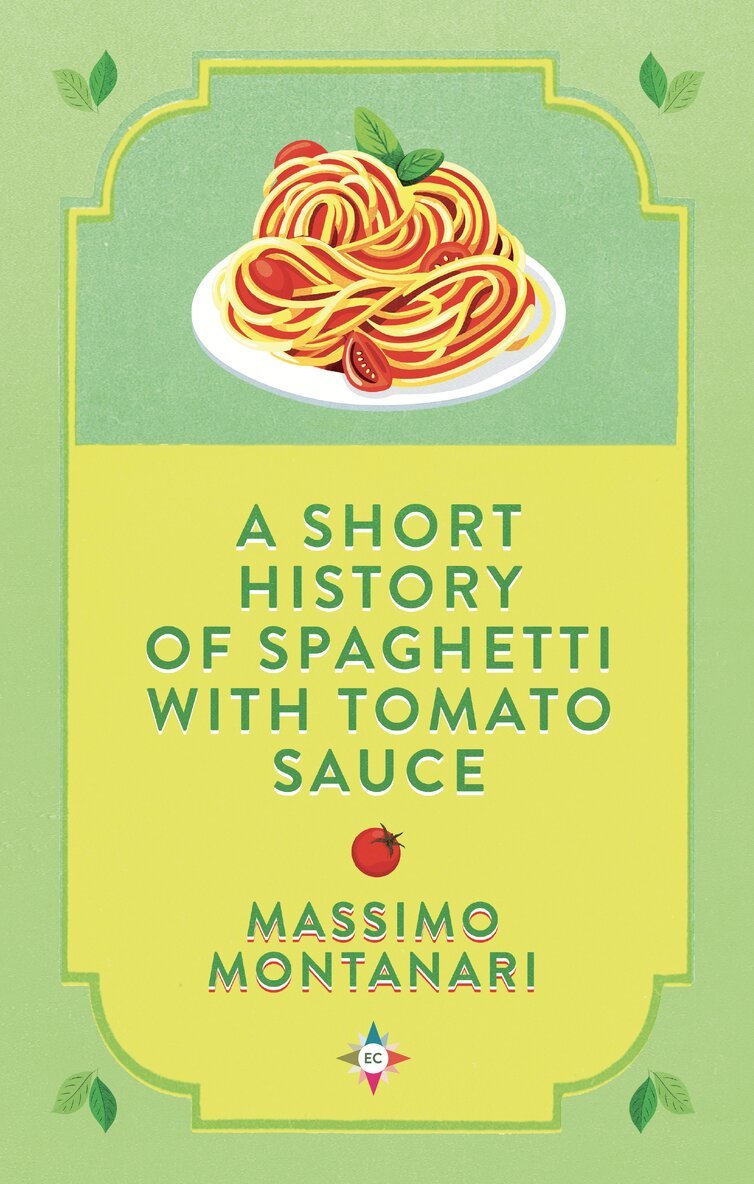
THE MYTHS SURROUNDING THE WORLD’S FAVOURITE DISH, DEBUNKEDDid Marco Polo bring pasta back from China, or is that a myth? How did the Neapolitan “macharoni” turn into the ubiquitous spaghetti?Is it even an Italian dish? Hundreds of shapes and thousands of recipes give expression to the culture and products of the country’s regions. But spaghetti with tomato sauce remains Italy’s identity dish par excellence. Massimo Montanari goes in search of the dish’s true origins, tracing its history along the multiple, intricate routes taken by its raw ingredients to merge and become a distinctive element of culinary tradition.It took almost two thousand years and input from the Far East, the Arabic world, and the Americas, for the dish to take centre stage. Its development is the result of chance encounters, unplanned exchanges, and unpredictable intersections. As we dig in search of spaghetti’s origins, we find its strands wrap right around the world.“Learned and entertaining.”–Il Giornale