Matt Duckham - Böcker
Visar alla böcker från författaren Matt Duckham. Handla med fri frakt och snabb leverans.
8 produkter
8 produkter
915 kr
Skickas inom 10-15 vardagar
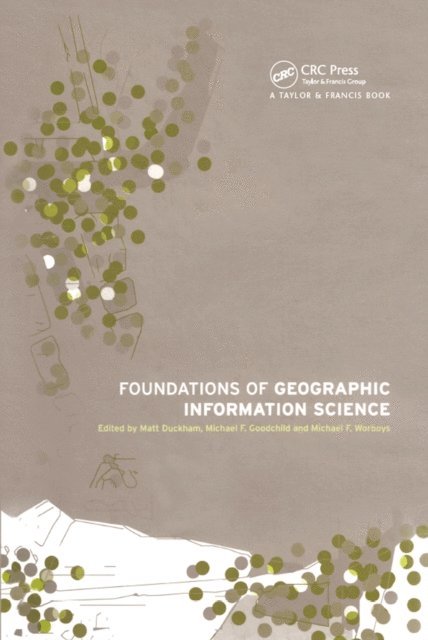
As the use of geographical information systems develops apace, a significant strand of research activity is being directed to the fundamental nature of geographic information. This volume contains a collection of essays and discussions on this theme.What is geographic information? What fundamental principles are associated with it? How can it be represented? How does it represent the world? How can geographic information be quantified? How can it be communicated and related to the other information sciences? How does HCI tie in with it? A number of other more specific but relevant issues are considered, such as Spatio-temporal relationships, boundaries, granularity and taxonomy.This book is a revised and updated version of a collection of presentations given by a group of distinguished researchers in the field of Geographic Information Science who gathered in Manchester in July 2001. It should be useful for graduate students as well as researchers and high-level professionals.
1 168 kr
Tillfälligt slut
1 887 kr
Skickas inom 10-15 vardagar
As the use of geographical information systems develops apace, a significant strand of research activity is being directed to the fundamental nature of geographic information. This volume contains a collection of essays and discussions on this theme.What is geographic information? What fundamental principles are associated with it? How can it be represented? How does it represent the world? How can geographic information be quantified? How can it be communicated and related to the other information sciences? How does HCI tie in with it? A number of other more specific but relevant issues are considered, such as Spatio-temporal relationships, boundaries, granularity and taxonomy.This book is a revised and updated version of a collection of presentations given by a group of distinguished researchers in the field of Geographic Information Science who gathered in Manchester in July 2001. It should be useful for graduate students as well as researchers and high-level professionals.
1 558 kr
Skickas inom 10-15 vardagar
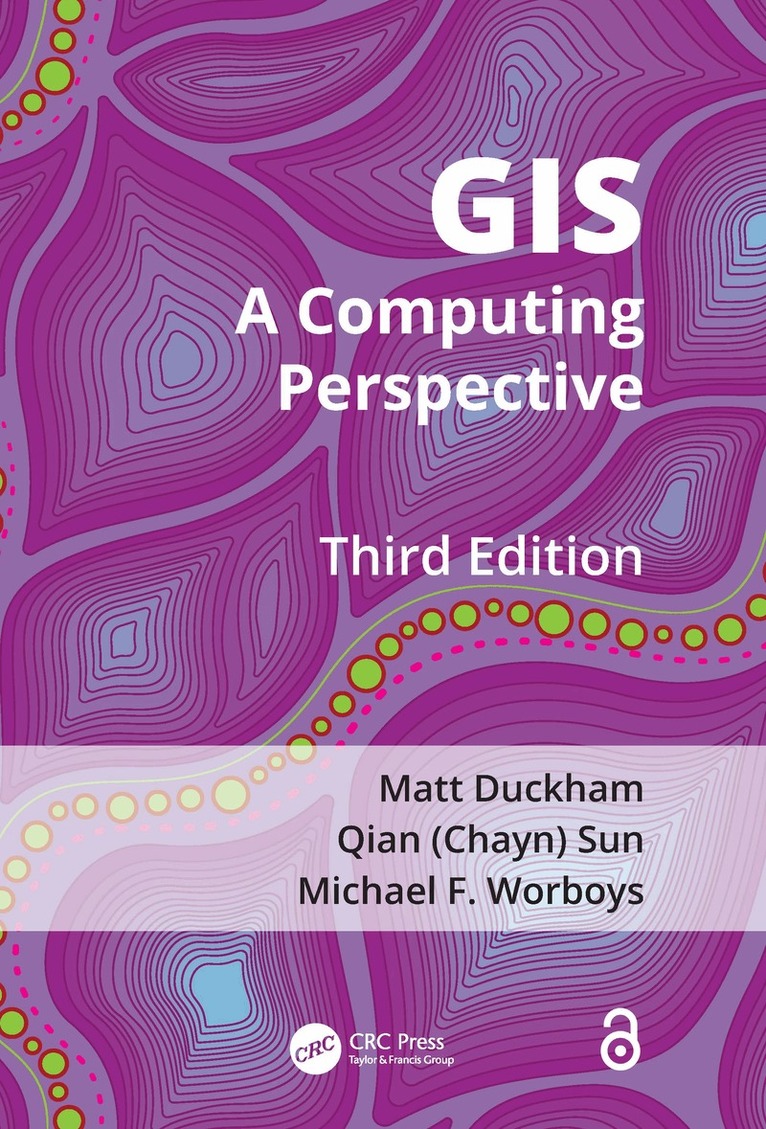
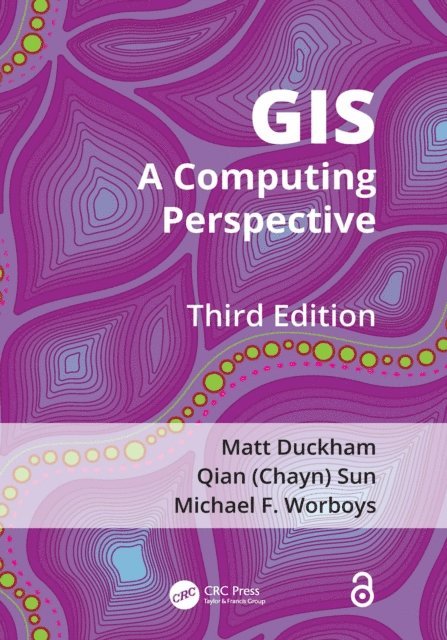
Following two successful editions, the third edition of GIS: A Computing Perspective has been completely revised and updated, with extensive new content reflecting the significant progress that has been made in the realm of GIS within the last 20 years. Major new topics covered for the first time in this edition include: graph databases and graph query languages, ontology engineering and qualitative spatial reasoning, geosensor networks and GeoAI, decentralized computing and online algorithms, and critical GIS and data sovereignty.FeaturesIncludes an entirely new chapter on AI and GIS, including ontologies and the Semantic Web, knowledge representation (KR) and spatial reasoning, machine learning and spatial analysis, and neural networks and deep learningPresents new material reflecting the advances made in cloud computing, stream computing, and sensor networks, as well as extensively revised and updated content on cartography, visualization, and interaction designConnects the technology to the social aspects and implications of GIS, including privacy and fair information practices, FATE (fairness, accountability, transparency, and ethics), and codes of conduct for responsible use of GISIntegrates the necessary background to foundational areas, such as databases and data structures, algorithms and indexes, and system architecture and AI, provided in context so readers new to those topics can still understand the concepts being discussedIncorporates over 20 carefully explained spatial algorithms; over 60 inset boxes with in-depth material that enriches the central topics; and more than 300 color figures to support the reader in mastering key conceptsWelcomes a new coauthor, Qian (Chayn) Sun, to the third edition, who brings her expertise in topics such as web mapping, cloud computing, critical geography, and machine learning with big spatial dataIntended for anyone interested in understanding GIS, especially students taking upper-level undergraduate and graduate courses in computer science and geography, as well as academics, researchers, practitioners, and professionals working in the field and involved in advanced GIS projects.
Del 8728 - Lecture Notes in Computer Science
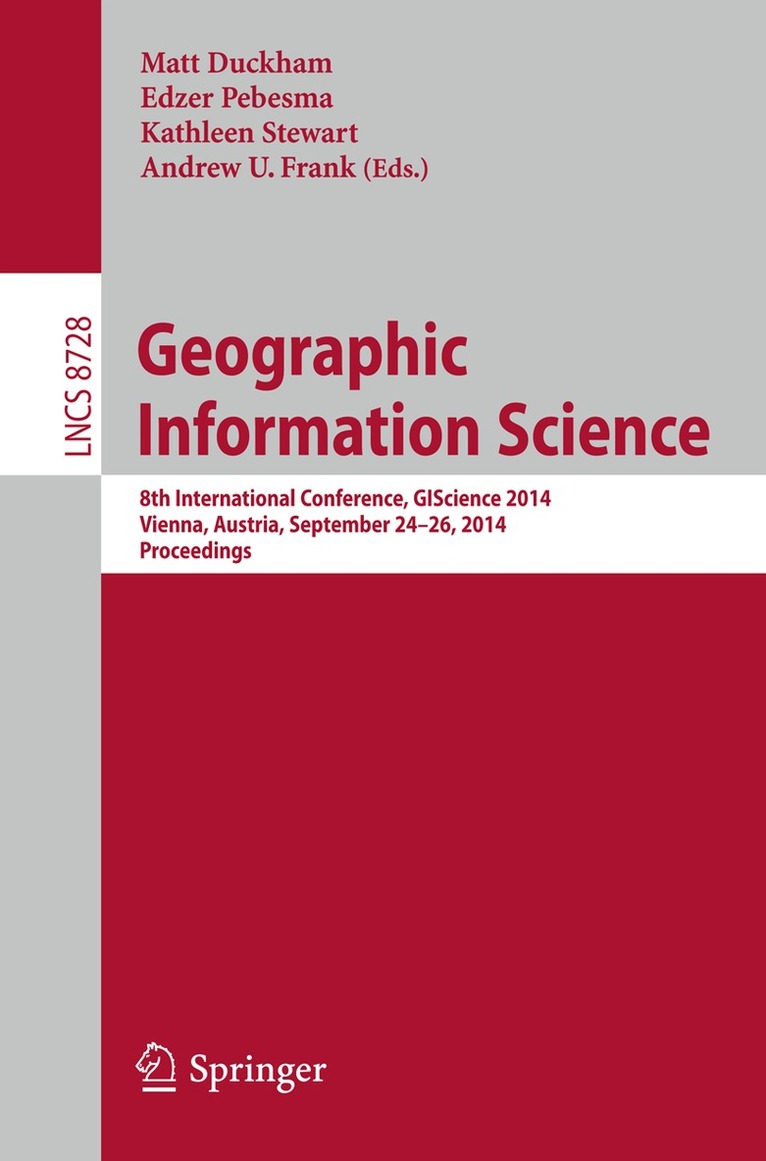
Geographic Information Science
8th International Conference, GIScience 2014, Vienna Austria, September 24-26, 2014, Proceedings
Häftad, Engelska, 2014
551 kr
Skickas inom 10-15 vardagar
This book constitutes the refereed proceedings of the 8th International Conference on Geographic Information Science, GIScience 2014, held in Vienna, Austria in September 2014. The 23 full papers presented were carefully reviewed and selected from various submissions. The papers are organized in topical sections such as information visualization, spatial analysis, user-generated content, semantic models, wayfinding and navigation, spatial algorithms, and spatial relations.
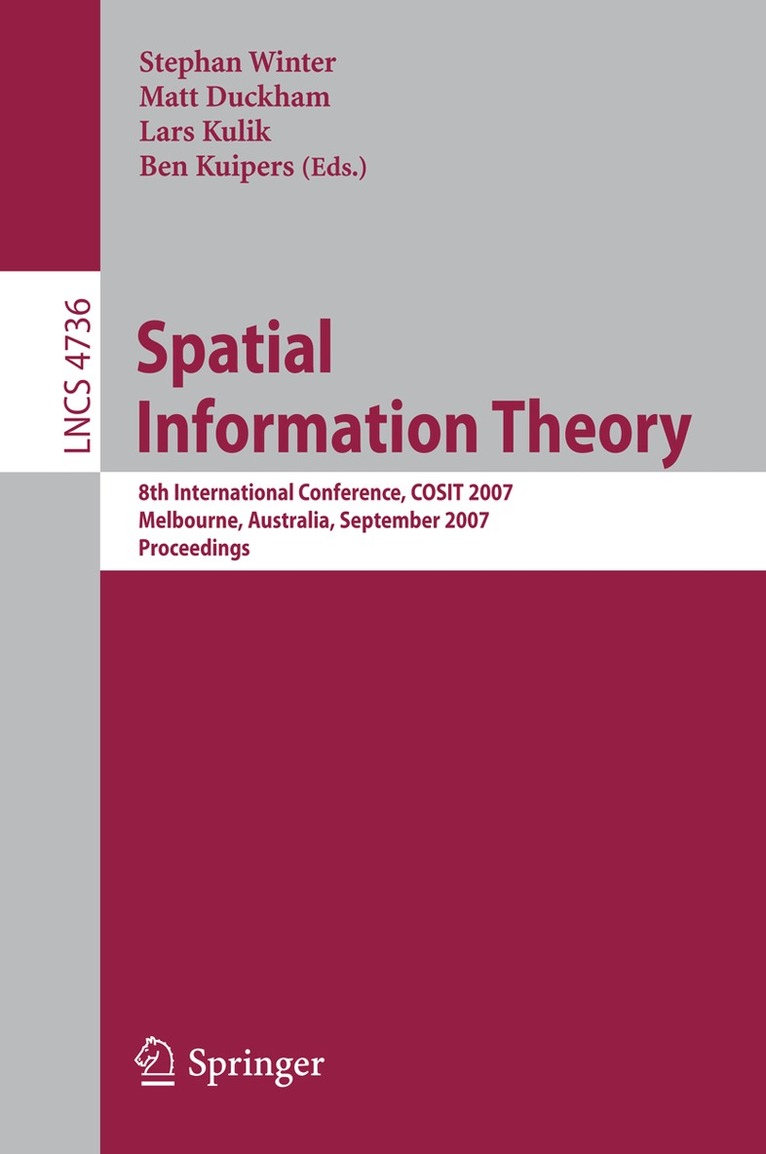
Spatial Information Theory
8th International Conference, COSIT 2007, Melbourne, Australia, September 19-23, 2007, Proceedings
Häftad, Engelska, 2007
535 kr
Skickas inom 10-15 vardagar
This book constitutes the refereed proceedings of the 8th International Conference on Spatial Information Theory, COSIT 2007, held in Melbourne, Australia in September 2007. The 27 revised full papers were carefully reviewed from 102 submissions, and they are organized in topical sections on cultural studies, semantics, similarity, mapping and representation, perception and cognition, reasoning and algorithms, navigation and landmarks, as well as uncertainty and imperfection.
535 kr
Skickas inom 10-15 vardagar
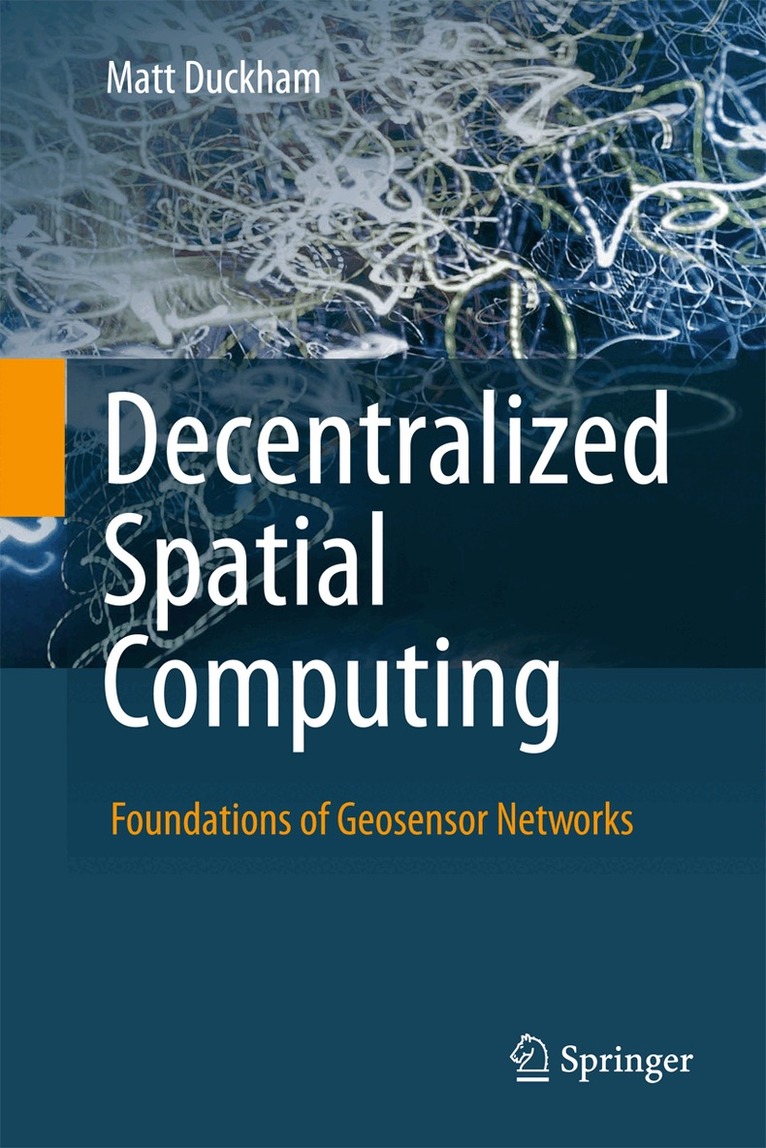
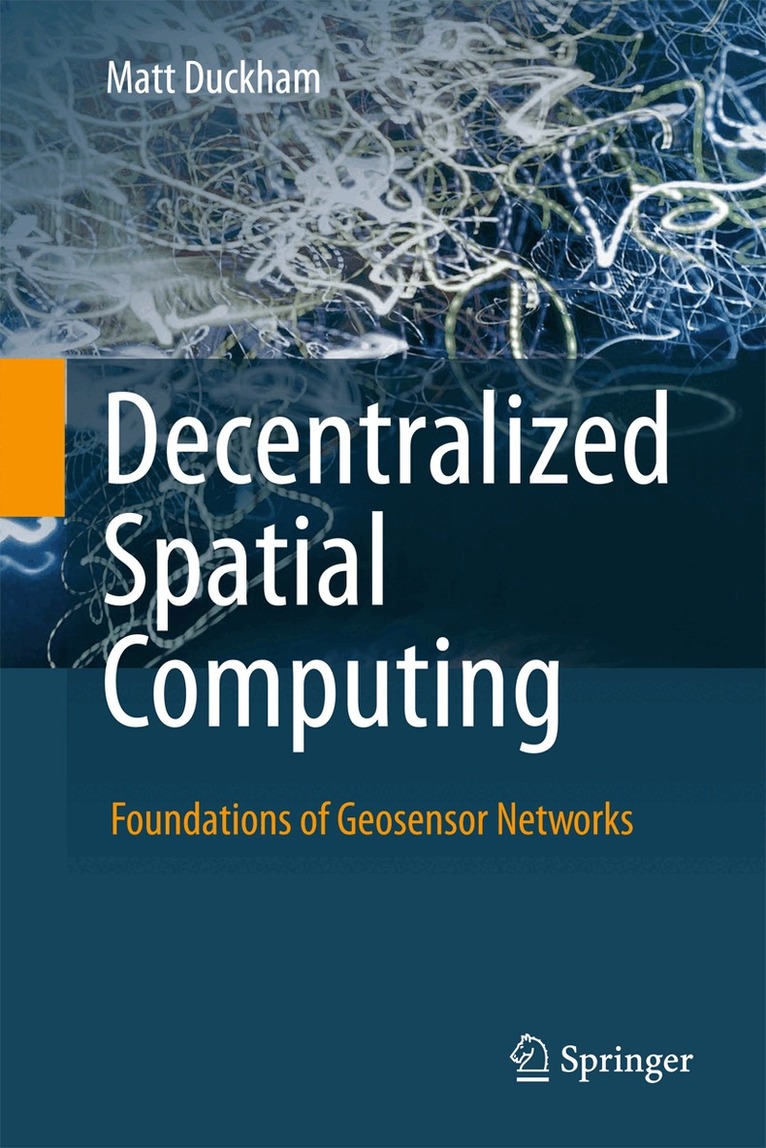
Computing increasingly happens somewhere, with that geographic location important to the computational process itself. Many new and evolving spatial technologies, such as geosensor networks and smartphones, embody this trend. Conventional approaches to spatial computing are centralized, and do not account for the inherently decentralized nature of "computing somewhere": the limited, local knowledge of individual system components, and the interaction between those components at different locations. On the other hand, despite being an established topic in distributed systems, decentralized computing is not concerned with geographical constraints to the generation and movement of information. In this context, of (centralized) spatial computing and decentralized (non-spatial) computing, the key question becomes: "What makes decentralized spatial computing special?"In Part I of the book the author covers the foundational concepts, structures, and design techniques for decentralized computing with spatial and spatiotemporal information. In Part II he applies those concepts and techniques to the development of algorithms for decentralized spatial computing, stepping through a suite of increasingly sophisticated algorithms: from algorithms with minimal spatial information about their neighborhoods; to algorithms with access to more detailed spatial information, such as direction, distance, or coordinate location; to truly spatiotemporal algorithms that monitor environments that are dynamic, even using networks that are mobile or volatile. Finally, in Part III the author shows how decentralized spatial and spatiotemporal algorithms designed using the techniques explored in Part II can be simulated and tested. In particular, he investigates empirically the important properties of a decentralized spatial algorithm: its computational efficiency and its robustness to unavoidable uncertainty. Part III concludes with a survey of the opportunities for connecting decentralized spatial computing to ongoing research and emerging hot topics in related fields, such as biologically inspired computing, geovisualization, and stream computing.The book is written for students and researchers of computer science and geographic information science. Throughout the book the author's style is characterized by a focus on the broader message, explaining the process of decentralized spatial algorithm design rather than the technical details. Each chapter ends with review questions designed to test the reader's understanding of the material and to point to further work or research. The book includes short appendices on discrete mathematics and SQL. Simulation models written in NetLogo and associated source code for all the algorithms presented in the book can be found on the author's accompanying website.
535 kr
Skickas inom 10-15 vardagar
Computing increasingly happens somewhere, with that geographic location important to the computational process itself. Many new and evolving spatial technologies, such as geosensor networks and smartphones, embody this trend. Conventional approaches to spatial computing are centralized, and do not account for the inherently decentralized nature of "computing somewhere": the limited, local knowledge of individual system components, and the interaction between those components at different locations. On the other hand, despite being an established topic in distributed systems, decentralized computing is not concerned with geographical constraints to the generation and movement of information. In this context, of (centralized) spatial computing and decentralized (non-spatial) computing, the key question becomes: "What makes decentralized spatial computing special?"In Part I of the book the author covers the foundational concepts, structures, and design techniques for decentralized computing with spatial and spatiotemporal information. In Part II he applies those concepts and techniques to the development of algorithms for decentralized spatial computing, stepping through a suite of increasingly sophisticated algorithms: from algorithms with minimal spatial information about their neighborhoods; to algorithms with access to more detailed spatial information, such as direction, distance, or coordinate location; to truly spatiotemporal algorithms that monitor environments that are dynamic, even using networks that are mobile or volatile. Finally, in Part III the author shows how decentralized spatial and spatiotemporal algorithms designed using the techniques explored in Part II can be simulated and tested. In particular, he investigates empirically the important properties of a decentralized spatial algorithm: its computational efficiency and its robustness to unavoidable uncertainty. Part III concludes with a survey of the opportunities for connecting decentralized spatial computing to ongoing research and emerging hot topics in related fields, such as biologically inspired computing, geovisualization, and stream computing.The book is written for students and researchers of computer science and geographic information science. Throughout the book the author's style is characterized by a focus on the broader message, explaining the process of decentralized spatial algorithm design rather than the technical details. Each chapter ends with review questions designed to test the reader's understanding of the material and to point to further work or research. The book includes short appendices on discrete mathematics and SQL. Simulation models written in NetLogo and associated source code for all the algorithms presented in the book can be found on the author's accompanying website.