Matt Houlbrook - Böcker
Visar alla böcker från författaren Matt Houlbrook. Handla med fri frakt och snabb leverans.
6 produkter
6 produkter
422 kr
Tillfälligt slut
274 kr
Skickas inom 7-10 vardagar
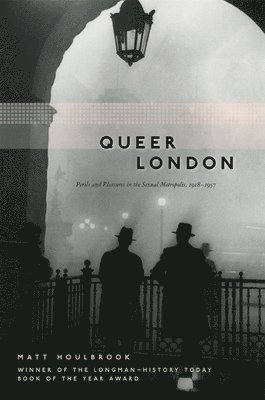
In August 1934, young Cyril L. wrote to his friend Billy about all the exciting men he had met, the swinging nightclubs he had visited, and the vibrant new life he had forged for himself in the big city. He wrote, "I have only been queer since I came to London about two years ago, before then I knew nothing about it." London, for Cyril, meant boundless opportunities to explore his newfound sexuality. But his freedom was limite: he was soon arrested, simply for being in a club frequented by queer men.Cyril's story is Matt Houlbrook's point of entry into the queer worlds of early twentieth-century London. Drawing on previously unknown sources, from police reports and newspaper exposés to personal letters, diaries, and the first queer guidebook ever written, Houlbrook here explores the relationship between queer sexualities and modern urban culture that we take for granted today. He revisits the diverse queer lives that took hold in London's parks and streets; its restaurants, pubs, and dancehalls; and its Turkish bathhouses and hotels—as well as attempts by municipal authorities to control and crack down on those worlds. He also describes how London shaped the culture and politics of queer life—and how London was in turn shaped by the lives of queer men. Ultimately, Houlbrook unveils the complex ways in which men made sense of their desires and who they were. In so doing, he mounts a sustained challenge to conventional understandings of the city as a place of sexual liberation and a unified queer culture. A history remarkable in its complexity yet intimate in its portraiture, Queer London is a landmark work that redefines queer urban life in England and beyond. “A ground-breaking work. While middle-class lives and writing have tended to compel the attention of most historians of homosexuality, Matt Houlbrook has looked more widely and found a rich seam of new evidence. It has allowed him to construct a complex, compelling account of interwar sexualities and to map a new, intimate geography of London.”—Matt Cook, The Times Higher Education Supplement Winner of History Today’s Book of the Year Award, 2006
2 103 kr
Skickas inom 10-15 vardagar
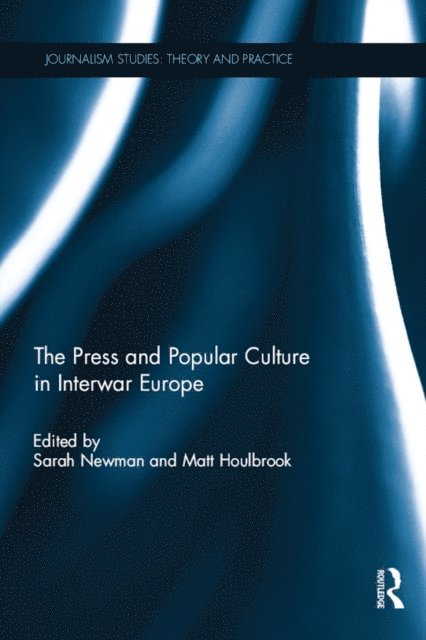
This collection shows the importance of a comparative European framework for understanding developments in the popular press and journalism between the wars. This was, it argues, a formative and vital period in the making of the modern press. A great deal of fine scholarship on the development of modern forms of journalism and newspapers in the nineteenth and twentieth centuries has emerged within discrete national histories. Yet in bringing together essays on Britain, France, Germany, Italy and Poland, this book discerns points of convergence and divergence, and the importance of the European context in shaping how news was defined, produced and consumed. Challenging the tendency of histories of the press to foreground processes of ‘Americanisation’ and the displacement of older notions of the ‘fourth estate’ by new forms of human interest journalism, the chapters draw attention to the complex ways in which the popular press continued to be politicized throughout the interwar period. Building on this analysis, the book examines the forms, processes and networks through which newspapers were produced for public consumption. In a period of massive social, political and economic upheaval and conflict, the popular press provided a forum in which Europe’s meanings and nature could be constructed and contested. The interpersonal, material and technological links between newspapers, news corporations and news agencies in different countries served to define the outlines of Europe. Europe was called into being through the circulation of news and the practices and networks of the modern mass press traced in this volume. This publication is highly relevant to scholars of the history of journalism and cultural historians of interwar Britain and Europe.This book was originally published as a special issue of Journalism Studies.
704 kr
Skickas inom 10-15 vardagar
This collection shows the importance of a comparative European framework for understanding developments in the popular press and journalism between the wars. This was, it argues, a formative and vital period in the making of the modern press. A great deal of fine scholarship on the development of modern forms of journalism and newspapers in the nineteenth and twentieth centuries has emerged within discrete national histories. Yet in bringing together essays on Britain, France, Germany, Italy and Poland, this book discerns points of convergence and divergence, and the importance of the European context in shaping how news was defined, produced and consumed. Challenging the tendency of histories of the press to foreground processes of ‘Americanisation’ and the displacement of older notions of the ‘fourth estate’ by new forms of human interest journalism, the chapters draw attention to the complex ways in which the popular press continued to be politicized throughout the interwar period. Building on this analysis, the book examines the forms, processes and networks through which newspapers were produced for public consumption. In a period of massive social, political and economic upheaval and conflict, the popular press provided a forum in which Europe’s meanings and nature could be constructed and contested. The interpersonal, material and technological links between newspapers, news corporations and news agencies in different countries served to define the outlines of Europe. Europe was called into being through the circulation of news and the practices and networks of the modern mass press traced in this volume. This publication is highly relevant to scholars of the history of journalism and cultural historians of interwar Britain and Europe.This book was originally published as a special issue of Journalism Studies.
364 kr
Skickas inom 5-8 vardagar
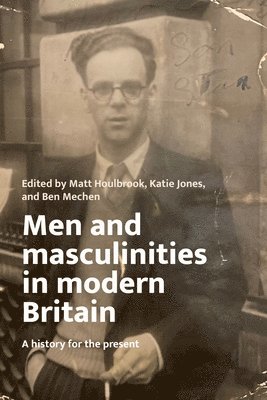
Men and masculinities provides an engaging, accessible and provocative introduction to histories of masculinity for all readers interested in contemporary gender politics. The book offers a critical overview of ongoing historiographical debates and the historical making of men’s lives and identities and ideas of masculinity between the 1890s and the present day. In setting out a new agenda for the field, it makes an ambitious argument for the importance of writing histories which are present-centred and politically engaged. This means that the book engages head-on with ferocious debates about men’s social position and the status of masculinity in contemporary public life. In establishing a critical genealogy for the proliferation of this crisis talk, it sets out new ways of understanding how men’s lives and ideas of masculinity have changed over time while patriarchy and male power have persisted.An electronic edition of this book is freely available under a Creative Commons (CC BY-NC-ND) licence.
259 kr
Skickas
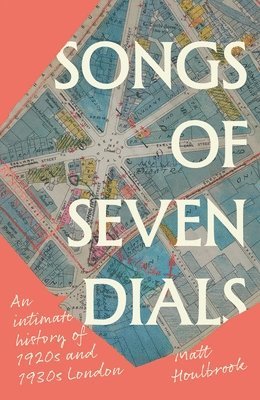
The untold story of a remarkable neighbourhood and the battle to define modern London.Throughout the 1920s and 1930s, Seven Dials was one of London’s most diverse neighbourhoods, home to migrant and working-class communities, bohemian clubs and cafes. But business leaders and city planners had other ideas.Beginning with a rancorous libel trial of 1927, in which a Sierra Leonean café owner and his wife confronted the racist newspaper that destroyed their business, Matt Houlbrook reveals the surprising history of this remarkable neighbourhood. He traces how tensions that simmered on the streets and finally exploded in court betrayed the politics of urban ‘improvement’ and the ‘colour bar’. Underlying the trial was a series of troubling questions that would define Britain in the twentieth century – about race, class and the boundaries of belonging, gentrification and the kind of city London would become.Imaginative, powerful and deeply moving, Songs of Seven Dials is an important new history of London in the 1920s and 1930s.