Matthieu Chapman - Böcker
Visar alla böcker från författaren Matthieu Chapman. Handla med fri frakt och snabb leverans.
8 produkter
8 produkter
793 kr
Skickas inom 10-15 vardagar
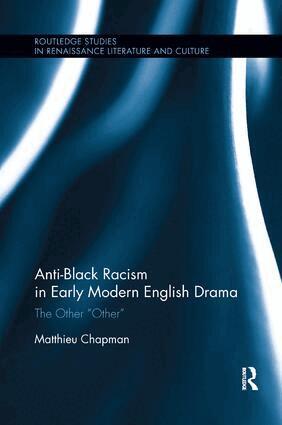
This is the first book to deploy the methods and ensemble of questions from Afro-pessimism to engage and interrogate the methods of Early Modern English studies. Using contemporary Afro-pessimist theories to provide a foundation for structural analyses of race in the Early Modern Period, it engages the arguments for race as a fluid construction of human identity by addressing how race in Early Modern England functioned not only as a marker of human identity, but also as an a priori constituent of human subjectivity. Chapman argues that Blackness is the marker of social death that allows for constructions of human identity to become transmutable based on the impossibility of recognition and incorporation for Blackness into humanity. Using dramatic texts such as Othello, Titus Andronicus, and other Early Modern English plays both popular and lesser known, the book shifts the binary away from the currently accepted standard of white/non-white that defines "otherness" in the period and examines race in Early Modern England from the prospective of a non-black/black antagonism. The volume corrects the Afro-pessimist assumption that the Triangle Slave Trade caused a rupture between Blackness and humanity. By locating notions of Black inhumanity in England prior to chattel slavery, the book positions the Triangle Trade as a result of, rather than the cause of, Black inhumanity. It also challenges the common scholarly assumption that all varying types of human identity in Early Modern England were equally fluid by arguing that Blackness functioned as an immutable constant. Through the use of structural analysis, this volume works to simplify and demystify notions of race in Renaissance England by arguing that race is not only a marker of human identity, but a structural antagonism between those engaged in human civil society opposed to those who are socially dead. It will be an essential volume for those with interest in Renaissance Literature and Culture, Shakespeare, Contemporary Performance Theory, Black Studies, and Ethnic Studies.
375 kr
Skickas inom 7-10 vardagar
The official journal of the Mid-America Theatre ConferenceTheatre History Studies is the official journal of the Mid-America Theatre Conference, Inc. (MATC). The conference is dedicated to the growth and improvement of all forms of theatre throughout a twelve-state region that includes the states of Illinois, Iowa, Nebraska, Kansas, Missouri, Minnesota, North Dakota, South Dakota, and Wisconsin. Its purposes are to unite people and organizations within this region and elsewhere who have an interest in theatre and to promote the growth and development of all forms of theatre.Published annually since 1981, Theatre History Studies provides critical, analytical, and descriptive essays on all aspects of theatre history and is devoted to disseminating the highest quality peer-review scholarship in the field.
375 kr
Skickas inom 7-10 vardagar
The official journal of the Mid-America Theatre ConferenceTheatre History Studies (THS) is a peer-reviewed journal of theatre history and scholarship published annually since 1981 by the Mid-America Theatre Conference (MATC), a regional body devoted to theatre scholarship and practice. The conference encompasses the states of Illinois, Iowa, Nebraska, Kansas, Missouri, Minnesota, North Dakota, South Dakota, Wisconsin, Indiana, Michigan, and Ohio. The purpose of the conference is to unite persons and organizations within the region with an interest in theatre and to promote the growth and development of all forms of theatre. THS is a member of the Council of Editors of Learned Journals and is included in the MLA Directory of Periodicals. THS is indexed in Humanities Index, Humanities Abstracts, Book Review Index, MLA International Bibliography, International Bibliography of Theatre, Arts & Humanities Citation Index, IBZ International Bibliography of Periodical Literature, and IBR International Bibliography of Book Reviews. Full texts of essays appear in the databases of both Humanities Abstracts Full Text and SIRS.Along with book reviews on the latest publications from established and emerging voices in the field, this issue of Theatre History Studies contains three sections with fourteen essays total. In the general section, three essays offer an array of insights, methods, and provocations. In the special section on care, contributors capture their experience as scholars, humans, and citizens in 2022. In Part III, the 2022 Robert A. Schanke Research Award-winning paper by Heidi L. Nees asks historians to rethink Western constructions of time. Taken together, volume 42 captures how this journal serves theatre historians as scholars and laborers as they work to attend and tend to their field. CONTRIBUTORSCheryl Black / Shelby Brewster / Matthieu Chapman / Meredith Conti / Zach Dailey / Michael DeWhatley / Whit Emerson / Katherine Gillen / Miles P. Grier / Patricia Herrera / Lisa Jackson-Schebetta / Nancy Jones / Joshua Kelly / Felicia Hardison LondrÉ / Bret McCandless / Marci R. McMahon/ Tom Mitchell / Sherrice Mojgani / John Murillo III / Heidi L. Nees / Jessica N. PabÓn-ColÓn / Kara Raphaeli / Leticia L. Ridley / Cynthia Running-Johnson / Alexandra Swanson / Catherine Peckinpaugh Vrtis / Shane Wood / Christine Woodworth / Robert O. Yates
172 kr
Skickas inom 7-10 vardagar
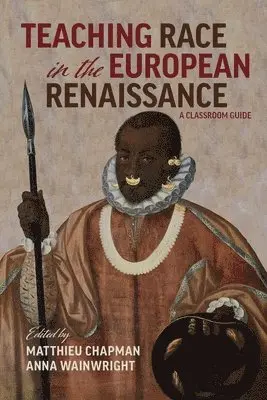
A multidisciplinary guide to classroom discussion of race in the European Renaissance. Teaching Race in the European Renaissance: A Classroom Guide provides both educators and students the tools they need to discuss race in the European Renaissance both in its unique historical contexts and as part of a broader continuum with racial thinking today. The volume gathers scholars of the English, French, Italian, and Iberian Renaissances to provide exercises, lesson plans, methodologies, readings, and other resources designed to bring discussions of race into a broad spectrum of classes on the early modern period, from literature to art history to the history of science. This book is designed to help educators create more diverse and inclusive syllabi and curricula that engage and address a diverse, twenty-first-century student body composed of students from a growing variety of cultural, national, ethnic, and racial backgrounds. By providing clear, concise, and diverse methodologies and analytical focuses, Teaching Race in the European Renaissance: A Classroom Guide will help educators in all areas of Renaissance Studies overcome the anxiety and fear that can come with stepping outside of their expertise to engage with the topic of race, while also providing expert scholars of race in the Renaissance with new techniques and pedagogies to enhance the classroom experience of their students.
2 574 kr
Skickas inom 10-15 vardagar
This is the first book to deploy the methods and ensemble of questions from Afro-pessimism to engage and interrogate the methods of Early Modern English studies. Using contemporary Afro-pessimist theories to provide a foundation for structural analyses of race in the Early Modern Period, it engages the arguments for race as a fluid construction of human identity by addressing how race in Early Modern England functioned not only as a marker of human identity, but also as an a priori constituent of human subjectivity. Chapman argues that Blackness is the marker of social death that allows for constructions of human identity to become transmutable based on the impossibility of recognition and incorporation for Blackness into humanity. Using dramatic texts such as Othello, Titus Andronicus, and other Early Modern English plays both popular and lesser known, the book shifts the binary away from the currently accepted standard of white/non-white that defines "otherness" in the period and examines race in Early Modern England from the prospective of a non-black/black antagonism. The volume corrects the Afro-pessimist assumption that the Triangle Slave Trade caused a rupture between Blackness and humanity. By locating notions of Black inhumanity in England prior to chattel slavery, the book positions the Triangle Trade as a result of, rather than the cause of, Black inhumanity. It also challenges the common scholarly assumption that all varying types of human identity in Early Modern England were equally fluid by arguing that Blackness functioned as an immutable constant. Through the use of structural analysis, this volume works to simplify and demystify notions of race in Renaissance England by arguing that race is not only a marker of human identity, but a structural antagonism between those engaged in human civil society opposed to those who are socially dead. It will be an essential volume for those with interest in Renaissance Literature and Culture, Shakespeare, Contemporary Performance Theory, Black Studies, and Ethnic Studies.
406 kr
Skickas inom 10-15 vardagar
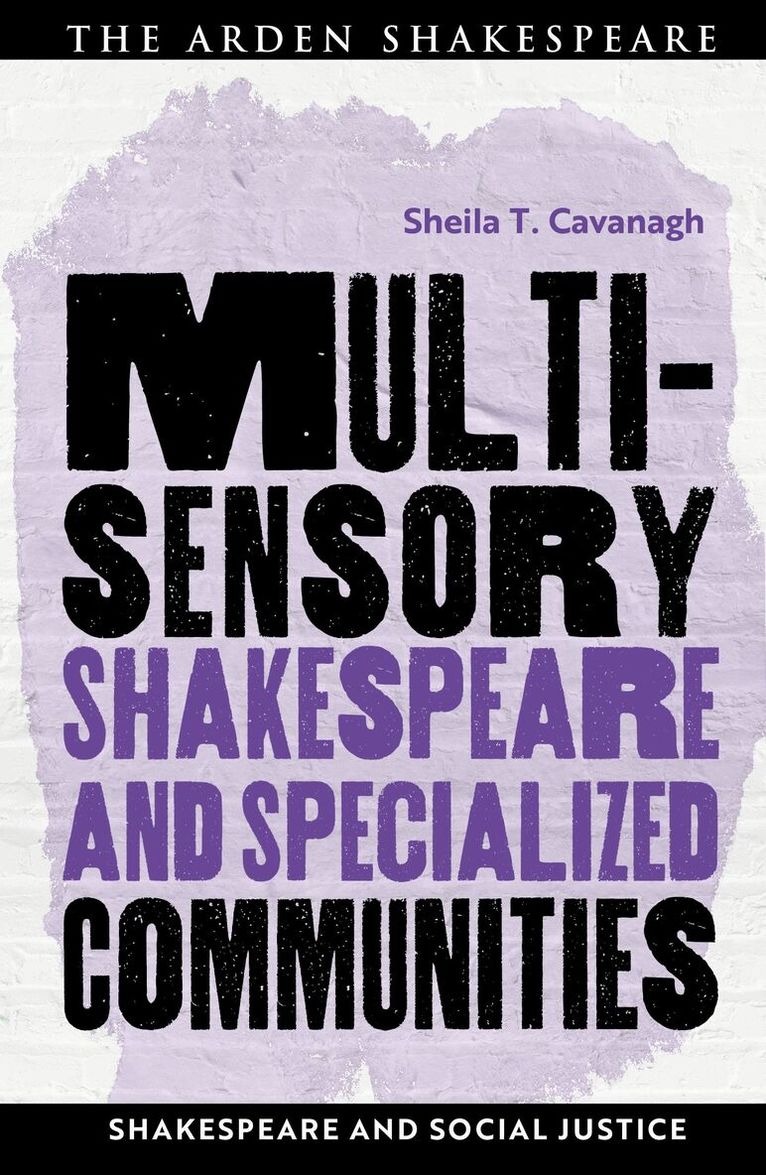
How can theatre and Shakespearean performance be used with different communities to assist personal growth and development, while advancing social justice goals?Employing an integrative approach that draws from science, actor training, therapeutical practices and current research on the senses, this study reveals the work being done by drama practitioners with a range of specialized populations, such as incarcerated people, neurodiverse individuals, those with physical or emotional disabilities, veterans, people experiencing homelessness and many others. With insights drawn from visits to numerous international programs, it argues that these endeavors succeed when they engage multiple human senses and incorporate kinesthetic learning, thereby tapping into the diverse benefits associated with artistic, movement and mindfulness practices.Neither theatre nor Shakespeare is universally beneficial, but the syncretic practices described in this book offer tools for physical, emotional and collaborative undertakings that assist personal growth and development, while advancing social justice goals. Among the practitioners and companies whose work is examined here are programs from the Shakespeare in Prison Network, the International Opera Theater, Blue Apple Theatre, Flute Theatre, DeCruit and Feast of Crispian programs for veterans, Extant Theatre and prison programs in Kolkata and Mysore, India.
303 kr
Skickas inom 7-10 vardagar
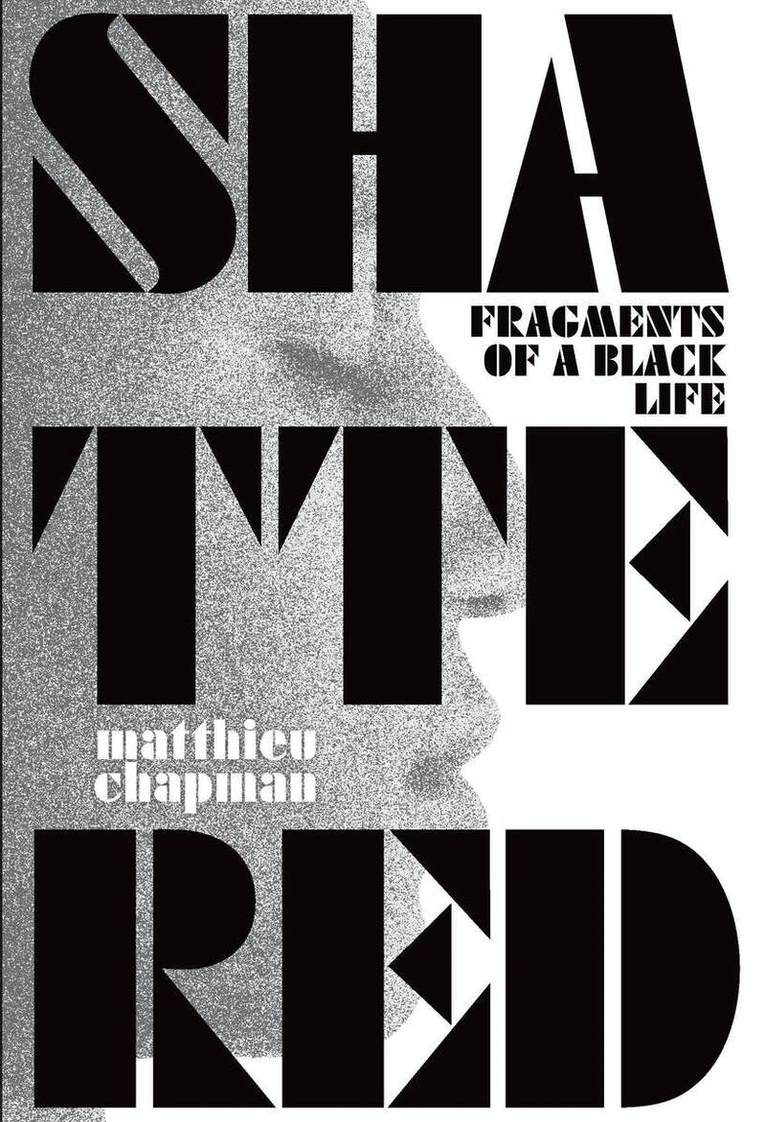
A heartrending and engrossing memoir that challenges narratives of racial progress and postracial America.From a distance, Matthieu Chapman’s life and accomplishments serve as an example of racial progress in America: the first in his family to go to college, he earns two master’s degrees and a doctorate and then becomes a professor of theater. Despite his personal and academic success, however, the specter of antiblackness continues to haunt his every moment and interaction. Told through fragments, facets, shards, slivers, splinters, and absences, Shattered places Chapman’s own story in dialogue with US history and structural analysis of race to relay the experience of being very alive in a demonstrably antiblack society—laying bare the impact of the American way on black bodies, black psyches, and black lives. From the Church of Jesus Christ of Latter-day Saints to the offices of higher education, from a Loyal White Knights flyer on his windshield to a play with black students written by a black playwright, Chapman’s life story embodies the resistance that occurs, the shattering, collapsing, and reconfiguring of being that happens in the collisions between conceptions of blackness. Shattered is a heartrending and thought-provoking challenge to narratives of racial progress and postracial America—an important reminder that systemic antiblack racism affects every black person regardless of what they achieve in spite of it.
1 408 kr
Skickas inom 10-15 vardagar
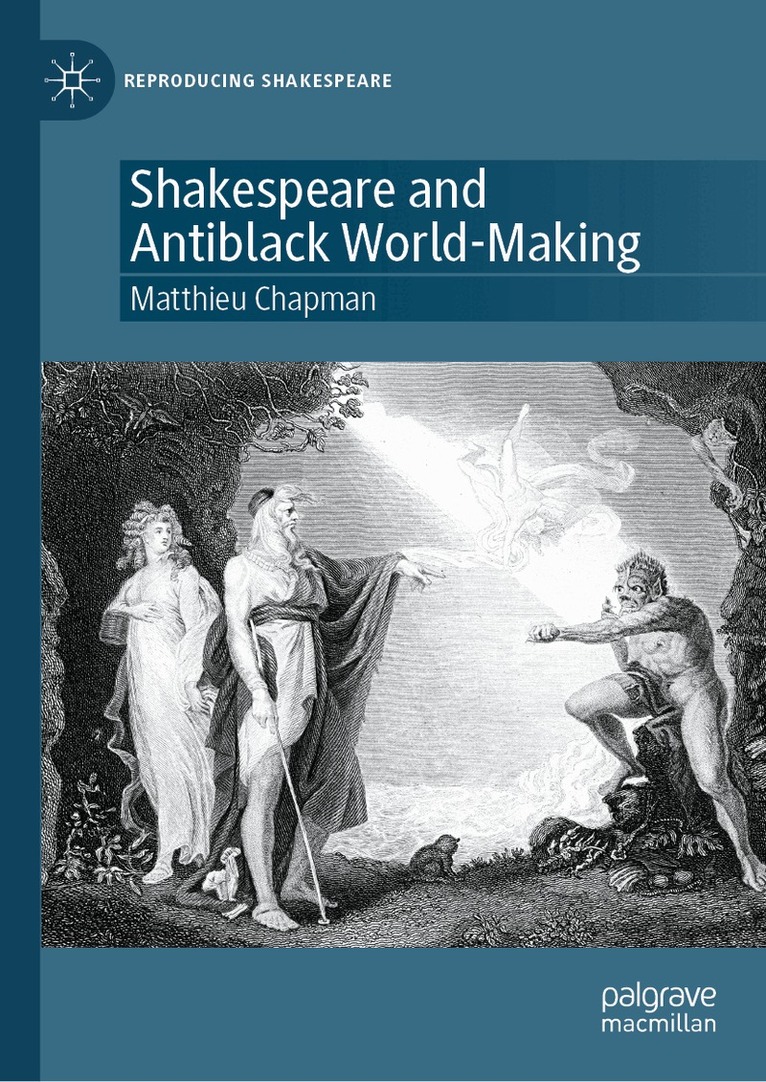
This book is about Shakespeare’s role in sustaining the antiblack paradigm of modernity. This work re-reads both Shakespearean texts and performances from the 16th century to the present to argue that American and English societies have deployed Shakespeare for four hundred years as a mechanism to construct and reinforce paradigmatic antiblackness. Framed within the author’s experiences as a Black scholar, actor, and director of Shakespeare and using both contemporary Critical Race Theory (CRT), as well as Pre-Modern Critical Race Studies (PCRS), this book uses civil society’s engagement with and performance of Shakespeare in various times and places to reveal the continuum of antiblackness that predates chattel slavery in America and contributes to antiblack world-making across oceans and centuries.