Mauro Carbone – författare
Visar alla böcker från författaren Mauro Carbone. Handla med fri frakt och snabb leverans.
18 produkter
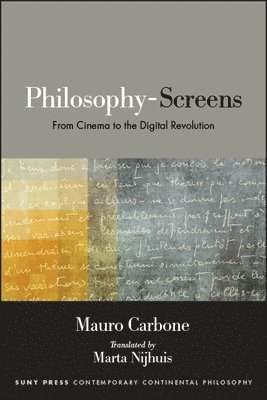
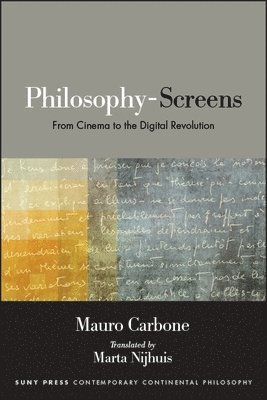
Philosophy-Screens
From Cinema to the Digital Revolution
Häftad, 2020
604 kr
Lägg i varukorg
Draws from twentieth-century French thought on film and aesthetics to address the philosophical significance of the pervasiveness of screens in contemporary technological life as well as the mutation of philosophy that such a pervasiveness seems to require.In The Flesh of Images, Mauro Carbone …
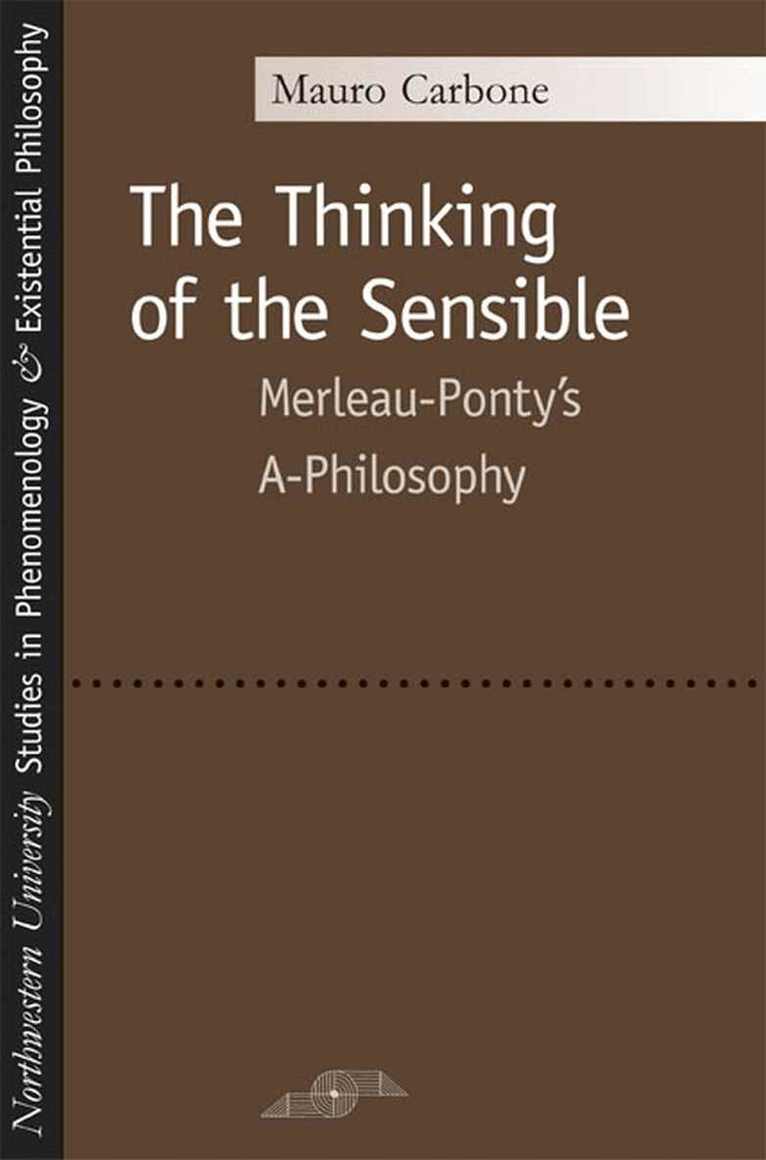
Thinking of the Sensible
Merleau-Ponty's ""a-Philosophy
Av Mauro Carbone, David Michael Kleinberg-Levin
Häftad, 2004
301 kr
Lägg i varukorg
In this first English publication of a well-known and widely respected Italian scholar, readers will encounter the preeminent interpreter of the works of Maurice Merleau-Ponty engaged in a dialogue of critical concern to contemporary philosophy. In subtle and sensitive language eminently suitable …
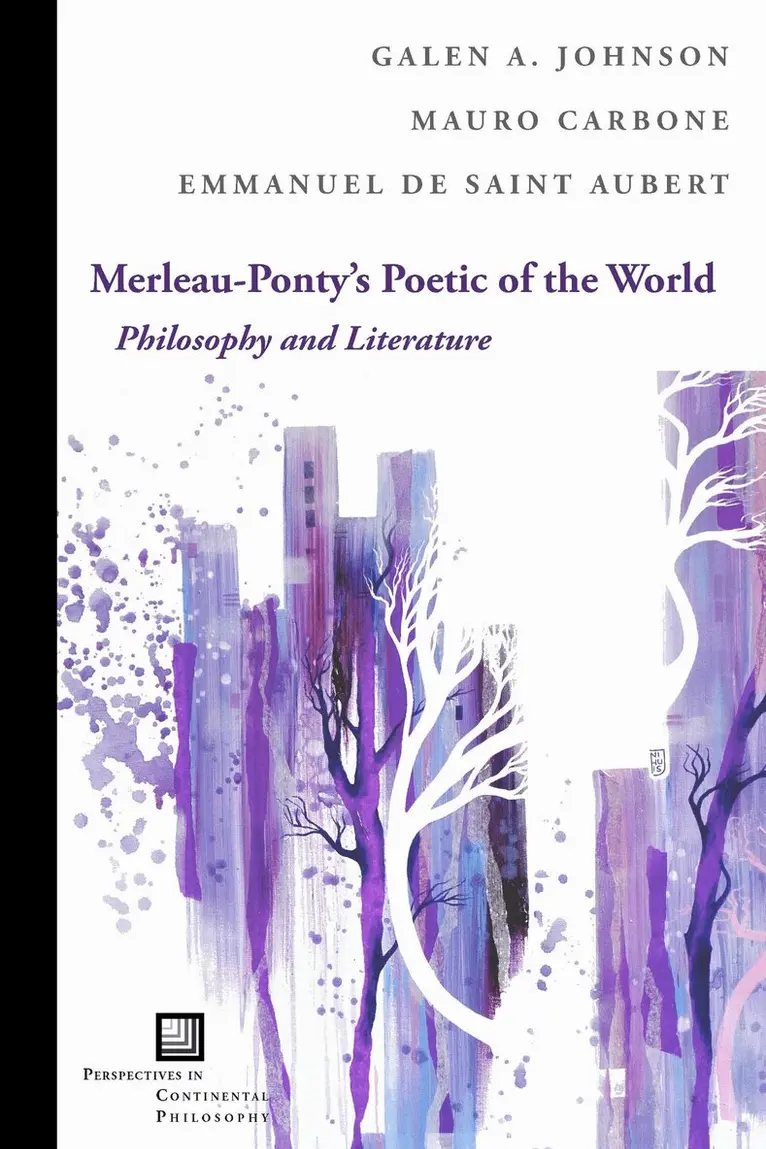
Merleau-Ponty's Poetic of the World
Philosophy and Literature
Av Galen A. Johnson, Mauro Carbone m. fl.
Häftad, 2020
495 kr
Lägg i varukorg
Merleau-Ponty has long been known as one of the most important philosophers of aesthetics, yet most discussions of his aesthetics focus on visual art. This book corrects that balance by turning to Merleau-Ponty's extensive engagement with literature.From Proust, Merleau-Ponty developed his …
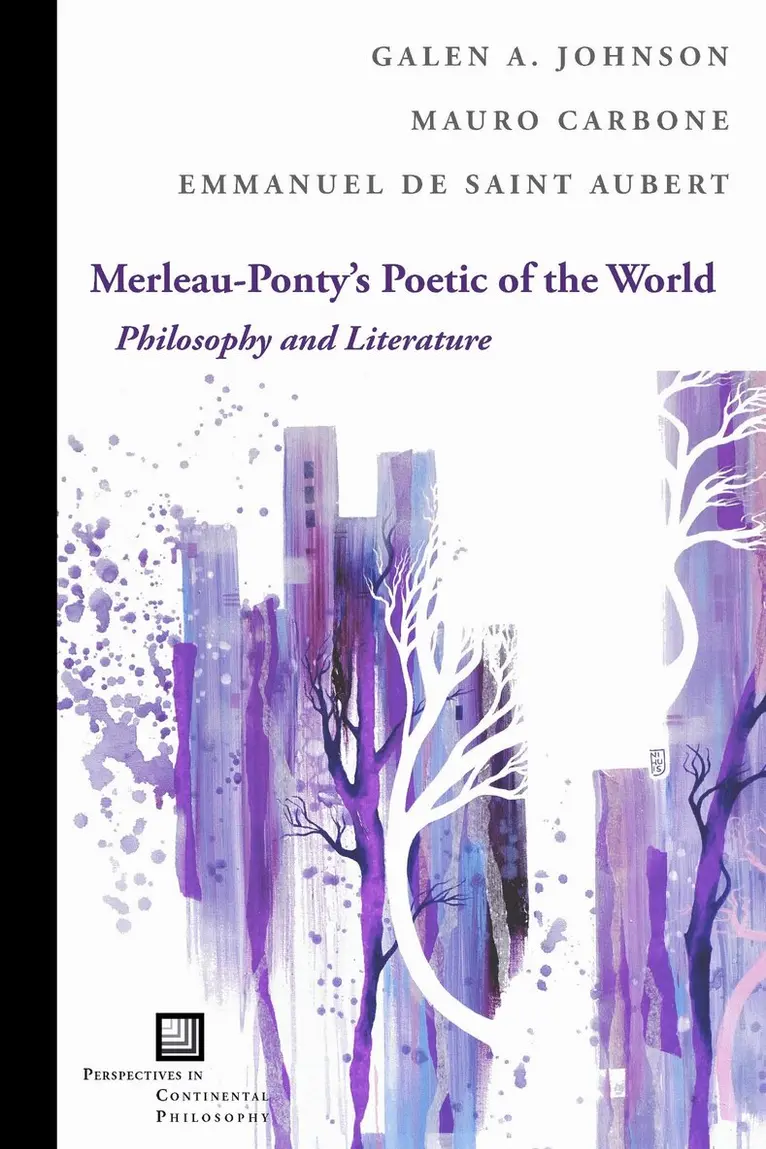
Merleau-Ponty's Poetic of the World
Philosophy and Literature
Av Galen A. Johnson, Mauro Carbone m. fl.
Inbunden, 2020
1568 kr
Lägg i varukorg
Merleau-Ponty has long been known as one of the most important philosophers of aesthetics, yet most discussions of his aesthetics focus on visual art. This book corrects that balance by turning to Merleau-Ponty's extensive engagement with literature.From Proust, Merleau-Ponty developed his …
Philosophy-Screens
From Cinema to the Digital Revolution
Inbunden, 2019
1087 kr
Lägg i varukorg
Draws from twentieth-century French thought on film and aesthetics to address the philosophical significance of the pervasiveness of screens in contemporary technological life as well as the mutation of philosophy that such a pervasiveness seems to require.In The Flesh of Images, Mauro Carbone …
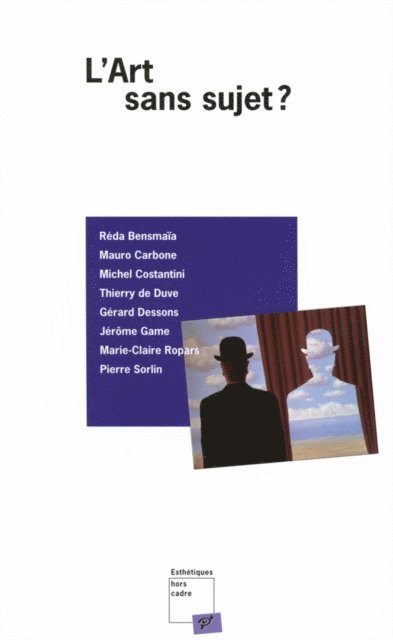
L'Art sans sujet
Av Thierry de Duve, Michel Constantini m. fl.
E-bok, 2008
277 kr
Lägg i varukorg
Approches philosophique, littéraire et esthétique autour de l''interrogation innovante et audacieuse de la notion fondamentale qu''est le sujet dans l''art. « Il n’y a pas de sujets. Il n’y a qu’un sujet : celui qui écrit. » Envisagées tant du point de vue de l’œuvre que du point de vue de …
L'Art sans sujet
Av Thierry de Duve, Michel Constantini m. fl.
E-bok, 2008
279 kr
Lägg i varukorg
Approches philosophique, littéraire et esthétique autour de l''interrogation innovante et audacieuse de la notion fondamentale qu''est le sujet dans l''art. « Il n’y a pas de sujets. Il n’y a qu’un sujet : celui qui écrit. » Envisagées tant du point de vue de l’œuvre que du point de vue de …
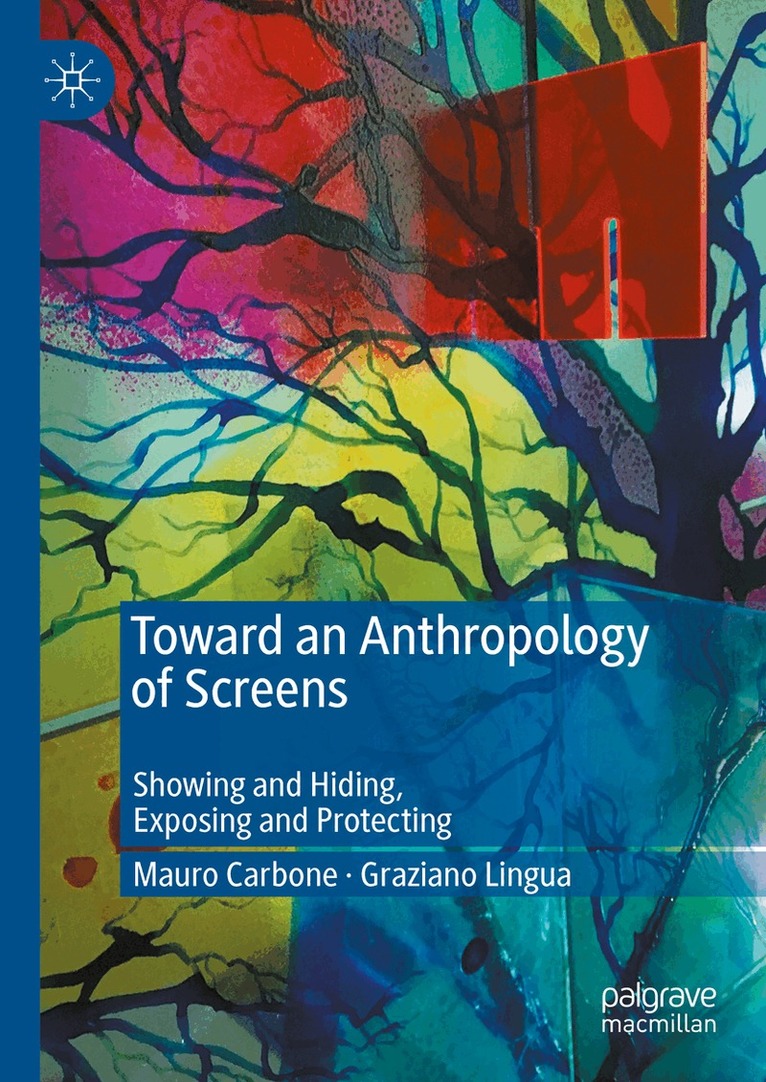
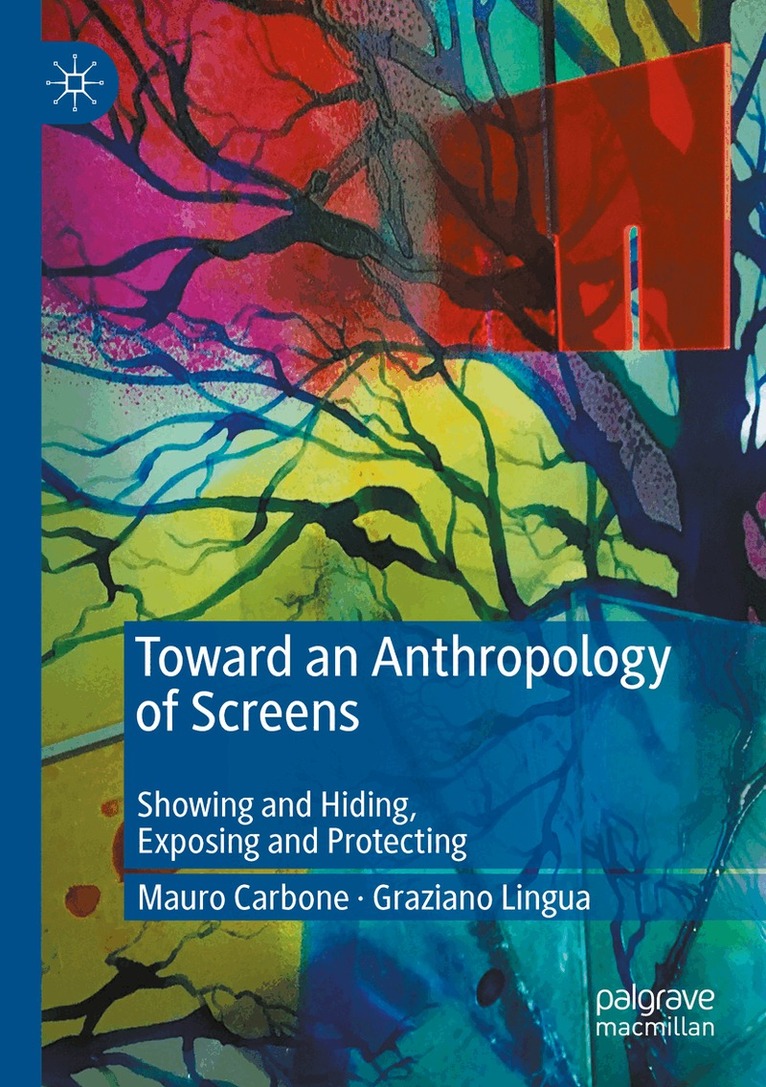
Toward an Anthropology of Screens
Showing and Hiding, Exposing and Protecting
Av Mauro Carbone, Graziano Lingua
Inbunden, 2023
1321 kr
Lägg i varukorg
This book shows that screens don’t just distribute the visible and the invisible, but have always mediated our body's relationships with the physical and anthropological-cultural environment. By combining a series of historical-genealogical reconstructions going back to prehistoric times with the …
Toward an Anthropology of Screens
Showing and Hiding, Exposing and Protecting
Av Graziano Lingua, Mauro Carbone
E-bok, 2023
1793 kr
Lägg i varukorg
This book shows that screens don’t just distribute the visible and the invisible, but have always mediated our body''s relationships with the physical and anthropological-cultural environment. By combining a series of historical-genealogical reconstructions going back to prehistoric times with the …
Toward an Anthropology of Screens
Showing and Hiding, Exposing and Protecting
Av Mauro Carbone, Graziano Lingua
Häftad, 2024
1321 kr
Lägg i varukorg
This book shows that screens don’t just distribute the visible and the invisible, but have always mediated our body's relationships with the physical and anthropological-cultural environment. By combining a series of historical-genealogical reconstructions going back to prehistoric times with the …
Chiasmi International n. 12
Av Mauro Carbone, Leonard Lawlor m. fl.
Häftad, 2014
540 kr
Lägg i varukorg
Chiasmi International 12 presents an extraordinary, unpublished extract from the first course Merleau-Ponty taught at the Collège de France. It is one of the few places where he speaks of cinema and its literal sense of movement. Thus, a “Special Section” called “Cinema and the Philosophy of …
Chiasmi International 24
ANTHROPOCENE AND CRITICAL PHENOMENOLOGY
Av Mauro Carbone, Mauro Carbone m. fl.
Häftad, 2024
146 kr
Lägg i varukorg
ANTHROPOCENE AND CRITICAL PHENOMENOLOGY. CRITICAL PHENOMENOLOGY AFTER MERLEAU-PONTY (PART II). AROUND MERLEAU-PONTY. TEXTS BY Nicola Banwell, Gael Caignard, Myriam Coté, Stanislas De Courville, Gianluca De Fazio, Elena De Silvestri, Luca Fabbris, Emmanuel Falque, Giovanni Fava, Lisa Guenther, Galen …
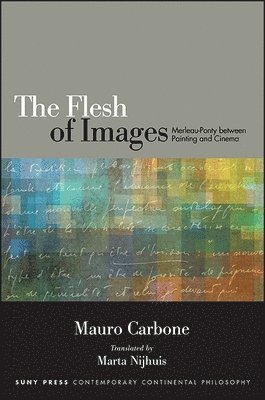
Flesh of Images
Merleau-Ponty between Painting and Cinema
Häftad, 2016
366 kr
Tillfälligt slut
Highlights Merleau-Ponty's interest in film and connects it to his aesthetic theory.In The Flesh of Images, Mauro Carbone begins with the point that Merleau-Ponty's often misunderstood notion of "flesh" was another way to signify what he also called "Visibility." Considering vision as creative …
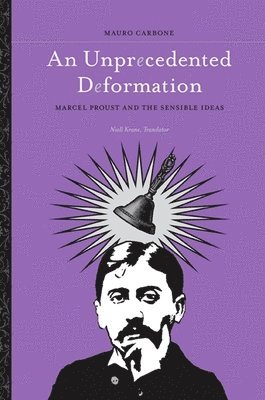
Unprecedented Deformation
Marcel Proust and the Sensible Ideas
Häftad, 2011
429 kr
Tillfälligt slut
Philosophical interpretation of Proust based on the work of Merleau-Ponty and Deleuze.French novelist Marcel Proust made famous "involuntary memory," a peculiar kind of memory that works whether one is willing or not and that gives a transformed recollection of past experience. More than a century …
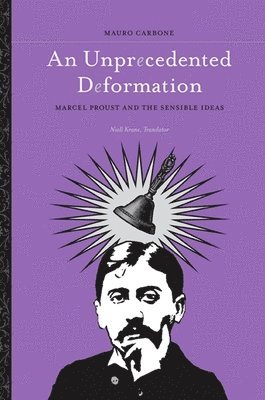
Unprecedented Deformation
Marcel Proust and the Sensible Ideas
Inbunden, 2010
1278 kr
Tillfälligt slut
Philosophical interpretation of Proust based on the work of Merleau-Ponty and Deleuze.French novelist Marcel Proust made famous "involuntary memory," a peculiar kind of memory that works whether one is willing or not and that gives a transformed recollection of past experience. More than a century …
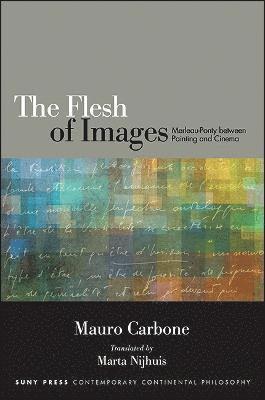
Flesh of Images
Merleau-Ponty between Painting and Cinema
Inbunden, 2015
1111 kr
Tillfälligt slut
Highlights Merleau-Ponty's interest in film and connects it to his aesthetic theory.In The Flesh of Images, Mauro Carbone begins with the point that Merleau-Ponty's often misunderstood notion of "flesh" was another way to signify what he also called "Visibility." Considering vision as creative …
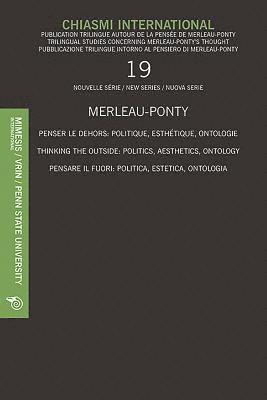
Chiasmi International 19
Penser le dehors: politique, esthétique, ontologie - Thinking the outside: politics, aestheontology - Pensare il fuori: politica, estetica, ontologia
Av Mauro Carbone, Galen Johnson m. fl.
Häftad, 2018
522 kr
Tillfälligt slut
Chiasmi International: Trilingual Studies Concerning the Thought of Merleau-Ponty is a peer-reviewed academic journal that publishes articles, reviews, and discussions in Italian, French, and English on the thought of the French philosopher Maurice Merleau-Ponty. The journal is produced in …