Maxine Sheets-Johnstone - Böcker
Visar alla böcker från författaren Maxine Sheets-Johnstone. Handla med fri frakt och snabb leverans.
9 produkter
9 produkter
572 kr
Skickas inom 5-8 vardagar
This book argues the case for a foundationalist ethics centrally based on an empirical understanding of human nature. For Maxine Sheets-Johnstone, “an ethics formulated on the foundations of anything other than human nature, hence on anything other than an identification of pan-cultural human realities, lacks solid empirical moorings. It easily loses itself in isolated hypotheticals, reductionist scenarios, or theoretical abstractions—in the prisoner’s dilemma, selfish genes, dedicated brain modules, evolutionary altruism, or psychological egoism, for example—or it easily becomes itself an ethical system over and above the ethics it formulates,” such as the deontological ethics of Kantian categorical imperatives, the utilitarianism of Bentham and Mill, or the ethics of care.Taking her cue from Hume, especially his Treatise on Human Nature, where he grounds “the moral sense” in human nature seen as always in tension between the natural tendencies of selfish acquisitiveness and sympathy for others, Sheets-Johnstone pursues her phenomenological investigation of the natural basis of human morality by directing her attention, first in Part I, to what is traditionally considered the dark side of human nature, and then, in Part II, to the positive side. The tension between the two calls for an interdisciplinary therapeutic resolution, which she offers in the Epilogue by arguing for the value of a moral education that enlightens humans about their own human nature, highlighting both the socialization of fear and the importance of play and creativity.
1 359 kr
Tillfälligt slut
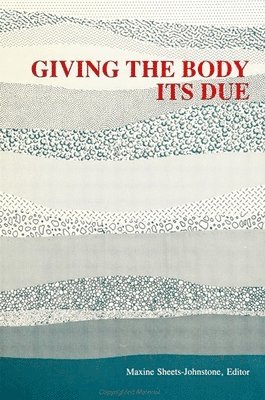
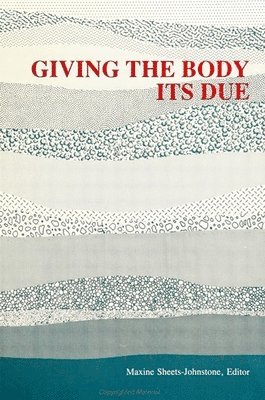
These essays bring together disciplinary understandings of what it is to be the bodies we are. In its own way, each essay calls into question certain culturally-embedded ways of valuing the body which deride or ignore its role in making us human. These ways have remained virtually unchanged since Descartes in the seventeenth century first sharply divided mind-a thinking substance, from the body-an extended substance.The legacy of this Cartesian metaphysics has been to reduce the body by turns to a static assemblage of parts and to a dumb show of movement. It has both divided the fundamental integrity of creaturely life and depreciated the role of the living body in knowing and making sense of the world, in learning, in the creative arts, and in self- and interpersonal understandings. The living sense of the body and its capacity for sense-making have indeed been blotted out by top-heavy concerns with brains, minds, and language, as if these existed without a body.It is this conception of the body as mere handmaiden to the privileged that the contributors to this book challenge. By the evidence they bring forward, they help restore what is properly due the body since Descartes convinced us that mind and body are separate, and that mind is the primary value. Moreover, they help to elucidate what is properly due the body since the more recent twentieth-century western emphasis upon vision effectively reduced the richness of the affective and tactile-kinesthetic body-the body of felt experience-to a simple sum of sensations.Dominant themes that run throughout the essays and that call our attention to the living sense of the body and its capacity for sense-making are: wholeness, the capacity for self-healing, cultural histories of the body, pan-cultural bodily invariants, thinking, emotions, and the body's wisdom. In the end, these themes show that giving the body its due means forging a metaphysics that upholds the truths of experience.
382 kr
Tillfälligt slut
These essays bring together disciplinary understandings of what it is to be the bodies we are. In its own way, each essay calls into question certain culturally-embedded ways of valuing the body which deride or ignore its role in making us human. These ways have remained virtually unchanged since Descartes in the seventeenth century first sharply divided mind-a thinking substance, from the body-an extended substance.The legacy of this Cartesian metaphysics has been to reduce the body by turns to a static assemblage of parts and to a dumb show of movement. It has both divided the fundamental integrity of creaturely life and depreciated the role of the living body in knowing and making sense of the world, in learning, in the creative arts, and in self- and interpersonal understandings. The living sense of the body and its capacity for sense-making have indeed been blotted out by top-heavy concerns with brains, minds, and language, as if these existed without a body.It is this conception of the body as mere handmaiden to the privileged that the contributors to this book challenge. By the evidence they bring forward, they help restore what is properly due the body since Descartes convinced us that mind and body are separate, and that mind is the primary value. Moreover, they help to elucidate what is properly due the body since the more recent twentieth-century western emphasis upon vision effectively reduced the richness of the affective and tactile-kinesthetic body-the body of felt experience-to a simple sum of sensations.Dominant themes that run throughout the essays and that call our attention to the living sense of the body and its capacity for sense-making are: wholeness, the capacity for self-healing, cultural histories of the body, pan-cultural bodily invariants, thinking, emotions, and the body's wisdom. In the end, these themes show that giving the body its due means forging a metaphysics that upholds the truths of experience.
504 kr
Skickas inom 3-6 vardagar
This interdisciplinary work demonstrates, by steadfast attention to corporeal matters of fact, how the concept of power and of power relations is rooted in bodily life, in animate form. It first shows how Foucault's "optics of power" is Sartre's "The Look" writ large, and proceeds to explain how optics of power are undergirded by a "power of optics" which has its roots in our primate evolutionary heritage. The exploration of an evolutionary genealogy leads in turn into extended examinations and exemplifications of corporeal and intercorporeal archetypes. Moving easily through biological, anthropological and psychological domains, and informed by keen philosophical reflection, "The Roots of Power" aims to show how the personal and political are fundamentally joined in the body, that is, how the political defines us both as creatures of a natural history and as culturally - and individually - groomed bearers of meaning.Sheets-Johnstone assesses the complex of topics that progressively surfaces such as females' being receptive "year-round", male threat/female vulnerability, Sartre's characterisation of females' being "in the form of a hole", and proposed relationships between aggression and sex. In addition, she shows through detailed analyses of Derrida's absencing of the living body from the scene of grammatology, and of sociobiologists' explanations of rape as adaptive behaviour how the tenets of postmodernism and sociobiology preclude insight into the personal-political equation. "The Roots of Power" concludes with an extended critical meditation on Lacan's psychoanalytic, showing not only how it is rooted in idiosyncratic archetypal elaborations but how, in its scientisation of life, pedestalling of human language, and silencing of the living body, it is a microcosm of 20th-century Western practices and ideologies.
336 kr
Skickas inom 7-10 vardagar
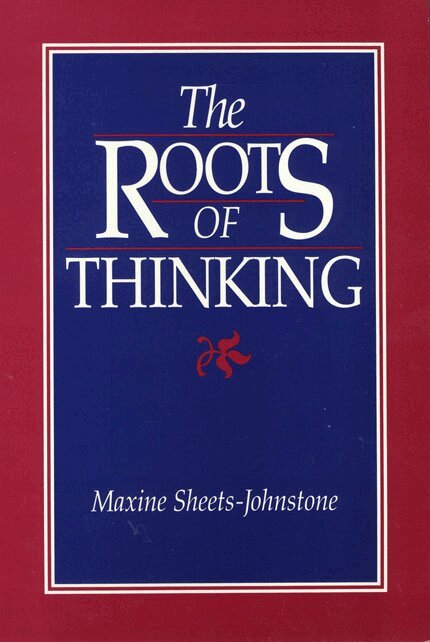
A ground-breaking interdisciplinary study about conceptual origins linking hominid thinking with hominid evolution
864 kr
Skickas inom 7-10 vardagar
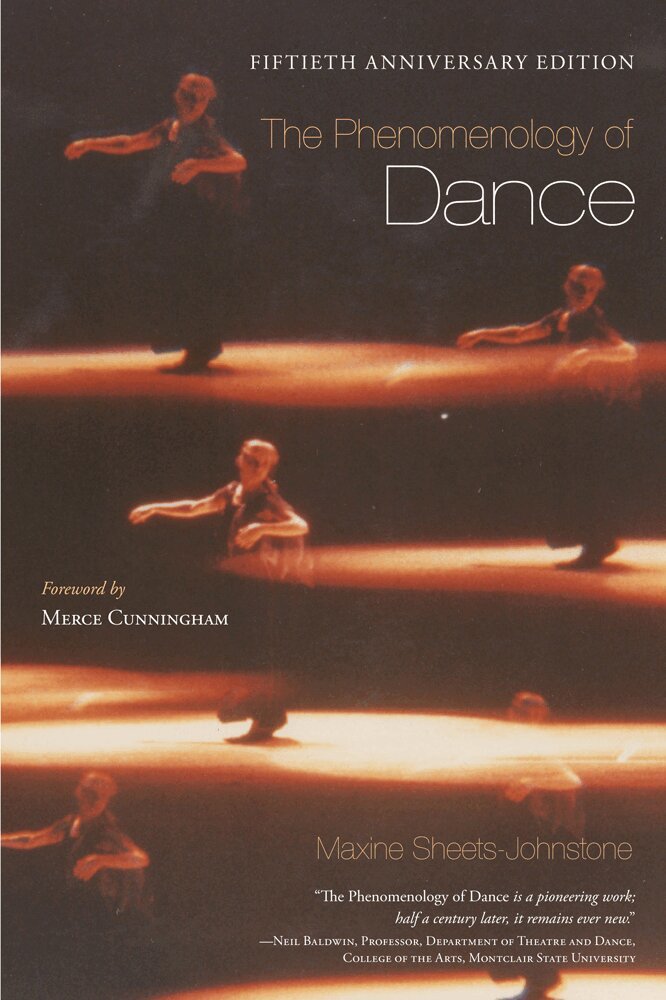
When The Phenomenology of Dance was first published in 1966, Maxine Sheets-Johnstone asked: “When we look at a dance, what do we see?” Her questions, about the nature of our experience of dance and the nature of dance as a formed and performed art, are still provocative and acutely significant today. Sheets-Johnstone considers dance as an aesthetic mode of expression, and integrates theories of dance into philosophical discussions of the nature of movement. Back in print after nearly 20 years, The Phenomenology of Dance provides an informed approach to teaching dance and to dance education, appreciation, criticism, and choreography. In addition to the foreword by Merce Cunningham from the original edition, and the preface from the second edition, this fiftieth anniversary edition includes an in-depth introduction that critically and constructively addresses present-day scholarship on movement and dance.
309 kr
Skickas
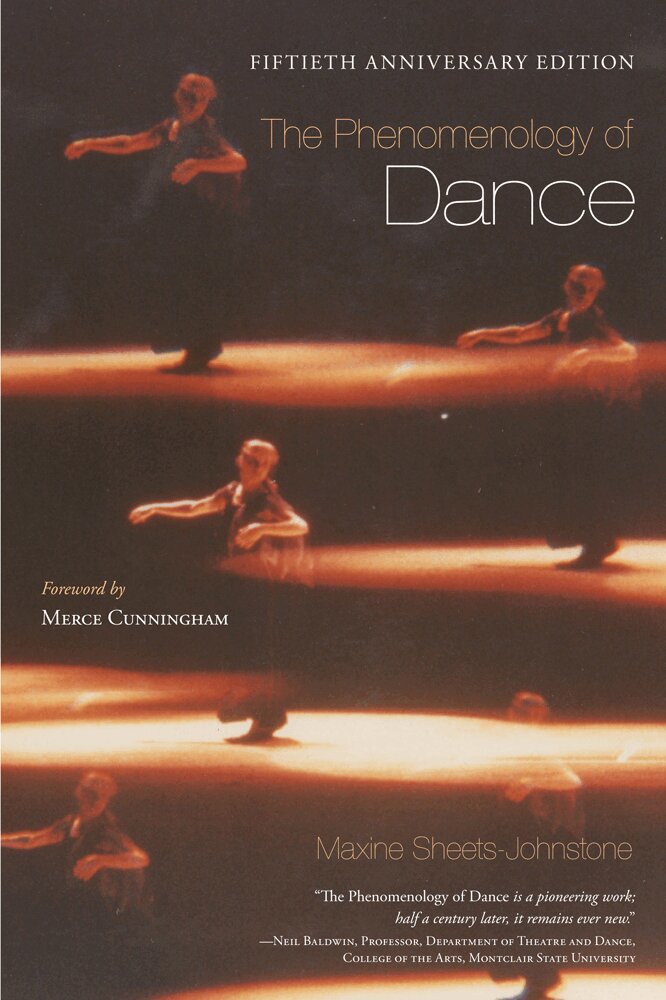
When The Phenomenology of Dance was first published in 1966, Maxine Sheets-Johnstone asked: “When we look at a dance, what do we see?” Her questions, about the nature of our experience of dance and the nature of dance as a formed and performed art, are still provocative and acutely significant today. Sheets-Johnstone considers dance as an aesthetic mode of expression, and integrates theories of dance into philosophical discussions of the nature of movement. Back in print after nearly 20 years, The Phenomenology of Dance provides an informed approach to teaching dance and to dance education, appreciation, criticism, and choreography. In addition to the foreword by Merce Cunningham from the original edition, and the preface from the second edition, this fiftieth anniversary edition includes an in-depth introduction that critically and constructively addresses present-day scholarship on movement and dance.
210 kr
Skickas
547 kr
Skickas inom 3-6 vardagar