May Hawas - Böcker
Visar alla böcker från författaren May Hawas. Handla med fri frakt och snabb leverans.
8 produkter
8 produkter
725 kr
Skickas inom 10-15 vardagar
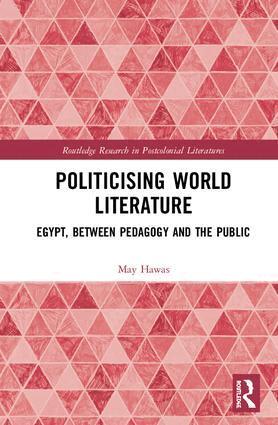
Politicising World Literature: Egypt, Between Pedagogy and the Public engages with postcolonial and world literature approaches to examine the worldly imaginary of the novel genre and assert the political imperative to teaching world literature. How does canonising world literature relate to societal, political or academic reform? Alternating between close reading of texts and literary history, this monograph studies a corpus of novels and travelogues in English, Arabic, French, Czech and Italian to historicise Egypt’s literary relations with different parts of the world in both the modern period and the pre-modern period. In this rigorous study, May Hawas argues that protagonists, particularly in times of political crises, locate themselves as individuals with communal or political affiliations that supersede, if not actually resist, national affiliations.
787 kr
Skickas inom 10-15 vardagar
The Routledge Companion to World Literature and World History is a comprehensive and engaging volume, combining essays from historians and literary academics to create a space for productive cross-cultural encounters between the two fields. In addition to the 27 essays, the Companion includes general introductions from two of the leading scholars of history and literature, David Damrosch and Patrick Manning, as well as personal testimonies from artists working in the area, and editorials asking provocative questions.The volume includes sections on:People – with essays looking at World Literature, Intellectual Commerce, Religion, language and war, and Indigenous ethnographyNetworks and methods – examining maps, geography, morality and the crises of world literatureTransformations – including essays on race, colonialism, and the non-humanInterdisciplinary and groundbreaking, this volume brings to light various ways in which scholars of literature and history analyse, assimilate or reveal the intellectual heritage of the past, at the same moment as they try consciously to deal with an unending amount of new information and an awareness of global connections and discrepancies. Including work from leading academics in the field, as well as newer voices, the Companion is ideal for students and scholars alike.
2 402 kr
Skickas inom 10-15 vardagar
Politicising World Literature: Egypt, Between Pedagogy and the Public engages with postcolonial and world literature approaches to examine the worldly imaginary of the novel genre and assert the political imperative to teaching world literature. How does canonising world literature relate to societal, political or academic reform? Alternating between close reading of texts and literary history, this monograph studies a corpus of novels and travelogues in English, Arabic, French, Czech and Italian to historicise Egypt’s literary relations with different parts of the world in both the modern period and the pre-modern period. In this rigorous study, May Hawas argues that protagonists, particularly in times of political crises, locate themselves as individuals with communal or political affiliations that supersede, if not actually resist, national affiliations.
3 755 kr
Skickas inom 10-15 vardagar
The Routledge Companion to World Literature and World History is a comprehensive and engaging volume, combining essays from historians and literary academics to create a space for productive cross-cultural encounters between the two fields. In addition to the 27 essays, the Companion includes general introductions from two of the leading scholars of history and literature, David Damrosch and Patrick Manning, as well as personal testimonies from artists working in the area, and editorials asking provocative questions.The volume includes sections on: People – with essays looking at World Literature, Intellectual Commerce, Religion, language and war, and Indigenous ethnography Networks and methods – examining maps, geography, morality and the crises of world literature Transformations – including essays on race, colonialism, and the non-humanInterdisciplinary and groundbreaking, this volume brings to light various ways in which scholars of literature and history analyse, assimilate or reveal the intellectual heritage of the past, at the same moment as they try consciously to deal with an unending amount of new information and an awareness of global connections and discrepancies. Including work from leading academics in the field, as well as newer voices, the Companion is ideal for students and scholars alike.
1 148 kr
Skickas inom 10-15 vardagar
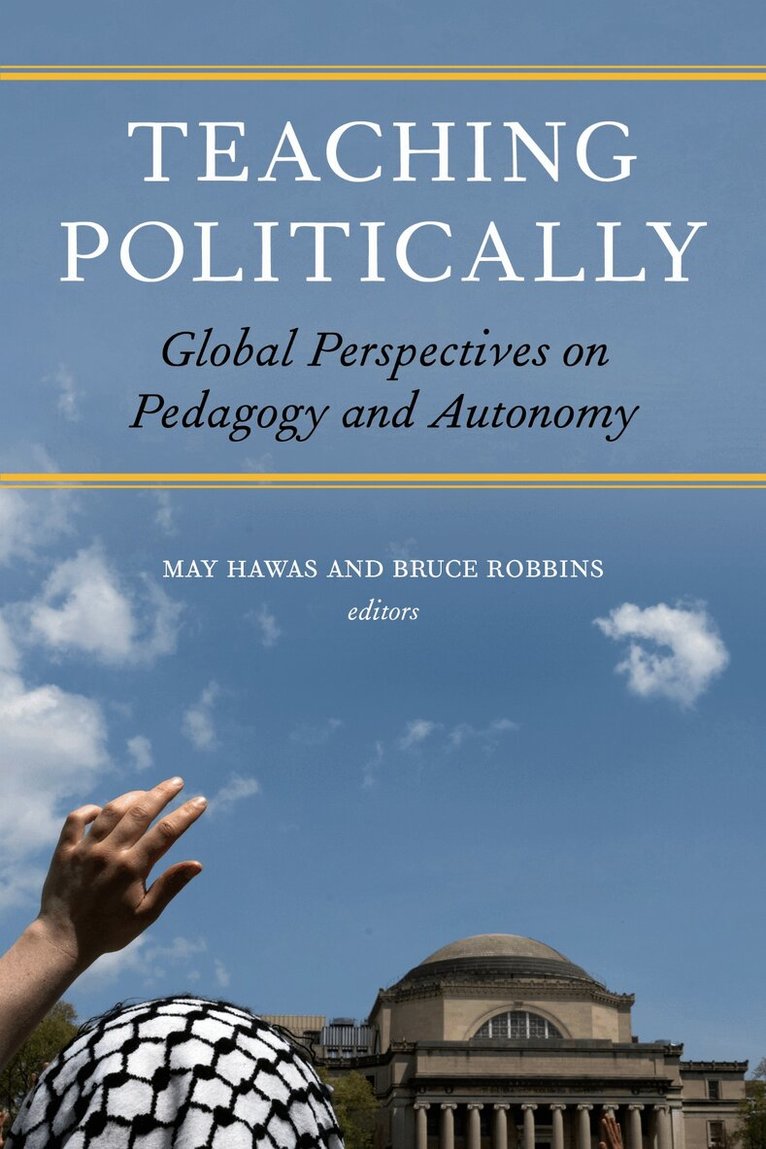
Culture is inextricable from politics. This includes the politics of who we are, as teachers, intellectuals, writers, cultural workers, and students, and what we want to bring to and take from the site of instruction. It also includes the politics of who we want to be, as citizens, professionals, and active contributors to our communities and to the world in general, and what we can be, realistically, in the particular contexts in which we live. Teaching Politically addresses some of the political constraints that shape our pedagogical spaces, especially in the teaching of literature. The book brings together a global group of academics, activists, public intellectuals, poets, and novelists to examine the way politics manifest pedagogically, and how a commitment to educating manifests politically, in and beyond the classroom. At the heart of the discussion is how political and professional paradigms chafe against, intersect with, or otherwise become inseparable from each other in any vocation that attempts to educate: from writing, journalism, and public speaking to art, activism, and medicine.Contributors: Dimitris Christopoulos, Dimitri Dimoulis, Khaled Fahmy, Rishi Goyal, May Hawas, Bonnie Honig, Mona Kareem, Benjamin Mangrum, Nora Parr, Bruce Robbins, Ahdaf Soueif, Omid Tofighian, Elahe Zivardar
313 kr
Skickas
Culture is inextricable from politics. This includes the politics of who we are, as teachers, intellectuals, writers, cultural workers, and students, and what we want to bring to and take from the site of instruction. It also includes the politics of who we want to be, as citizens, professionals, and active contributors to our communities and to the world in general, and what we can be, realistically, in the particular contexts in which we live. Teaching Politically addresses some of the political constraints that shape our pedagogical spaces, especially in the teaching of literature. The book brings together a global group of academics, activists, public intellectuals, poets, and novelists to examine the way politics manifest pedagogically, and how a commitment to educating manifests politically, in and beyond the classroom. At the heart of the discussion is how political and professional paradigms chafe against, intersect with, or otherwise become inseparable from each other in any vocation that attempts to educate: from writing, journalism, and public speaking to art, activism, and medicine.Contributors: Dimitris Christopoulos, Dimitri Dimoulis, Khaled Fahmy, Rishi Goyal, May Hawas, Bonnie Honig, Mona Kareem, Benjamin Mangrum, Nora Parr, Bruce Robbins, Ahdaf Soueif, Omid Tofighian, Elahe Zivardar
358 kr
Skickas inom 5-8 vardagar
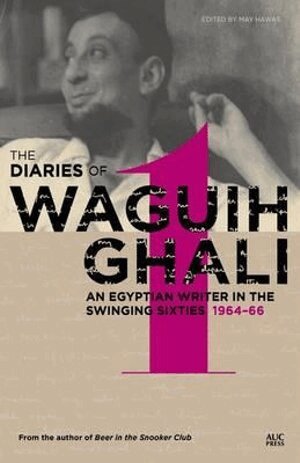
In 1968 Egyptian novelist and political exile Waguih Ghali committed suicide in the London flat of his editor, friend, and sometime lover, Diana Athill. Ghali left behind six notebooks of diaries that for decades were largely inaccessible to the public. An Egyptian in the Swinging Sixties is the first publication of its kind of the journals, casting fascinating light on a likeable and highly enigmatic literary personality.Waguih Ghali (1930?-69), author of the acclaimed novel Beer in the Snooker Club, was a libertine, sponger, and manic depressive, but also an extraordinary writer, a pacifist, and a savvy political commentator. Covering the last four years of his life, Ghali's Diaries offer an exciting glimpse into London's swinging sixties.Moving from West Germany to London and Israel, and back in memory to Egypt and Paris, the entries boast of endless drinking, countless love affairs, and of mingling with the dazzling intellectuals of London, but the Diaries also critique the sinister political circles of Jerusalem and Cairo, describe Ghali's trepidation at being the first Egyptian allowed into Israel after the 1967 War, and confess in detail the pain and difficulties of writing and exile.Including two interviews conducted by Deborah Starr, with celebrated literary editor Diana Athill, OBE, and with Ghali's cousin, former director of UNICEF-Geneva, Samir Basta, the Diaries bring together those most familiar with Ghali's life and work, and offer a fresh take on a distinctive author and a vibrant decade.
370 kr
Skickas inom 5-8 vardagar
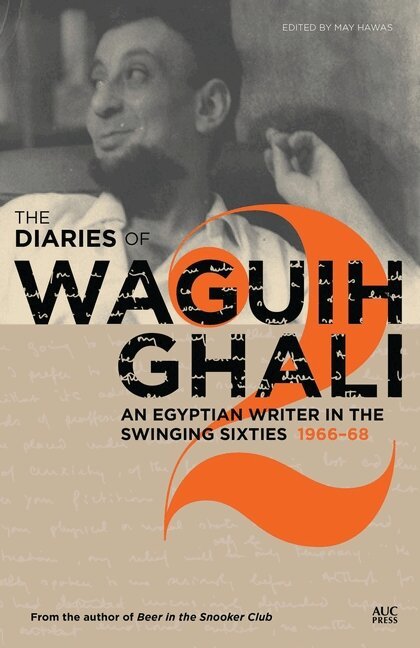
In 1968 Egyptian novelist and political exile Waguih Ghali committed suicide in the London flat of his editor, friend, and sometime lover, Diana Athill. Ghali left behind six notebooks of diaries that for decades were largely inaccessible to the public. The Diaries of Waguih Ghali: An Egyptian in the Swinging Sixties, in two volumes, is the first publication of its kind of the journals, casting fascinating light on a likable and highly enigmatic literary personality.Waguih Ghali (1930?-69), author of the acclaimed novel Beer in the Snooker Club, was a libertine, sponger, and manic depressive, but also an extraordinary writer, a pacifist, and a savvy political commentator. Covering the last four years of his life, Ghali's Diaries offer an exciting glimpse into London's swinging sixties. Volume 2 covers the period from 1966 to 1968.Moving from West Germany to London and Israel, and back in memory to Egypt and Paris, the entries boast of endless drinking, countless love affairs, and of mingling with the dazzling intellectuals of London, but the Diaries also critique the sinister political circles of Jerusalem and Cairo, describe Ghali's trepidation at being the first Egyptian allowed into Israel after the 1967 War, and confess in detail the pain and difficulties of writing and exile.Including an interview conducted by Deborah Starr with Ghali's cousin, former director of UNICEF-Geneva, Samir Basta.