M.B. Peoples – författare
Visar alla böcker från författaren M.B. Peoples. Handla med fri frakt och snabb leverans.
3 produkter
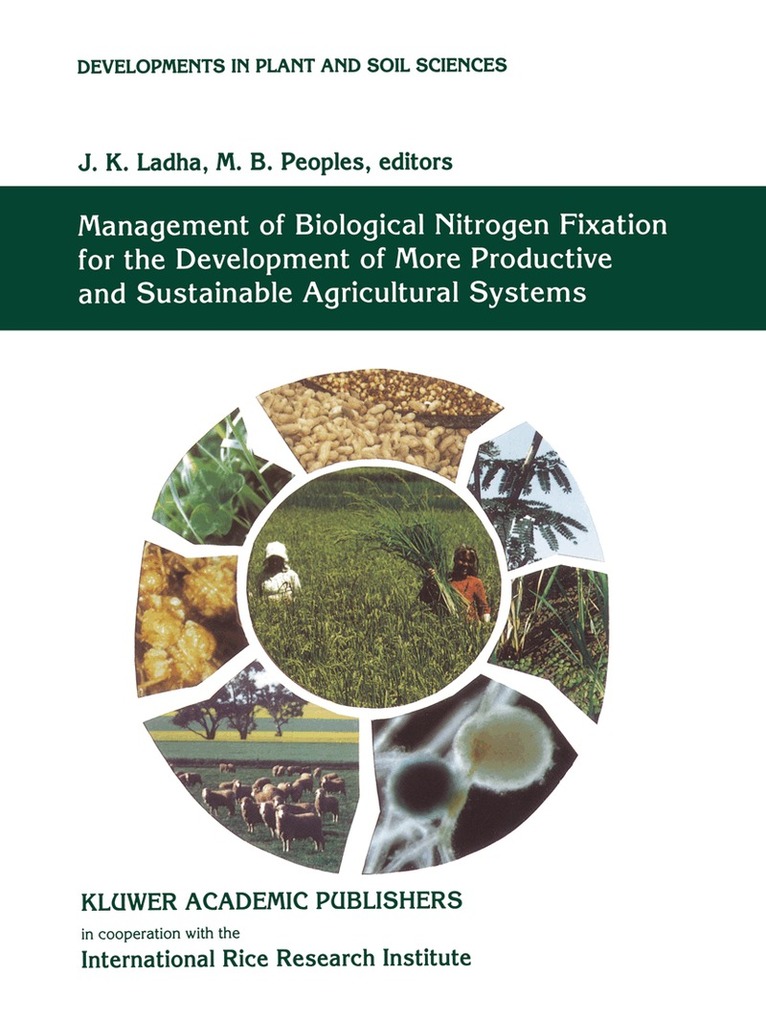
Management of Biological Nitrogen Fixation for the Development of More Productive and Sustainable Agricultural Systems
Extended versions of papers presented at the Symposium on Biological Nitrogen Fixation for Sustainable Agriculture at the 15th Congress of Soil Science, Acapulco, Mexico, 1994
Inbunden, 1995
1637 kr
Lägg i varukorg
The subsistence agriculture of the pre-chemical era efficiently sustained the nitrogen status of soils by maintaining a balance between N loss and N gain from biological nitrogen fixation (BNF): the microbial conversion of atmospheric N to a form usable by plants. This was possible with less …
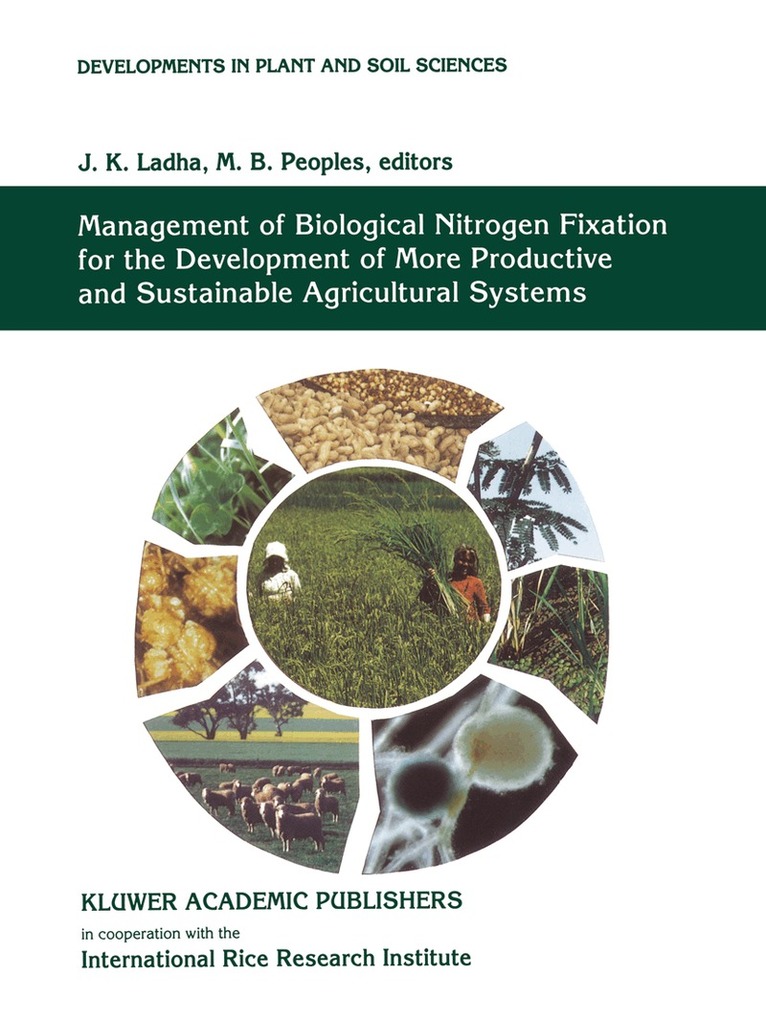
Management of Biological Nitrogen Fixation for the Development of More Productive and Sustainable Agricultural Systems
Extended versions of papers presented at the Symposium on Biological Nitrogen Fixation for Sustainable Agriculture at the 15th Congress of Soil Science, Acapulco, Mexico, 1994
Häftad, 2012
1639 kr
Lägg i varukorg
Table 1. Global allocation of arable land between different com modities Globally, cereal cropping dominates cultivated land Commodities' Proportion of land area use (around 50% of total area, Table I). The remain (%) ing arable land is used for production of oilseed, fibre, or food and cash …
Management of Biological Nitrogen Fixation for the Development of More Productive and Sustainable Agricultural Systems
Extended versions of papers presented at the Symposium on Biological Nitrogen Fixation for Sustainable Agriculture at the 15th Congress of Soil Science, Acapulco, Mexico, 1994
E-bok, 2012
2111 kr
Lägg i varukorg
Table 1. Global allocation of arable land between different com modities Globally, cereal cropping dominates cultivated land Commodities'' Proportion of land area use (around 50% of total area, Table I). The remain (%) ing arable land is used for production of oilseed, fibre, or food and cash …