Megan Riley McGilchrist – Författare
Visar alla böcker från författaren Megan Riley McGilchrist. Handla med fri frakt och snabb leverans.
3 produkter
3 produkter
Western Landscape in Cormac McCarthy and Wallace Stegner
Myths of the Frontier
Inbunden, Engelska, 2009
2 508 kr
Skickas inom 10-15 vardagar
The western American landscape has always had great significance in American thinking, requiring an unlikely union between frontier mythology and the reality of a fragile western environment. Additionally it has borne the burden of being a gendered space, seen by some as the traditional "virgin land" of the explorers and pioneers, subject to masculine desires, and by others as a masculine space in which the feminine is neither desired nor appreciated. Both Wallace Stegner and Cormac McCarthy focus on this landscape and environment; its spiritual, narrative, symbolic, imaginative, and ideological force is central to their work. In this study, McGilchrist shows how their various treatments of these issues relate to the social climates (pre- and post-Vietnam era) in which they were written, and how despite historical discontinuities, both Stegner and McCarthy reveal a similar unease about the effects of the myth of the frontier on American thought and life. The gendering of the landscape is revealed as indicative of the attempts to deny the failure of the myth, and to force the often numinous western landscape into parameters which will never contain it. Stegner's pre-Vietnam sensibility allows the natural world to emerge tentatively triumphant from the ruins of frontier mythology, whereas McCarthy's conclusions suggest a darker future for the West in particular and America in general. However, McGilchrist suggests that the conclusion of McCarthy's Border Trilogy, upon which her arguments regarding McCarthy are largely based, offers a gleam of hope in its final conclusion of acceptance of the feminine.
930 kr
Skickas inom 10-15 vardagar
The western American landscape has always had great significance in American thinking, requiring an unlikely union between frontier mythology and the reality of a fragile western environment. Additionally it has borne the burden of being a gendered space, seen by some as the traditional "virgin land" of the explorers and pioneers, subject to masculine desires, and by others as a masculine space in which the feminine is neither desired nor appreciated. Both Wallace Stegner and Cormac McCarthy focus on this landscape and environment; its spiritual, narrative, symbolic, imaginative, and ideological force is central to their work. In this study, McGilchrist shows how their various treatments of these issues relate to the social climates (pre- and post-Vietnam era) in which they were written, and how despite historical discontinuities, both Stegner and McCarthy reveal a similar unease about the effects of the myth of the frontier on American thought and life. The gendering of the landscape is revealed as indicative of the attempts to deny the failure of the myth, and to force the often numinous western landscape into parameters which will never contain it. Stegner's pre-Vietnam sensibility allows the natural world to emerge tentatively triumphant from the ruins of frontier mythology, whereas McCarthy's conclusions suggest a darker future for the West in particular and America in general. However, McGilchrist suggests that the conclusion of McCarthy's Border Trilogy, upon which her arguments regarding McCarthy are largely based, offers a gleam of hope in its final conclusion of acceptance of the feminine.
441 kr
Skickas inom 7-10 vardagar
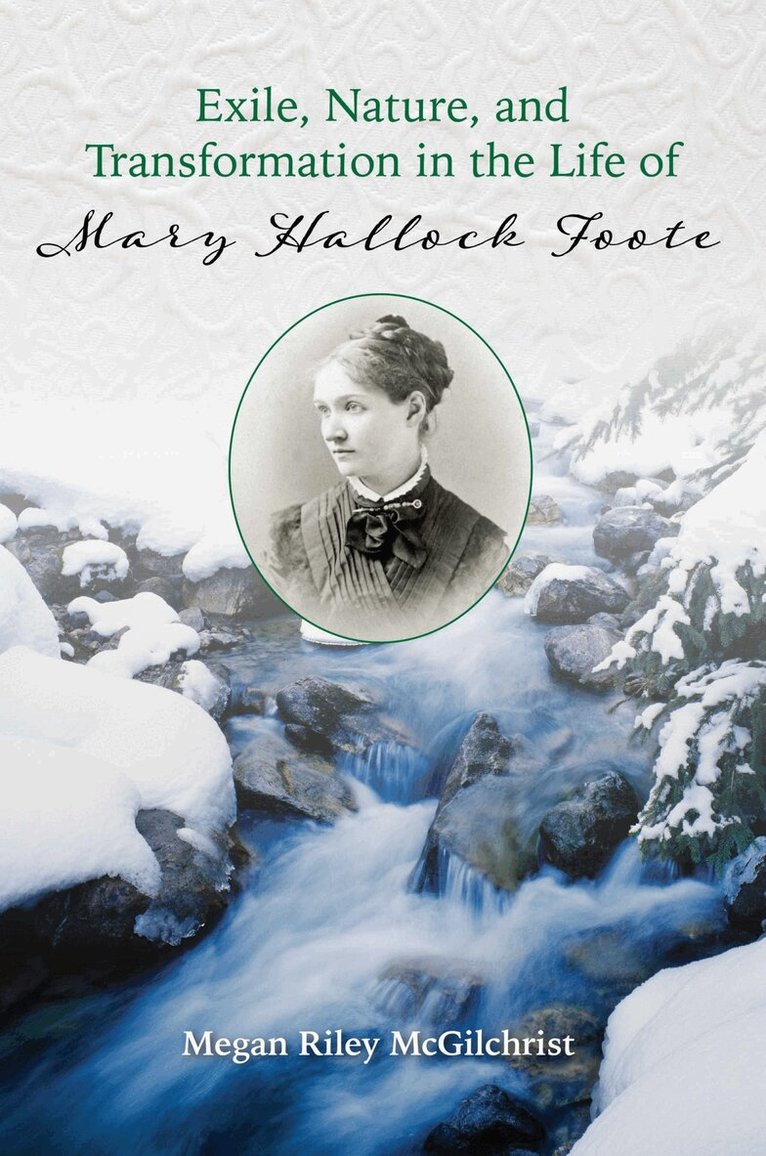
Combining a breadth of scholarship, insightful critical thinking, and an engaging personal interaction with Mary Hallock Foote's substantial collection of illustrations and writings, Megan Riley McGilchrist provides a significant contribution to western literature and the lives of western writers. Exile, Nature, and Transformation in the Life of Mary Hallock Foote opens a window into the remarkable, little-known nineteenth-century personal history of accomplished American author and illustrator, Mary Hallock Foote, a woman both of her time, and ahead of it. When Mary gave up a successful career as an illustrator in New York to follow her husband, a mining engineer, to the West, she found herself in a new, unfamiliar, and often challenging world—sometimes feeling like an exile. The thousands of pages of her unpublished letters, which form the foundation of this book, give rare insight into the process of acculturation and eventually the transformation that she experienced. This wide-ranging analysis also examines the role that nature and Mary's lifelong connection with the natural world played in her adaptation to the western mining towns where she spent much of the rest of her life. In many ways, Mary's life mirrored that of author Megan Riley McGilchrist, whose parallel exile began in 1977 when she left America for England. Drawing equivalences with Mary's life as an exile and her own life as an expatriate American woman, Megan provides a meditation on her own transformation, as much as on Mary's. Megan demonstrates what it has been like to be a twenty-first-century American expatriate, Californian-turned-Londoner—to find common ground in the life of a nineteenth-century woman.Comprising elements of biography, literary analysis, history, and personal history, and containing many unpublished excerpts from Mary's voluminous correspondence, Exile, Nature, and Transformation in the Life of Mary Hallock Foote offers insight into the ways Mary perceived the world around her. It also provides insight into the experiences of exiles of any time—people who have left a familiar environment to embark on a new life in a new and not necessarily comfortable setting.