Meghan Elizabeth Kallman - Böcker
Visar alla böcker från författaren Meghan Elizabeth Kallman. Handla med fri frakt och snabb leverans.
5 produkter
5 produkter
1 107 kr
Skickas inom 7-10 vardagar
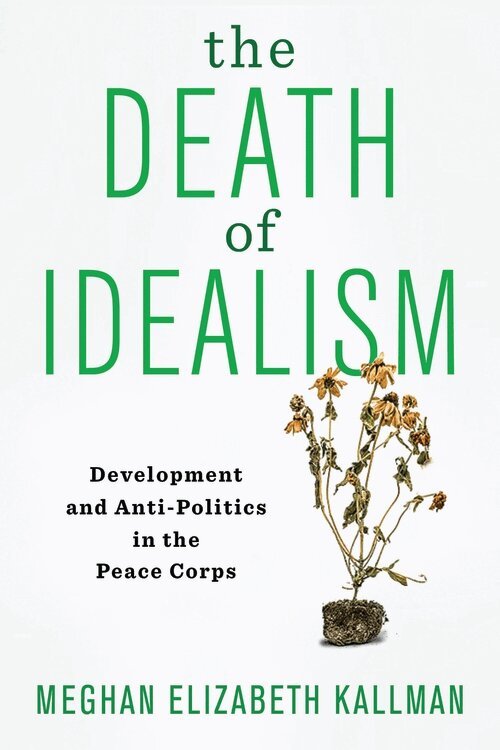
Peace Corps volunteers seem to exemplify the desire to make the world a better place. Yet despite being one of history’s clearest cases of organized idealism, the Peace Corps has, in practice, ended up cultivating very different outcomes among its volunteers. By the time they return from the Peace Corps, volunteers exhibit surprising shifts in their political and professional consciousness. Rather than developing a systemic perspective on development and poverty, they tend instead to focus on individual behavior; they see professions as the only legitimate source of political and social power. They have lost their idealism, and their convictions and beliefs have been reshaped along the way.The Death of Idealism uses the case of the Peace Corps to explain why and how participation in a bureaucratic organization changes people’s ideals and politics. Meghan Elizabeth Kallman offers an innovative institutional analysis of the role of idealism in development organizations. She details the combination of social forces and organizational pressures that depoliticizes Peace Corps volunteers, channels their idealism toward professionalization, and leads to cynicism or disengagement. Kallman sheds light on the structural reasons for the persistent failure of development organizations and the consequences for the people involved. Based on interviews with over 140 current and returned Peace Corps volunteers, field observations, and a large-scale survey, this deeply researched, theoretically rigorous book offers a novel perspective on how people lose their idealism, and why that matters.
199 kr
Skickas
Peace Corps volunteers seem to exemplify the desire to make the world a better place. Yet despite being one of history’s clearest cases of organized idealism, the Peace Corps has, in practice, ended up cultivating very different outcomes among its volunteers. By the time they return from the Peace Corps, volunteers exhibit surprising shifts in their political and professional consciousness. Rather than developing a systemic perspective on development and poverty, they tend instead to focus on individual behavior; they see professions as the only legitimate source of political and social power. They have lost their idealism, and their convictions and beliefs have been reshaped along the way.The Death of Idealism uses the case of the Peace Corps to explain why and how participation in a bureaucratic organization changes people’s ideals and politics. Meghan Elizabeth Kallman offers an innovative institutional analysis of the role of idealism in development organizations. She details the combination of social forces and organizational pressures that depoliticizes Peace Corps volunteers, channels their idealism toward professionalization, and leads to cynicism or disengagement. Kallman sheds light on the structural reasons for the persistent failure of development organizations and the consequences for the people involved. Based on interviews with over 140 current and returned Peace Corps volunteers, field observations, and a large-scale survey, this deeply researched, theoretically rigorous book offers a novel perspective on how people lose their idealism, and why that matters.
Conceivable Future
Planning Families and Taking Action in the Age of Climate Change
Inbunden, Engelska, 2024
269 kr
Skickas inom 7-10 vardagar
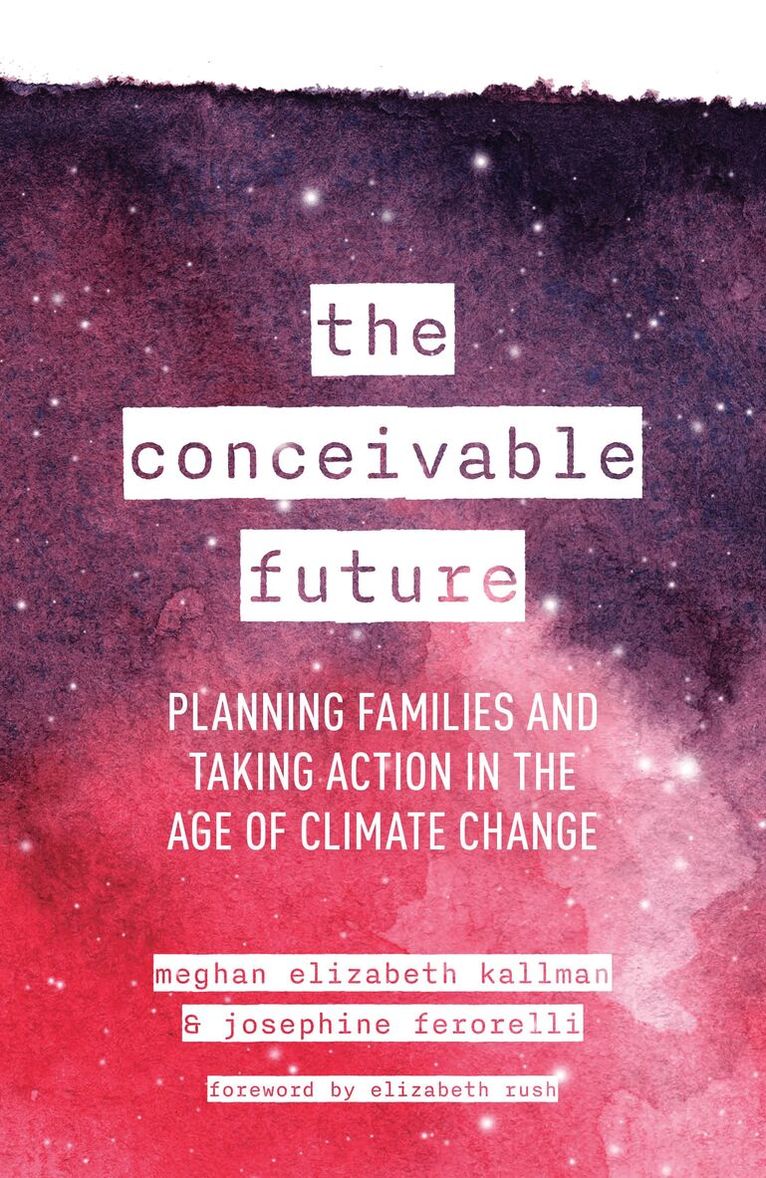
"This reassuring consideration of a deeply personal matter teams seamlessly with a reasoned, emphatic call to action." - Booklist, Starred Review • ABooklist Top 10 Book on the Environment & Sustainability 2024 • Winner, Nellie Bly Book Award for journalistic non-fiction, Chanticleer International Book Awards 2024Explore the ways in which the climate crisis is affecting our personal decisions about family planning, parenting, and political action.In The Conceivable Future, authors Meghan Elizabeth Kallman and Josephine Ferorelli explore the ways in which the climate crisis is affecting our personal decisions about family planning, parenting, and political action. This book offers fresh, timely answers to questions such as: How do I decide to have a baby when there's the threat of environmental collapse? How do I parent a child in the middle of the climate crisis? What can I actually do to help stop global warming?Drawing from their decade of work with the organization Conceivable Future, Kallman, a sociologist and Rhode Island State Senator, and Ferorelli, an activist and former Climate Bureau editor, offers both informed perspective and practical steps for taking meaningful action in combating the climate crisis, while also making smart, balanced decisions when it comes to starting and maintaining a family.First, The Conceivable Future explores what the real threats are to reproductive, gestational, and infant health (spoiler: it's inequality, heat, and fossil fueled pollution), and debunks the myths of personal carbon footprint, and the harmful legacy of population control. The authors examine the successes and impediments of women-led movements around the world and share what they've learned through ten years of organizing to bring attention to the reproductive crisis that is climate change.Finally, the book looks at what can be done about the climate crisis today. By taking these steps, we can both understand the crisis on its own terms, and stay rooted in the human scale, where our lives retain their full meaning.The Conceivable Future is a must-read for all who want to make a difference in the world--and secure a sustainable future for all our families.
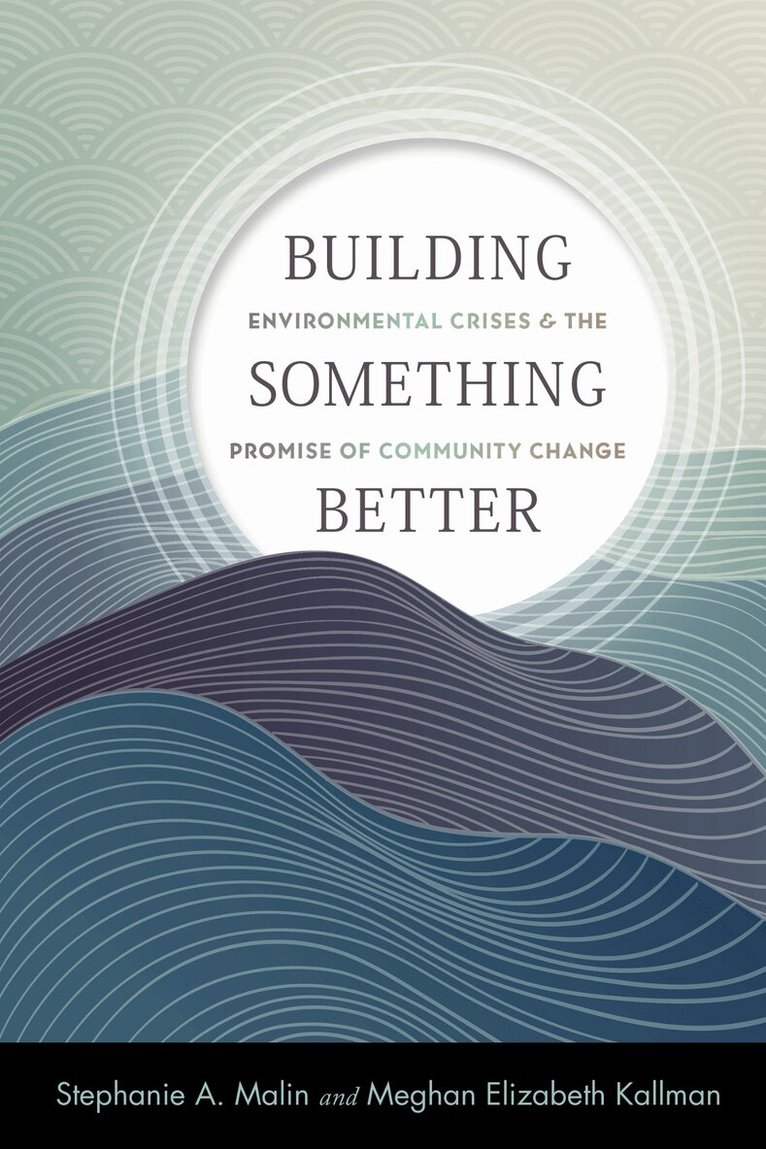
Building Something Better
Environmental Crises and the Promise of Community Change
Häftad, Engelska, 2022
334 kr
Skickas inom 7-10 vardagar
As the turmoil of interlinked crises unfolds across the world-from climate change to growing inequality to the rise of authoritarian governments-social scientists examine what is happening and why. Can communities devise alternatives to the systems that are doing so much harm to the planet and people? Sociologists Stephanie A. Malin and Meghan Elizbeth Kallman offer a clear, accessible volume that demonstrates the ways that communities adapt in the face of crises and explains that sociology can help us understand how and why they do this challenging work. Tackling neoliberalism head-on, these communities are making big changes by crafting distributive and regenerative systems that depart from capitalist approaches. The vivid case studies presented range from activist water protectors to hemp farmers to renewable energy cooperatives led by Indigenous peoples and nations. Alongside these studies, Malin and Kallman present incisive critiques of colonialism, extractive capitalism, and neoliberalism, while demonstrating how sociology’s own disciplinary traditions have been complicit with those ideologies-and must expand beyond them. Showing that it is possible to challenge social inequality and environmental degradation by refusing to continue business-as-usual, Building Something Better offers both a call to action and a dose of hope in a time of crises.
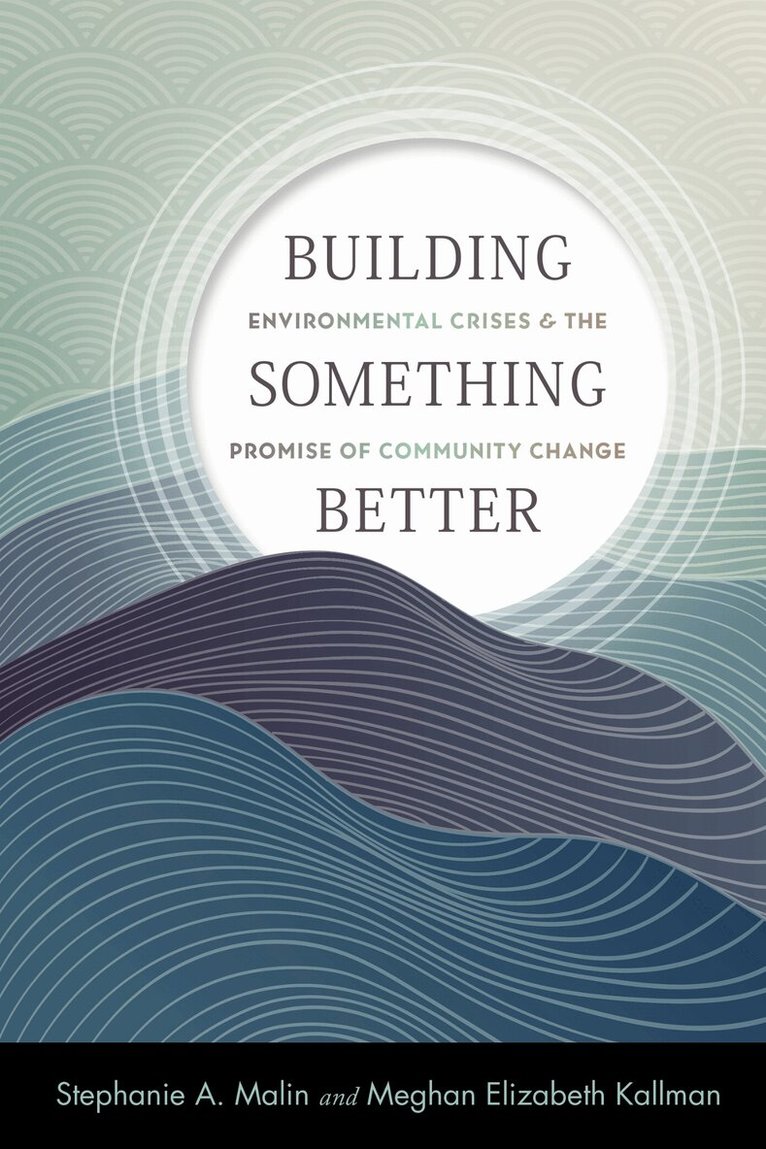
Building Something Better
Environmental Crises and the Promise of Community Change
Inbunden, Engelska, 2022
780 kr
Skickas inom 7-10 vardagar
As the turmoil of interlinked crises unfolds across the world-from climate change to growing inequality to the rise of authoritarian governments-social scientists examine what is happening and why. Can communities devise alternatives to the systems that are doing so much harm to the planet and people? Sociologists Stephanie A. Malin and Meghan Elizbeth Kallman offer a clear, accessible volume that demonstrates the ways that communities adapt in the face of crises and explains that sociology can help us understand how and why they do this challenging work. Tackling neoliberalism head-on, these communities are making big changes by crafting distributive and regenerative systems that depart from capitalist approaches. The vivid case studies presented range from activist water protectors to hemp farmers to renewable energy cooperatives led by Indigenous peoples and nations. Alongside these studies, Malin and Kallman present incisive critiques of colonialism, extractive capitalism, and neoliberalism, while demonstrating how sociology’s own disciplinary traditions have been complicit with those ideologies-and must expand beyond them. Showing that it is possible to challenge social inequality and environmental degradation by refusing to continue business-as-usual, Building Something Better offers both a call to action and a dose of hope in a time of crises.