Mekonnen Gebremichael - Böcker
Visar alla böcker från författaren Mekonnen Gebremichael. Handla med fri frakt och snabb leverans.
3 produkter
3 produkter
1 701 kr
Skickas inom 11-20 vardagar
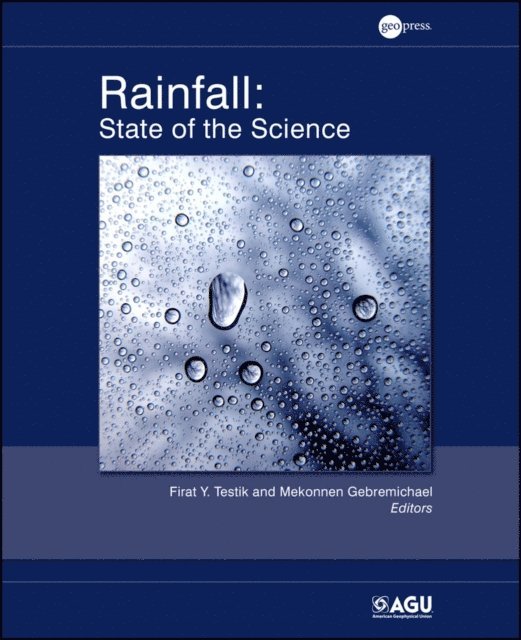
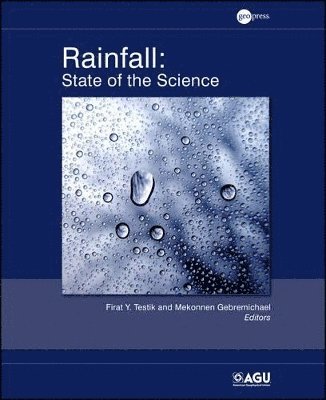
Published by the American Geophysical Union as part of the Geophysical Monograph Series, Volume 191.Rainfall: State of the Science offers the most up-to-date knowledge on the fundamental and practical aspects of rainfall. Each chapter, self-contained and written by prominent scientists in their respective fields, provides three forms of information: fundamental principles, detailed overview of current knowledge and description of existing methods, and emerging techniques and future research directions.The book discusses Rainfall microphysics: raindrop morphodynamics, interactions, size distribution, and evolutionRainfall measurement and estimation: ground-based direct measurement (disdrometer and rain gauge), weather radar rainfall estimation, polarimetric radar rainfall estimation, and satellite rainfall estimationStatistical analyses: intensity-duration-frequency curves, frequency analysis of extreme events, spatial analyses, simulation and disaggregation, ensemble approach for radar rainfall uncertainty, and uncertainty analysis of satellite rainfall productsThe book is tailored to be an indispensable reference for researchers, practitioners, and graduate students who study any aspect of rainfall or utilize rainfall information in various science and engineering disciplines.
1 578 kr
Skickas inom 10-15 vardagar
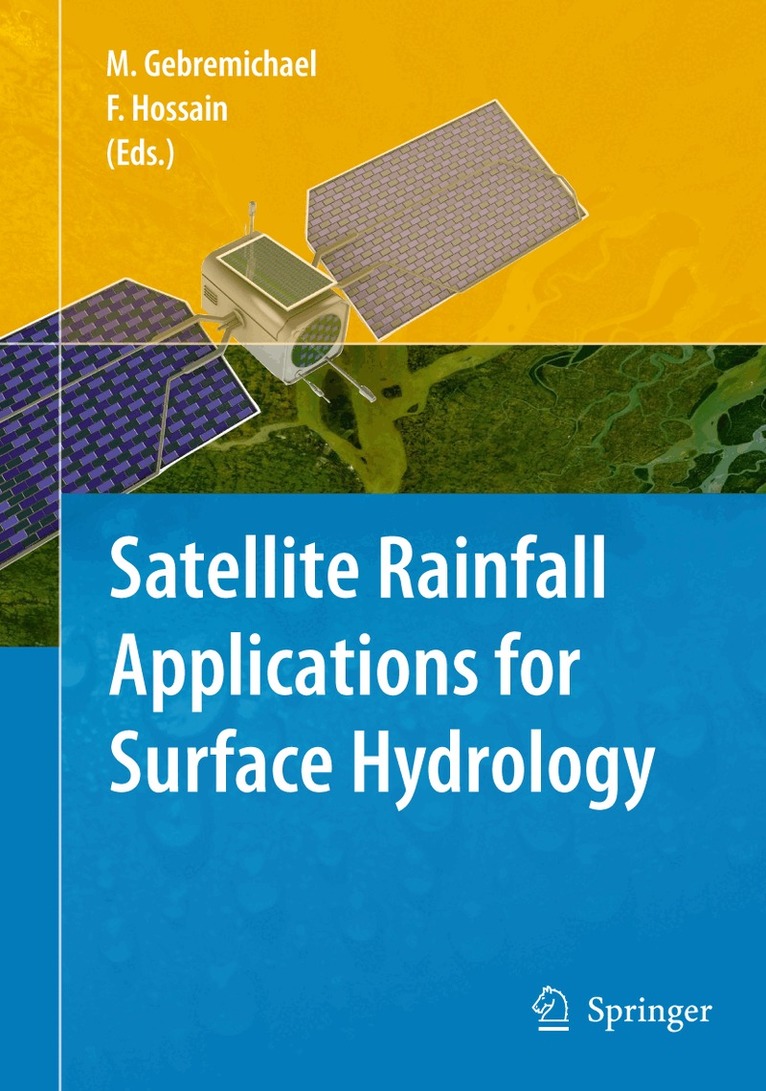
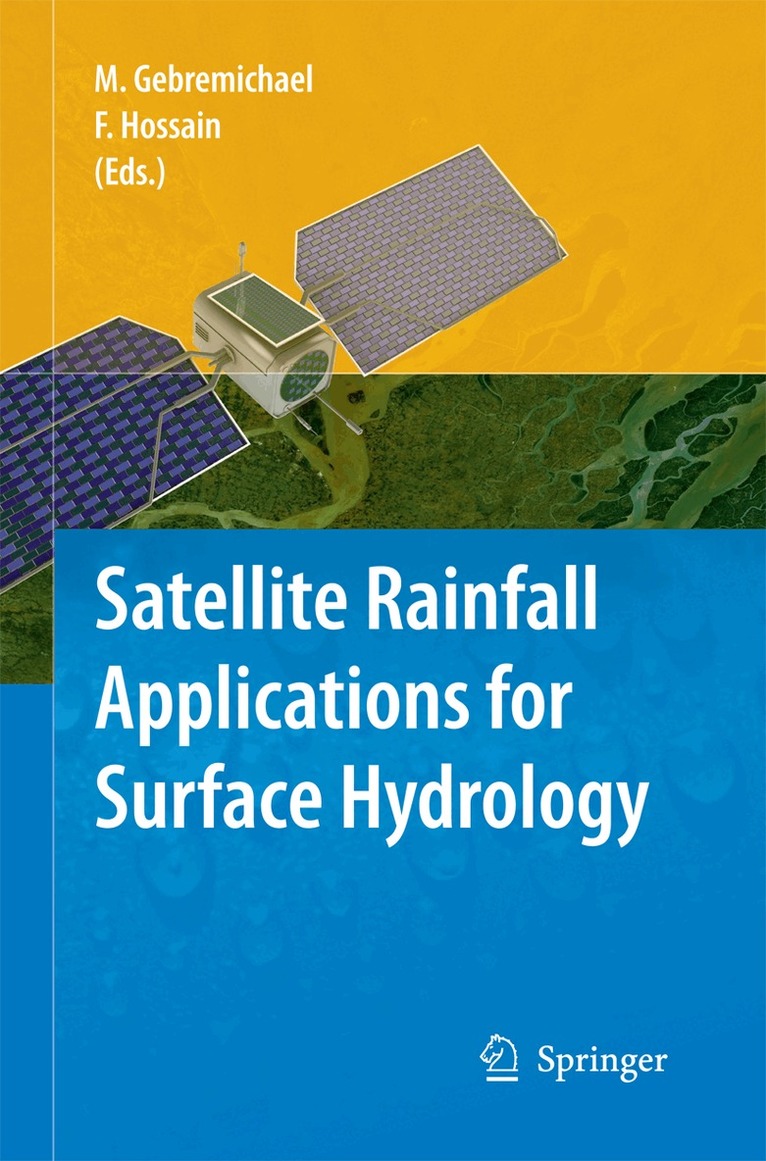
As individual topics, the terms "satellite rainfall" and "surface hydrology" have beenmuchwidelystudiedoverthelastfewdecades.Eversincerainfallproducts beguntobedevelopedusingspace-borneinfraredsensorsingeostationaryorbitin theseventies,satelliteremotesensingofrainfallexperiencedtremendousprogress. Microwavesensorsonlowearthorbitscamealongduringtheeightiestoprovide more accurate estimates of rainfall at the cost of limited sampling. As the c- trastingbutcomplementarypropertiesofmicrowaveandinfraredsensorsbecame apparent,mergedrainfallproductsstartedtoappearduringthefollowingdecade.In 1997,theTropicalRainfallMeasuringMission(TRMM)withthe?rstspace-borne active microwave precipitation radar (TRMM-PR), was launched. The success of TRMMinimprovingourunderstandingonTropicalandSub-tropicalrainfalld- tribution and precipitation structures consequently spurred a larger scale mission aimed at the study of global distribution of precipitation. Today, we now eagerly anticipatetheGlobalPrecipitationMeasurement(GPM)mission,whichenvisions aglobalconstellationofmicrowavesensorsthatwillprovidemoreaccurateglobal rainfallproductsathighresolutionfrom2013onwards.Itisthereforesafetoclaimthreedecadesofresearchheritageonsatelliteremote sensing of rainfall. Similarly, the topic of "surface hydrology" requires no int- duction for readers of environmental sciences and geosciences either. But what happens if we connect all the individual terms and name it - "satellite rainfall applications for surface hydrology"? A new topic is created. But little is known aboutthistopicbecausesatelliteremotesensingofrainfallandsurfacehydrology have evolved rather independently of each other. Even though the potential for a space-bornesourceofrainfalldatawasalwaysrecognizedforavarietyofappli- tions(suchas?oodforecastinginungaugedregions,transboundarywaterresources, global/regionaldroughtandagriculturalplanning),the?eldsofsatelliterainfalland surfacehydrologyhavehardlyintersectedduringtheirdevelopmentalstagesduring thelastfewdecades.Wearenowfacedwithamyriadofquestionsrangingfrom commonoperationalissuestodetailedscienti?cinquiries.Someofthesequestions are: There are so many satellite rainfall products currently available - which one does one use for a speci?c application to get the best results?What is the optimum scaleofapplication ofsatelliterainfalldataforagiven surfaceapplication? Whatis the level of uncertainty in each satellite rainfall product and what is the implication v vi Preface for a given surface hydrologic prediction? Where do I acquire the data for research or for operational applications? How are these satellite rainfall products developed and how do they differ from one another? This book by Springer on "Satellite Rainfall Applications for Surface Hydrology" is a contribution to both scienti?c and practical questions regarding
1 578 kr
Skickas inom 10-15 vardagar
As individual topics, the terms "satellite rainfall" and "surface hydrology" have beenmuchwidelystudiedoverthelastfewdecades.Eversincerainfallproducts beguntobedevelopedusingspace-borneinfraredsensorsingeostationaryorbitin theseventies,satelliteremotesensingofrainfallexperiencedtremendousprogress. Microwavesensorsonlowearthorbitscamealongduringtheeightiestoprovide more accurate estimates of rainfall at the cost of limited sampling. As the c- trastingbutcomplementarypropertiesofmicrowaveandinfraredsensorsbecame apparent,mergedrainfallproductsstartedtoappearduringthefollowingdecade.In 1997,theTropicalRainfallMeasuringMission(TRMM)withthe?rstspace-borne active microwave precipitation radar (TRMM-PR), was launched. The success of TRMMinimprovingourunderstandingonTropicalandSub-tropicalrainfalld- tribution and precipitation structures consequently spurred a larger scale mission aimed at the study of global distribution of precipitation. Today, we now eagerly anticipatetheGlobalPrecipitationMeasurement(GPM)mission,whichenvisions aglobalconstellationofmicrowavesensorsthatwillprovidemoreaccurateglobal rainfallproductsathighresolutionfrom2013onwards.Itisthereforesafetoclaimthreedecadesofresearchheritageonsatelliteremote sensing of rainfall. Similarly, the topic of "surface hydrology" requires no int- duction for readers of environmental sciences and geosciences either. But what happens if we connect all the individual terms and name it - "satellite rainfall applications for surface hydrology"? A new topic is created. But little is known aboutthistopicbecausesatelliteremotesensingofrainfallandsurfacehydrology have evolved rather independently of each other. Even though the potential for a space-bornesourceofrainfalldatawasalwaysrecognizedforavarietyofappli- tions(suchas?oodforecastinginungaugedregions,transboundarywaterresources, global/regionaldroughtandagriculturalplanning),the?eldsofsatelliterainfalland surfacehydrologyhavehardlyintersectedduringtheirdevelopmentalstagesduring thelastfewdecades.Wearenowfacedwithamyriadofquestionsrangingfrom commonoperationalissuestodetailedscienti?cinquiries.Someofthesequestions are: There are so many satellite rainfall products currently available - which one does one use for a speci?c application to get the best results?What is the optimum scaleofapplication ofsatelliterainfalldataforagiven surfaceapplication? Whatis the level of uncertainty in each satellite rainfall product and what is the implication v vi Preface for a given surface hydrologic prediction? Where do I acquire the data for research or for operational applications? How are these satellite rainfall products developed and how do they differ from one another? This book by Springer on "Satellite Rainfall Applications for Surface Hydrology" is a contribution to both scienti?c and practical questions regarding