Melody Graulich - Böcker
Visar alla böcker från författaren Melody Graulich. Handla med fri frakt och snabb leverans.
4 produkter
4 produkter
486 kr
Skickas inom 10-15 vardagar
Dirty Words in “Deadwood” showcases literary analyses of the Deadwood television series by leading western American literary critics. Whereas previous reaction to the series has largely addressed the question of historical accuracy rather than intertextuality or literary complexity, Melody Graulich and Nicolas S. Witschi’s edited volume brings a much-needed perspective to Deadwood’s representation of the frontier West.As Graulich observes in her introduction: “With its emotional coherence, compelling characterizations, compressed structural brilliance, moral ambiguity, language experiments, interpretation of the past, relevance to the present, and engagement with its literary forebears, Deadwood is an aesthetic triumph as historical fiction and, like much great literature, makes a case for the humanistic value of storytelling.” From previously unpublished interviews with series creator David Milch to explorations of sexuality, disability, cinematic technique, and western narrative, this collection focuses on Deadwood as a series ultimately about the imagination, as a verbal and visual construct, and as a literary masterpiece that richly rewards close analysis and interpretation.
362 kr
Skickas inom 10-15 vardagar
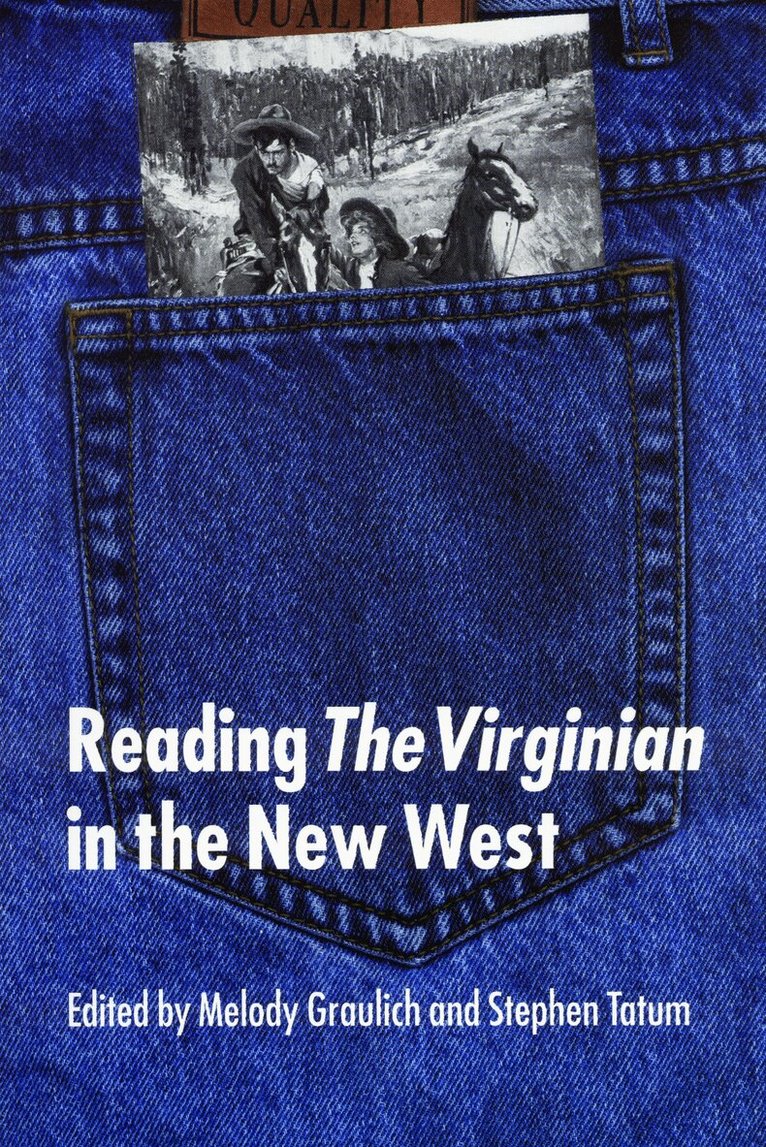
Although the origins of the western are as old as colonial westward expansion, it was Owen Wister's novel The Virginian, published in 1902, that established most of the now-familiar conventions of the genre. On the heels of the classic western's centennial, this collection of essays both re-examines the text of The Virginian and uses Wister's novel as a lens for studying what the next century of western writing and reading will bring. The contributors address Wister's life and travels, the novel's influence on and handling of gender and race issues, and its illustrations and various retellings on stage, film, and television as points of departure for speculations about the "new West"—as indeed Wister himself does at the end of the novel. The contributors reconsider the novel's textual complexity and investigate The Virginian's role in American literary and cultural history. Together their essays represent a new western literary studies, comparable to the new western history.
355 kr
Skickas inom 5-8 vardagar
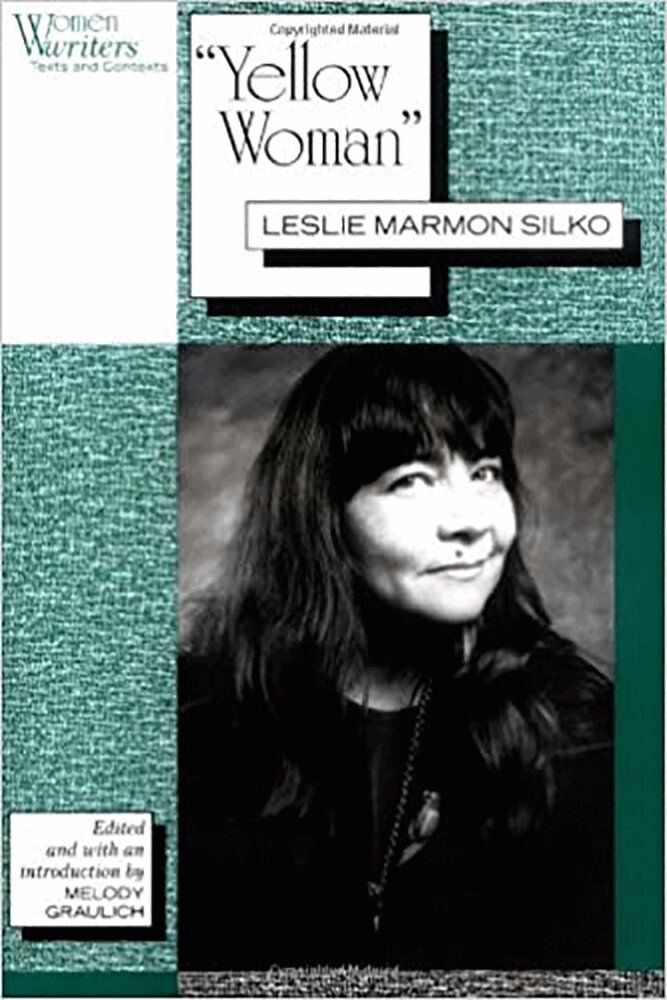
In the past twenty-five years many Native American writers have retold the traditional stories of powerful mythological women: Corn Woman, Changing Woman, Serpent Woman, and Thought Woman, who with her sisters created all life by thinking it into being. Within and in response to these evolving traditions, Leslie Marmon Silko takes from her own tradition, the Keres of Laguna, the Yellow Woman. Yellow Woman stories, always female-centered and always from the Yellow Woman's point of view, portray a figure who is adventurous, strong, and often alienated from her own people. She is the spirit of woman. Ambiguous and unsettling, Silko's "Yellow Woman" explores one woman's desires and changes--her need to open herself to a richer sensuality. Walking away from her everyday identity as daughter, wife and mother, she takes possession of transgressive feelings and desires by recognizing them in the stories she has heard, by blurring the boundaries between herself and the Yellow Woman of myth. Silko's decision to tell the story from the narrator's point of view is traditional, but her use of first person narration and the story's much raised ambiguity brilliantly reinforce her themes. Like traditional yellow women, the narrator is unnamed. By choosing not to reveal her name, she claims the role of Yellow Woman, and Yellow Woman's story is the one Silko clearly claims as her own. The essays in this collection compare Silko's many retellings of Yellow Woman stories from a variety of angles, looking at crucial themes like storytelling, cultural inheritances, memory, continuity, identity, interconnectedness, ritual, and tradition. This casebook includes an introduction by the editor, a chronology, an authoritative text of the story itself, critical essays, and a bibliography for further reading in both primary and secondary sources. Contributors include Kim Barnes, A. LaVonne Ruoff, Paula Gunn Allen, Patricia Clark Smith, Bernard A. Hirsch, Arnold Krupat, Linda Danielson, and Patricia Jones.
Trading Gazes
Euro-American Women Photographers and Native North Americans, 1880-1940
Häftad, Engelska, 2003
412 kr
Skickas inom 11-20 vardagar
The story of westering Americans in the late nineteenth and early twentieth centuries has been told most notably through photographs of American Indians. Unlike this vast archive, produced primarily by male photographers, which depicted American Indians as either vanishing or domesticated, the lesser-known images by the women featured in Trading Gazes provide new ways of seeing the intersecting histories of colonial expansion and indigenous resistance. Four unconventional women-Jane Gay, who documented land allotment to the Nez Perces; Kate Cory, an artist who lived for years in a Hopi community; Grace Nicholson, who purchased cultural items from the Karuk and other northern California tribes; and Mary Schaffer, who traveled among the Stoney and MÉtis of Alberta, Canada-used cameras to document their cross-cultural encounters.Trading Gazes reconstructs the rich biographical and historical contexts explaining these women's presence in different Native communities of the North American West. Their photographs not only record the unprecedented opportunities available for Euro-American women eager to shed gender restrictions, but also reveal how women's newfound mobility depended on the increasing restrictions placed on Native Americans in this era. By tracing the complex, often unexpected relationships forged between these women, their cameras, and the Native subjects of their photographs, Trading Gazes offers a new focus for recovering women's histories in the West while bringing attention to the complicated legacies of these images for Native and non-Native viewers.