Meri-Jane Rochelson - Böcker
Visar alla böcker från författaren Meri-Jane Rochelson. Handla med fri frakt och snabb leverans.
4 produkter
4 produkter
391 kr
Skickas inom 10-15 vardagar
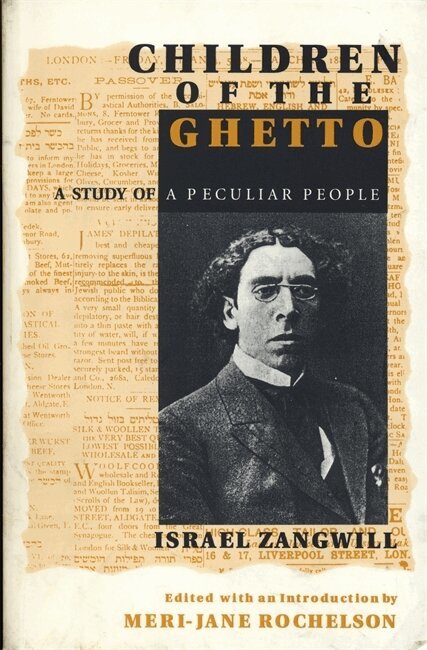
In its first appearance in 1892, Israel Zangwill's ""Children of the Ghetto"" created a sensation in both England and America, becoming the first Anglo-Jewish bestseller and establishing Zangwill as the literary voice of Anglo-Jewry. A novel set in late-19th-century London, ""Children of the Ghetto"" gave an inside look into an immigrant community that was almost as mysterious to the more established middle-class Jews of Britain as to the non-Jewish population, providing an analysis of a generation caught between the ghetto and modern British life. ""Children of the Ghetto"" remains a landmark work of modern Jewish fiction as well as an essential late Victorian text. As the first Jewish East End novel, the book ignited an important 20th-century genre. In a period that saw the development of the working-class novel and the novel of spiritual malaise, ""Children of the Ghetto"" encompassed both. The novel conveys details of life in the ghetto and explores a spiritual crisis among young Jews at a time when a questioning of beliefs appeared in Christian novels as well. Zangwill's realistic portrayal intrigued middle-class Jews and elicited nostalgia in those who started out in the East End. Although a novel about British Jews, ""Children of the Ghetto"" also found success in the US as the first work of fiction published by the Jewish Publication Society of America. This volume brings back to print the 1895 edition of ""Children of the Ghetto"", the latest American version known to have been corrected by the author. Meri-Jane Rochelson places the novel in proper context by providing a biographical, historical and critical introduction; a bibliography of primary and secondary sources, and notes on the text, making this accessible to both Jewish and non-Jewish readers.
330 kr
Skickas inom 10-15 vardagar
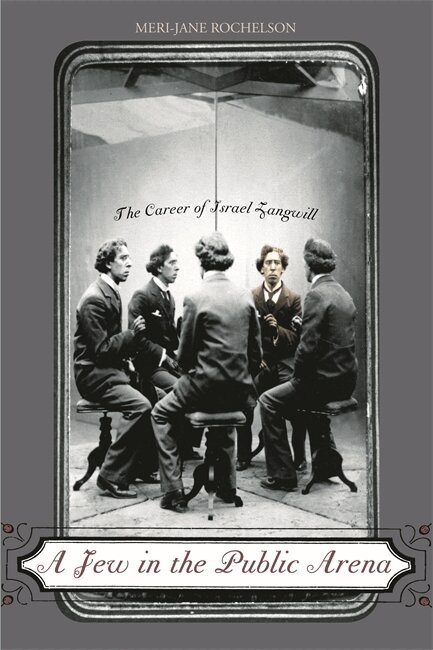
After winning an international audience with his novel Children of the Ghetto, Israel Zangwill went on to write numerous short stories, four additional novels, and several plays, including The Melting Pot. Author Meri-Jane Rochelson, a noted expert on Zangwill's work, examines his career from its beginnings in the 1890s to the performance of his last play, We Moderns, in 1924, to trace how Zangwill became the best-known Jewish writer in Britain and America and a leading spokesperson on Jewish affairs throughout the world. In A Jew in the Public Arena, Rochelson examines Zangwill's published writings alongside a wealth of primary materials, including letters, diaries, manuscripts, press cuttings, and other items in the vast Zangwill files of the Central Zionist Archives, to demonstrate why an understanding of Israel Zangwill's career is essential to understanding the era that so significantly shaped the modern Jewish experience.Once he achieved fame as an author and playwright, Israel Zangwill became a prominent public activist for the leading social causes of the twentieth century, including women's suffrage, peace, Zionism, and the Jewish territorialist movement and rescue efforts. Rochelson shows how Zangwill's activism and much of his literary output were grounded in a universalist vision of Judaism and a commitment to educate the world about Jews as a way of combating antisemitism. Still, Zangwill's position in favor of creating a homeland for the Jews wherever one could be found (in contrast to mainstream Zionism's focus on Palestine) and his apparent advocacy of assimilation in his play The Melting Pot made him an increasingly controversial figure. By the middle of the twentieth century his reputation had fallen into decline, and his work is unknown to many modern readers.A Jew in the Public Arena looks at Zangwill's literary and political activities in the context of their time, to make clear why he held such a place of importance in turn-of-the-century literary and political culture and why his life and work are significant today. Jewish studies scholars as well as students and teachers of late Victorian to Modernist British literature and culture will appreciate this insightful look at Israel Zangwill.
330 kr
Skickas inom 10-15 vardagar
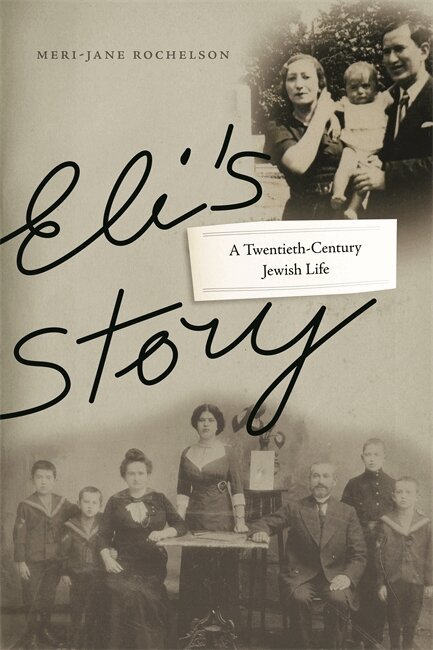
Biography of a Jewish doctor who survived and triumphed over the horrors of the Holocaust.Eli’s Story: A Twentieth-Century Jewish Life is first and foremost a biography. Its subject is Eli G. Rochelson, MD (1907-1984), author Meri-Jane Rochelson’s father. At its core is Eli’s story in his own words, taken from an interview he did with his son, Burt Rochelson, in the mid-1970s. The book tells the story of a man whose life and memory spanned two world wars, several migrations, an educational odyssey, the massive upheaval of the Holocaust, and finally, a frustrating yet ultimately successful effort to restore his professional credentials and identity, as well as reestablish family life.Eli’s Story contains a mostly chronological narration that embeds the story in the context of further research. It begins with Eli’s earliest memories of childhood in Kovno and ends with his death, his legacy, and the author’s own unanswered questions that are as much a part of Eli’s story as his own words. The narrative is illuminated and expanded through Eli’s personal archive of papers, letters, and photographs, as well as research in institutional archives, libraries, and personal interviews. Rochelson covers Eli’s family’s relocation to southern Russia; his education, military service, and first marriage after he returned to Kovno; his and his family’s experiences in the Dachau, Stutthof, and Auschwitz concentration camps—including the deaths of his wife and child; his postwar experience in the Landsberg Displaced Persons (DP) camp, and his immigration to the United States, where he determinedly restored his medical credentials and started a new family. Rochelson recognizes that both the effort of reconstructing events and the reality of having personal accounts that confi rm and also differ from each other in detail, make the process of gap-fi lling itself a kind of fi ction??an attempt to shape the incompleteness that is inherent to the story. An earlier reviewer said of the book, ""Eli’s Story combines the care of a scholar with the care of a daughter."" Both scholars and general readers interested in Holocaust narratives will be moved by this monograph.
928 kr
Skickas inom 10-15 vardagar
Biography of a Jewish doctor who survived and triumphed over the horrors of the Holocaust.Eli’s Story: A Twentieth-Century Jewish Life is first and foremost a biography. Its subject is Eli G. Rochelson, MD (1907-1984), author Meri-Jane Rochelson’s father. At its core is Eli’s story in his own words, taken from an interview he did with his son, Burt Rochelson, in the mid-1970s. The book tells the story of a man whose life and memory spanned two world wars, several migrations, an educational odyssey, the massive upheaval of the Holocaust, and finally, a frustrating yet ultimately successful effort to restore his professional credentials and identity, as well as reestablish family life.Eli’s Story contains a mostly chronological narration that embeds the story in the context of further research. It begins with Eli’s earliest memories of childhood in Kovno and ends with his death, his legacy, and the author’s own unanswered questions that are as much a part of Eli’s story as his own words. The narrative is illuminated and expanded through Eli’s personal archive of papers, letters, and photographs, as well as research in institutional archives, libraries, and personal interviews. Rochelson covers Eli’s family’s relocation to southern Russia; his education, military service, and first marriage after he returned to Kovno; his and his family’s experiences in the Dachau, Stutthof, and Auschwitz concentration camps—including the deaths of his wife and child; his postwar experience in the Landsberg Displaced Persons (DP) camp, and his immigration to the United States, where he determinedly restored his medical credentials and started a new family. Rochelson recognizes that both the effort of reconstructing events and the reality of having personal accounts that confi rm and also differ from each other in detail, make the process of gap-fi lling itself a kind of fi ction??an attempt to shape the incompleteness that is inherent to the story. An earlier reviewer said of the book, ""Eli’s Story combines the care of a scholar with the care of a daughter."" Both scholars and general readers interested in Holocaust narratives will be moved by this monograph.