Mette Eilstrup-Sangiovanni - Böcker
Visar alla böcker från författaren Mette Eilstrup-Sangiovanni. Handla med fri frakt och snabb leverans.
5 produkter
5 produkter
838 kr
Skickas inom 7-10 vardagar
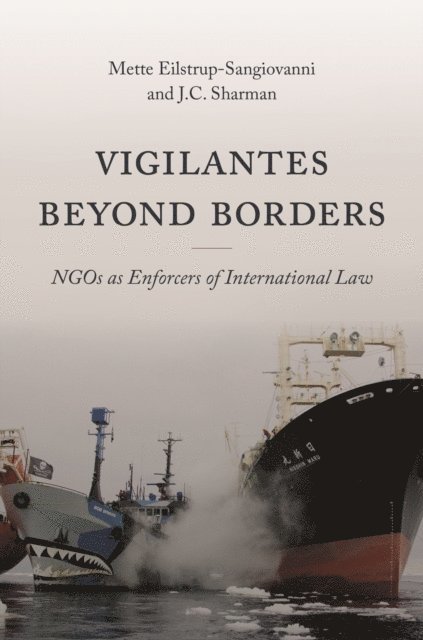
How and why NGOs are increasingly taking independent and direct action in global law enforcement, from human rights to the environment Nongovernmental organizations (NGOs) have generally served as advocates and service providers, leaving enforcement to states. Now, NGOs are increasingly acting as private police, prosecutors, and intelligence agencies in enforcing international law. NGOs today can be found investigating and gathering evidence; suing and prosecuting governments, companies, and individuals; and even catching lawbreakers red-handed. Examining this trend, Vigilantes beyond Borders considers why some transnational groups have opted to become enforcers of international law regarding such issues as human rights, the environment, and corruption, while others have not.Three factors explain the rise of vigilante enforcement: demand, supply, and competition. Governments commit to more international laws, but do a poor job of policing them, leaving a gap and creating demand. Legal and technological changes make it easier for nonstate actors to supply enforcement, as in the instances of NGOs that have standing to use domestic and international courts, or smaller NGOs that employ satellite imagery, big data analysis, and forensic computing. As the growing number of NGOs vie for limited funding and media attention, smaller, more marginal, groups often adopt radical strategies like enforcement.Looking at the workings of major organizations, including Amnesty International, Greenpeace, and Transparency International, as well as smaller players, such as Global Witness, the Sea Shepherd Conservation Society, and Bellingcat, Vigilantes beyond Borders explores the causes and consequences of a novel, provocative approach to global governance.
252 kr
Skickas inom 7-10 vardagar
How and why NGOs are increasingly taking independent and direct action in global law enforcement, from human rights to the environment Nongovernmental organizations (NGOs) have generally served as advocates and service providers, leaving enforcement to states. Now, NGOs are increasingly acting as private police, prosecutors, and intelligence agencies in enforcing international law. NGOs today can be found investigating and gathering evidence; suing and prosecuting governments, companies, and individuals; and even catching lawbreakers red-handed. Examining this trend, Vigilantes beyond Borders considers why some transnational groups have opted to become enforcers of international law regarding such issues as human rights, the environment, and corruption, while others have not.Three factors explain the rise of vigilante enforcement: demand, supply, and competition. Governments commit to more international laws, but do a poor job of policing them, leaving a gap and creating demand. Legal and technological changes make it easier for nonstate actors to supply enforcement, as in the instances of NGOs that have standing to use domestic and international courts, or smaller NGOs that employ satellite imagery, big data analysis, and forensic computing. As the growing number of NGOs vie for limited funding and media attention, smaller, more marginal, groups often adopt radical strategies like enforcement.Looking at the workings of major organizations, including Amnesty International, Greenpeace, and Transparency International, as well as smaller players, such as Global Witness, the Sea Shepherd Conservation Society, and Bellingcat, Vigilantes beyond Borders explores the causes and consequences of a novel, provocative approach to global governance.
753 kr
Skickas inom 7-10 vardagar
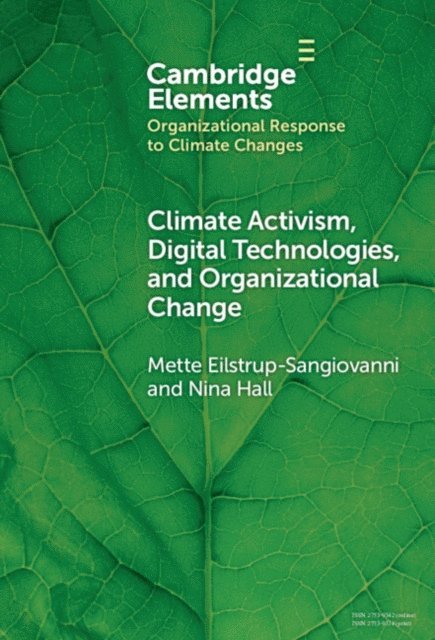
Non-governmental and civil society organizations have long been recognized as crucial players in climate politics. Today, thanks to the internet, social media, satellite, and more, climate activists are pioneering new organizational forms and strategies. Organizations like Fridays for Future, 350.org, and GetUp! have used social media and other digital platforms to mobilize millions of people. Many NGOs use digital tools to collect and analyze 'big data' on environmental factors, and to investigate and prosecute environmental crimes. Although the rise of digitally based advocacy organizations is well documented, we know less about how digital technologies are used in different aspects of climate activism, and with what effects. On this basis, we ask: how do NGOs use digital technology to campaign for climate action? What are the benefits and downsides of using technology to push for political change? To what extent does technology influence the goals activists strive for and their strategies.
234 kr
Non-governmental and civil society organizations have long been recognized as crucial players in climate politics. Today, thanks to the internet, social media, satellite, and more, climate activists are pioneering new organizational forms and strategies. Organizations like Fridays for Future, 350.org, and GetUp! have used social media and other digital platforms to mobilize millions of people. Many NGOs use digital tools to collect and analyze 'big data' on environmental factors, and to investigate and prosecute environmental crimes. Although the rise of digitally based advocacy organizations is well documented, we know less about how digital technologies are used in different aspects of climate activism, and with what effects. On this basis, we ask: how do NGOs use digital technology to campaign for climate action? What are the benefits and downsides of using technology to push for political change? To what extent does technology influence the goals activists strive for and their strategies.
608 kr
Skickas inom 10-15 vardagar
This is a major new reader that brings together and assesses the most influential scholarly contributions that have fashioned the debate on European integration over the past 50 years. It includes an original contribution reflecting on key issues in integration theory by Ben Rosamond.