Michael A. Ryan - Böcker
Visar alla böcker från författaren Michael A. Ryan. Handla med fri frakt och snabb leverans.
4 produkter
4 produkter
572 kr
Skickas inom 5-8 vardagar
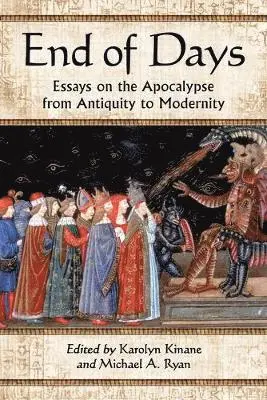
The idea of the complete annihilation of all life is a powerful and culturally universal concept. As human societies around the globe have produced creation myths, so too have they created narratives concerning the apocalyptic destruction of their worlds. This book explores the idea of the apocalypse and its reception within culture and society, bringing together 17 essays that explore both the influence and innovation of apocalyptic ideas from classical Greek and Roman writings to the foreign policies of today's United States.
Kingdom of Stargazers
Astrology and Authority in the Late Medieval Crown of Aragon
Inbunden, Engelska, 2011
622 kr
Skickas inom 10-15 vardagar
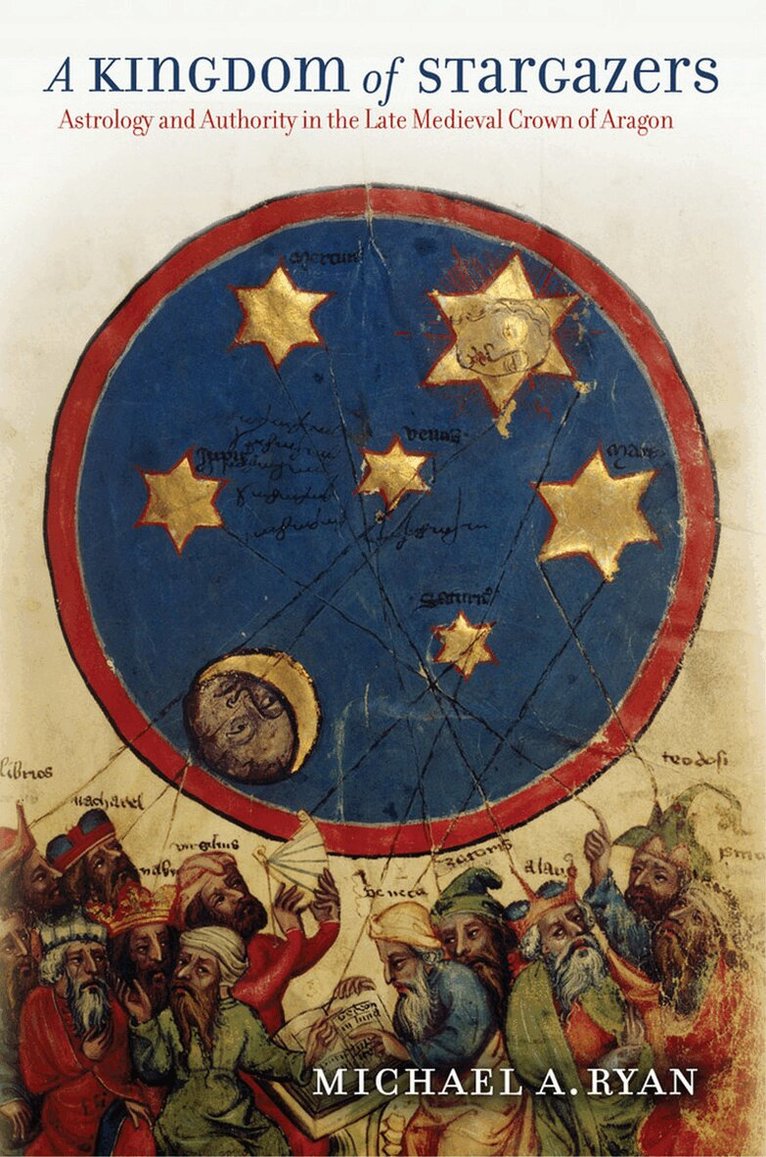
Astrology in the Middle Ages was considered a branch of the magical arts, one informed by Jewish and Muslim scientific knowledge in Muslim Spain. As such it was deeply troubling to some Church authorities. Using the stars and planets to divine the future ran counter to the orthodox Christian notion that human beings have free will, and some clerical authorities argued that it almost certainly entailed the summoning of spiritual forces considered diabolical. We know that occult beliefs and practices became widespread in the later Middle Ages, but there is much about the phenomenon that we do not understand. For instance, how deeply did occult beliefs penetrate courtly culture and what exactly did those in positions of power hope to gain by interacting with the occult? In A Kingdom of Stargazers, Michael A. Ryan examines the interest in astrology in the Iberian kingdom of Aragon, where ideas about magic and the occult were deeply intertwined with notions of power, authority, and providence. Ryan focuses on the reigns of Pere III (1336–1387) and his sons Joan I (1387–1395) and Martí I (1395–1410). Pere and Joan spent lavish amounts of money on astrological writings, and astrologers held great sway within their courts. When Martí I took the throne, however, he was determined to purge Joan's courtiers and return to religious orthodoxy. As Ryan shows, the appeal of astrology to those in power was clear: predicting the future through divination was a valuable tool for addressing the extraordinary problems—political, religious, demographic—plaguing Europe in the fourteenth century. Meanwhile, the kings' contemporaries within the noble, ecclesiastical, and mercantile elite had their own reasons for wanting to know what the future held, but their engagement with the occult was directly related to the amount of power and authority the monarch exhibited and applied. A Kingdom of Stargazers joins a growing body of scholarship that explores the mixing of religious and magical ideas in the late Middle Ages.
Kingdom of Stargazers
Astrology and Authority in the Late Medieval Crown of Aragon
Häftad, Engelska, 2017
368 kr
Skickas inom 10-15 vardagar
Astrology in the Middle Ages was considered a branch of the magical arts, one informed by Jewish and Muslim scientific knowledge in Muslim Spain. As such it was deeply troubling to some Church authorities. Using the stars and planets to divine the future ran counter to the orthodox Christian notion that human beings have free will, and some clerical authorities argued that it almost certainly entailed the summoning of spiritual forces considered diabolical. We know that occult beliefs and practices became widespread in the later Middle Ages, but there is much about the phenomenon that we do not understand. For instance, how deeply did occult beliefs penetrate courtly culture and what exactly did those in positions of power hope to gain by interacting with the occult? In A Kingdom of Stargazers, Michael A. Ryan examines the interest in astrology in the Iberian kingdom of Aragon, where ideas about magic and the occult were deeply intertwined with notions of power, authority, and providence. Ryan focuses on the reigns of Pere III (1336–1387) and his sons Joan I (1387–1395) and Martí I (1395–1410). Pere and Joan spent lavish amounts of money on astrological writings, and astrologers held great sway within their courts. When Martí I took the throne, however, he was determined to purge Joan's courtiers and return to religious orthodoxy. As Ryan shows, the appeal of astrology to those in power was clear: predicting the future through divination was a valuable tool for addressing the extraordinary problems—political, religious, demographic—plaguing Europe in the fourteenth century. Meanwhile, the kings' contemporaries within the noble, ecclesiastical, and mercantile elite had their own reasons for wanting to know what the future held, but their engagement with the occult was directly related to the amount of power and authority the monarch exhibited and applied. A Kingdom of Stargazers joins a growing body of scholarship that explores the mixing of religious and magical ideas in the late Middle Ages.
Del 64 - Brill's Companions to the Christian Tradition
Companion to the Premodern Apocalypse
Inbunden, Engelska, 2016
4 301 kr
Skickas inom 5-8 vardagar
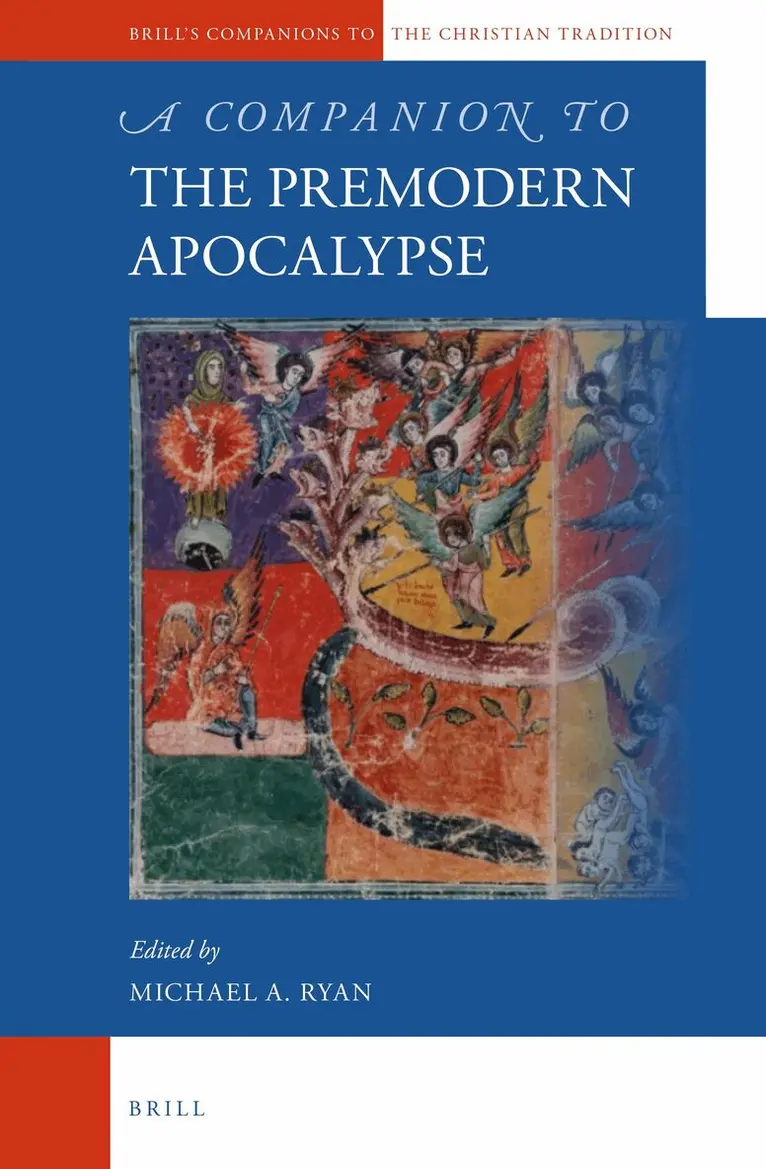
The final book of the New Testament, the Apocalypse, has been controversial since its initial appearance during the first century A.D. For centuries after, theologians, exegetes, scholars, and preachers have grappled with the imagery and symbolism behind this fascinating and terrifying book. Their thoughts and ideas regarding the apocalypse—and its trials and tribulations—were received within both elite and popular culture in the medieval and early modern eras. Therefore, one may rightly call the Apocalypse, and its accompanying hopes and fears, a foundational pillar of Western Civilization. The interest in the Apocalypse, and apocalyptic movements, continues apace in modern scholarship and society alike. This present volume, A Companion to the Premodern Apocalypse, collates essays from specialists in the study of premodern apocalyptic subjects. It is designed to orient undergraduate and graduate students, as well as more established scholars, to the state of the field of premodern apocalyptic studies as well as to point them in future directions for their scholarship and/or pedagogy. Contributors are: Roland Betancourt, Robert Boenig, Richard K. Emmerson, Ernst Hintz, László Hubbes, Hiram Kümper, Natalie Latteri, Thomas Long, Katherine Olson, Kevin Poole, Matthias Riedl, Michael A. Ryan