Michael B. First – författare
1 081 kr
Skickas
SCID-5-CV Intervju är en semistrukturerad diagnostisk intervju som kan användas av personer utbildade i psykiatrisk diagnostik för att ställa de vanligaste psykiatriska diagnoserna i DSM-5.
SCID-5-CV Intervju inleds med en översiktsintervju med öppna frågor, där patienten får möjlighet att beskriva sina besvär med egna ord. Därefter är intervjun indelad i 10 olika diagnostiska moduler som innehåller frågor som intervjuaren ställer för att värdera om patienten uppfyller diagnoskriterierna i DSM-5. Resultaten dokumenteras i SCID-5-CV Sammanställningsprotokoll som finns i intervjuprotokollets början.
SCID-5-CV är en del i en diagnostisk process som möjliggör en reliabel och valid diagnostik av psykiatriska syndrom.Intervjun kan dels användas av sjukvårdspersonal i det kliniska arbetet med psykiatrisk diagnostik, dels i utbildning av studenter på universitetsutbildningar och vid vidareutbildning av professionella inom vården.
Boken
är ett semistrukturerat intervjustöd för psykiatrisk diagnostik enligt DSM-5 underlättar en reliabel och valid diagnostisk psykiatrisk bedömning ger den senaste versionen av SCID-5-CV på svenska.I SCID-5-CV Intervju anges DSM-5-kriterierna ordagrant så som de översatts i MINI-D 5 (utgiven av Pilgrim Press). ICD-koder har översatts till dess svenska motsvarighet ICD-10-SE, enligt Socialstyrelsens riktlinjer och i enlighet med översättningen i MINI-D 5.
Om författarnaMichael B. First, M.D. Janet B.W. Williams, PhD, Rhonda S. Karg, Ph.D. Robert L. Spitzer, M.D.
Texten är faktagranskad och bearbetad av:
Johanna Motilla Hoppe; leg. psykolog, filosofie doktor, Mia Ramklint; leg. läkare, specialist i psykiatri, professor och Linda Bylin; leg. psykolog, specialist i klinisk psykologi, leg. psykoterapeut, psykoterapihandledare.Först publicerad i USA av American Psychiatric Association (APA), Washington DC. Copyright ©2015 (SCID-5-CV). Alla rättigheter reserverade. Först publicerad i Sverige av Liber AB på svenska. Liber AB har exklusiv förlagsrätt till SCID-5-CV, Klinisk version Intervju första utgåvan (copyright ©2015) författad av Michael B. First, M.D., Janet B. W. Williams, Ph.D., Rhonda S. Karg, Ph.D. och Robert L. Spitzer, M.D. på svenska för distribution över hela världen.
Skriftligt tillstånd från Liber AB krävs för återgivning i någon form av material från det översatta verket. APA har inte på något sätt bidragit till översättningen av det här verket från engelska till svenska och ansvarar inte för eventuella felaktigheter, utelämnanden eller andra möjliga brister i översättningen av verket.
933 kr
Skickas
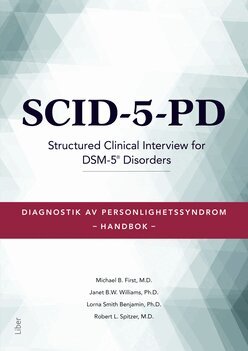
Presenterar principerna för SCID-5-PD; en semistrukturerad intervju för psykiatrisk diagnostik av personlighetssyndrom enligt DSM-5.
Här ges detaljerade, praktiska anvisningar för hur intervjun ska genomföras och anvisningar för självskattningsformuläret Structured Clinical Interview for DSM-5 Screening Personality Questionnaire (SCID-5-SPQ). I handboken finns också vägledning i hur patienternas svar på intervjufrågor ska bedömas med utgångspunkt i kriterierna för DSM-5. Ett korrekt användande av SCID-5-PD ökar reliabiliteten vid diagnostik av personlighetssyndrom.
Handboken kan dels användas av sjukvårdspersonal i det kliniska arbetet med psykiatrisk diagnostik, dels i utbildning av studenter på universitetsutbildningar och vid vidareutbildning av professionella inom vården.
I SCID-5-PD Handbok anges DSM-5-kriterierna ordagrant så som de översatts i MINI-D 5 (utgiven av Pilgrim Press). ICD-koder har översatts till dess svenska motsvarighet ICD-10-SE, enligt Socialstyrelsens riktlinjer och i enlighet med översättningen i MINI-D 5.
Om författarnaMichael B. First, M.D. Janet B.W. Williams, Ph.D. Lorna Smith Benjamin, Ph.D. Robert L. Spitzer, M.D.
Faktagranskning och textbearbetningJohanna Motilla Hoppe; leg. psykolog, filosofie doktor,Mia Ramklint; leg. läkare, specialist i psykiatri, professor och Linda Bylin; leg. psykolog, specialist i klinisk psykologi, leg. psykoterapeut, psykoterapihandledare.
RättigheterFörst publicerad i USA av American Psychiatric Association (APA), Washington DC. Copyright 2016 (SCID-5-PD). Alla rättigheter reserverade. Först publicerad i Sverige av Liber AB på svenska. Liber AB har exklusiv förlagsrätt till SCID-5-PD Intervju samt SCID-5-PD Handbok första utgåvan (copyright 2016) författad av Michael B. First, M.D., Janet B. W. Williams, Ph.D., Lorna Smith Benjamin, Ph.D. och Robert L. Spitzer, M.D. på svenska för distribution över hela världen.
Skriftligt tillstånd från Liber AB krävs för återgivning i någon form av material från det översatta verket. APA har inte på något sätt bidragit till översättningen av det här verket från engelska till svenska och ansvarar inte för eventuella felaktigheter, utelämnanden eller andra möjliga brister i översättningen av verket.
837 kr
Skickas
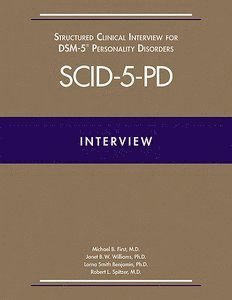
SCID-5-PD Intervju är en semistrukturerad diagnostisk intervju som kan användas av personer som är utbildade i psykiatrisk diagnostik för att diagnostisera personlighetssyndrom enligt DSM-5.
SCID-5-PD Intervju inleds med en översiktsintervju med öppna frågor, där patienten får möjlighet att beskriva sina besvär med egna ord. Därefter följer intervjufrågor för bedömning av de generella diagnostiska kriterierna för personlighetssyndrom samt frågor för att värdera de diagnostiska kriterierna för vart och ett av de specifika personlighetssyndromen i DSM-5.
Resultaten dokumenteras i SCID-5-PD Sammanställningsprotokoll som finns i intervjuprotokollets början. SCID-5-PD är en del i en diagnostisk process som möjliggör en reliabel och valid diagnostik av personlighetssyndrom.
I SCID-5-PD Intervju ingår SPQ som är ett självskattningsformulär utformat för att användas som screening av personlighetssyndrom inför intervjun.
Intervjun kan dels användas av sjukvårdspersonal i det kliniska arbetet med psykiatrisk diagnostik, dels i utbildning av studenter på universitetsutbildningar och vid vidareutbildning av professionella inom vården.
I SCID-5-PD Intervju anges DSM-5-kriterierna ordagrant så som de översatts i MINI-D 5 (utgiven av Pilgrim Press). ICD-koder har översatts till dess svenska motsvarighet ICD-10-SE, enligt Socialstyrelsens riktlinjer och i enlighet med översättningen i MINI-D5.
Om författarnaMichael B. First, M.D. Janet B.W. Williams, Ph.D. Lorna Smith Benjamin, Ph.D. Robert L. Spitzer, M.D.
Faktagranskning och textbearbetningJohanna Motilla Hoppe; leg. psykolog, filosofie doktor,Mia Ramklint; leg. läkare, specialist i psykiatri, professor ochLinda Bylin; leg. psykolog, specialist i klinisk psykologi, leg. psykoterapeut, psykoterapihandledare.
RättigheterFörst publicerad i USA av American Psychiatric Association (APA), Washington DC. Copyright 2016 (SCID-5-PD). Alla rättigheter reserverade. Först publicerad i Sverige av Liber AB på svenska. Liber AB har exklusiv förlagsrätt till SCID-5-PD Intervju första utgåvan (copyright 2016) författad av Michael B. First, M.D., Janet B. W. Williams, Ph.D., Lorna Smith Benjamin, Ph.D. och Robert L. Spitzer, M.D. på svenska för distribution över hela världen.
Skriftligt tillstånd från Liber AB krävs för återgivning i någon form av material från det översatta verket. APA har inte på något sätt bidragit till översättningen av det här verket från engelska till svenska och ansvarar inte för eventuella felaktigheter, utelämnanden eller andra möjliga brister i översättningen av verket.
611 kr
1 241 kr
Skickas inom 5-8 vardagar
284 kr
Skickas inom 5-8 vardagar
761 kr
Skickas inom 7-10 vardagar
833 kr
Skickas inom 5-8 vardagar
1 450 kr
Läs direkt efter köp
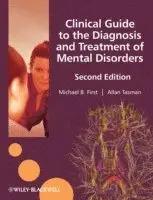
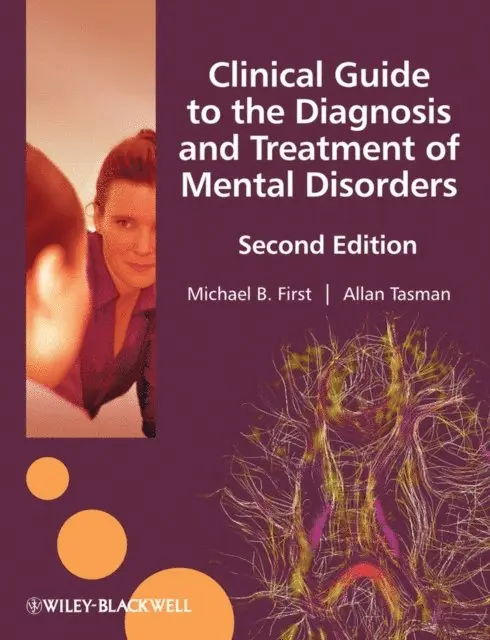
Clinical Guide to the Diagnosis and Treatment of Mental Disorders - Second Edition combines clinically-relevant information about each of theDSM-IV-TR diagnoses with clear, detailed information on treatment options, giving full clinical management advice. Once again, the editors, both leading psychiatrists, have condensed the chapters on Disorders from Tasman et al’s acclaimed two volume textbook of Psychiatry (now in its Third Edition), retaining only the content they deem particularly relevant to the clinician for ease of use.
Each disorder is discussed under the headings of Diagnosis (including Assessment Issues, Comorbidity, Course, and Differential Diagnosis, giving diagnostic decision trees where relevant) and Treatment (listing all therapeutic options, giving practical advice for patient management, summarising treatment specifics with tables and treatment flowcharts).
The original edition established itself as the first point of reference for any clinician or mental health practitioner needing expert advice on therapeutic options for any psychiatric disorder. This edition features an additional chapter on the psychiatric interview and assessment of mental status to increase its utility.
It echoes the progress in psychiatry regarding the establishment of an evidenced-based model of taxonomy, diagnosis, etiology, and treatment. Indeed, from a psychologist''s perspective, the equal consideration provided to empirically supported psychosocial treatments versus somatic treatment is a significant development in the field of psychiatry.
Jonathan Weinand in PsycCritiques, the American Psychological Association Review of Books
1 450 kr
Läs direkt efter köp
Clinical Guide to the Diagnosis and Treatment of Mental Disorders - Second Edition combines clinically-relevant information about each of theDSM-IV-TR diagnoses with clear, detailed information on treatment options, giving full clinical management advice. Once again, the editors, both leading psychiatrists, have condensed the chapters on Disorders from Tasman et al’s acclaimed two volume textbook of Psychiatry (now in its Third Edition), retaining only the content they deem particularly relevant to the clinician for ease of use.
Each disorder is discussed under the headings of Diagnosis (including Assessment Issues, Comorbidity, Course, and Differential Diagnosis, giving diagnostic decision trees where relevant) and Treatment (listing all therapeutic options, giving practical advice for patient management, summarising treatment specifics with tables and treatment flowcharts).
The original edition established itself as the first point of reference for any clinician or mental health practitioner needing expert advice on therapeutic options for any psychiatric disorder. This edition features an additional chapter on the psychiatric interview and assessment of mental status to increase its utility.
It echoes the progress in psychiatry regarding the establishment of an evidenced-based model of taxonomy, diagnosis, etiology, and treatment. Indeed, from a psychologist''s perspective, the equal consideration provided to empirically supported psychosocial treatments versus somatic treatment is a significant development in the field of psychiatry.
Jonathan Weinand in PsycCritiques, the American Psychological Association Review of Books
5 015 kr
Läs direkt efter köp
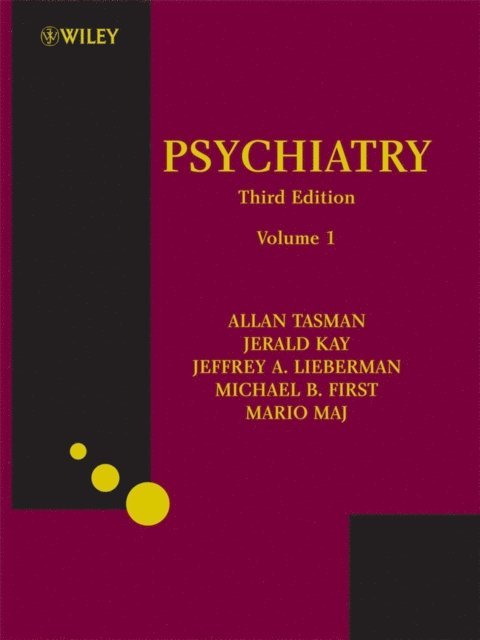
Written by well-known and highly regarded experts from around the world, it takes a patient-centered approach making it an indispensable resource for all those involved in the care of patients with psychiatric disorders.
For this new edition, the section on the Neuroscientific Foundations of Psychiatry has been completely revised, with a new author team recruited by Section Editors Jonathan Polan and Eric Kandel. The final section, Special Populations and Clinical Settings, features important new chapters on today’s most urgent topics, including the homeless, restraint and geriatric psychiatry.
Key features include:
Coverage of the entire field of psychiatry, from psychoanalysis to pharmacology and brain imaging, including family relations, cultural influence and change, epidemiology, genetics and behavioral medicine Clinical vignettes describing current clinical practice in an attractive design Numerous figures and tables that facilitate learning and comprehension appear throughout the text Clear comparisons of the DSM-IV-TR and ICD-10 criteria for easy understanding in a global context Diagnostic and treatment decision trees to help both the novice and experienced readerThe chapter on Cognitive Behavioral Therapies by Edward Friedman, Michael Thase and Jesse Wright is freely available. Please click on Read Excerpt 2 above to read this superb exposition of these important therapies.
709 kr
Skickas inom 7-10 vardagar
876 kr
Skickas inom 7-10 vardagar
929 kr
Skickas inom 5-8 vardagar
1 302 kr
Skickas inom 5-8 vardagar
815 kr
Skickas inom 5-8 vardagar
887 kr
Skickas inom 5-8 vardagar
929 kr
Skickas inom 5-8 vardagar
902 kr
Läs direkt efter köp
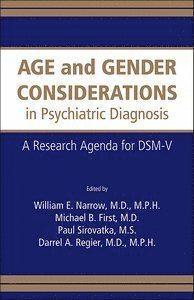
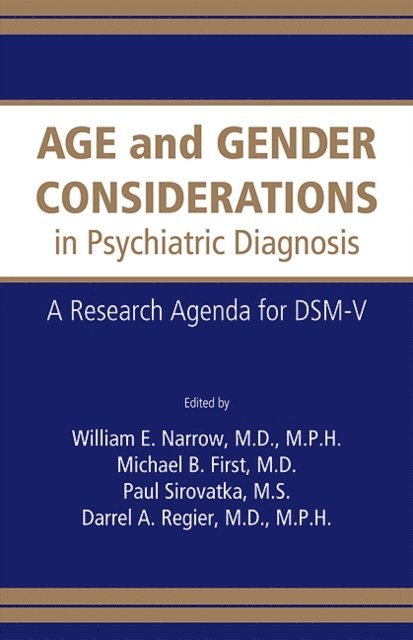
Written to help identify major gaps in our knowledge of how gender and age affect psychiatric diagnoses and to stimulate much-needed research to fill these gaps, Age and Gender Considerations in Psychiatric Diagnosis serves as both a valuable short-term source for the DSM-V Task Force and its disorder-specific workgroups, and a long-term guide for future studies that will contribute to revised psychiatric classifications in these three areas.
Here, 47 experts present findings in three areas of psychiatric research that historically have been neglected but rightfully have received increasing attention in recent years and thus are worthy of investigation into their clinical features, etiology, and course:
1. Significant gender differences in prevalence, symptom profiles, and risk factors for mental disorders, including neurodevelopmental, neurophysiological, and environmental factors for men and women that cut across diagnostic categories-for example, the critical importance of gender in how psychiatric illness develops and presents; DSM''s approach to gender to date; and relevant research findings and gaps in the epidemiology, etiology, and pathophysiology of disorders and the gender-related expression of psychopathology, including the controversial and complex question of whether DSM should have different diagnostic criteria for men and women.
2. Mental disorders in infancy and early childhood, including diagnosis and measurement of psychopathology; PTSD and social and cognitive factors related to the experience of stress; reactive attachment disorder (unique in part because of its specificity to early childhood); mood and anxiety disorders and difficulties in diagnosis; sleep disorders, including two new disorders, Night-Waking Dysomnia and Sleep-Onset Dysomnia; feeding disorders, including the need to address overeating and overfeeding (especially given the alleged U.S. epidemic of obesity); early childhood manifestations of behavior disorders; and early symptoms and diagnosis of autism.
3. Mental disorders in the elderly, such as dementia and depression, once considered normal consequences of aging but now understood to represent mental disorders, including the need to identify specific brain structure abnormalities, biomarkers, and the many contributing biological, psychosocial, and environmental factors of mental illness in late life and to understand their roles in the elderly to better diagnose and monitor disease progression.
Written for clinicians and researchers alike, this thought-provoking compendium contributes critical information that helps enhance our understanding of the causes of mental disorders, develop effective preventive and treatment interventions, and inform future editions of DSM and ICD.
1 230 kr
Läs direkt efter köp
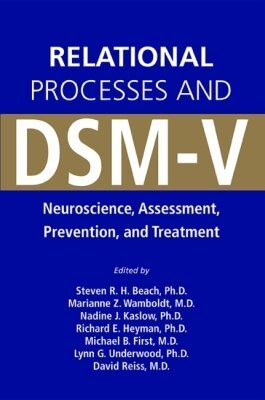
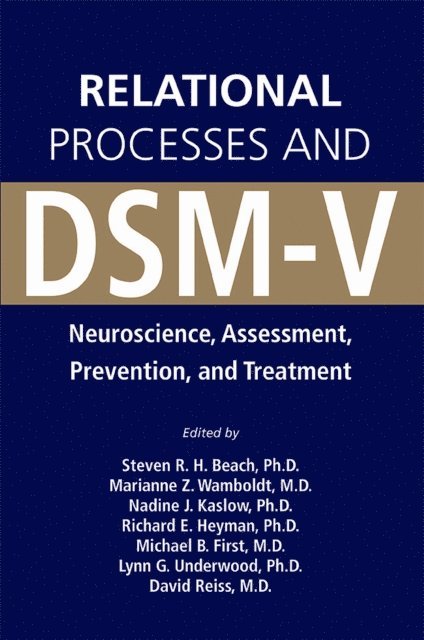
Seeking to integrate the large volume of clinical research on relational processes and mental health disorders with other scientific advances in psychiatry, Relational Processes and DSM-V builds on exciting advances in clinical research on troubled relationships. These advances included marked improvements in the assessment and epidemiology of troubled relationships as well the use of genetics, neuroscience, and immunology to explore the importance of close relationships in clinical practice. Advances in family-based intervention, and prevention are also highlighted to help practitioners and researchers find common ground and begin an empirically based discussion about the best way to revise the DSM. Given the overwhelming research showing that relationships play a role in regulating neurobiology and genetic expression and are critical for understanding schizophrenia, conduct disorder, and depression among other disorders, relational processes must be a part of any empirically based plan for revising psychiatric nosology in DSM-V.
The chapters in this book counter the perspective that we can safely discard the biopsychosocial model that has guided psychiatry in the past. The contributors examine the relevance of close relationships in such issues as the basic psychopathology of mental disorders, factors influencing maintenance and relapse, sources of burden for family members, and guiding family-based interventions. By tying relational processes to basic research on psychopathology, they demonstrate the value of integrating basic behavioral and brain research with a sophisticated understanding of the self-organizing and self-sustaining characteristics of relationships. Coverage includes: research linking relational processes to neuroscience, neurobiology, health outcomes, intervention research, prevention research, and genetics consideration of specific circumstances, such as promoting healthy parenting following divorce and relational processes in depressed Latino adolescents optimal approaches to the assessment of relational processes with clinical significance, such as child abuse, partner abuse, and expressed emotion. a simple introduction to the methodology of taxometrics, offering insight into whether key relational processes are distinct categories or continuously distributed variables an overview of the links between relational processes and psychiatric outcomes, providing a theoretical foundation for the discussion of links to psychopathology
Together, these contributions seek to develop a shared commitment among clinicians, researchers, and psychopathologists to take seriously the issue of relational processes as they relate to diagnoses within DSM-and to encourage mental health care workers at all levels to harness the generative and healing properties of intimate relationships and make them a focus of clinical practice. It is a book that will prove useful to all who are interested in integrating greater sensitivity to relational processes in their work.
953 kr
Läs direkt efter köp
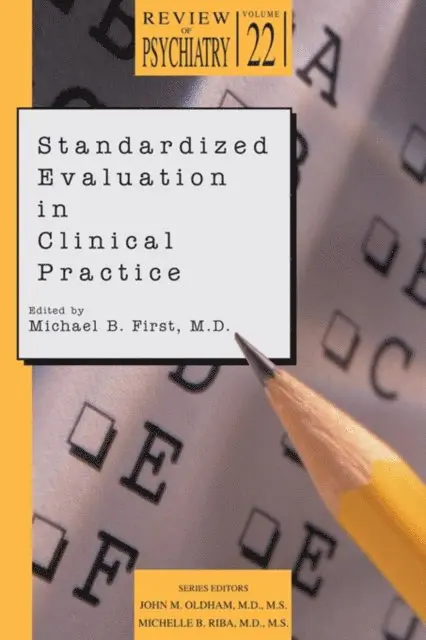
In clinical settings clinicians continue to underutilize interviews and rating scales because their benefits are underappreciated and their use is perceived as too costly and time consuming. Augmenting the broad information contained in the APA''s Handbook of Psychiatric Measures, this in-depth guide examines the real-world issues involved in implementing measures in actual clinical settings. This book Asserts that the use of structured diagnostic interviews in clinical settings is justified, suggesting that it would be most cost-effective to target research assessment toward those groups most difficult to evaluate and most likely to be misdiagnosed, especially those whose misdiagnosis leads to consumption of a greater-than-expected amount of treatment resources Focuses on the underrecognition and underreporting of diagnostic comorbidity, discussing the daunting practical issues of using comprehensive structured interviews and suggesting instead that a self-administered questionnaire be used to screen for the most common DSM-IV Axis I disorders Considers the use of structured interviews-administered by either lay interviewers or by computer-in the diagnostic assessment of children and adolescents, making a case that using the research model (i.e., reliable measures that can be given to large numbers of subjects) in clinical settings meets the cost-efficiency requirements of understaffed clinical providers Discusses the utility and limitations of research instruments for crucially important clinical purposes-determining suicide risk-and presents the inherent difficulties in predicting risk and explore the underlying clinical risk factors based on their proposed stress-diathesis model Presents the issues and challenges involved in the U.S. Department of Veteran''s Affairs (VA) attempt to implement a national program requiring the routine use of the GAF scale. The authors conclude with a discussion of the reasons why the Global Assessment of Functioning (GAF) scale was chosen, software and procedures, methods to ensure system compliance, and the specific measures taken by two VA networks that helped improve its implementation
It is a groundbreaking guide that details the pros and cons of using structured interviews and rating scales in clinical settings to ensure reliable and valid assessment of diagnoses, symptoms, and outcomes.
1 074 kr
Läs direkt efter köp
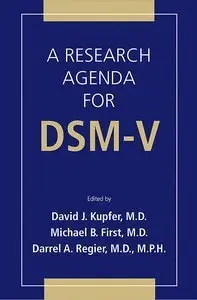
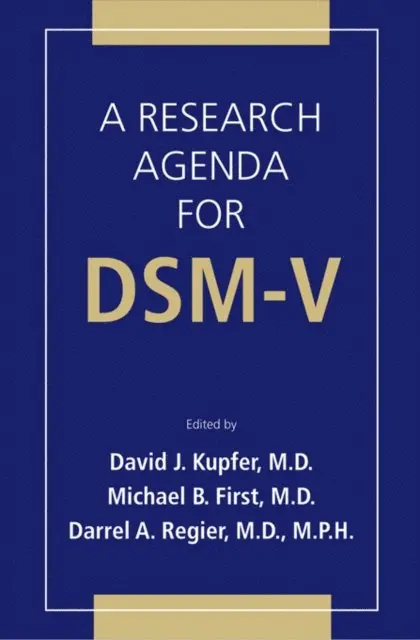
In the ongoing quest to improve our psychiatric diagnostic system, we are now searching for new approaches to understanding the etiological and pathophysiological mechanisms that can improve the validity of our diagnoses and the consequent power of our preventive and treatment interventions -- venturing beyond the current DSM paradigm and DSM-IV framework.
This thought-provoking volume -- produced as a partnership between the American Psychiatric Association, the National Institute of Mental Health, the National Institute on Alcohol Abuse and Alcoholism, and the National Institute on Drug Abuse -- represents a far-reaching attempt to stimulate research and discussion in the field in preparation for the eventual start of the DSM-V process, still several years hence. The book Explores a variety of basic nomenclature issues, including the desirability of rating the quality and quantity of information available to support the different disorders in the DSM in order to indicate the disparity of empirical support across the diagnostic system.
Offers a neuroscience research agenda to guide development of a pathophysiologically based classification for DSM-V, which reviews genetic, brain imaging, postmortem, and animal model research and includes strategic insights for a new research agenda.
Presents highlights of recent progress in developmental neuroscience, genetics, psychology, psychopathology, and epidemiology, using a bioecological perspective to focus on the first two decades of life, when rapid changes in behavior, emotion and cognition occur.
Discusses how to address two important gaps in the current DSM-IV: (1) the categorical method of diagnosing personality disorders and their relationship with Axis I disorders, and (2) the limited provision for the diagnosis of relational disorders -- suggesting a research agenda for personality disorders that considers replacing the current categorical approach with a dimensional classification of personality.
Reevaluates the relationship between mental disorders and disability, asserting that research into disability and impairment would benefit from the diagnosis of mental disorders be uncoupled from a requirement for impairment or disability to foster a more vigorous research agenda on the etiologies, courses, and treatment of mental disorders as well as disabilities and to avert unintended consequences of delayed diagnosis and treatment.
Examines the importance of culture in psychopathology and the main cultural variables at play in the diagnostic process, stating that training present and future professionals in the need to include cultural factors in the diagnostic process is a logical step in any attempt to develop comprehensive research programs in psychology, psychiatry, and related disciplines.
This fascinating work, with contributions from an international group of research investigators, reaches into the core of psychiatry, providing invaluable background and insights for all psychology and psychiatry professionals -- food for thought and further research that will be relevant for years to come.
3 220 kr
Läs direkt efter köp
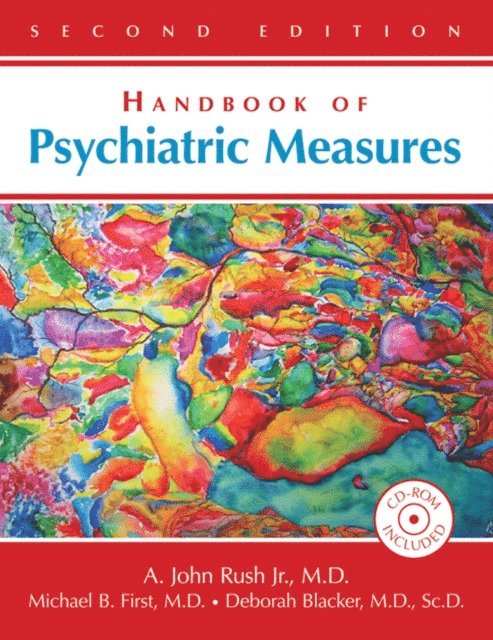
The Handbook of Psychiatric Measures offers a concise summary of key evaluations that you can easily incorporate into your daily practice. The measures will enhance the quality of patient care assisting you, both in diagnosis and assessment of outcomes. Comprising a wide range of methods available for assessing persons with mental health problems, the Handbook contains more than 275 rating methods, from the Abnormal Involuntary Movement Scale to the Zung Self-Rating Depression Scale.
In this fully revised edition, more than 40 measures have been added both to the book and to the accompanying CD-ROM. The Handbook features: Thoroughly examined and revised measures that provide the most relevant and timely information for clinicians. New measures that empirically provide better patient evaluation Updated costs, translations, and contact information for each measure
This handy compendium includes both diagnostic tools and measures of symptoms, function and quality of life, medication side effects, and other clinically relevant parameters. It focuses on measures that can be most readily used in either clinical practice or research. Most of the measures are designed to improve the reliability and validity of patient assessment over what might be accomplished in a standard clinical interview. The measures also demonstrate that the use of formal measures can improve the collection, synthesis, and reporting of information as compared with the use of unstructured examinations.
Seventeen disorder-specific chapters, organized in DSM-IV-TR order, include measures for: Disorders of childhood and adolescence Cognitive disorders Sexual dysfunction Eating disorders Sleep disorders Aggression and much more.
The discussion of each measure includes goals, description, practical issues, psychometric properties, and clinical utility, followed by references and suggested readings. This revised edition includes updated measure descriptions, new measure variants and research, and newly selected measures particularly appropriate to the domain of discussion. As a clinical tool, this book Describes how, when, and to what purpose measures are used Points out practical issues to consider in choosing a measure for clinical use Addresses limitations in the use of measures including ethnic, cultural, and socioeconomic factors that influence their interpretation
Use of this special resource is further enhanced by a CD-ROM containing the full text of more than 150 of these measures -- an invaluable aid for reference and clinical decision-making.
888 kr
Skickas inom 5-8 vardagar
902 kr
Skickas
991 kr
Skickas inom 5-8 vardagar
1 303 kr
Läs direkt efter köp
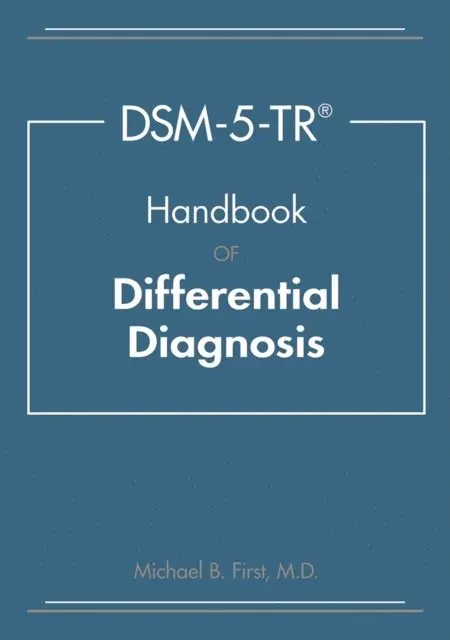
The DSM-5-TR Handbook of Differential Diagnosis is the preeminent guide to differential diagnosis for both clinicians and students learning psychiatric diagnosis. Fully updated to reflect the recent Diagnostic and Statistical Manual of Mental Disorders, Fifth Edition, Text Revision (DSM-5-TR), this handbook includes two newly developed diagnostic trees (for dissociative symptoms and repetitive pathological behaviors). This indispensable guide offers a rich selection of diagnostic lenses through which to consider symptomatic presentations, grounded in the latest research and standards of practice.
Written by the DSM-5-TR Editor, an expert on psychiatric diagnosis and assessment, the handbook guides clinicians and students on how to differentiate between disorders with similar presentations in an accessible, easy-to-use format. An assortment of approaches to differential diagnosis and a number of features designed to benefit the evaluation include: • A six-step framework for diagnosing patients that proceeds from determining if the presenting symptoms are due to a substance/medication or a medical condition, to establishing the boundary between disorder and normality, to determining the primary disorder, and differentiating adjustment disorders from other mental disorders.• Thirty symptom-oriented decision trees, two of which are new to this edition, that provide detailed decision points to facilitate the process of generating the differential diagnosis based on the presenting symptoms and eliminate formulating premature conclusions.• Sixty-seven differential diagnosis tables, one for each of the most important disorders in DSM-5-TR, cross-referenced with the terminal branches of the decision trees presented in the handbook and that provide a head-to-head comparison of each disorder, highlighting similarities and differences.• The DSM-5-TR Classification, to facilitate coding and to provide an overview of all the DSM-5-TR diagnoses that must be considered in formulating a differential diagnosis.
DSM-5-TR Handbook of Differential Diagnosis provides a comprehensive overview of the process of diagnosing DSM-5-TR disorders while serving as a reference guide to assist in the differential diagnosis of individual patients. Clinicians and students learning psychiatric diagnosis faced with this most crucial task will find this handbook of enormous benefit.
920 kr
Skickas
1 013 kr
Skickas inom 5-8 vardagar
932 kr
Skickas
SCID-5-CV Handbok presenterar principerna för SCID-5-CV Intervju, som är en semistrukturerad intervju för psykiatrisk diagnostik enligt DSM-5.
Här ges detaljerade, praktiska anvisningar för hur intervjun ska genomföras och svaren bedömas. I handboken finns vägledning i hur patienternas svar på intervjufrågor ska bedömas med utgångspunkt i kriterierna för DSM-5. Ett korrekt användande av SCID-5-CV ökar reliabiliteten vid diagnostik av psykiatriska syndrom.
SCID-5-CV Handbok innehåller också utbildningsmaterial med fallbeskrivningar och övningsuppgifter. Handboken kan dels användas av sjukvårdspersonal i det kliniska arbetet med psykiatrisk diagnostik, dels i utbildning av studenter på universitetsutbildningar och vid vidareutbildning av professionella inom vården.
Boken
ger detaljerade instruktioner för SCID-5-CV Intervju och bedömning av DSM-5-diagnoskriterier innehåller utbildningsmaterial för att träna bedömning av diagnoskriterier underlättar en reliabel och valid diagnostisk bedömning.I SCID-5-CV Handbok anges DSM-5-kriterierna ordagrant så som de översatts i MINI-D 5 (utgiven av Pilgrim Press). ICD-koder har översatts till dess svenska motsvarighet ICD-10-SE, enligt Socialstyrelsens riktlinjer och i enlighet med översättningen i MINI-D 5.
Om författarnaMichael B. First, M.D. Janet B.W. Williams, PhD, Rhonda S. Karg, Ph.D. Robert L. Spitzer, M.D.
Texten är faktagranskad och bearbetad av:
Johanna Motilla Hoppe; leg. psykolog, filosofie doktor, Mia Ramklint; leg. läkare, specialist i psykiatri, professor och Linda Bylin; leg. psykolog, specialist i klinisk psykologi, leg. psykoterapeut, psykoterapihandledare.Först publicerad i USA av American Psychiatric Association (APA), Washington DC. Copyright ©2015 (SCID-5-CV). Alla rättigheter reserverade. Först publicerad i Sverige av Liber AB på svenska. Liber AB har exklusiv förlagsrätt till SCID-5-CV, Klinisk version Handbok första utgåvan (copyright ©2015) författad av Michael B. First, M.D., Janet B. W. Williams, Ph.D., Rhonda S. Karg, Ph.D. och Robert L. Spitzer, M.D. på svenska för distribution över hela världen.
Skriftligt tillstånd från Liber AB krävs för återgivning i någon form av material från det översatta verket. APA har inte på något sätt bidragit till översättningen av det här verket från engelska till svenska och ansvarar inte för eventuella felaktigheter, utelämnanden eller andra möjliga brister i översättningen av verket.