Darrel A. Regier – författare
Visar alla böcker från författaren Darrel A. Regier. Handla med fri frakt och snabb leverans.
25 produkter
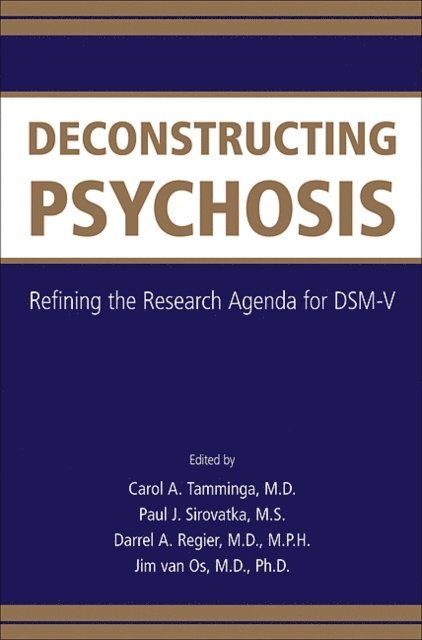
Deconstructing Psychosis
Refining the Research Agenda for DSM-V
Av Jim van Os, Darrel A. Regier m. fl.
E-bok, 2009
1169 kr
Lägg i varukorg
Deconstructing Psychosis: Refining the Research Agenda for DSM-V provides an all-important summary of the latest research about the diagnosis and pathophysiology of psychosis. This volume gives the reader an inside look at how psychotic phenomena are represented in the current diagnostic system and …
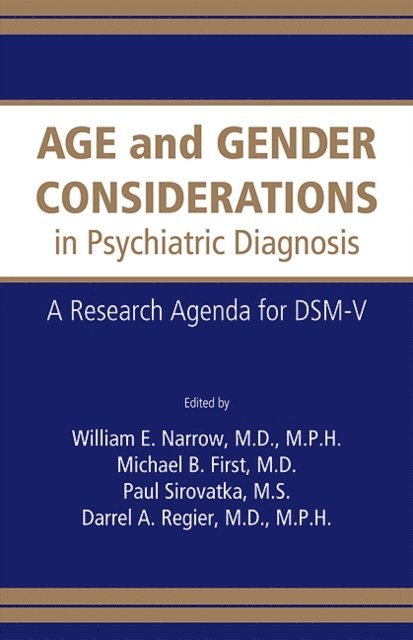
Age and Gender Considerations in Psychiatric Diagnosis
A Research Agenda for DSM-V
Av William E. Narrow, Michael B. First m. fl.
Häftad, 2007
888 kr
Lägg i varukorg
Written to help identify major gaps in our knowledge of how gender and age affect psychiatric diagnoses and to stimulate much-needed research to fill these gaps, Age and Gender Considerations in Psychiatric Diagnosis serves as both a valuable short-term source for the DSM-V Task Force and its …
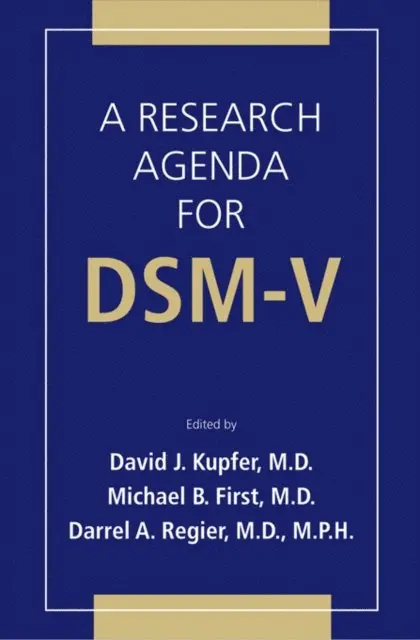
Research Agenda for DSM V
Av David J. Kupfer, Michael B. First m. fl.
Häftad, 2002
794 kr
Lägg i varukorg
In the ongoing quest to improve our psychiatric diagnostic system, we are now searching for new approaches to understanding the etiological and pathophysiological mechanisms that can improve the validity of our diagnoses and the consequent power of our preventive and treatment interventions - …
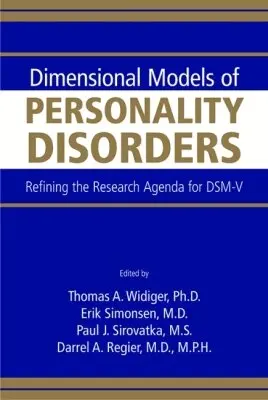
Dimensional Models of Personality Disorders
Refining the Research Agenda for DSM-V
Av Thomas A. Widiger, Erik Simonsen m. fl.
Häftad, 2006
1039 kr
Lägg i varukorg
DSM-IV and ICD-10 both diagnose personality disorders categorically, yet studies indicate that many patients meet criteria for an excessive number of diagnoses, raising the question of whether personality disorders are discrete conditions or rather distinctions along dimensions of general …
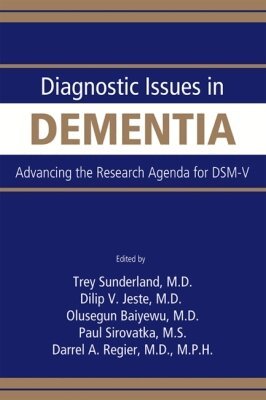
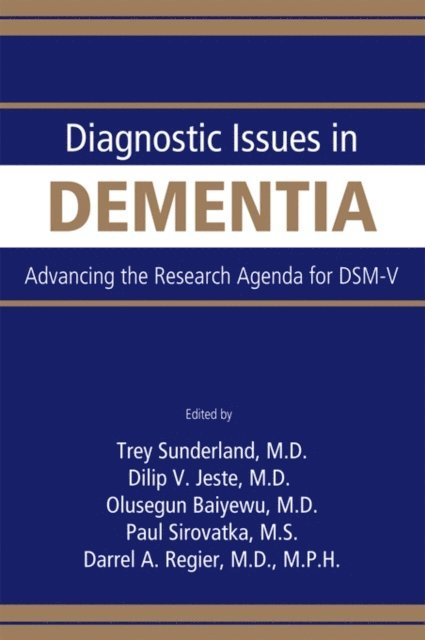
Diagnostic Issues in Dementia
Advancing the Research Agenda for DSM-V
Av Trey Sunderland, Dilip V. Jeste m. fl.
Häftad, 2007
714 kr
Lägg i varukorg
Advancing the Research Agenda for DSM-V, Diagnostic Issues in Dementia comprises nine chapters with research suggestions for consideration for the upcoming DSM-V process, reflecting the nascent effort toward a new diagnostic nomenclature in the still rapidly evolving field of dementia. Here, 18 …
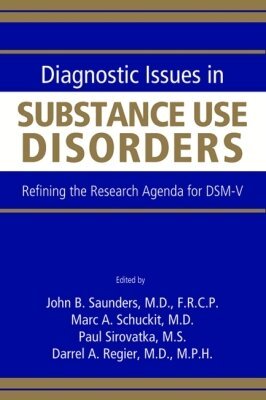
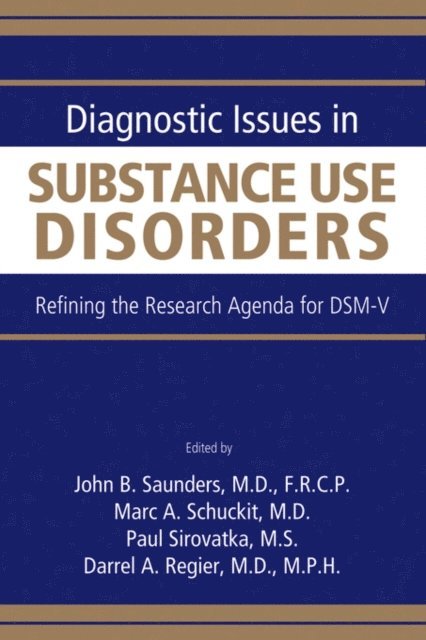
Diagnostic Issues in Substance Use Disorders
Refining the Research Agenda for DSM-V
Av John B. Saunders, Marc A. Schuckit m. fl.
Häftad, 2007
1140 kr
Lägg i varukorg
Inviting the help of colleagues worldwide, the concise Diagnostic Issues in Substance Use Disorders is part of the new series Advancing the Research Agenda for DSM-V . Its 19 chapters by an international group of experts are designed to stimulate questions that will help guide research related to …
Somatic Presentations of Mental Disorders
Refining the Research Agenda for DSM-V
Av Joel E. Dimsdale, Yu Xin m. fl.
Häftad, 2009
1005 kr
Lägg i varukorg
Sometimes described as "the nemesis of the primary care physician," somatoform disorders are frustrating, expensive to treat, and under-investigated. Somatic Presentations of Mental Disorders provides a fascinating and practical review of the epidemiology, diagnosis, and treatment of this …
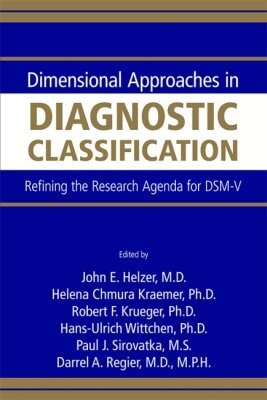
Dimensional Approaches in Diagnostic Classification
Refining the Research Agenda for DSM-V
Av John E. Helzer, Helena C. Kraemer m. fl.
Häftad, 2008
921 kr
Lägg i varukorg
Since its initial publication more than 50 years ago, the DSM has systematized the complex intellectual and clinical process of diagnosing mentally ill persons through the use of categories and classification. The manuals have provided a consistent diagnostic language for clinical work, research, …
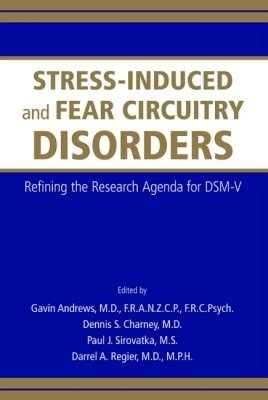
Stress-Induced and Fear Circuitry Disorders
Refining the Research Agenda for DSM-V
Av Gavin Andrews, Dennis S. Charney m. fl.
Häftad, 2009
781 kr
Lägg i varukorg
As disorders in which stress or fear play major roles present an increasing need for psychiatric care around the world, this volume summarizes current research to determine whether a specific group of stress-induced and fear-based disorders form a distinct syndrome independent from other anxiety …
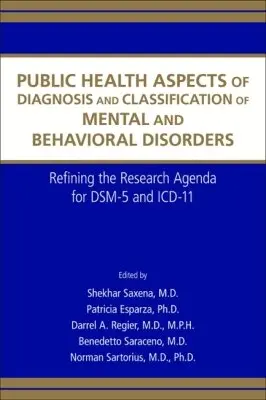
Public Health Aspects of Diagnosis and Classification of Mental and Behavioral Disorders
Refining the Research Agenda for DSM-5 and ICD-11
Av Shekhar Saxena, Patricia Esparza m. fl.
Häftad, 2012
955 kr
Lägg i varukorg
Public Health Aspects of Diagnosis and Classification of Mental and Behavioral Disorders: Refining the Research Agenda for DSM-5 and ICD-11 provides a comprehensive summary of the current state of mental health classification in the United States and internationally, fostering a better …
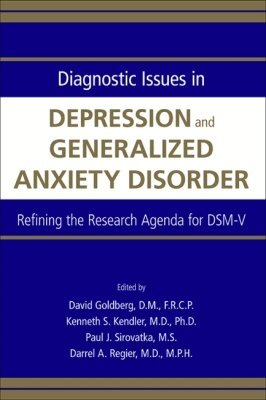
Diagnostic Issues in Depression and Generalized Anxiety Disorder
Refining the Research Agenda for DSM-V
Av David Goldberg, Kenneth S. Kendler m. fl.
Häftad, 2010
1005 kr
Lägg i varukorg
Generalized anxiety disorder (GAD) and major depression (MD) form the largest group of common mental disorders. These two conditions often occur together, and emerging evidence suggests several similarities between them. As we move toward revising the Diagnostic and Statistical Manual of Mental …
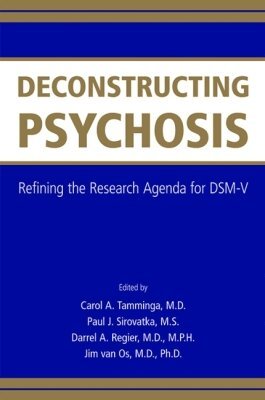
Deconstructing Psychosis
Refining the Research Agenda for DSM-V
Av Carol A. Tamminga, Paul J. Sirovatka m. fl.
Häftad, 2009
874 kr
Lägg i varukorg
Deconstructing Psychosis: Refining the Research Agenda for DSM-V provides an all-important summary of the latest research about the diagnosis and pathophysiology of psychosis. This volume gives the reader an inside look at how psychotic phenomena are represented in the current diagnostic system and …
Dimensional Approaches in Diagnostic Classification
Refining the Research Agenda for DSM-V
Av Darrel A. Regier, Paul J. Sirovatka m. fl.
E-bok, 2009
999 kr
Lägg i varukorg
Since its initial publication more than 50 years ago, the DSM has systematized the complex intellectual and clinical process of diagnosing mentally ill persons through the use of categories and classification. The manuals have provided a consistent diagnostic language for clinical work, research, …
Stress-Induced and Fear Circuitry Disorders
Refining the Research Agenda for DSM-V
Av Darrel A. Regier, Paul J. Sirovatka m. fl.
E-bok, 2009
1070 kr
Lägg i varukorg
As disorders in which stress or fear play major roles present an increasing need for psychiatric care around the world, this volume summarizes current research to determine whether a specific group of stress-induced and fear-based disorders form a distinct syndrome independent from other anxiety …
Somatic Presentations of Mental Disorders
Refining the Research Agenda for DSM-V
Av Darrel A. Regier, Paul J. Sirovatka m. fl.
E-bok, 2009
1071 kr
Lägg i varukorg
Sometimes described as "the nemesis of the primary care physician," somatoform disorders are frustrating, expensive to treat, and under-investigated. Somatic Presentations of Mental Disorders provides a fascinating and practical review of the epidemiology, diagnosis, and treatment of this …
Obsessive-Compulsive Spectrum Disorders
Refining the Research Agenda for DSM-V
Av Eric Hollander, Joseph Zohar m. fl.
Häftad, 2010
938 kr
Lägg i varukorg
The five-year process of preparing for the revision of the Diagnostic and Statistical Manual (DSM) has been organized around a series of conferences convened by the American Psychiatric Association, in collaboration with the World Health Organization and the U.S. National Institutes of Health, to …
Obsessive-Compulsive Spectrum Disorders
Refining the Research Agenda for DSM-V
Av Darrel A. Regier, Paul J. Sirovatka m. fl.
E-bok, 2010
1012 kr
Lägg i varukorg
The five-year process of preparing for the revision of the Diagnostic and Statistical Manual (DSM) has been organized around a series of conferences convened by the American Psychiatric Association, in collaboration with the World Health Organization and the U.S. National Institutes of Health, to …
Public Health Aspects of Diagnosis and Classification of Mental and Behavioral Disorders
Refining the Research Agenda for DSM-5 and ICD-11
Av Norman Sartorius, Benedetto Saraceno m. fl.
E-bok, 2012
1035 kr
Lägg i varukorg
Public Health Aspects of Diagnosis and Classification of Mental and Behavioral Disorders: Refining the Research Agenda for DSM-5 and ICD-11 provides a comprehensive summary of the current state of mental health classification in the United States and internationally, fostering a better …
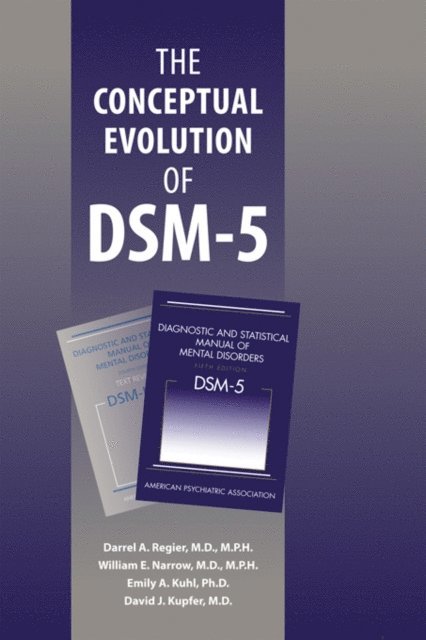
Conceptual Evolution of DSM-5®
Av Darrel A. Regier, William E. Narrow m. fl.
Häftad, 2010
1005 kr
Lägg i varukorg
There is a need to refine our current psychiatric nosology to produce diagnostic criteria and disorder categories that keep pace with advances in neuroscience while at the same time enhance clinical utility. Furthermore, dimensional aspects of psychiatric disorders require greater recognition so as …
Dimensional Models of Personality Disorders
Refining the Research Agenda for DSM-V
Av Erik Simonsen, Darrel A. Regier m. fl.
E-bok, 2007
1124 kr
Lägg i varukorg
DSM-IV and ICD-10 both diagnose personality disorders categorically, yet studies indicate that many patients meet criteria for an excessive number of diagnoses, raising the question of whether personality disorders are discrete conditions or rather distinctions along dimensions of general …
Age and Gender Considerations in Psychiatric Diagnosis
A Research Agenda for DSM-V
Av Darrel A. Regier, Paul J. Sirovatka m. fl.
E-bok, 2008
935 kr
Lägg i varukorg
Written to help identify major gaps in our knowledge of how gender and age affect psychiatric diagnoses and to stimulate much-needed research to fill these gaps, Age and Gender Considerations in Psychiatric Diagnosis serves as both a valuable short-term source for the DSM-V Task Force and its …
Diagnostic Issues in Substance Use Disorders
Refining the Research Agenda for DSM-V
Av Darrel A. Regier, Paul J. Sirovatka m. fl.
E-bok, 2008
1249 kr
Lägg i varukorg
Inviting the help of colleagues worldwide, the concise Diagnostic Issues in Substance Use Disorders is part of the new series Advancing the Research Agenda for DSM-V. Its 19 chapters by an international group of experts are designed to stimulate questions that will help guide research related to …
Diagnostic Issues in Dementia
Advancing the Research Agenda for DSM-V
Av Darrel A. Regier, Paul J. Sirovatka m. fl.
E-bok, 2008
981 kr
Lägg i varukorg
Advancing the Research Agenda for DSM-V, Diagnostic Issues in Dementia comprises nine chapters with research suggestions for consideration for the upcoming DSM-V process, reflecting the nascent effort toward a new diagnostic nomenclature in the still rapidly evolving field of dementia. Here, 18 …
Research Agenda For DSM V
Av Darrel A. Regier, Michael B. First m. fl.
E-bok, 2008
1106 kr
Lägg i varukorg
In the ongoing quest to improve our psychiatric diagnostic system, we are now searching for new approaches to understanding the etiological and pathophysiological mechanisms that can improve the validity of our diagnoses and the consequent power of our preventive and treatment interventions -- …
Conceptual Evolution of DSM-5
Av David J. Kupfer, Emily A. Kuhl m. fl.
E-bok, 2010
1106 kr
Lägg i varukorg
There is a need to refine our current psychiatric nosology to produce diagnostic criteria and disorder categories that keep pace with advances in neuroscience while at the same time enhance clinical utility. Furthermore, dimensional aspects of psychiatric disorders require greater recognition so as …