• Fri frakt över 249 kr
  • •
  • Snabba leveranser
  • •
  • Billiga böcker
Kundservice

Du är på sajten för privatpersoner.

Företag, bibliotek eller offentlig verksamhet?

Du handlar på classic.bokus.com, där alla dina funktioner finns intakta.
Till classic.bokus.com
Bokus logotyp. Gå till startsidan.
  • Erbjudanden
  • Nyheter
  • Student
  • Topplistor
  • Barn & ungdom
  • Bokus Play
  • E-böcker
  • Pocketböcker
  • Spel & pussel

10% rabatt på allt med kod: NYSTART10 →

Sidfot

Mina sidor

    Hjälp

    • Kundservice
    • Vanliga frågor och svar
    • Frakt och leverans
    • Retur vid ångerrätt
    • Reklamera vara
    • Betalning
    • Köpvillkor
    • Allmänna villkor
    • Information om webbplatsens tillgänglighet

    Om Bokus

    • Om oss
    • Pressrum
    • För studenter
    • För företag
    • För bibliotek och offentlig verksamhet
    • För leverantörer
    • Hållbarhet

    Populärt

    • Aktuella erbjudanden
    • Presentkort
    • Studentlitteratur
    • Nya böcker
    • Topplistor
    • Signerade böcker
    • Engelska böcker

    Inspiration

    • Boktips
    • BookTok
    • Populära bokserier
    • Barnbokskaraktärer
    • Populära författare
    Logotyp för Bokus
    Följ oss på Facebook (extern länk)Följ oss på Instagram (extern länk)Följ oss på YouTube (extern länk)Följ oss på TikTok (extern länk)
    bokus @ CookiesAnpassa cookiesIntegritetspolicyKöpvillkor
    Till Citymail hemsida (extern länk)Till Budbee hemsida (extern länk)Till Postnord hemsida (extern länk)Till Schenker hemsida (extern länk)Till Early Bird hemsida (extern länk)Till Walleys hemsida (extern länk)
    1. Medicin
    2. Andra medicinska specialiteter
    3. Psykiatri

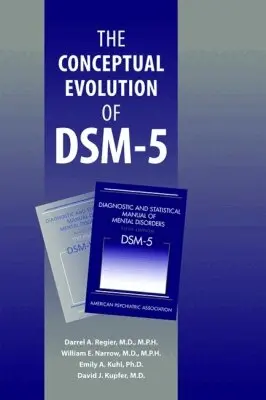
    Conceptual Evolution of DSM-5®

    AvDarrel A. Regier,William E. Narrow

    Häftad, Engelska, 2010

    974 kr

    Beställningsvara. Skickas inom 5-8 vardagar. Fri frakt över 249 kr.

    Beskrivning

    There is a need to refine our current psychiatric nosology to produce diagnostic criteria and disorder categories that keep pace with advances in neuroscience while at the same time enhance clinical utility. Furthermore, dimensional aspects of psychiatric disorders require greater recognition so as to improve our understanding of boundaries between disorders and underscore the heterogeneous nature of psychopathology. The Conceptual Evolution of DSM-5 provides a framework for the evolution of the forthcoming diagnostic system in the fifth edition of Diagnostic and Statistical Manual of Mental Disorders (DSM-5), which will help advance clinical practice and facilitate ongoing development of diagnostic criteria. This manual: Highlights recent progress in our understanding of cross-cutting factors relevant to psychiatric diagnosis and symptom presentation; Includes detailed discussions on the role of factors such as age, gender, culture, and disability in the expression of mental disorders; Provides a review of genetic evidence supporting a cross-cutting approach to nosology; Offers suggestions for integrating cross-cutting factors with DSM-5. The Conceptual Evolution of DSM-5 was written to impart a theoretical context for understanding potential revisions to DSM-5. The authors reevaluate the structure of the current manual and discuss cross-cutting approaches to facilitate clinical practice and refine research approaches that will guide clinical trials, genetics, imaging, and treatment guidelines. The authors provide the following insights: Detailed descriptions of age-, gender-, and culture-specific aspects relevant to psychiatric diagnosis and the need for sensitivity to these factors when making diagnoses; Discussions on the dimensional aspects of mental disorders, including overlapping symptoms relevant to many or most diagnoses; Consideration of alternative classifications of disorders that recognize disorders sharing validating features; Presentation of neuroscientific and epidemiologic evidence to expand understanding of disorders beyond that of the categorical organization presented in DSM-IV; A review of clinical implications, including how clinicians may shift their conceptualization of previously reified diagnostic criteria and their consequences. As presented to the 99th Annual Meeting of the American Psychopathological Association, The Conceptual Evolution of DSM-5 explores the rapidly changing research base for the understanding of neurodevelopmental, neurocognitive, addictive, and other psychiatric disorders. The contributions in this volume confirm that DSM-5 is intended to be a living document that can accommodate revisions to specific diagnostic areas based on new evidence that is replicable and subject to review. This efficient updating process will help researchers and clinicians keep abreast of the latest protocols for the research, diagnosis, and treatment of mental illness.

    Produktinformation

    • Utgivningsdatum:2010-11-30
    • Mått:152 x 226 x 25 mm
    • Vikt:616 g
    • Format:Häftad
    • Språk:Engelska
    • Antal sidor:389
    • Förlag:American Psychiatric Association Publishing
    • ISBN:9781585623884

    Utforska kategorier

    • Psykiatri inom Medicin

    Mer om författaren

    Darrel A. Regier, M.D., M.P.H., is Executive Director of the American Psychiatric Institute for Research and Education and Director of the Division of Research at the American Psychiatric Association in Arlington, Virginia, and Vice-Chair of the DSM-5 Task Force.William E. Narrow, M.D., M.P.H., is Associate Director of the Division of Research at the American Psychiatric Association and the American Psychiatric Institute for Research and Education in Arlington, Virginia, and Research Director of the DSM-5 Task Force.Emily A. Kuhl, Ph.D., is a science writer in the Division of Research at the American Psychiatric Association in Arlington, Virginia.David J. Kupfer, M.D., is Thomas Detre Professor in the Department of Psychiatry at the University of Pittsburgh and Western Psychiatric Institute & Clinic in Pittsburgh, Pennsylvania, and Chair of the DSM-5 Task Force.

    Recensioner i media

    The Conceptual Evolution of DSM-5 is an outstanding book that provides the reader with an in-depth understanding of the complexities of developing a new DSM that is clinically useful and yet also reflects the most current research findings in the field. The book is highly recommended, as it will provide an excellent platform to "jump" into DSM-5.

    Innehållsförteckning

    • ContributorsIntroductionPART I: Diagnostic Spectra: Assessing the Validity of Disorder GroupingsChapter 1. Diagnosis of Mental Disorders in Light of Modern GeneticsChapter 2. Integration of Dimensional Spectra for Depression and Anxiety Into Categorical Diagnoses for General Medical PracticeChapter 3. One Way Forward for Psychiatric Nomenclature: The Example of the Spectrum Project ApproachChapter 4. Meta Effects of Classifying Mental DisordersPART II: Integrating Dimensional Concepts Into a Categorical SystemChapter 5. A Proposal for Incorporating Clinically Relevant Dimensions Into DSM-5Chapter 6. Empirically Derived Personality Disorder Prototypes: Bridging Dimensions and Categories in DSM-5Chapter 7. Options and Dilemmas of Dimensional Measures for DSM-5: Which Types of Measures Fare Best in Predicting Course and Outcome?PART III: Assessing Functional Impairment for Clinical Significance and DisabilityChapter 8. Clinical Significance and Disorder Thresholds in DSM-5: The Role of Disability and DistressChapter 9. Assessing Activity Limitations and Disability Among AdultsChapter 10. Measuring Disability Across Physical, Mental, and Cognitive DisordersPART IV: Identifying Important Culture- and Gender- Related Expressions of DisordersChapter 11. Assessing Mental Disorders and Service Use Across Countries: The WHO World Mental Health Survey InitiativeChapter 12. The Intersection of Race, Ethnicity, Immigration, and Cultural Influences on the Nature and Distribution of Mental Disorders: An Examination of Major DepressionChapter 13. Gender and Gender-Related Issues in DSM-5PART V: Incorporating Developmental Variations of Disorder Expression Across the LifespanChapter 14. Increasing the Developmental Focus in DSM-5: Broad Issues and Specific Potential Applications in AnxietyChapter 15. Diagnostic Issues Relating to Lifespan From Adulthood Into Later LifeIndex