1 899 kr
Skickas inom 5-8 vardagar
1 899 kr
Skickas inom 5-8 vardagar
660 kr
Skickas
Outside the Box: Rethinking ADD/ADHD in Children and Adults-A Practical Guide identifies assumptions about ADD/ADHD that demand reevaluation in light of recent research. Building upon a current, science-based foundation, the book describes in practical terms how ADHD can be recognized at various ages; how it differs from more typical brain development; how it can significantly impair those affected; and how it can safely, and in most cases effectively, be treated in children and adults. The book is based upon current scientific research but also on the experience and perspective of the author, a clinician who has devoted more than 35 years to studying this disorder formally and countless hours to engaging with and providing treatment for a diversity of children, teenagers, and adults with ADHD and related problems. The book's audience is the wide variety of clinicians involved in assessing, treating, and/or monitoring the care of children and adults with this disorder (e.g., pediatricians, primary care physicians, psychologists, psychiatrists, neurologists, physician assistants, advanced practice nurses, and clinical social workers) and also educators, disability service providers, human resource specialists, and the adolescents and adults who seek more information about ADHD assessment and treatment for themselves or for family or friends.
The book offers practical, accessible information that is grounded in the latest research: • The book is focused not primarily on details of academic arguments but on practical aspects of ADHD—how it varies from one person to another, how it changes over the life span, how treatments need to be adjusted for different individuals, and how it sometimes gets worse and sometimes gets better.• Emphasizing that ADHD is not a simple problem of failing to listen or staying focused on a task, the author examines research demonstrating that ADHD results from impairment of a complex syndrome of brain functions essential for self-management, the "executive functions." • While DSM-5 is acknowledged as a valuable source of information about ADHD, this book draws upon a wider range of scientific research and perspectives not yet incorporated into DSM. • Although accessible to the general reader, the text includes citations to sources that can be used to obtain additional, more technical information.
Utterly current and scientifically based, Outside the Box: Rethinking ADD/ADHD in Children and Adults—A Practical Guide challenges old thinking and provides much-needed information and support to clinicians, educators, patients, and families.
2 519 kr
Skickas inom 5-8 vardagar
1 068 kr
Skickas inom 5-8 vardagar
830 kr
Skickas
Deftly combining contemporary theory with clinical practice, Psychodynamic Therapy for Personality Pathology: Treating Self and Interpersonal Functioning is an invaluable resource for any clinician seeking a coherent model of personality functioning and pathology, classification, assessment, and treatment. This insightful guide introduces Transference-Focused Psychotherapy-Extended (TFP-E), a specialized but accessible approach for any clinician interested in the skillful treatment of personality disorders.
Compatible with the DSM-5 Section III Alternative Model for Personality Disorders—and elaborating on that approach, this volume offers clinicians at all levels of experience an accessible framework to guide evaluation and treatment of personality disorders in a broad variety of clinical and research settings.
In this book, readers will find: • A coherent model of personality functioning and disorders based in psychodynamic object relations theory• A clinically near approach to the classification of personality disorders, coupled with a comprehensive approach to assessment• An integrated treatment model based on general clinical principles that apply across the spectrum of personality disorders• An understanding of specific modifications of technique that tailor intervention to the individual patient's personality pathology• Descriptions of specific psychodynamic techniques that can be exported to shorter-term treatments and acute clinical settings
Patient assessment and basic psychodynamic techniques are described in up-to-date, jargon-free terms and richly supported by numerous clinical vignettes, as well as online videos demonstrating interventions. At the end of each chapter, readers will find a summary of key clinical concepts, making this book both a quick reference tool as well as a springboard for continued learning.
Clinicians looking for an innovative, trustworthy guide to understanding and treating personality pathology that combines contemporary theory with clinical practice need look no further than Psychodynamic Therapy for Personality Pathology: Treating Self and Interpersonal Functioning.
727 kr
Skickas
Despite the widespread influence of psychoanalysis in the field of mental health, until now no single book has been published that explains the psychoanalytic model of the mind to the many students and practitioners who want to understand it. The Psychoanalytic Model of the Mind represents an important breakthrough: in simple language, it presents complicated ideas and concepts in an accessible manner, demystifies psychoanalysis, debunks some of the myths that have plagued it, and defuses the controversies that have too long attended it. The author effectively demonstrates that the psychoanalytic model of the mind is consistent with a brain-based approach. Even in patients whose mental illness has a predominantly biological basis, psychological factors contribute to the onset, expression, and course of the illness. For this reason, treatments that focus exclusively on symptoms are not effective in sustaining change. The psychoanalytic model provides clinicians with the framework to understand each patient as a unique psychological being.
The book is rich in descriptive detail yet pragmatic in its approach, offering many features and benefits: • In addition to providing the theoretical scaffolding for psychodynamic psychotherapy, the book emphasizes the critical importance of forging a strong treatment alliance, which requires understanding the transference and countertransference reactions that either disrupt or strengthen the clinician-patient bond.• The book is respectful of Freud without being reverential; it considers his contribution as founder of psychoanalysis in the context of the historical and conceptual evolution of the field.• The final section is devoted to learning to use the psychoanalytic model and exploring how it can be integrated with existing models of the mind.• In addition to being a valuable reference for mental health clinicians, the text can serve as a resource for undergraduate and graduate students of philosophy, neuroscience, psychology, literature, and all academic disciplines outside of the mental health professions who may want to learn more about what psychoanalysts have to say about the mind.• Important features include an extensive glossary of terms, a series of illustrative tables, and appendixes addressing libido theory and defenses.
Drawing upon a broad range of sources to make her case, the author persuasively argues that the basic tenets of the psychoanalytic model of the mind are supported by empirical evidence as well as clinical efficacy. The Psychoanalytic Model of the Mind is a fascinating exploration of this complex model of mental functioning, and both clinicians and students of the mind will find it comprehensive and riveting.
771 kr
Skickas
The diagnosis and treatment of patients with BPD can be fraught with anxiety, uncertainty, and complexity. How welcome, then, is the Handbook of Good Psychiatric Management for Borderline Personality Disorder, which teaches clinicians what to do and how to do it, as well as what not to do and how to avoid it. The author, a renowned researcher and clinician, has developed a new evidence-based treatment, Good Psychiatric Management (GPM) that comfortably utilizes cognitive, behavioral, and psychodynamic interventions that are practical and simple to implement. Because psychoeducation is an important component of GPM, the book teaches clinicians how to educate their patients about BPD, including the role of genetics and the expected course of the disease. This approach offers advantages both to practitioners, who become more adept at honest communication, and to patients, who are encouraged to have realistic hopes and to focus on strategies for coping with BPD in daily life.
The book is structured for maximum learning, convenience, and utility, with an impressive array of features. • Section I provides background on BPD, including the myths that sometimes discourage clinicians from treating these patients and that hamper the effective treatment of the disorder.• Section II, the GPM Manual, provides a condensed and clear description of the most essential and specific GPM interventions that clinicians can learn from and use in everyday practice.• Section III, the GPM Workbook, offers case vignettes which reference chapters from the manual. Each vignette has a number of "decision points" where alternative interventions are proposed and discussed. • To further facilitate learning, a set of nine interactions is found in a series of online video demonstrations. Here, readers can see in vivo illustrations of the GPM model in practice.• Finally, a set of appendices provides critical information, such as a comparison of GPM with other evidence-based treatments of BPD, scaling risk and response strategies, and family guidelines.
Designed to be a basic case management text for all hospital, outpatient clinic, or office-based psychiatrists or mental health professionals who assume primary responsibility for the treatment of those with BPD, the Handbook of Good Psychiatric Management for Borderline Personality Disorder constitutes a breakthrough in the treatment of these often misunderstood patients.
812 kr
Skickas inom 7-10 vardagar
888 kr
Skickas inom 5-8 vardagar
918 kr
Skickas
Transference-Focused Psychotherapy for Borderline Personality Disorder: A Clinical Guide presents a model of borderline personality disorder (BPD) and its treatment that is based on contemporary psychoanalytic object relations theory as developed by the leading thinker in the field, Otto Kernberg, M.D., who is also one of the authors of this insightful manual. The model is supported and enhanced by material on current phenomenological and neurobiological research and is grounded in real-world cases that deftly illustrate principles of intervention in ways that mental health professionals can use with their patients.
The book first provides clinicians with a model of borderline pathology that is essential for expert assessment and treatment planning and then addresses the empirical underpinnings and specific therapeutic strategies of transference-focused psychotherapy (TFP). • From the chapter on clinical assessment, the clinician learns how to select the type of treatment on the basis of the level of personality organization, the symptoms the patient experiences, and the areas of compromised functioning. In order to decide on the type of treatment, the clinician must examine the patient's subjective experience (such as symptoms of anxiety or depression), observable behaviors (such as investments in relationships and deficits in functioning), and psychological structures (such as identity, defenses, and reality testing). • Next, the clinician learns to establish the conditions of treatment through negotiating a verbal treatment contract or understanding with the patient. The contract defines the responsibilities of each of the participants and defines what the reality of the therapeutic relationship is. • Techniques of treatment interventions and tactics to address particularly difficult clinical challenges are addressed next, equipping the therapist to employ the four primary techniques of TFP (interpretation, transference analysis, technical neutrality, and use of countertransference) and setting the stage for and guiding the proper use of those techniques within the individual session.• What to expect in the course of long-term treatment to ameliorate symptoms and to effect personality change is covered, with sections on the early, middle, and late phases of treatment. This material prepares the clinician to deal with predictable phases, such as tests of the frame, impulse containment, movement toward integration, episodes of regression, and termination.• Finally, the text is accompanied by supremely instructive online videos that demonstrate a variety of clinical situations, helping the clinician with assessment and modeling critical therapeutic strategies. The book recognizes that each BPD patient presents a unique treatment challenge. Grounded in the latest research and rich with clinical insight, Transference-Focused Psychotherapy for Borderline Personality Disorder: A Clinical Guide will prove indispensable to mental health professionals seeking to provide thoughtful, effective care to these patients.
787 kr
Skickas inom 5-8 vardagar
892 kr
Läs direkt efter köp
Frightening and destabilizing as they may be, personal crises can also provide meaningful opportunities for learning and growth. For individuals struggling with mental disorders, however, mitigating the former and fostering the latter can be challenging, particularly in the context of what are often time-limited conversations or a limited number of visits.
In Crisis Integration With Acceptance and Commitment Therapy: Theory and Practice, health care professionals will find a practical guide, informed by both theory and evidence, to the psychological skills patients need to deal with and grow through crises.
Enlivened by detailed and engaging clinical dialogues—all based on real-world clinical practice—this book introduces the acceptance and commitment therapy (ACT) model, demonstrating how it applies to findings from crisis studies and can be integrated into clinical practice. It then delves into the three core processes of ACT:
• Mindfulness, as understood in terms of predictive coding as well as non-systematic interoceptive exposure, and its effectiveness in both acute and chronic crises• Self-compassion and how the action of bringing affection and kindness to oneself during intense torment can be crucial to acceptance• Engagement with life and the importance of controlling one''s own behavior in the midst of otherwise uncontrollable crisis-provoking events
Although crises come in a variety of forms, Crisis Integration With Acceptance and Commitment Therapy: Theory and Practice argues that the core processes that underpin the generation and maintenance of a crisis response are essentially the same and helps to simplify the conceptualization of complex clinical presentations.
By accessibly and deftly melding crisis science, evolutionary psychology, neuroscience, behavioral psychology, and the practice of mindfulness, this volume offers readers—be they psychiatrists, psychiatric residents, psychologists, psychotherapists, or other health care professionals—an approach that is easy to learn, simple to remember, and applicable to any crisis situation that their patients may be confronting.
2 461 kr
Skickas inom 5-8 vardagar
854 kr
Skickas inom 5-8 vardagar
869 kr
Skickas inom 5-8 vardagar
913 kr
Skickas inom 5-8 vardagar
815 kr
Skickas
712 kr
Skickas
888 kr
Skickas inom 5-8 vardagar
935 kr
Skickas inom 5-8 vardagar
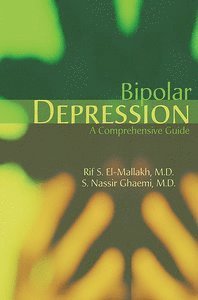
Although depression is the most common presentation of bipolar disorder, correct diagnosis generally requires a history of mania and thus presents a formidable challenge. This book provides clinicians with the necessary guidance to distinguish this illness and pursue an appropriate therapeutic course. It brings together a team of clinical investigators who offer cutting-edge research on the topic and address the most critical concerns regarding its treatment.
Bipolar Depression first introduces a hierarchical model for diagnosis to allow the clinician to distinguish between bipolar and unipolar depression, addressing problems of misdiagnosis and overdiagnosis as well as differentiating attention-deficit/hyperactivity disorder (ADHD) and bipolar disorder. Early chapters review the neurobiology and genetics of this highly heritable condition, presenting studies of neurotransmitter function and brain imaging studies and documenting the susceptibility of specific chromosomes as loci for bipolar disorder. Other chapters address the particular issues of bipolar depression in children, for whom a diagnosis is especially problematic, and suicide, focusing on the need for assessment during both acute and maintenance treatment with interventions appropriate to a patient's symptoms and history. Bipolar Depression offers critiques of specific treatment approaches: • Lithium and antiepileptic drugs: featuring a review of the most recent research on the use of lithium, in which higher doses are shown to be effective, plus coverage of lamotrigine, valproic acid, carbamazepine, oxcarbazepine, and topiramate.• Antidepressants: offering new perspectives on a complex field, including a discussion of the randomized clinical trial literature and observational studies on their use, and citing cautions regarding side effects.• Antipsychotics: evaluating the difference between first- and second-generation medications and discussing their role in controlling acute depressions.• Novel approaches to treatment: including the use of atypical neuroleptics, electroconvulsive therapy, transcranial magnetic stimulation, vagus nerve stimulation, ketogenic diet, omega-3 fatty acids, myo-inositol, and dopamine agonists.• Psychological interventions: focusing on the inclusion of cognitive-behavioral therapy or interpersonal social rhythm therapy for nonmelancholic depressions in patients who had previously received psychoeducation.
Despite the past decade's advances in practice and research, there remains much room for progress in understanding and treating bipolar depression. This book blazes a trail toward that goal, opening new doors in recognizing differences between bipolar and unipolar forms of depression while offering both researchers and clinicians key insights into this troubling illness.
771 kr
Skickas
In this important new volume, Otto F. Kernberg, M.D., of Weill Cornell Medical College, offers an updated vision of psychoanalytic object relations theory, revealing its application to transference-focused psychotherapy (TFP), a treatment approach derived from, and related to, psychoanalysis.
Collecting previously published articles and new material based on empirical studies carried out by the Personality Disorders Institute of Weill Cornell, the book illustrates TFP's applicability in scenarios that include:
• Schizoid personality disorders• Psychotic personality organization• Disturbances in sexuality and love relations in cases of narcissistic personalities• Inpatient hospital treatment• Large group regression in organizational and political settings as a consequence of malignant narcissism
Hatred, Emptiness, and Hope also devotes a chapter to the implications of new developments in neurobiology on psychoanalytic object relations theory, examining the relationship between neurobiological dispositions and their interaction with psychodynamic developments.
Besides offering a detailed look at the application of TFP to severe personality disorders, this book also examines the practice of TFP itself, tackling controversial issues regarding the supervision of psychoanalysis and its derived psychotherapies, the challenges for the future of psychoanalysis, and innovations that may serve to strengthen its role as a profession, a treatment approach and a social organization within mental health sciences.
1 043 kr
Skickas inom 5-8 vardagar
989 kr
Skickas inom 5-8 vardagar
Covering the range of clinical presentations, treatments, and levels of care, Borderline Personality Disorder: A Clinical Guide, Second Edition, provides a comprehensive guide to the diagnosis and treatment of borderline personality disorder (BPD). The second edition includes new research about BPD's relationship to other disorders and up-to-date descriptions of empirically validated treatments, including cognitive-behavioral and psychodynamic approaches. Compelling new research also indicates a much better prognosis for BPD than previously known.
A pioneer in the field, author John Gunderson, M.D., director of the Borderline Personality Disorder Center at McLean Hospital, draws from nearly 40 years of research and clinical experience. The guide begins with a clear and specific definition of BPD, informed by a nuanced overview of the historical evolution of the diagnosis and a thoughtful discussion of misdiagnosis. Offering a complete evaluation of treatment approaches, Dr. Gunderson provides an authoritative overview of the treatment options and describes in-depth each modality of treatment, including pharmacotherapy, family therapy, individual and group therapy, and cognitive-behavioral therapies.
Unlike other works, this book guides clinicians in using multiple modalities, including the sequence of treatments and the types of changes that can be expected from each mode. The discussion of each treatment emphasizes empirically validated therapies, helping clinicians choose modalities that work best for specific patients. In addition, Borderline Personality Disorder: A Clinical Guide, Second Edition, also outlines therapeutic approaches for multiple settings, such as hospitalization, partial hospitalization or day hospital programs, and levels of outpatient care.
Complementing the well-organized treatment guide are a series of informative and intriguing sidebars, providing insight into the subjective experience of BPD, addressing myths about therapeutic alliances in BPD, and questioning the efficacy of contracting for safety. Throughout the book, Dr. Gunderson recommends specific do's and don'ts for disclosing the diagnosis, discussing medications, meeting with families, starting psychotherapy, and managing suicidality.
A synthesis of theory and practical examples, Borderline Personality Disorder: A Clinical Guide, Second Edition, provides a thorough and practical manual for any clinician working with BPD patients.
771 kr
Skickas
Otto Kernberg is a towering figure in the field of psychoanalysis and has accomplished seminal work in object relations and the treatment of borderline and narcissistic patients. This volume collects his recent work in several areas: severe personality disorders, couples in conflict, and religious experience. In each area, he explores the relationship between the psychoanalytic, clinical psychiatric, and neurobiological approaches, yielding insights and analysis that are compelling, thought-provoking, and at times startling in their penetrating brilliance. In addition, the book addresses the challenges that psychoanalysis faces in the current medical environment, and the need to strengthen its ties with academic institutions.
Beautifully written, the book is designed to both provoke questions and provide enlightenment on a variety of critical issues within psychotherapy. Specifically, the volume: • Explores new approaches to diagnosis and new psychotherapeutic techniques to treat the most severe personality disorders, particularly severe narcissistic psychopathology, based on new research findings;• Relates psychoanalytic theory to neurobiological findings by illuminating the influences of neurobiological structures and intrapsychic conflicts on the development of the personality;• Examines the psychoanalytic and neurobiological underpinnings of sexual love, from the organization of brain structures and neurotransmitters to the overall systems of erotic activation, attachment and bonding. This systematic approach provides insight into the nature of passionate love and the psychodynamic features of the love relationship; • Addresses psychodynamic factors in the religious experience and the search for universal ethical values, and explores the crucial function of religious experience in dealing with the ideological challenges of social life; and• Identifies the serious problems facing psychoanalytic education, institutions, and the profession of psychoanalysis, and proposes solutions to energize the field and increase its contributions to scientific research and progress.
In The Inseparable Nature of Love and Aggression: Clinical and Theoretical Perspectives, Kernberg demonstrates his belief that the collaboration of psychoanalysis and neurobiology has the potential to significantly advance our understanding of the human mind. The full spectrum of mental health clinicians, as well as educated general readers, will find this to be a work of creativity and substance.
720 kr
Skickas inom 5-8 vardagar
912 kr
Skickas
989 kr
Skickas
1 693 kr
Skickas inom 5-8 vardagar
2 186 kr
Skickas inom 5-8 vardagar
991 kr
Skickas inom 5-8 vardagar